
Monday to Saturday - 9:00 am -18:00 pm

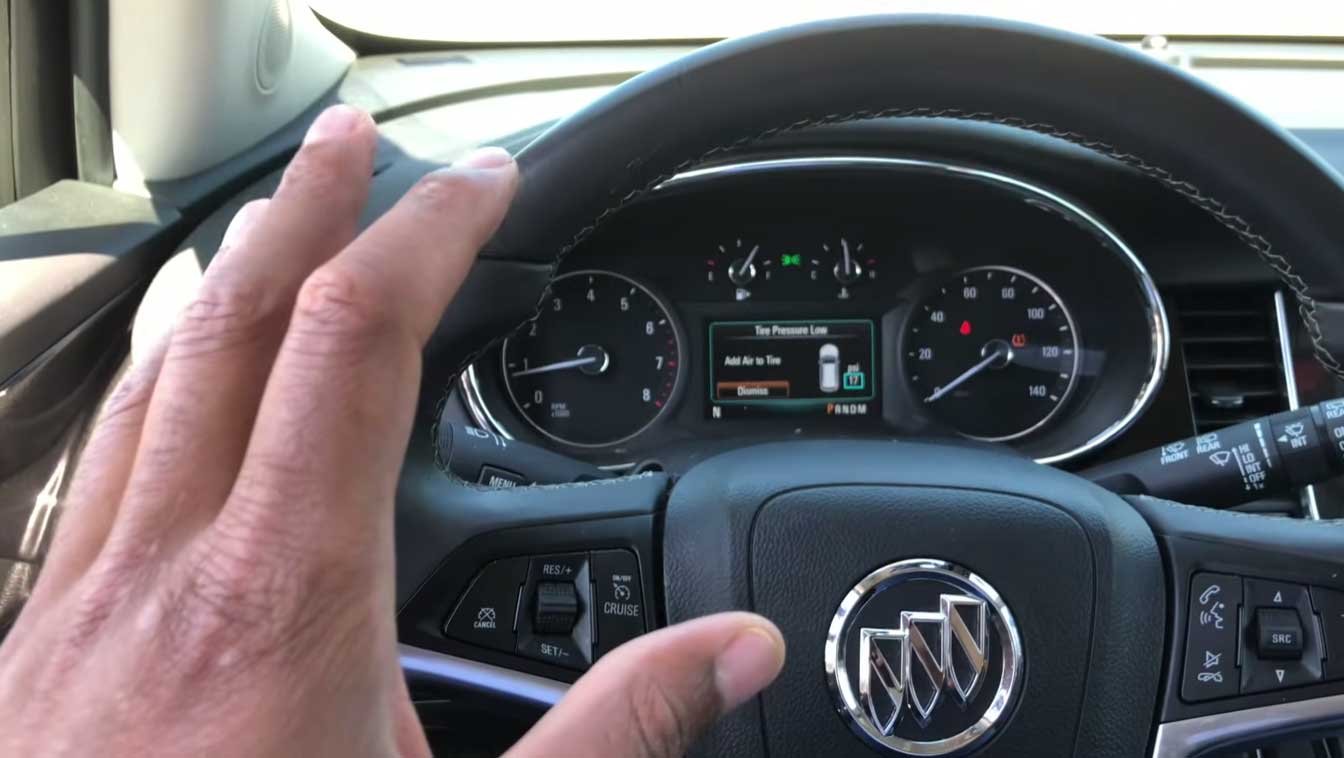
You’re driving your Buick when a warning light appears on your dashboard. It says “Service StabiliTrak.” Your heart skips. Is something wrong? Can you keep driving?
Here’s the truth: This warning doesn’t mean your car will stop working. But it does mean something needs attention. StabiliTrak is a safety system that helps keep your Buick stable in slippery conditions. When the warning appears, the system has detected a problem.
In this article, you’ll learn exactly what StabiliTrak does, why the warning appears, whether it’s safe to drive, and how to fix it. By the end, you’ll understand this system better than most car owners—and know exactly what to do next.
What Is StabiliTrak?
StabiliTrak is General Motors’ name for electronic stability control (ESC). It’s a safety system installed on every modern Buick.
Think of it like this: When you hit a patch of ice and your car starts to slide, StabiliTrak automatically applies the brakes to individual wheels. This helps point your car back in the direction you’re steering. It fights against skids and loss of control.
This system has been standard on Buicks since the mid-2000s. It’s not optional equipment. It’s built into your vehicle to keep you and your passengers safe.
StabiliTrak works together with your anti-lock braking system (ABS). They share sensors and computers. When one has a problem, you often see a warning light for both.
How Does StabiliTrak Work?
Understanding how StabiliTrak works helps you understand why it fails.
The Sensors
Your Buick has sensors that constantly monitor:
- How fast each wheel is spinning
- How hard you’re turning the steering wheel
- How quickly the car is rotating (yaw rate)
- How tilted the car is (roll rate)
These sensors send signals to the StabiliTrak computer hundreds of times per second.
The Computer Decision
The computer compares what the sensors report to what your steering inputs say should happen. If the car is sliding or skidding when it shouldn’t be, the computer detects a mismatch.
The Action
When the computer detects a problem, it takes action in milliseconds:
- It applies the brakes to specific wheels
- It may reduce engine power
- It pulses the brakes rapidly to regain traction
This all happens without you pressing the brake pedal. You might feel the car pulling slightly, or the brakes pulsing under your foot.
Why This Matters
On dry pavement, StabiliTrak makes almost no difference. You won’t notice it working. But on ice, rain, or gravel, it’s the difference between staying on the road and sliding into a ditch.
Why Did the Warning Light Come On?
The “Service StabiliTrak” warning light appears when the system detects an internal fault. This is not the same as the system activating during a skid.
When the light comes on, it means:
- One of the sensors has failed or sent a bad signal
- The wiring to a sensor is corroded or broken
- The StabiliTrak computer has detected an error
- The system has shut itself off to prevent unsafe operation
Your Buick’s onboard diagnostics detected the problem. The computer turned off StabiliTrak and turned on the warning light to tell you.
This is actually a good sign. The system is working as designed. It’s protecting you by letting you know there’s a problem.
Is It Safe to Drive With the Warning?
Short answer: Yes, but not for long.
Here’s what you need to know:
Your Buick will still run. Your brakes still work. Your steering still works. All your basic driving functions are fine.
But StabiliTrak is off. This means you’ve lost an important safety tool, especially in bad weather.
What You’ve Actually Lost
Without StabiliTrak, your car behaves like older vehicles did (before 2005). On dry roads, you probably won’t notice any difference. Your car will drive normally.
On wet roads, gravel, or ice, your car becomes more likely to skid. If you lose traction, the system won’t help you regain control. You’ll have to do it manually with steering and braking.
Is This Dangerous?
It depends on how you drive:
- If you drive carefully on dry roads at normal speeds, you’ll probably be fine for a day or two
- If you drive on wet roads, gravel, or icy conditions, the risk goes up significantly
- If you drive aggressively or speed, the risk is much higher
What You Should Do
You should get it fixed soon. Don’t ignore this warning for weeks or months.
Drive carefully until you can get to a shop. Avoid bad weather if possible. Don’t drive like you normally would.
Think of it this way: You can drive to the mechanic. You shouldn’t drive on vacation across three states.
Common Causes of the Service StabiliTrak Message
Most “Service StabiliTrak” warnings come from a handful of problems. Here are the most common ones:
1. A Faulty Wheel Speed Sensor
What it is: A small sensor on each wheel that measures how fast that wheel is spinning.
Why it fails: These sensors sit near the brake rotor, where they’re exposed to salt, water, and heat. Over time, corrosion builds up. The sensor stops sending accurate signals.
How common: Very common. This is the number-one cause of StabiliTrak warnings in Buicks.
Cost to fix: $150–$400 per sensor, depending on which wheel and your Buick model.
2. Corroded Wiring or Connectors
What it is: The wires that connect sensors to the computer can corrode, especially in salt-heavy climates.
Why it fails: Salt from winter roads gets into connectors. Water gets trapped. Corrosion builds up. The signal becomes weak or disappears.
How common: Very common, especially in the UK and northern US states.
Cost to fix: $100–$300 if it’s just cleaning connectors. More if wires need replacement.
3. Low Battery Voltage
What it is: Your battery is weak, and the StabiliTrak system isn’t getting enough power to operate correctly.
Why it fails: The battery is old, dying, or has a bad connection.
How common: Fairly common, especially in cold weather.
Cost to fix: $0 if it’s just a loose connection. $100–$200 for a new battery.
How to check: If your dashboard lights are dim, or the car is slow to start, the battery might be the problem.
4. A Bad ABS Module or Computer
What it is: The computer that controls both ABS and StabiliTrak has failed internally.
Why it fails: Power surges, water damage, or age.
How common: Less common than sensor failures, but it happens.
Cost to fix: $600–$1,500. This is the most expensive fix.
5. Dirty or Damaged Wheel Speed Sensor
What it is: The sensor lens has gotten dirty or the sensor itself is bent.
Why it fails: Brake dust, road grime, or the sensor got hit during a wheel change.
How common: Fairly common.
Cost to fix: $0 if it’s just dirty (you can clean it yourself). $150–$400 if it needs replacement.
How to Fix It
Step 1: Read the Diagnostic Code
Take your Buick to a shop with a diagnostic scanner. The scanner will read the exact fault code from the computer. This tells you exactly which sensor failed or which component has the problem.
You cannot fix StabiliTrak problems with guessing. You need to know the specific code.
Step 2: Inspect the Suspected Component
Once the shop knows the code, they’ll inspect that part. For a wheel speed sensor, they’ll look for corrosion or damage. For wiring, they’ll check for loose connections or breaks.
Step 3: Repair or Replace
Depending on what they find, they’ll either:
- Clean corroded connectors
- Replace a faulty sensor
- Repair damaged wiring
- Replace the ABS module (in rare cases)
Step 4: Clear the Code and Test
After the repair, the shop will clear the warning code and test the system. They’ll drive the car to make sure the warning doesn’t come back.
Can You Do This Yourself?
If you have mechanical experience and a diagnostic scanner, you might be able to clean corroded connectors or replace a wheel speed sensor. These are relatively simple jobs.
However, diagnosing the problem requires a scanner. You cannot know what’s wrong without one. This is not a guessing game.
For most car owners, taking it to a shop is the best option. The diagnostic usually costs $50–$150. This is money well spent because it prevents you from replacing the wrong part.
Common Mistakes Drivers Make
Mistake 1: Ignoring the Warning for Months
Some drivers see the light, think “It’s probably nothing,” and keep driving for six months. Meanwhile, the underlying problem gets worse. A simple sensor failure can turn into a corroded connector that damages the wiring harness.
Don’t do this. Get it checked soon.
Mistake 2: Replacing the Wrong Part
I’ve seen car owners buy and install a new ABS module because the warning light was on. The real problem was a dirty wheel speed sensor. They wasted $1,000.
Always get a diagnostic first.
Mistake 3: Turning Off StabiliTrak Manually
Some Buicks have a button that disables StabiliTrak. Some drivers press this button when they see the warning, thinking it will turn off the light.
It doesn’t work that way. The light will still stay on. And now you’ve manually disabled a safety system. This is a bad idea.
Mistake 4: Thinking the Car Is Unsafe
Many drivers panic when they see this warning. They think their Buick is broken and dangerous.
It’s not. You’ve simply lost one safety feature. Your car is still drivable. It’s just less safe in bad weather.
Treat it like you’d treat a broken headlight. It’s a problem that needs fixing, but not an emergency that requires you to abandon the car.
Mistake 5: Washing the Engine Bay After Seeing the Warning
I’ve had customers tell me they power-washed their engine bay to clean it, and the next day the warning appeared.
Here’s why: Water got into the wheel speed sensor connectors. This caused a short circuit.
If you wash your engine bay, use a hose with low pressure. Don’t use a power washer. Keep water away from sensors and electrical connectors.
Frequently Asked Questions
Q: How much does it cost to fix the Service StabiliTrak warning?
A: It depends on the cause. A diagnostic scan costs $50–$150. Cleaning corroded connectors costs $100–$300. Replacing a wheel speed sensor costs $150–$400 per sensor. Replacing an ABS module costs $600–$1,500. Most fixes fall in the $150–$400 range.
Q: Will the warning light go away on its own?
A: No. Once the computer detects a fault, it sets the warning light. It will stay on until someone repairs the problem and clears the code with a diagnostic scanner. You cannot clear it by yourself without fixing the underlying issue.
Q: Can I drive on the highway with this warning?
A: Yes, for short distances on dry roads. You should avoid doing this regularly. If you need to drive on the highway, do it on a day with good weather, and drive smoothly without sudden maneuvers. Don’t drive aggressively.
Q: Does this affect my brakes?
A: Not directly. Your regular brakes work fine. StabiliTrak helps prevent loss of control, but your basic braking system is separate. However, ABS and StabiliTrak share some components, so if the ABS module is faulty, your ABS might not work either.
Q: Is this covered by my warranty?
A: If your Buick is still under warranty (typically 3 years or 36,000 miles), this repair might be covered. Check your warranty paperwork or call a Buick dealer. Wheel speed sensors are often covered. ABS module failures might not be, depending on the cause.
Q: What’s the difference between StabiliTrak and ABS?
A: ABS prevents your wheels from locking up when you brake hard. StabiliTrak prevents your car from skidding or spinning out. They’re different systems, but they work together and share sensors.
Q: Can I turn off StabiliTrak temporarily?
A: Some Buicks have a button to disable it for off-road driving or when stuck in snow. However, if the warning light is on, the system is already disabled. Pressing the button won’t do anything. Fix the underlying problem first.
Q: How long can I drive with this warning?
A: For emergencies, you can drive to a mechanic. For daily driving, don’t let this go more than a week. For long trips or bad weather, get it fixed before you go.
Conclusion
The “Service StabiliTrak” warning means your Buick’s electronic stability control system has detected a problem and shut itself off. It’s not an emergency, but it is a problem that needs fixing.
In most cases, the cause is a faulty wheel speed sensor or corroded connector. These are relatively inexpensive to repair ($150–$400 in most cases).
You can drive carefully to a mechanic with this warning on. You should not ignore it for weeks. Your Buick is safe for daily driving on dry roads, but you’ve lost an important safety feature for wet or slippery conditions.
Here’s what to do next:
- Schedule an appointment with a trusted mechanic or Buick dealer
- Have them run a diagnostic scan to identify the specific problem
- Get their recommendation and repair estimate
- Have them fix the problem and clear the code
- Test the system to confirm the warning is gone
Don’t panic. Don’t guess at repairs. Get a proper diagnosis. Then fix it the right way.
Your Buick’s stability control system is there to protect you. When it warns you that something’s wrong, listen to it. That’s exactly what it’s designed to do.