
Monday to Saturday - 9:00 am -18:00 pm

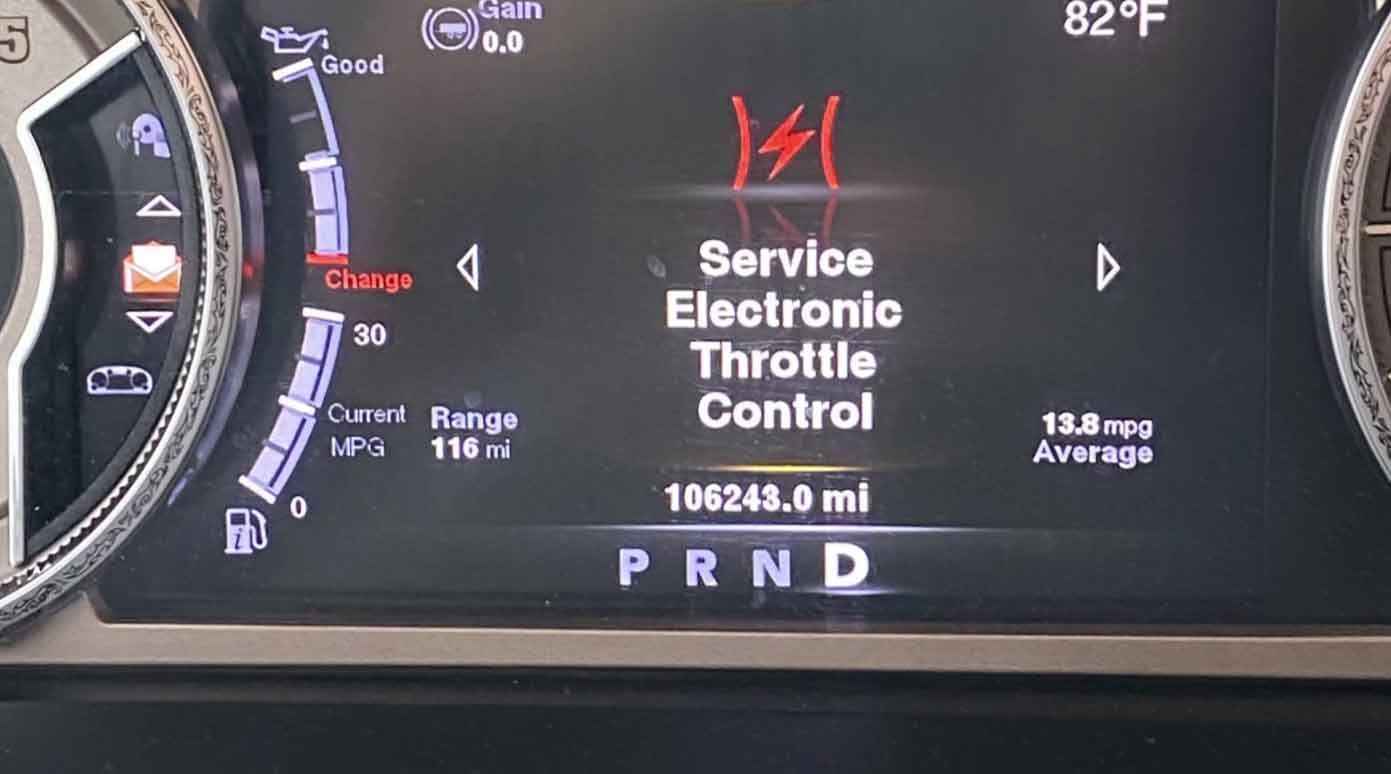
Have you noticed a lightning bolt symbol lighting up on your Dodge Ram dashboard? The icon looks like a bolt of electricity wrapped in two curved brackets. It might be red or yellow, and it’s trying to tell you something important.
Don’t worry. I’m going to walk you through exactly what this warning means. You’ll learn why it appears and how to fix it. By the end of this guide, you’ll know what steps to take to get your truck running smoothly again.
Understanding the Lightning Bolt Symbol
You’re driving your Dodge Ram like any other day. Suddenly, a bright symbol pops up on your dashboard. It’s shaped like a lightning bolt. This catches your attention right away.
This symbol is your truck’s way of saying there’s trouble with the electronic throttle control system. We call it the ETC system for short. It needs your attention now.
Your Dodge Ram comes with smart technology built in. The truck monitors itself constantly. When something goes wrong, it warns you with dashboard lights. This helps you catch problems early before they get worse.
The ETC system controls how your engine responds when you press the gas pedal. When this system works right, your truck accelerates smoothly. When it has issues, you’ll see this lightning bolt warning.
Why the Lightning Bolt Appears: Common Causes
From years working on Dodge trucks, I’ve seen this warning light triggered by several main problems. Let me break down the seven most common causes I encounter in my shop.
Dirty or Broken Throttle Body
The throttle body sits in your air intake system. Think of it as a gate that controls airflow into your engine. When you push the accelerator, this gate opens wider. More air flows in, and your truck speeds up.
When the Throttle Body Gets Dirty
Over months and years, your throttle body collects gunk. Carbon builds up inside. Oil residue sticks to the surfaces. Dirt and grime coat the moving parts. All this buildup stops the throttle body from working smoothly.
When the Throttle Body Breaks Down
Sometimes the throttle body itself fails. The moving parts wear out. Springs break. Motors stop responding. When this happens, the wrong amount of air enters your engine. Your truck’s computer notices this mismatch and turns on the warning light.
Problems with Sensors
Two important sensors work with your throttle system. They act like messengers, sending information to your truck’s brain.
Throttle Position Sensor Problems
The TPS sensor watches the throttle body. It tells the computer exactly where the throttle plate sits. When this sensor fails, it sends bad information. The computer gets confused and triggers the warning.
In my shop, I’ve replaced dozens of these sensors. They’re small electronic parts that can fail without warning.
Accelerator Pedal Sensor Issues
The APPS sensor monitors your gas pedal position. Every time you press down, this sensor tells the computer how far you pushed. A broken APPS sensor can’t do this job correctly. The lightning bolt appears on your dashboard.
Weak or Dying Battery
Your ETC system runs on electricity. It needs steady, strong power to work right. When I check trucks with this warning, I often find the battery is weak or old.
A battery that’s losing voltage can’t power all your truck’s systems properly. The ETC system is sensitive to power drops. Even a small voltage dip can trigger the warning light.
Damaged Wires or Loose Connections
Your throttle system uses many wires and connectors. These carry electrical signals between parts. In my experience, this is one of the most common causes I find.
Wires can get damaged in several ways. They rub against hot engine parts and melt. Corrosion eats through the copper. Connectors work loose from vibration. Mice and rats sometimes chew through wiring under the hood.
When any wire connection fails, signals can’t travel properly. Your truck’s computer loses communication with the throttle system.
Tire Pressure Sensor Malfunctions
Your Dodge Ram has small sensors inside each tire. These are TPMS sensors. They watch your tire pressure constantly and send data to the computer.
When a TPMS sensor fails, it can sometimes trigger the lightning bolt warning. This happens because all these systems talk to each other through your truck’s main computer.
Water and road salt damage these sensors over time. They’re exposed to harsh conditions every time you drive.
Engine Computer Issues
The ECU is your truck’s brain. It’s a computer that controls dozens of engine functions. It manages fuel injection, timing, idle speed, and many other systems.
Sometimes the ECU itself causes the problem. Internal circuits can fail. Software can glitch. Connections inside the computer can corrode.
The ECU relies on many sensors to do its job. It reads data from the camshaft sensor, coolant sensor, knock sensor, and MAP sensor. When any of these fail, the ECU can’t function properly. This triggers warning lights.
Air Leaks and Software Bugs
Vacuum leaks let unwanted air into your engine. This throws off the air-fuel mixture. Your engine runs lean, which means too much air and not enough fuel. Performance drops, and warning lights appear.
Software problems can also cause false warnings. Your truck’s computer runs on programmed code. Sometimes this code has bugs or glitches. A software error might turn on the lightning bolt even when nothing is physically wrong.
How to Fix the Lightning Bolt Warning
Let me share the solutions I use in my shop to fix this problem. These methods work for most Dodge Ram trucks I service.
Clean Your Throttle Body
Start here if your throttle body is dirty. You’ll need throttle body cleaner spray and a soft brush. An old toothbrush works great.
Remove the air intake tube to access the throttle body. Spray the cleaner inside. Scrub away the carbon and gunk with your brush. Wipe everything clean with a rag.
I recommend cleaning the throttle body every 50,000 miles during regular maintenance. This prevents buildup from becoming a problem.
If cleaning doesn’t help, the throttle body might be worn out. In that case, replacement is your best option.
Replace Faulty Sensors
Bad sensors need to come out. New ones need to go in. It’s that simple.
When I diagnose sensor problems, I use a scanner tool to read fault codes. This tells me exactly which sensor failed. Then I replace just that sensor.
Check your TPS sensor first. Then test the APPS sensor. Also inspect all your TPMS sensors and any ECU-related sensors showing errors.
Check All Wiring
Look over every wire connected to your throttle system. Search for damage, corrosion, or loose plugs.
In my shop, I wiggle each connector to make sure it’s tight. I look for melted insulation, green corrosion, or broken wires. Any damaged wire gets replaced or repaired immediately.
Pay special attention to connectors near the throttle body and accelerator pedal.
Update Your Computer
Sometimes your ECU needs a software update or reset. This job can be tricky if you’re not familiar with vehicle computers.
A professional mechanic has the right diagnostic tools for this. We can reprogram the ECU, update software, and clear fault codes. We also check for internal ECU damage and replace components if needed.
Get Professional Help
If you’ve tried everything and the light still won’t go away, it’s time to visit a mechanic. An expert can use advanced diagnostic equipment to find the exact problem.
We have factory scan tools that read detailed fault codes. These tools show us information that basic code readers can’t see. This helps us pinpoint issues quickly.
Most dealerships and qualified repair shops can diagnose and fix this problem. Don’t drive around with this warning light on for too long.
Final Thoughts
The lightning bolt warning on your Dodge Ram dashboard is serious. It tells you the electronic throttle control system needs attention. Don’t ignore this warning.
Most of the time, you’re dealing with a dirty throttle body, bad sensor, or wiring problem. These are fixable issues that won’t cost a fortune if you catch them early.
You can handle some of these repairs yourself if you’re comfortable working on vehicles. Cleaning a throttle body is straightforward. Checking wiring connections is simple.
But if you’re not sure what you’re doing, take your truck to a professional. The ETC system is important for safe driving. It’s worth having an expert look at it.
Regular maintenance prevents many of these problems. Keep your throttle body clean. Have sensors tested during routine service. Check battery health yearly. These simple steps keep your Dodge Ram running strong.
Common Questions About This Warning
What exactly does the lightning bolt symbol mean?
The lightning bolt tells you something is wrong with your truck’s electronic throttle control system. This system needs immediate attention to prevent further damage.
Is it safe to drive with this light on?
I don’t recommend driving with this warning showing. You might notice reduced power, rough acceleration, or unpredictable throttle response. Stop driving and fix the problem soon. Ignoring it leads to bigger, more expensive repairs.
How do I figure out what’s causing this warning?
Use an OBD-II scanner to read fault codes. Check your throttle body for dirt or damage. Inspect sensors and wiring. Look at ECU components. Search for vacuum leaks. If you can’t find the problem, bring your truck to a mechanic.
What fixes work best for this issue?
Clean or replace your throttle body. Swap out bad sensors. Fix damaged wiring. Update your ECU software. Repair vacuum leaks. Get professional diagnosis when needed. These solutions fix most cases I see in my shop.
Can I prevent this warning from happening?
Yes. Clean your throttle body every 50,000 to 70,000 miles. Test sensors during regular service. Inspect wiring for damage. Keep your battery healthy. Fix small problems before they become big ones. Regular maintenance stops most issues before they start.