
Monday to Saturday - 9:00 am -18:00 pm

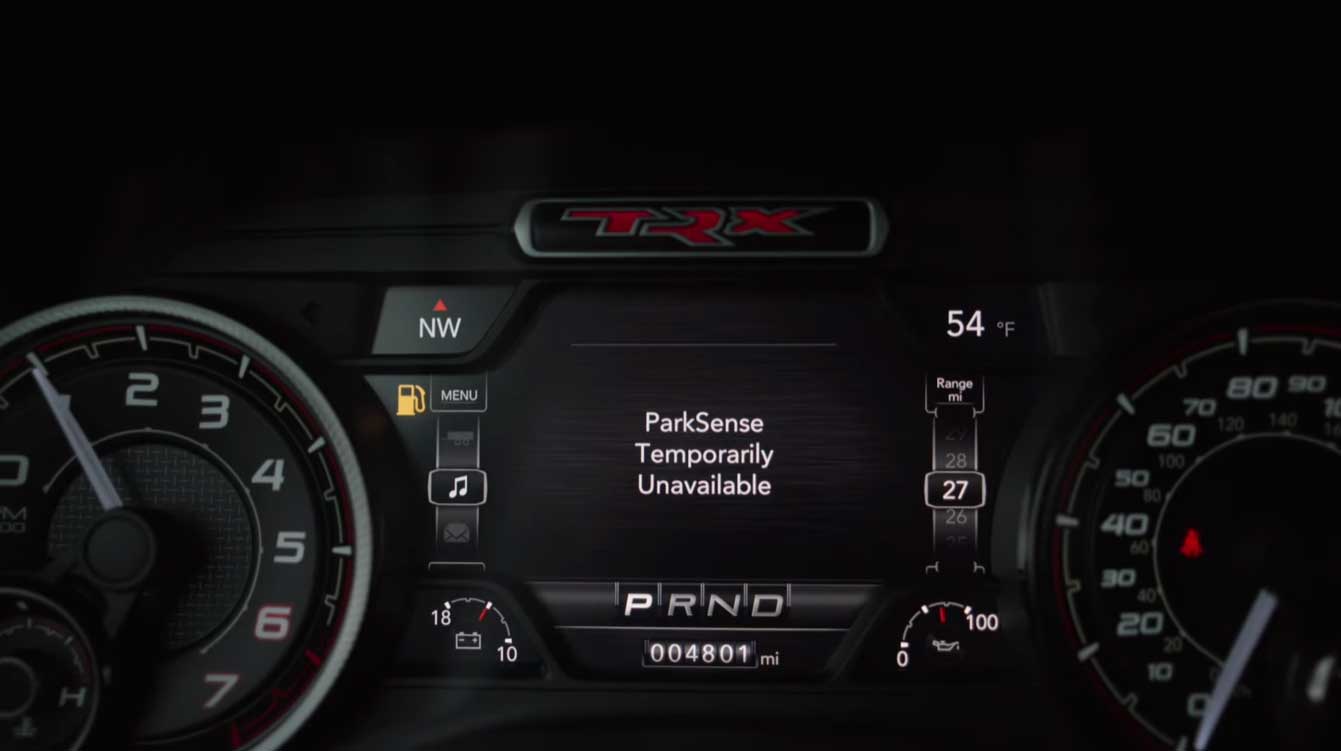
Your dashboard just flashed a warning: “ParkSense system unavailable.” Your heart sinks. You’re imagining a big repair bill. But here’s the truth: this message doesn’t always mean disaster. Sometimes it’s an easy fix. Sometimes it’s a sensor covered in dirt. Let me walk you through what’s really happening and what you can actually do about it.
What ParkSense Actually Is
ParkSense is Jeep and Chrysler’s parking sensor system. It uses small ultrasonic sensors mounted in your bumpers to detect objects behind or around your vehicle.
When you shift into reverse, these sensors wake up. They send out sound waves. When sound waves bounce off something—a car, a pole, a shopping cart—the sensors catch the bounce. The system calculates distance and alerts you with beeps or a screen display.
It’s designed to help you avoid backing into things you can’t see. But it’s not perfect. Sensors fail. Dirt blocks them. Electronics glitch.
Why Your ParkSense System Shows Unavailable
This message means the system detected a problem and shut itself off for safety. It won’t give you false alerts or drain power chasing a ghost problem. Here are the real reasons this happens.
Dirty or Blocked Sensors
This is the most common cause. Your bumper sensors get covered in mud, snow, salt, or road grime.
When sensors are dirty, they can’t hear the sound waves bounce back. The system realizes something’s wrong and disables itself rather than giving you bad information.
Look at your bumpers. Run your finger over the sensor areas. Feel caked-on dirt? That’s likely your culprit.
Location of sensors:
- Rear bumper: Usually 4 sensors spread across the width
- Front bumper (some models): 2 sensors, often near the edges
The sensors are small, round, dark plastic circles. On dark bumpers, they’re easy to miss.
Wiring Problems
Sensors connect to a control module via wiring. Over time, wires corrode, crack, or disconnect.
Road salt in winter is brutal for wiring. Salt spray eats through plastic insulation. Water finds its way into connectors. Corrosion builds up.
A loose connector at the bumper or a damaged wire harness will trigger the unavailable message.
Sensor Hardware Failure
Sometimes the sensor itself dies. An ultrasonic transducer inside wears out or electronics fail.
If you’ve cleaned the sensors and the wires look fine, a bad sensor is likely the cause.
Software or Control Module Glitch
Rarely, the control module that runs the system has an error. A software glitch can cause the system to disable itself.
In some cases, a battery disconnect and reconnect will reset the system. In others, it’s a dealer-level reprogram.
Water Damage
Heavy rain, flooding, or deep puddles can push water into sensor housings or connectors. Electronics short out. The system shuts down to protect itself.
If this happened during heavy rain or after you drove through standing water, water damage is worth investigating.
How to Troubleshoot It Yourself
You can fix this yourself if the cause is simple. Here’s the step-by-step approach.
Step 1: Visually Inspect All Sensors
Jack up your vehicle safely or use a pit if you have access. You need to see both bumpers clearly.
Look at every sensor. Count them. On most Jeeps, you’ll find 4 rear sensors and 2 front sensors.
Write down which ones look dirty, cracked, or obviously damaged. This tells you if it’s a single sensor problem or multiple.
Safety note: Use jack stands. Never rely on a jack alone. A falling vehicle kills people.
Step 2: Clean the Sensors
Use warm water and a soft cloth or sponge. Gently wipe each sensor. Don’t use high-pressure washers—water can force moisture into the housing.
Dry thoroughly with a microfiber cloth.
For stubborn dirt, use a soft brush (like an old toothbrush). A little car soap is fine. Avoid harsh chemicals.
After cleaning, shift into reverse in your driveway. Does the warning go away?
If yes: Problem solved. Cost: $0. Time: 10 minutes.
Step 3: Check Connectors
Look behind each bumper where the sensor wires connect. You’ll see plastic connectors.
Are they loose? Push them in firmly until you hear a click.
Do they look corroded (green or white crusty buildup)? If so, you may need to disconnect them and clean the contacts with a pencil eraser or contact cleaner.
After reconnecting, test the system again.
Step 4: Inspect Wiring
Follow the wiring from the bumpers toward the center of the vehicle. Look for:
- Cracks in the rubber insulation
- Pinched or crushed wires
- Signs of water or corrosion
- Wires pulled loose from clips
Small cracks can be wrapped with electrical tape temporarily. But if wires are severely damaged, they need replacing.
Step 5: Perform a System Reset
Disconnect the negative battery terminal for 15 minutes. This clears error codes and resets the control module.
Reconnect the terminal. Start the vehicle and test.
In some cases, this resolves software glitches. Most cases, though, you’ll get the same error again if there’s a hardware problem.
Common Mistakes Drivers Make
Ignoring the warning and driving anyway. You can drive fine without ParkSense. But it’s there for a reason. A disabled system is a red flag something’s wrong. Fix it.
Using a high-pressure washer on sensors. This forces water inside. It makes things worse. Use hand washing only.
Assuming it’s always the sensor. Drivers often buy replacement sensors unnecessarily. It’s usually dirty, corrosion, or a loose connector. Check those first.
Driving through deep water when you know ParkSense is failing. If the system is already malfunctioning due to water sensitivity, more water exposure will make it worse.
Leaving it broken for months. Corrosion gets worse. Wires deteriorate further. What costs $50 to fix today costs $400 next month.
When to Visit a Mechanic
Visit a mechanic if:
- You’ve cleaned the sensors and checked connectors, but the warning persists
- You see cracked wires you can’t repair yourself
- The front bumper needs removal to access sensors (some models)
- You’ve had water damage and the system won’t reset
- You’re uncomfortable working under the vehicle
A good independent mechanic will diagnose this in 30–45 minutes. They’ll charge you $75–$150 for diagnostics.
A Jeep/Chrysler dealer will charge $100–$200 for the same work.
Costs and Repair Timeline
Cleaning (DIY): $0–$15 (cleaning supplies). Time: 30 minutes.
Connector replacement (mechanic): $50–$150 parts and labor. Time: 1 hour.
Sensor replacement (one sensor): $150–$300 parts and labor. Time: 1–2 hours.
Sensor replacement (multiple): $400–$800. Time: 2–4 hours.
Wiring harness replacement: $300–$600. Time: 2–3 hours.
Control module replacement: $400–$1,000+. This is rare. Time: 2–4 hours.
Dealer vs. independent shop: Dealers are usually 20–30% more expensive. But they have factory parts and software. Use a dealer if you suspect a control module issue. Use an independent shop for sensors, wiring, and connectors.
FAQ
Q: Can I drive without ParkSense?
A: Yes. The system is a convenience feature, not a safety requirement for driving. You can drive normally. You’ll just lose the parking assist until it’s fixed. Be extra careful when reversing.
Q: Will ParkSense fail again after I fix it?
A: Not usually. If you cleaned dirty sensors, they’ll stay clean unless you drive through mud regularly. If it was a corroded connector, replacing it solves the problem. If it was a bad sensor, a new one will work fine. The only exception: if you live in a very wet climate or drive through water frequently, you might have recurring issues.
Q: Does ParkSense affect my warranty?
A: If your vehicle is under manufacturer’s warranty, repairs may be covered. Check your documentation. An independent mechanic won’t void your warranty for ParkSense repairs. A dealer repair definitely won’t. Don’t worry about this.
Q: How long does it take to fix?
A: If it’s a DIY sensor cleaning, 30 minutes. If a mechanic needs to diagnose and replace a sensor, 1–2 hours. If it’s wiring or a control module, 2–4 hours. Most shops will have you in and out in a day, often a few hours.
Q: Is ParkSense expensive to fix?
A: Not usually. Most repairs run $100–$300. Full sensor replacement on both bumpers might reach $500–$800. Control module replacement is rare and costly ($800+), but that’s uncommon. The average fix is under $300 if you use an independent mechanic.
Q: What if I ignore it and don’t fix it?
A: Nothing catastrophic happens. The system stays off. You lose the parking alerts. But your car runs fine. It’s not a safety hazard unless you rely heavily on ParkSense. I’d recommend fixing it anyway. It’s cheap peace of mind, and resale value might take a small hit if a future buyer sees warning lights.
Q: Can I turn off ParkSense myself?
A: On some Jeep models, you can disable it through the settings menu. But if the system is showing “unavailable,” it’s already disabled. You can’t override a hardware failure with software. That said, if you find the warning annoying and the system is working fine, check your infotainment settings to see if there’s a disable option.
Bottom Line
“ParkSense system unavailable” usually means something simple: dirty sensors, a loose connector, or a corroded wire. Start by cleaning the bumper sensors thoroughly. Check connectors for corrosion or loose fits. Disconnect the battery for 15 minutes to reset the system.
If that doesn’t work, a mechanic can diagnose the real problem in under an hour for $75–$150.
Most repairs cost under $300. It’s worth fixing because parking assist is genuinely useful, and a working system improves resale value.
Don’t ignore the warning forever, but don’t panic either. This is a fixable problem that doesn’t require dealer prices or complicated work.
Clean your sensors this weekend. Odds are good your ParkSense comes back online and this article becomes unnecessary.