
Monday to Saturday - 9:00 am -18:00 pm

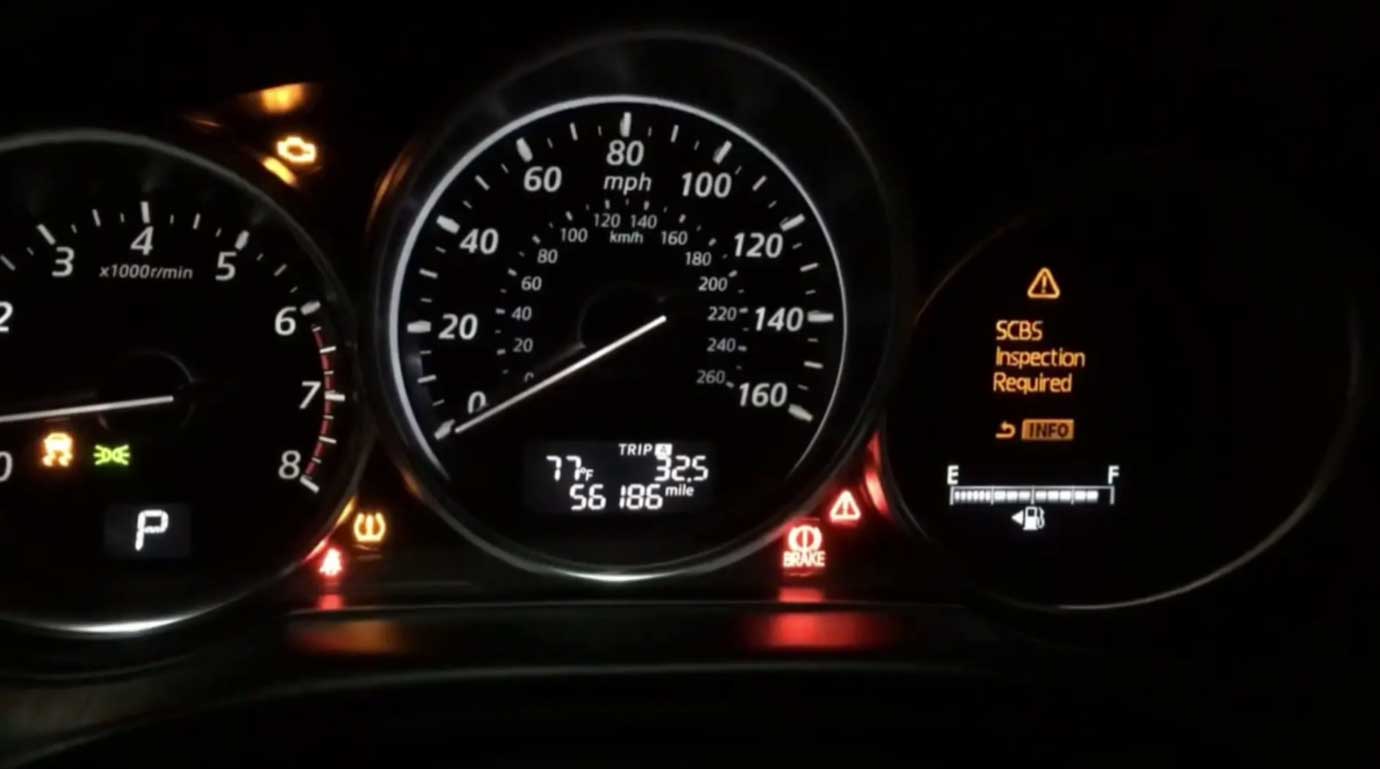
The SCBS inspection required warning on your dashboard can worry you fast. You’re driving, a light pops up, and suddenly you’re wondering if something is seriously wrong with your car. The good news? Most SCBS problems are fixable and many are simple.
In this guide, I’ll explain exactly what SCBS is, why the warning appears, what it costs to fix, and what you should do right now.
What SCBS Actually Is
SCBS stands for Smart City Brake Support.
It’s a safety feature in many newer Mazda cars. Think of it as an extra set of eyes on the road. The system watches for objects and other vehicles ahead of you. If you’re going slow (between 2 and 19 miles per hour), SCBS can automatically apply your brakes to prevent or soften a collision.
This matters most in city driving. You’re in traffic. A car stops suddenly. SCBS detects it and primes your brakes to react faster than you could.
How it works:
- A laser sensor sits at the top of your windshield, right in the center
- Another sensor is in the front grille
- These sensors scan the road ahead
- If a collision is about to happen, the system tightens your brakes
- Your car stops faster
You don’t press the brakes. The system does it for you.
Why You’re Seeing the Warning
When your dashboard shows “SCBS Inspection Required,” it means the system has detected a problem. The system itself is not working right.
Here are the main reasons this happens:
1. Dirty or Blocked Sensors
This is the most common cause.
Your windshield sensor gets covered with:
- Dirt and dust
- Road grime
- Bird droppings
- Water spots or fog
- Snow or ice
- Window tint residue
When the sensor can’t see clearly, it can’t do its job. The system shuts down and warns you.
2. A Faulty Sensor
Sometimes the sensor is damaged.
This happens from:
- A crack in the windshield
- Impact damage
- Age and wear
- Corrosion
- Internal failure
3. Problems with the Brake System
SCBS relies on your regular brakes to work.
If your brake system has issues, SCBS stops working:
- Low brake fluid
- Worn brake pads
- ABS sensor failure
- Brake system faults
4. Wheel Speed Sensors
Your car has sensors at each wheel.
These tell your ABS (Anti-lock Braking System) how fast each wheel is spinning. SCBS uses this info too. If a wheel speed sensor fails, SCBS can’t function properly.
5. Electrical or Computer Issues
Rarely, the problem is deeper:
- A blown fuse
- Bad wiring connection
- Software glitch
- Computer module malfunction
6. Recent Work on Your Car
Sometimes SCBS warnings appear after:
- Window tinting
- Windshield replacement
- Sensor calibration issues
- Other mechanic work
Can You Still Drive?
Yes, you can drive with an SCBS warning.
But you shouldn’t ignore it. Here’s what happens:
Your SCBS system is disabled. That means you lose automatic collision prevention. In low-speed city driving, you’re more vulnerable to accidents. The safety net is gone.
Many newer Mazdas apply a speed limiter when SCBS fails. Your car may not go above 40 mph. This forces you to get it fixed quickly.
Is it safe to drive?
- Your regular brakes still work fine
- Your steering still works fine
- Everything except the automatic collision prevention works
- Short trips to a mechanic are okay
- Long-distance driving is not recommended
You’re driving without one safety feature, but other systems still protect you.
Quick Fixes You Can Try First
Before you spend money at a dealership, try these simple steps. Many SCBS warnings clear themselves after one or two of these.
Step 1: Clean the Sensors
This solves the problem about 50% of the time.
What you need:
- Soft, lint-free cloth
- Mild soap and water
- Your hands
How to do it:
- Turn off your car
- Look at the top center of your windshield from outside
- You’ll see a small sensor array (it looks like a small black box or cluster)
- Gently wipe it with the soft cloth and soapy water
- Dry it completely
- Do the same for the front grille sensor (center, below the hood emblem)
- Turn your car back on
Important: Never use a scraper, brush, or rough cloth. You can damage the sensor.
Step 2: Restart Your Car
Sometimes a simple reset works.
- Turn off the engine
- Wait 15 to 30 minutes
- Turn it back on
This clears temporary glitches from the computer.
Step 3: Check Your Windshield
Make sure nothing is blocking the sensor.
- Move any objects from the dashboard
- Check for window tint covering the sensor
- Wipe away condensation or fog
- Check for reflections from objects inside
Step 4: Check Your Brake Fluid
Low brake fluid can trigger SCBS warnings.
- Pop your hood
- Look for the brake fluid reservoir (a translucent container)
- Check the level against the min/max marks
- If it’s low, top it up with the correct brake fluid for your Mazda
Don’t guess the fluid type. Check your owner’s manual.
Step 5: Disconnect the Battery
A full system reset sometimes works.
- Turn off the car
- Disconnect the negative terminal on your battery
- Wait 15 minutes
- Reconnect it
- Start the car
This clears all stored codes and resets the computer.
Note: This may erase other settings in your car. Your radio presets, for example, might reset.
Professional Repairs & Costs
If the quick fixes don’t work, you need a mechanic or dealership.
Diagnostic Scan
A mechanic uses a computer to scan your system.
Cost: $100 to $200 (about one hour of labor)
This identifies exactly what’s wrong. Without this, mechanics are guessing.
What happens:
- Technician plugs in a diagnostic scanner
- Scanner pulls fault codes from your car’s computer
- Codes tell exactly which component is failing
- Mechanic can now give you a real repair estimate
Sensor Replacement
If your windshield sensor is broken, it needs replacing.
Cost: $500 to $1,500
This includes the sensor and labor. Prices vary by:
- Your Mazda model
- Dealership vs. independent shop
- Your location (city costs more than rural)
Why it’s expensive:
- The sensor is sensitive and precise
- It must be calibrated after installation
- Labor is high because of calibration time
Wheel Speed Sensor Replacement
If an ABS wheel speed sensor is bad, replacing it costs less.
Cost: $200 to $500 per wheel
There are usually four sensors (one per wheel). You might only need one replaced.
Brake System Repairs
If your brakes have issues, costs vary widely.
Possible repairs:
- Brake fluid flush: $150 to $300
- Brake pad replacement: $300 to $800 (all four wheels)
- ABS module repair: $500 to $2,000
Your mechanic will tell you exactly what’s needed after diagnosis.
Software Updates
Sometimes Mazda issues software updates that fix SCBS bugs.
Cost: Often free
Ask your dealership if updates are available for your model year. Some SCBS warnings disappear after an update.
What a Dealership vs. Independent Shop Will Charge
Mazda Dealership:
- Diagnostic scan: $100 to $150
- Sensor replacement: $600 to $1,800
- Labor rates: $100 to $180 per hour
Dealerships charge more but have factory parts and specialized training.
Independent Mechanic Shop:
- Diagnostic scan: $80 to $120
- Sensor replacement: $400 to $1,200
- Labor rates: $60 to $120 per hour
Shops are cheaper but may not have all factory parts available.
Both should give you a written estimate before work starts.
Common Mistakes Drivers Make
I’ve seen these problems repeatedly in my 20 years as a mechanic.
Mistake 1: Ignoring the Warning
“It’s just a light. I’ll deal with it later.”
Your SCBS won’t get better on its own. It will get worse. You’ll lose the safety feature for weeks or months. One accident could have been prevented.
Take action within a week.
Mistake 2: Disconnecting the Battery Repeatedly
Drivers think restarting will fix it.
Doing this over and over doesn’t help. You’re just clearing the warning temporarily. The problem is still there.
Only disconnect once. If it doesn’t work, get a diagnostic scan.
Mistake 3: Using Harsh Cleaners
“I’ll use my windshield washer aggressive cleaner.”
Harsh chemicals and rough cloths damage sensors.
Use only soft cloths and mild soap and water.
Mistake 4: Ignoring Speed Limits
“The car says 40 mph but I’ll drive faster anyway.”
If your car limits speed to 40 mph because of SCBS failure, respect that. The system is protecting you. Forcing it creates safety risks and could void your warranty.
Mistake 5: Covering Up the Sensor
“I’ll just block it with something.”
Some drivers try to hide the warning with tint or stickers. This makes the problem worse and can damage the sensor.
Never cover the sensor.
Mistake 6: Assuming It’s Not Serious
“My regular brakes work fine, so this can’t be a big deal.”
SCBS is a safety system. It’s there for a reason. Ignoring it puts you at risk.
Treat it like a real problem because it is.
FAQ: What Readers Really Ask
Q: Will the warning light go away on its own?
A: Rarely. In 90% of cases, you need to fix the problem. Sensors don’t heal themselves. The warning persists until you address the root cause.
Q: Can I reset the warning light myself?
A: You can clear it temporarily with a battery disconnect, but it comes back. The real problem is still there. Only fixing the actual issue makes it stay off.
Q: Is SCBS really necessary?
A: It’s a safety feature, not essential like brakes. But it’s designed to prevent accidents in city driving. Most people want it working.
Q: What happens if I drive long distances with the warning?
A: Your regular brakes work fine for long trips. But you lose collision prevention. A 500-mile road trip with SCBS off is okay. Daily city driving without it is risky.
Q: Will my insurance cover the repair?
A: No. SCBS repairs are maintenance and repairs, not accidents. Your comprehensive or collision insurance won’t cover it. Only your own warranty (if you have one) might help.
Q: How long does a repair take?
A: Sensor cleaning: 15 minutes. Sensor replacement: 2 to 4 hours. Full brake system diagnosis and repair: 2 to 8 hours, depending on what’s wrong.
Q: Can I prevent this warning?
A: Yes. Keep your windshield clean, especially the sensor area. Don’t let the windshield fog up. Get regular brake maintenance. Have wheel speed sensors checked during tire rotations.
Q: Does every Mazda have SCBS?
A: No. SCBS comes standard on newer models (2013 and up, typically). Older Mazdas don’t have it. Check your manual to see if your car has it.
What to Do Right Now
Today:
- Stop driving long distances
- Try the cleaning steps in this guide
- Restart your car and see if the warning clears
- Write down exactly when the warning started (helps your mechanic)
This Week:
- Book an appointment at your dealership or trusted mechanic
- Get a diagnostic scan ($100 to $200)
- Get a written estimate before work begins
- Ask about warranty on parts and labor
Before You Pay:
- Get the scan results in writing
- Ask why this specific problem occurred
- Compare prices between dealership and independent shop
- Ask about preventive steps to avoid it again
The Bottom Line
An “SCBS Inspection Required” warning is fixable. It costs between $200 (for cleaning and diagnosis) to $1,500 (for sensor replacement). Most problems come from dirty sensors, which you can clean for free.
Don’t ignore it. Don’t panic either. Get it diagnosed this week, get a quote, and get it fixed. Your safety systems matter.
Your regular brakes will work the whole time. You’re not in danger. You just need to restore this one safety feature.
If you have questions about your specific situation, comment below or take photos of your warning light and ask your mechanic about it during your appointment.
Stay safe out there.