
Monday to Saturday - 9:00 am -18:00 pm


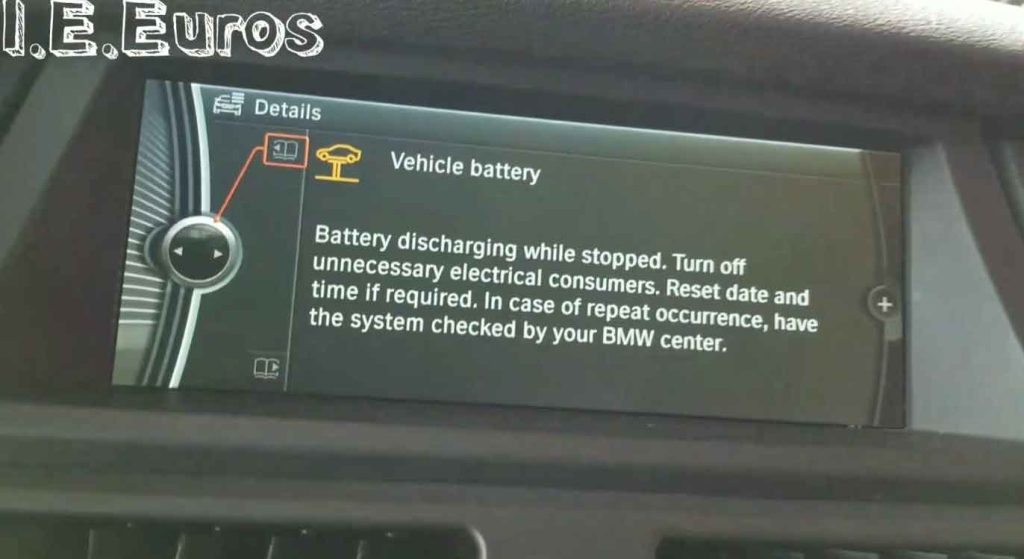
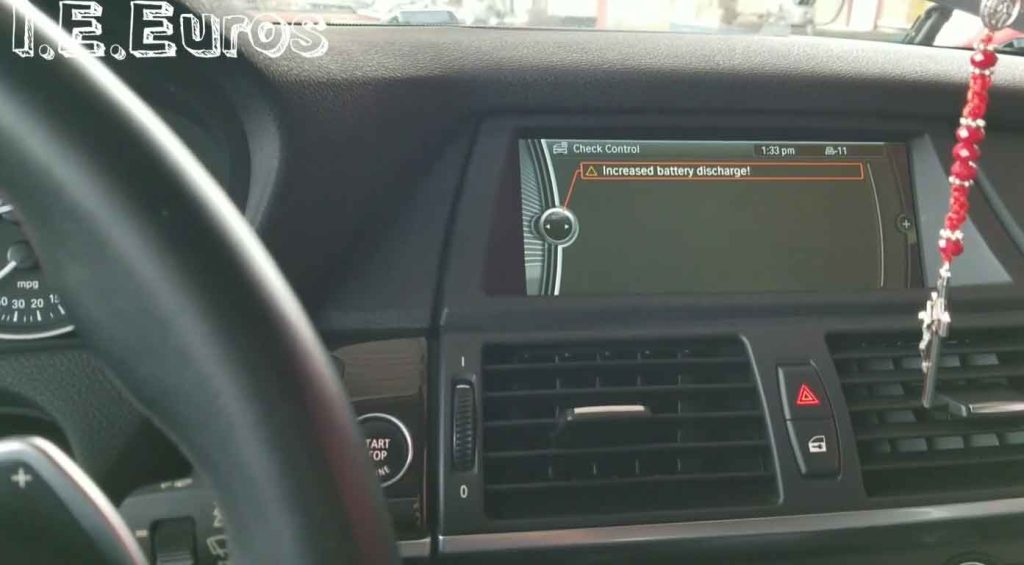
Have you seen the “increased battery discharge” message pop up on your BMW’s dashboard?
Don’t panic. This is a common problem I see in my shop almost every week. The good news is that you can fix it yourself in most cases.
I’ve been working on BMWs for over 12 years. In that time, I’ve handled hundreds of battery discharge cases. Today, I’ll walk you through everything you need to know. You’ll learn what causes this warning and how to fix it step by step.
Let’s get your BMW running smoothly again.
What Does “Increased Battery Discharge” Actually Mean?
This warning tells you that your battery is losing power too fast. Even when your car sits still, the battery keeps draining.
Your BMW needs at least 12.6 volts to run properly. When it drops below this number, the warning appears.
Here’s what happens inside your car:
- The battery voltage drops too low
- The computer system detects this problem
- It shows you the warning message
- Some electrical features shut off automatically
The car does this to save power. It wants to make sure you can still start the engine.
If you ignore this warning, your battery will die completely. Then your car won’t start at all.
Why Your BMW Battery Keeps Draining (Common Causes)
From my years under the hood, I’ve found that a few problems cause most battery drain issues. Let me break them down for you.
Old or Dying Battery
This is the number one culprit I see in my garage.
A car battery typically lasts 4 to 5 years. After that, it starts losing its ability to hold a charge. Think of it like an old phone battery that dies faster each year.
When I service a car like this, I use my NOCO digital voltmeter to check the battery health. If the voltage reads below 12.4 volts when the engine is off, there’s usually a problem.
Signs your battery is failing:
- Engine cranks slowly when starting
- Battery terminals have white or green crusty buildup
- The battery case looks swollen or cracked
- Dashboard lights flicker
- Voltage bounces between 11 and 15 volts
Broken Intelligent Battery Sensor (IBS)
Your BMW has a smart sensor attached to the battery. We call it the IBS.
This little device tracks three things:
- Battery voltage
- Current flow
- Temperature
When the IBS breaks, it sends wrong information to your car’s computer. The computer thinks the battery is fine when it’s actually dying.
I once had a 2015 BMW 5 Series come in with this exact problem. The owner kept charging the battery, but the warning kept coming back. We replaced the IBS, and the problem disappeared.
How to spot a bad IBS:
- Error codes show up during diagnostic scans
- Battery readings jump around randomly
- Car has trouble starting even with a good battery
- Charging system acts weird
Using Too Many Electronics When Parked
In my shop, I see this a lot with younger drivers.
They sit in their parked BMW with the engine off. They’re charging phones, using the radio, and watching videos on the screen. All this drains the battery fast.
Your alternator only charges the battery when the engine runs. When the engine is off, everything runs purely on battery power.
High-drain devices to watch:
- Aftermarket sound systems
- Phone chargers
- Seat heaters
- Interior lights
- Infotainment screens
Parasitic Drain Problems
Some electrical parts keep drawing power even when your car is “off.” This is normal for things like your clock and alarm system.
But sometimes, components don’t shut down properly. They keep sucking power all night long.
Common parasitic drain culprits:
- Trunk lights that stay on
- Glove box lights stuck on
- Aftermarket alarms
- Bad door switches
- Faulty control modules
I use my ANCEL automotive multimeter to test for parasitic draw. If it shows more than 50 milliamps with everything off, something is wrong.
Freezing Cold Weather
Cold temperatures kill batteries faster. I see this every winter in my area.
When it’s freezing outside, your battery loses about 35% of its power. The chemical reactions inside slow way down.
Your BMW knows this. It automatically turns off some features to save power in cold weather. That’s why you might see the warning more often in winter.
Winter battery tips:
- Keep a portable jump starter in your trunk
- Park in a garage when possible
- Take longer drives to recharge the battery
- Consider a battery blanket for extreme cold
Electrical System Faults
Your BMW has dozens of electrical parts. Any one of them can cause battery drain if it fails.
Common electrical problems I find:
- Blown fuses
- Corroded wiring connections
- Bad alternator
- Faulty starter motor
- Short circuits in wiring
These problems need professional diagnosis. The electrical system is complex and requires special tools.
Taking Only Short Trips
This surprises many BMW owners.
Your alternator needs time to recharge the battery after starting the car. Starting the engine uses a lot of power.
If you only drive 5 to 10 minutes at a time, the battery never fully recharges. Over weeks, this adds up. The battery gets weaker and weaker.
I tell my customers to take a 20-minute highway drive once a week. This gives the alternator time to fully charge the battery.
How to Fix Increased Battery Discharge (Step by Step)
Now let’s fix your problem. Follow these solutions in order.
Step 1: Test Your Battery
You need to know if your battery is good or bad.
What you need:
- Digital multimeter (I recommend the Fluke 117)
- Wire brush
- Safety gloves
How to test:
- Turn off your car completely
- Wait 2 hours (this lets the battery rest)
- Set your multimeter to DC voltage
- Touch the red probe to the positive (+) terminal
- Touch the black probe to the negative (-) terminal
- Read the voltage
What the numbers mean:
- 12.6 volts or higher = Good battery
- 12.4 to 12.6 volts = Battery needs charging
- Below 12.4 volts = Battery is weak or dying
While you’re there, check the terminals. Clean off any corrosion with a wire brush. Tight, clean connections are important.
Step 2: Replace Your Battery If Needed
If your battery failed the test, you need a new one.
Choosing the right battery:
- Check your BMW owner’s manual for specs
- Match the cold cranking amps (CCA) rating
- Get an AGM battery if your car came with one
- Buy from reputable brands like Bosch, Varta, or OEM BMW
Important note: After installing a new battery, you must register it with your BMW’s computer. This is crucial. The car needs to know it has a fresh battery so it can adjust the charging system.
You can register the battery yourself with an OBD2 scanner that supports BMW coding. Or visit a BMW specialist to do it for you.
Step 3: Check the Intelligent Battery Sensor
The IBS sits on the negative battery cable. It’s a small black box.
Look at it closely. Check for:
- Cracks in the housing
- Loose connections
- Corrosion on the contacts
- Physical damage
If it looks damaged, replace it. A new IBS costs about $50 to $100.
After replacing the IBS, you need to code it to your car. Use a BMW-compatible scanner or visit a shop.
Step 4: Test for Parasitic Draw
This test shows if something is draining your battery when it shouldn’t.
You’ll need:
- Digital multimeter with 10-amp capability
- 30 minutes of time
How to test:
- Turn off your car and remove the key
- Close all doors and trunk
- Wait 20 minutes (this lets modules go to sleep)
- Disconnect the negative battery cable
- Connect your multimeter in series between the cable and terminal
- Set the meter to measure amps
- Read the current draw
What you should see:
- Below 50 milliamps = Normal
- 50 to 100 milliamps = Slightly high but usually okay
- Above 100 milliamps = Problem found
If the draw is too high, start pulling fuses one by one. When the draw drops, you’ve found the problem circuit.
Step 5: Limit Accessory Use
This is the easiest fix.
Simple rules to follow:
- Don’t use electronics with the engine off
- Turn off all lights when you park
- Unplug phone chargers when not in use
- Close all doors fully (this turns off interior lights)
- Switch off the infotainment system before shutting down
Step 6: Change Your Driving Habits
If you only take short trips, your battery never gets fully charged.
Better driving habits:
- Take one longer drive each week (20+ minutes)
- Use highway speeds when possible (alternator charges better at higher RPM)
- Combine multiple short trips into one longer trip
- Let the car idle for a few minutes after a cold start
Step 7: Inspect the Entire Electrical System
Sometimes the problem is hidden deep in the wiring.
Check these components:
- Alternator output (should be 13.5 to 14.5 volts with engine running)
- Drive belts for wear or slipping
- Fuse box for blown fuses
- Wiring harness for damage or rodent chewing
- Ground connections for corrosion
This is where you might need professional help. I use a professional scan tool (like Launch X431 or Autel MaxiSys) to check all the modules for error codes.
Step 8: Update Your Car’s Software
Sometimes a software bug causes the warning.
BMW releases updates that fix known problems. Your car’s computer might need new programming.
Visit a BMW dealership or independent BMW specialist. They can check if updates are available for your specific model.
This usually costs $100 to $200 but can solve mysterious electrical problems.
Warning Messages by BMW Model
Different BMW models show different messages. But they all mean the same thing.
Here’s what you might see on your dashboard:
BMW 3 Series: “Battery Discharging while stopped. Turn off unnecessary electrical consumers.”
BMW 5 Series: “Increased battery discharge when stationary. The electrical consumer was temporarily switched off.”
BMW X1: “Battery discharging while stopped. Electrical devices were temporarily switched off.”
BMW X3: “The vehicle battery charge is low. Charge by driving for longer periods or using an external charger.”
BMW X5: “Increased battery discharge while stationary. Electrical consumers were temporarily switched off.”
BMW 7 Series: “Increased battery discharge. Electrical devices have been switched off.”
All these messages point to the same battery drain problem.
Can You Drive With This Warning?
I get asked this question every day in my shop.
The short answer is yes, but not for long.
Here’s what happens:
- Your car automatically shuts off non-essential features
- You can still drive and steer normally
- The engine will still run
- But your battery keeps getting weaker
You should:
- Drive home or to a repair shop
- Avoid long trips
- Don’t turn the car off until you reach your destination
- Get it checked within a day or two
Don’t:
- Ignore the warning for weeks
- Take long road trips
- Leave the car sitting for days
- Use high-power accessories
If your battery dies completely while driving, you could lose power steering and brakes. This is dangerous.
How to Prevent Battery Discharge in the Future
Prevention is easier than repair.
Follow these tips from my years of experience:
Regular maintenance:
- Test your battery every 6 months
- Clean battery terminals twice a year
- Check alternator output annually
- Replace battery every 4 to 5 years
Smart driving:
- Take longer drives regularly
- Don’t let your car sit for weeks without starting
- Drive it at least once a week
- Use a battery tender if storing the car
Electrical care:
- Remove aftermarket accessories if they cause problems
- Fix electrical issues immediately
- Keep spare fuses in your car
- Watch for dimming lights or slow starts
Winter preparation:
- Use a battery with high cold cranking amps
- Park in a garage when possible
- Keep a portable jump starter handy
- Consider a battery warmer in extreme cold
When to See a Professional Mechanic
Some problems need expert help.
Visit a BMW specialist if:
- You’ve tried these fixes but the warning keeps coming back
- You don’t have tools to test the battery properly
- You found a parasitic draw but can’t locate the source
- Error codes appear on your dashboard
- The battery is less than a year old but keeps dying
- You’re not comfortable working on your car
What a professional can do:
- Run complete electrical system diagnostics
- Test all modules for problems
- Check for software updates
- Properly register a new battery
- Find hidden electrical faults
A proper diagnosis usually costs $100 to $150. It’s worth it to find the real problem instead of guessing.
My Final Thoughts
The “increased battery discharge” warning is common in BMWs. I’ve fixed this problem hundreds of times.
Most cases come down to a simple cause:
- Old battery that needs replacement
- Broken intelligent battery sensor
- Too much accessory use when parked
- Short trips that don’t recharge the battery
Start with the simple fixes first. Test your battery. Check for obvious problems. Change your driving habits.
If those don’t work, dig deeper. Look for parasitic draws. Check the electrical system. Get professional help if needed.
The key is to act quickly. Don’t let a small problem become a dead battery that leaves you stranded.
With the right approach, you’ll have your BMW back to normal in no time.
Frequently Asked Questions
Why does my BMW show increased battery discharge when I park?
Your battery is losing power faster than normal. The car detects this and warns you. It then shuts off some electrical features to save energy for starting the engine.
What causes the battery discharge warning in BMW?
Common causes include old batteries, faulty sensors, electrical system problems, too much accessory use, parasitic drains, and cold weather. You need to test each possibility to find your specific problem.
How can I stop my BMW battery from draining when parked?
Turn off all electronics when you park. Don’t use the radio or charge phones with the engine off. Close all doors properly. Take longer drives to fully recharge the battery. Fix any electrical problems right away.
How do I know when my BMW battery needs replacing?
Check for these signs: slow engine cranking, dim headlights, battery older than 4 years, frequent discharge warnings, and voltage below 12.4 volts. If you see these, replace your battery soon.
Is it safe to drive with the battery discharge warning?
You can drive short distances to get home or to a repair shop. But don’t take long trips. The battery will keep getting weaker. Eventually, it might die while you’re driving. Get it checked within a day or two.
Can a software update fix BMW battery discharge issues?
Yes, sometimes. Software bugs can cause false warnings or improper battery management. BMW releases updates to fix these problems. Visit a dealer or BMW specialist to check for available updates.
How much does it cost to fix increased battery discharge?
It depends on the cause. A new battery costs $200 to $400. An IBS sensor costs $50 to $100. Professional diagnosis runs $100 to $150. Electrical repairs vary based on the problem. Start with testing to know what you need.
Will disconnecting the battery reset the warning?
Disconnecting the battery might clear the warning temporarily. But if the underlying problem still exists, the warning will come back. You need to fix the actual cause, not just reset the warning.