
Monday to Saturday - 9:00 am -18:00 pm

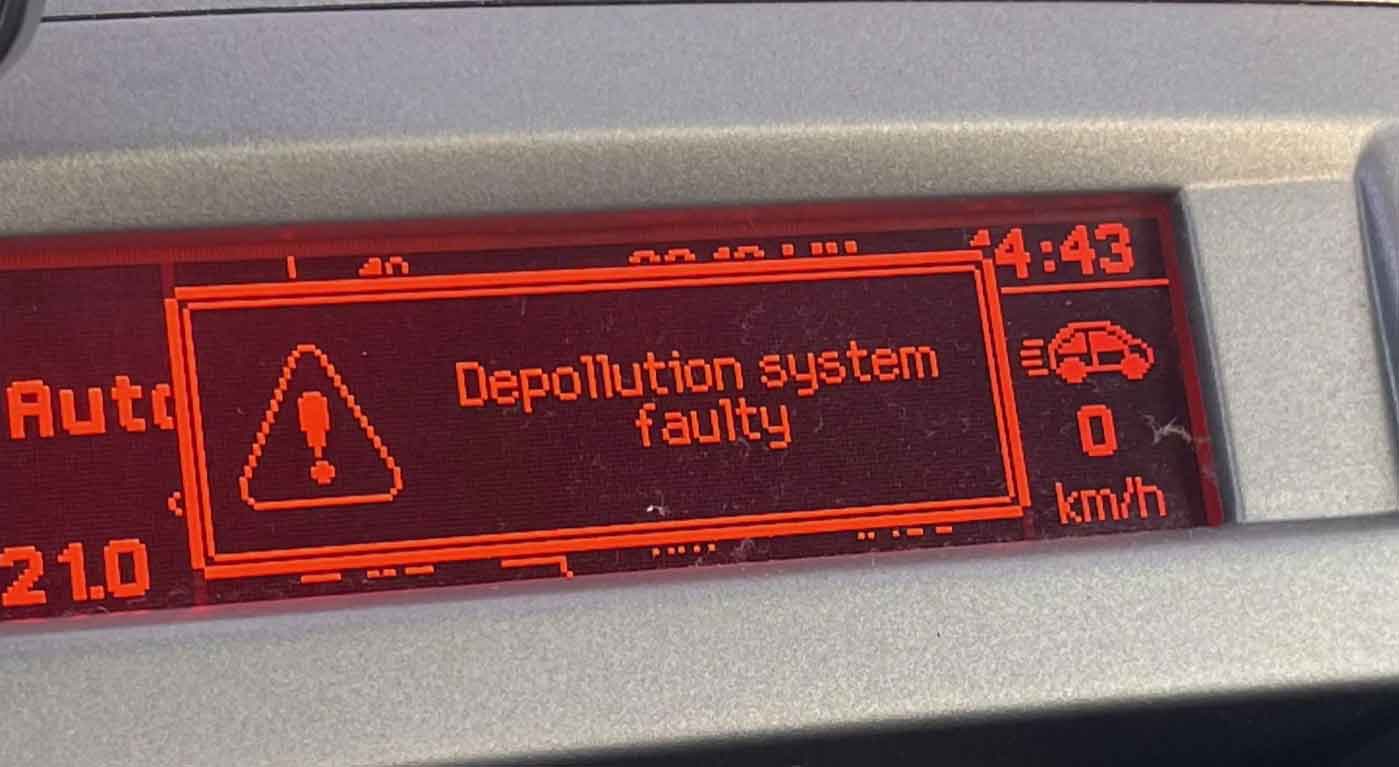
Have you seen a “Depollution System Faulty” message pop up on your Peugeot 307 dashboard? This warning light can be scary at first.
But don’t panic. This alert tells you that something is wrong with your car’s emission system. The good news is that you can often fix it yourself.
In my shop, I see this problem all the time on Peugeot 307 models. After working on hundreds of these cars, I know exactly what triggers this warning. I’ll walk you through everything you need to know.
Let’s dive into what causes this issue and how to solve it step by step.
What is the Depollution System?
Your car burns fuel to run. When fuel burns, it creates dirty exhaust gases. These gases include harmful stuff that hurts the air we breathe.
The depollution system is your car’s way of cleaning up these gases. It’s basically a pollution control system. Think of it as your car’s air filter for the outside world.
This system catches bad chemicals before they leave your exhaust pipe. It turns them into safer substances. Without it, your car would pump toxic fumes straight into the air.
Every modern car has this system. It’s not just good for the planet. It’s also required by law in most places.
Understanding the Fault Message
When your Peugeot 307 shows “Depollution System Faulty,” something in the emission system isn’t working right. The car’s computer has picked up a problem.
Here’s the tricky part. This system has many different parts. So the warning doesn’t tell you exactly what’s broken. It just says something is wrong somewhere.
From years under the hood, I’ve learned that finding the exact problem takes detective work. You need to check several components one by one.
The emission system has about five major parts. Any one of them can trigger this warning. Sometimes it’s even a false alarm from a computer glitch.
Key System Parts Explained
Let me break down the main components that keep your emissions clean. Understanding these parts helps you figure out what might be wrong.
Catalytic Converter
This is a metal box in your exhaust system. Inside are special materials that work like a chemical filter.
The converter changes nasty gases into safer ones. It removes carbon monoxide, nitrogen oxides, and unburned fuel. These get turned into water vapor and carbon dioxide.
When I service a car like this, a bad converter usually shows up as poor engine performance. The car feels sluggish and uses more gas.
Fuel Delivery Parts
Your fuel system includes the fuel filter, fuel injectors, and related components. These control how fuel gets into the engine.
Clean fuel means clean burning. Dirty or clogged parts cause incomplete combustion. That creates extra emissions and triggers warnings.
Oxygen Sensors
These small sensors sit in your exhaust pipe. They measure how much oxygen is in the exhaust gases.
Your car’s computer uses this info to adjust the fuel mixture. A faulty sensor gives wrong readings. Then your engine runs too rich or too lean.
In my experience, oxygen sensors are one of the most common culprits. They’re also pretty easy to replace.
DPF (Diesel Particulate Filter)
If you have a diesel Peugeot 307, you have this filter. It catches soot particles from diesel exhaust.
The DPF traps tiny black particles that would otherwise blow out the tailpipe. Over time, it fills up and needs to regenerate or be cleaned.
EGR Valve (Exhaust Gas Recirculation)
This valve sends some exhaust gas back into the engine. Sounds weird, right? But it actually reduces nitrogen oxide emissions.
The EGR valve recycles exhaust to lower combustion temperatures. When it gets stuck or clogged, emissions go up and performance drops.
Common Causes Behind the Warning
Now let’s talk about what actually goes wrong. Here are the main problems I see in my shop.
Bad Oxygen Sensors
Oxygen sensors wear out over time. They get covered in carbon deposits. This makes them give false readings to your car’s computer.
When the sensor fails, your fuel mixture goes wrong. You’ll burn too much or too little fuel. Either way, emissions shoot up and the warning light comes on.
Checking oxygen sensors is easy with a diagnostic scanner. You can also inspect them visually for damage or heavy carbon buildup.
Vacuum System Leaks
Your engine has rubber hoses and gaskets that create vacuum pressure. If these crack or come loose, air leaks in where it shouldn’t.
Extra air throws off the fuel mixture. The engine runs lean (too much air, not enough fuel). This triggers the depollution fault message.
Listen for hissing sounds near the engine. That’s often a vacuum leak talking.
Failing Catalytic Converter
A worn-out catalytic converter can’t clean exhaust gases properly. The inside material breaks down after many miles of use.
You might hear a rattling noise from underneath the car. That’s pieces of the catalyst breaking loose inside. Performance drops too.
Replacing a catalytic converter isn’t cheap. But it’s necessary when it fails.
Clogged Diesel Particulate Filter
For diesel models, a blocked DPF is a very common cause. Soot builds up over time, especially on short trips.
A clogged DPF causes lots of problems. You’ll see black smoke from the exhaust. The engine might go into limp mode. Fuel economy gets worse.
Sometimes a forced regeneration clears it. Other times you need a new filter.
Computer Software Issues
Sometimes the car’s computer itself acts up. A software bug can trigger false warnings even when everything is fine.
An outdated ECU (Engine Control Unit) program might not recognize newer parts. Or a glitch makes it see problems that aren’t there.
A simple software update at the dealer can fix these false alarms.
Fuel System Problems
Dirty fuel filters, failing injectors, or contaminated fuel can all cause emission problems. When fuel doesn’t burn cleanly, you get extra pollution.
Fuel injectors get clogged over time. They spray fuel in the wrong pattern. This leads to incomplete burning and higher emissions.
How to Fix and Reset the Issue
Fixing this problem takes two main approaches. You can use diagnostic tools or do hands-on inspection. Let me explain both.
Using Diagnostic Tools
The fastest way to find the problem is with a scan tool. I always start with an OBD-II scanner in my shop.
You can buy an OBD-II scanner online for about $30 to $200. The cheaper ones work fine for basic codes. Plug it into the port under your dashboard.
The scanner reads trouble codes from your car’s computer. These codes point to specific problems. For example, P0420 means catalytic converter issue.
Write down all the codes you see. Then look them up online or in a repair manual. This tells you exactly what needs fixing.
You can do this yourself at home. Or take your car to a mechanic or auto parts store. Many stores scan codes for free.
Manual Inspection by a Professional
A trained mechanic can inspect the system by hand. We look at each part carefully for signs of damage or wear.
When I inspect these systems, I follow a checklist. I examine every component that could cause the warning. This takes experience but finds problems scanners might miss.
DIY Component Checks
If you want to try fixing it yourself, here’s what to check:
Oxygen Sensor Check
Find your oxygen sensors in the exhaust pipes. There are usually two or more. Unplug them and look for damage.
Heavy carbon buildup means they’re failing. You can try cleaning them with electrical contact cleaner. But replacement is often better.
New oxygen sensors cost $50 to $150 each. They’re not hard to swap out with basic tools.
Catalytic Converter Inspection
Look under your car at the catalytic converter. Check for dents, rust, or physical damage.
Tap it gently with a wrench. If you hear rattling inside, the catalyst is broken. That means replacement time.
Also check if it glows red hot after driving. That’s a sign of internal blockage.
Fuel System Components
Check your fuel filter first. If it’s dark and dirty, replace it. They’re cheap (around $15 to $30).
Inspect fuel injectors for leaks or clogs. You can buy injector cleaner at auto parts stores. Run it through your tank to clean them.
Diesel Particulate Filter Check
For diesel models, check if the DPF is clogged. Look for excessive black smoke from the exhaust.
You might need a forced regeneration. This burns off the soot at high temperatures. Some scanners can trigger this. Or drive on the highway for 20 minutes at steady speed.
If that doesn’t work, the DPF needs professional cleaning or replacement.
EGR Valve Inspection
Locate the EGR valve on your engine. It’s usually near the intake manifold. Remove it carefully.
Check inside for carbon buildup. Clean it with carburetor cleaner and a wire brush. Make sure the valve moves freely.
Test it after cleaning. If it still sticks, replace it. A new EGR valve costs $100 to $300.
Resetting the Warning Light
After fixing the problem, you need to clear the fault code. Use your OBD-II scanner to reset it.
Most scanners have a “clear codes” button. Press it after making your repairs. The warning light should turn off.
If the light comes back on, the problem isn’t fixed yet. You need to dig deeper or get professional help.
Warning Signs to Watch For
Before the warning light appears, your car often gives hints. Here’s what to look for.
Dashboard Warning Light
The most obvious sign is the warning message itself. It usually says “Depollution System Faulty” or shows an engine light.
Don’t ignore this warning. It means your car is polluting more than it should. Fix it soon to prevent bigger damage.
Higher Fuel Consumption
Notice your gas mileage dropping? A faulty depollution system often causes this.
Clogged filters make the engine work harder. Bad sensors mess up the fuel mixture. Either way, you burn more fuel than normal.
Track your miles per gallon. A sudden drop of 10-20% suggests emission system problems.
Unusual Engine Odors
Smell something strange from your exhaust? That’s a red flag.
A sulfur or rotten egg smell means the catalytic converter is struggling. A sweet smell suggests coolant burning. Raw gas smell indicates unburned fuel.
In my shop, weird smells almost always mean something needs attention. Don’t brush them off.
Loss of Power
Does your car feel sluggish? Acceleration lagging? Engine struggling on hills?
Emission system problems rob your engine of power. Blocked filters create back pressure. Faulty sensors throw off engine timing.
Your Peugeot 307 should feel responsive. If it doesn’t, check the depollution system.
Final Thoughts
The “Depollution System Faulty” warning on your Peugeot 307 isn’t the end of the world. It’s your car’s way of asking for help.
We’ve covered what this system does and why it matters. You now know the main parts involved. We’ve explored the common causes and how to fix them.
Regular maintenance prevents most of these issues. Change your filters on time. Use quality fuel. Get your car serviced according to the schedule.
For basic checks, you can handle some tasks yourself. An OBD-II scanner is a good investment. But don’t hesitate to call a professional for complex repairs.
When I see customers ignore this warning, they always regret it later. Small problems become expensive repairs. Fix it early and save money.
Take care of your emission system. Your car runs better. The air stays cleaner. And you avoid costly breakdowns down the road.
Frequently Asked Questions
What exactly is a depollution system?
It’s your car’s emission control system. It cleans harmful gases from exhaust before they enter the air. The system includes filters, sensors, and converters that work together.
Can I still drive with this warning?
You can drive short distances to a repair shop. But don’t use the car for long trips. The problem could get worse. Plus you’re polluting more than legal limits allow. Get it checked within a few days.
How much does it cost to fix?
It depends on what’s broken. A simple sensor costs $50 to $150. A fuel filter is $20 to $40. But a new catalytic converter can run $500 to $1,500 with labor. Diagnosis usually costs $80 to $150.
How do I reset the warning light?
First fix the actual problem. Then use an OBD-II scanner to clear the fault codes. If you don’t have a scanner, disconnect the car battery for 15 minutes. This resets the computer. But the light returns if the problem isn’t fixed.
What triggers this fault most often?
From my experience, bad oxygen sensors are the top cause. After that, clogged filters and vacuum leaks. Diesel models often have DPF blockage issues. Regular maintenance prevents most of these problems.
Is this problem dangerous?
It’s not immediately dangerous to you. But it harms the environment and your engine. Ignoring it leads to worse damage. Your catalytic converter can overheat. Your engine can develop serious problems. Always fix it promptly.
Can I fix this myself?
Some fixes are DIY-friendly. Replacing sensors, filters, and cleaning EGR valves are manageable. But catalytic converter replacement needs special tools. Start with diagnostics to know what’s wrong. Then decide if you can handle it.
How long does the repair take?
Simple fixes like sensor replacement take 30 minutes to an hour. Filter changes are quick too. But diagnosing the problem might take longer. Complex repairs like DPF cleaning or converter replacement can take several hours or a full day.