
Monday to Saturday - 9:00 am -18:00 pm

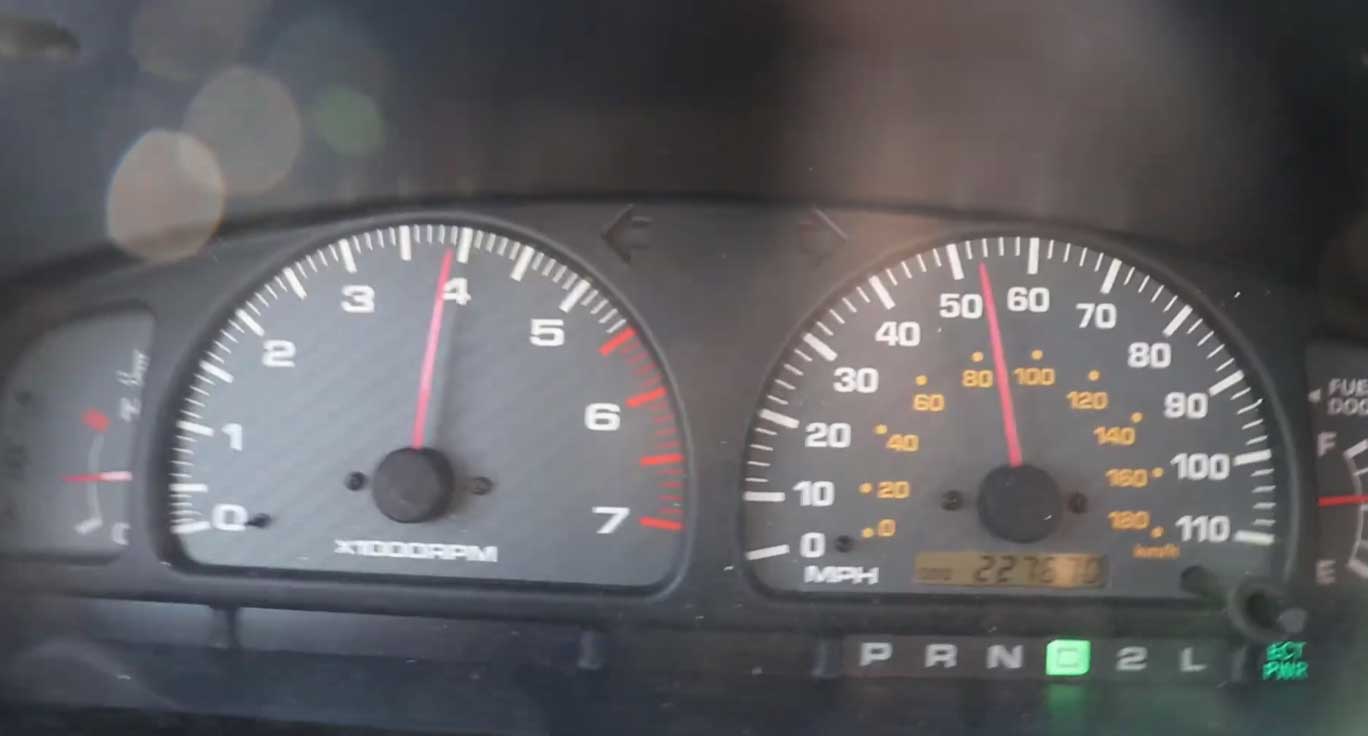
If you’ve driven a Toyota 4Runner, you’ve probably seen a button labeled “ECT PWR” on your center console. Maybe you’ve pressed it. Maybe you’ve ignored it. Either way, you’re probably wondering what it actually does.
Here’s the truth: ECT Power is one of the most misunderstood buttons in Toyota trucks. Some people swear by it. Others never touch it. Most don’t understand it at all.
In this guide, I’ll explain exactly what that button does, when you should use it, and—most importantly—when you shouldn’t. I’m basing this on years of working on 4Runners and understanding how automatic transmissions work.
What ECT Power Actually Means
ECT stands for Electronically Controlled Transmission. PWR is short for Power.
So “ECT Power” is just Toyota’s name for a button that tells your automatic transmission to prioritize power delivery over fuel efficiency.
That’s it. That’s what it does.
But understanding what that means requires understanding how automatic transmissions think.
The Basics: How Automatic Transmissions Decide When to Shift
Your 4Runner’s automatic transmission is controlled by a computer. That computer watches several things:
- How fast the engine is running (RPM)
- How hard you’re pressing the gas pedal
- The current gear you’re in
- Your vehicle’s speed
Based on all that information, the computer decides when to shift to the next gear.
The computer has two main goals:
- Keep the engine running smoothly
- Save fuel
Most of the time, your transmission shifts up to a higher gear as soon as it safely can. Shifting up earlier means the engine runs at lower RPMs, which burns less gas.
When you press the ECT Power button, you tell the computer: “Don’t worry about fuel right now. Focus on power instead.”
What Actually Changes When You Press the Button
When ECT Power is OFF (normal mode):
- The transmission shifts at lower RPMs
- It wants to get into a higher gear quickly
- The engine stays relaxed
- You get the best fuel economy
When ECT Power is ON:
- The transmission holds each gear longer
- It waits until higher RPMs to shift
- The engine stays in a lower gear longer
- You get more power, but worse fuel economy
That’s the only thing that changes. The engine doesn’t make more horsepower. The transmission doesn’t get a boost. The button doesn’t unlock some hidden performance mode.
It just changes when the transmission decides to shift gears.
How It Really Works: The Mechanical Side
Let me explain what’s actually happening inside your transmission when ECT Power is on.
Lower Gears = More Power
This is the key concept. Lower gears multiply the engine’s torque.
Think of it like this: your 4Runner makes, let’s say, 280 horsepower and 300 pound-feet of torque at the engine.
But your transmission multiplies that torque through gearing. In first gear, that torque gets multiplied by about 3.5 times. In second gear, maybe 2.0 times. In third gear, maybe 1.3 times. In fourth (overdrive), it’s less than 1.0—that’s why it’s called overdrive.
The lower the gear, the more multiplication happens.
So if you stay in a lower gear longer, you have more multiplication power. That means faster acceleration and more pulling power.
When ECT Power is off, your transmission upshifts quickly. You lose that gear multiplication sooner. The engine is spinning slower, but you also have less pulling power.
When ECT Power is on, the transmission waits before upshifting. You keep the gear multiplication longer. The engine works harder, but you get more pulling power.
Why This Matters on a 4Runner
A 4Runner is a heavy vehicle. It weighs about 4,500 pounds (depending on the year and model). It’s not a sports car.
When you try to accelerate hard, or climb a steep hill, or merge onto a highway, keeping the transmission in a lower gear longer gives you the torque you need to do those things without bogging down.
Without ECT Power, the transmission upshifts too early. The engine loses power. You feel sluggish. Your 4Runner doesn’t respond the way you want.
With ECT Power on, the transmission holds the gear. The engine stays in its power band. You get the acceleration or pulling power you need.
When to Use ECT Power
There are specific situations where turning on ECT Power makes sense.
Passing Other Vehicles
If you’re on a two-lane road and want to pass a car in front of you, you need quick acceleration.
With ECT Power on, you press the gas pedal. The transmission won’t immediately upshift. It holds the lower gear, gives you the torque multiplication, and you accelerate fast enough to get around safely.
Without ECT Power, the transmission upshifts early. Your acceleration is slower. It takes longer to pass, which is unsafe.
Real example: You’re doing 55 mph in fourth gear (overdrive). You want to pass. With ECT off, your transmission is already in a high gear. It needs to downshift first before you get any real power. That lag is dangerous.
With ECT on, you’re already in a lower gear selection pattern. You get power immediately.
Merging onto a Highway
Similar situation. You’re at a stoplight waiting to merge onto an interstate. Ahead is a long on-ramp with fast-moving traffic.
You need solid acceleration to merge safely. ECT Power helps you get that acceleration without the transmission hunting for the right gear.
Climbing Steep Hills
If you’re driving through mountainous terrain or towing a trailer uphill, ECT Power helps.
The transmission won’t upshift as early. It keeps you in a lower gear where the engine can generate the torque needed to climb. You won’t lose power halfway up the hill.
Towing a Heavy Load
A 4Runner can tow up to 5,000 pounds depending on the year. When you’re towing, the transmission works harder.
With ECT Power on, the transmission is smarter about shifting. It holds gears longer to keep torque to the trailer. It doesn’t hunt around looking for the right gear.
However—and this is important—keep reading the section below about NOT using ECT Power while towing long distances.
Off-Road Driving
If you’re in rough terrain and need controlled power delivery, ECT Power can help.
It keeps the engine in a power band where you have steady torque. You get more controlled acceleration in rocky or loose terrain.
When NOT to Use ECT Power
This is equally important. There are times when ECT Power hurts you, not helps you.
Highway Driving at Steady Speed
If you’re cruising on the interstate at a constant speed, turn ECT Power off.
Here’s why: when ECT is on, the transmission holds gears longer and stays at higher RPMs. Higher RPMs mean worse fuel economy.
On a highway, you’re not accelerating hard. You don’t need the extra power. You’re just maintaining speed. ECT Power wastes gas.
Real math: On a 200-mile highway drive, ECT Power might cost you an extra gallon of fuel. That’s real money.
Long-Distance Towing
This is critical. When you’re towing a trailer for hours, do NOT use ECT Power.
Why? Transmission heat.
When ECT is on, the transmission works harder. It holds gears longer. The fluid gets hotter. Over many hours of towing, that heat builds up.
Too much heat damages your transmission. It breaks down the fluid. The internal parts wear faster.
Towing heats up a transmission enough already. Don’t make it worse with ECT Power.
Exception: Short towing trips—like pulling a trailer to a job site a few miles away—ECT Power is fine.
Bumper-to-Bumper City Traffic
Stop-and-go driving burns extra fuel anyway. ECT Power makes it worse.
In traffic, you’re accelerating, braking, accelerating, braking. The constant shifting with ECT on wastes gas. You’re not gaining any real-world advantage because you’re stuck in traffic anyway.
Keep ECT off in the city unless you’re accelerating hard to merge or pass.
When Your Transmission is Already Hot
On a hot summer day, if you’ve been driving hard, check your transmission temperature if your 4Runner has a gauge.
If the transmission is already running hot, don’t use ECT Power. Let it cool down in normal mode.
Does ECT Power Use More Gas?
Yes. Absolutely. Every mechanic and engineer will tell you the same thing.
The Exact Impact
The fuel economy hit depends on how you drive, but expect to lose 1–3 miles per gallon.
If your 4Runner normally gets 18 mpg on the highway, using ECT Power might drop you to 16–17 mpg.
That’s real. It adds up.
Why it happens: When the transmission holds gears longer, the engine runs at higher RPMs. Higher RPMs burn more fuel. It’s simple physics.
When the Fuel Loss Matters
If you use ECT Power for a few minutes to pass another car, the fuel loss is negligible. You use a little extra gas, but you’re not wasting much.
If you use ECT Power all the time, every trip, every day—then it matters. That’s expensive.
Is the Power Worth the Gas?
That’s up to you. Some drivers say the performance gain is worth the fuel cost. Others say it’s not.
I’ll be honest: for daily driving in most conditions, ECT Power isn’t necessary. Your 4Runner has plenty of power in normal mode.
ECT Power is for specific situations—passing, merging, towing—where you need the extra responsiveness for safety.
Common Mistakes Drivers Make
After years of working on these trucks, I see the same mistakes over and over.
Mistake #1: Using ECT Power All the Time
Some owners flip on ECT Power and never turn it off. They think it’s making their 4Runner better.
It’s not. You’re just wasting gas and wearing out your transmission slightly faster.
Fix: Use ECT Power only when you need the extra power. For normal driving, leave it off.
Mistake #2: Thinking ECT Power Adds Horsepower
It doesn’t. Your engine makes the same horsepower whether ECT is on or off.
What ECT Power does is let your engine stay in a gear where it can use more of that horsepower. But the horsepower itself isn’t changing.
Why this matters: If your 4Runner feels slow, ECT Power won’t fix it. There’s probably something else wrong—low tire pressure, a plugged air filter, or engine trouble.
Mistake #3: Not Understanding the Fuel Economy Trade-Off
Some drivers use ECT Power expecting no downside. Then they’re shocked when their fuel economy drops.
You have to choose: power or economy. You can’t have both all the time.
Fix: Understand the trade-off. Use it when you need it. Accept the fuel cost.
Mistake #4: Using ECT Power in Slippery Conditions
If you’re driving on ice or loose gravel, don’t use ECT Power.
The constant holding of lower gears and higher RPMs can cause your wheels to spin. It’s harder for the transmission to find traction. You can get stuck.
Fix: In snow, ice, or loose terrain, keep ECT off. Let the transmission shift naturally to find traction.
Mistake #5: Towing Heavy and Using ECT Power the Whole Trip
As I said above, this overheats your transmission.
Many owners tow a trailer for hours with ECT Power on, not realizing they’re damaging the transmission slowly.
Fix: Save ECT Power for accelerating onto the highway. For steady towing, use normal mode.
FAQ: Questions Real 4Runner Owners Ask
Q: Will ECT Power damage my transmission?
A: No, not if you use it correctly. Using ECT Power occasionally for short periods won’t hurt anything. But using it constantly for years, or using it while towing long distances, puts extra stress on the transmission. Stress builds heat. Heat damages fluid. So use it wisely. Short bursts for passing or merging? Fine. Leaving it on for an 8-hour road trip? Not smart.
Q: Can I use ECT Power when my transmission is cold?
A: Yes. In fact, on a cold morning, ECT Power works well. Your transmission fluid is thicker when cold. The transmission is less responsive. ECT Power helps it shift more crisply. No problem using it when the truck is cold.
Q: Is there a right RPM to turn ECT Power on?
A: No. ECT Power is a on/off button. You press it, or you don’t. Some drivers think there’s a perfect time to engage it at a certain RPM. There isn’t. It’s just telling the computer to change its shift strategy. The RPM when you press it doesn’t matter.
Q: Does ECT Power work the same on all model years?
A: Not exactly. Older 4Runners (1990s–early 2000s) have a simple ECT button that works as I’ve described. Newer 4Runners have more advanced transmission computers. The principle is the same, but the shift points and response might feel different. If you’re not sure how your specific year works, check your owner’s manual.
Q: Should I use ECT Power if I have a towing package?
A: If you’re towing, use ECT Power occasionally during acceleration phases—like accelerating up an on-ramp with a trailer. But during steady-state towing (cruising at constant speed with a load), keep it off. The towing package helps with cooling, but it doesn’t change the basic rule: constant ECT Power while towing builds heat.
Q: Why does my transmission feel sluggish when ECT Power is off?
A: Because it is sluggish in comparison. Automatic transmissions optimized for fuel economy aren’t as responsive as ones running in power mode. Your 4Runner’s transmission is making the trade-off: saving fuel instead of delivering power. If you want snappier acceleration all the time, you have to accept worse fuel economy. That’s just how automatics work.
Q: Can I use ECT Power in 4WD low range off-road?
A: Yes. In fact, it’s often helpful off-road. Low range is already a low gear, so ECT Power adds extra responsiveness to wheel-speed changes. Many off-road drivers keep ECT Power on when rock crawling. Just remember to turn it off when you get back on pavement to save fuel.
Q: My 4Runner has an ECT indicator light on the dash. Is that different from the ECT Power button?
A: Possibly. Some 4Runners show an indicator light when ECT Power is active. Other models have warning lights if the ECT system is malfunctioning. Check your owner’s manual to see what your light means. If the light comes on unexpectedly and won’t go off, have your transmission scanned for codes.
Common Myths About ECT Power
Myth: ECT Power boosts your engine’s horsepower.
False. Your engine makes the same power whether ECT is on or off. ECT Power just lets your transmission use that power more efficiently in certain situations.
Myth: ECT Power is bad for your transmission.
Half-false. Using ECT Power occasionally is fine. Abusing it—constant use, towing long distances, never letting your transmission rest—will put extra stress on it and shorten its life. Use it right, and it’s not an issue.
Myth: ECT Power doesn’t really do anything.
False. It definitely changes how your transmission behaves. You can feel the difference in acceleration. Whether you should use it is a different question, but it definitely does something.
Myth: You should always use ECT Power because the car came with the button.
False. The button exists for specific uses. Not for everyday driving. Toyota wouldn’t include the button if they expected drivers to use it all the time.
Myth: ECT Power helps you drive safer.
Partially true. ECT Power helps you accelerate faster for passing and merging, which can be safer. But it doesn’t prevent accidents. And using it constantly increases fuel consumption, which isn’t smart. Use it for safety-critical maneuvers (passing, merging). That’s the right approach.
Real-World Driving Scenarios
Here’s how I actually use ECT Power on a 4Runner.
Scenario 1: Highway driving at constant speed
ECT Power: Off
Why? I’m not accelerating. I’m just maintaining speed. ECT Power only wastes gas here. No benefit.
Scenario 2: Passing a slow truck on a two-lane road
ECT Power: On for the duration of the pass
Why? I need quick acceleration to pass safely. ECT Power makes the transmission respond instantly. Once I’m past the truck, I turn it off.
Scenario 3: Merging onto a busy interstate
ECT Power: On until I’m fully merged, then off
Why? Same as passing. I need responsive acceleration to merge safely into traffic. Once I’m on the highway at speed, I turn it off.
Scenario 4: Towing a trailer on a highway
ECT Power: Off for steady cruising; on only during initial merges
Why? Most of the trip is steady speed. ECT Power here only overheats the transmission. I use it briefly to accelerate onto the highway, then turn it off for the rest of the trip.
Scenario 5: Climbing a mountain pass in Colorado
ECT Power: On
Why? The engine needs to work hard in lower gears to maintain speed going uphill. ECT Power keeps the transmission in the right gear to make that happen. This is the exact scenario ECT Power was designed for.
Scenario 6: Stop-and-go traffic in the city
ECT Power: Off
Why? I’m not going anywhere fast. ECT Power just makes the light cycles of acceleration and braking burn extra fuel. Pointless.
What Your 4Runner’s Owner Manual Says
If you want to know for sure what Toyota recommends, your owner’s manual has the official answer.
Most 4Runner manuals say something like: “ECT Power mode adjusts transmission shift points for enhanced performance in situations requiring increased power.”
They usually recommend using it when:
- Accelerating to merge into traffic
- Passing other vehicles
- Towing
- Driving on steep grades
They usually don’t recommend using it for:
- Normal highway cruising
- City driving
- Situations where fuel economy is a priority
So Toyota is basically saying what I’m saying: use it when you need power, not all the time.
Bottom Line: Should You Use ECT Power?
Yes. But only sometimes.
Here’s my honest mechanic’s take:
Use ECT Power when:
- You’re passing another vehicle
- You’re merging into fast traffic
- You’re towing a load
- You’re climbing a steep hill
- You need responsive acceleration for safety
Don’t use ECT Power when:
- You’re cruising at steady speed
- You’re driving in city traffic
- You’re towing for more than an hour
- You want to save fuel
- You’re in slippery conditions
It’s that simple.
ECT Power isn’t a magic button. It’s a tool. And like any tool, you use it when you need it. The rest of the time, you don’t.
Your 4Runner has plenty of power in normal mode for everyday driving. ECT Power is for specific moments where you need extra responsiveness.
Use it that way, and you’ll get years of reliable service from your transmission. Your fuel economy will stay good. And you’ll be safe when passing or merging.
That’s what ECT Power is really about: safety and performance when you need it, without wasting gas when you don’t.
Final Thought
If you’ve never used the ECT Power button before, try it next time you’re merging onto a highway. Feel the difference. You’ll immediately understand what the button does.
Then turn it off on the highway, watch your acceleration normalize, and save yourself some fuel.
That’s how you use the tool correctly.
Your 4Runner will thank you.