
Monday to Saturday - 9:00 am -18:00 pm

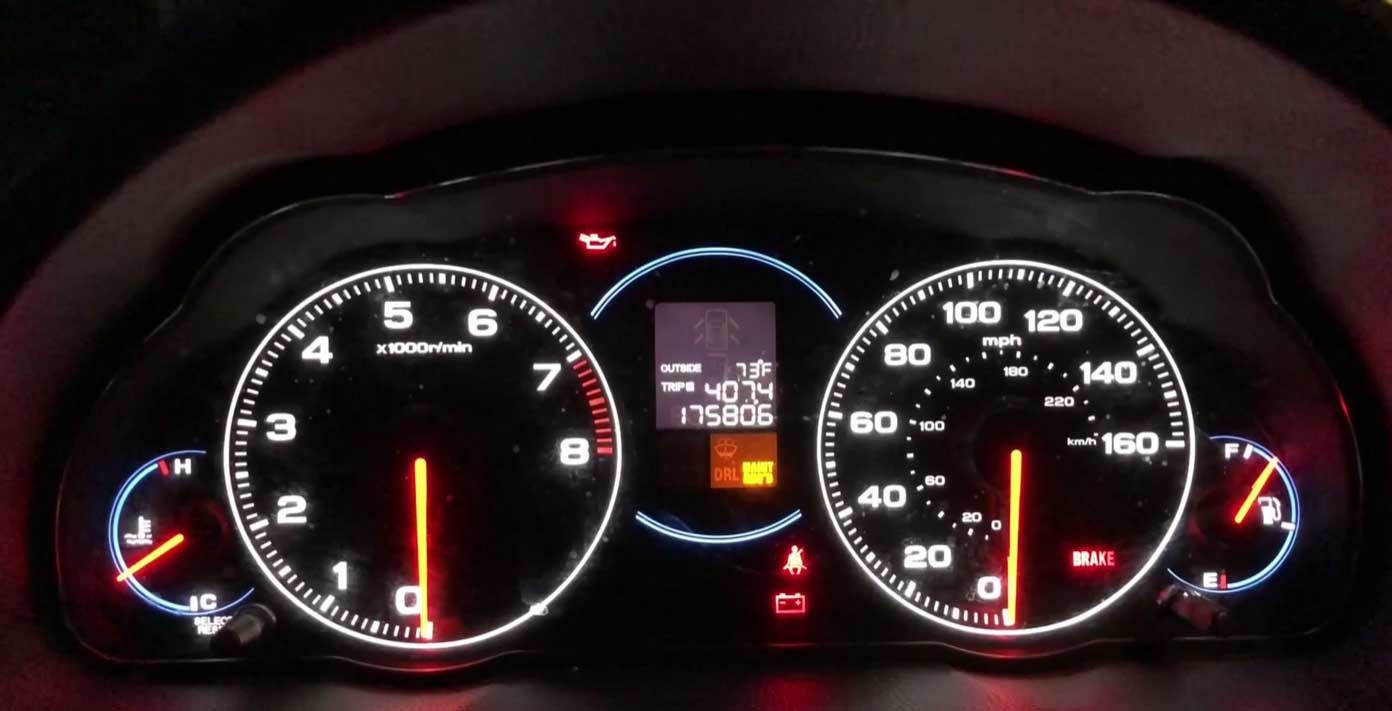
Your VW’s red oil light just started flashing. Your heart sinks. The engine sounds fine. The oil level looks okay on the stick. So what’s actually happening?
Here’s the truth: A flashing red oil light might be nothing urgent. Or it might be the start of a serious problem. The difference comes down to three simple checks you can do right now.
I’ve spent 15 years diagnosing VW oil pressure issues—from quick sensor swaps to engine rebuilds. Most of the time, drivers panic over a faulty sensor costing £30-50. Sometimes, it’s a dying pump that costs £400-800. The scary part? Both look the same on your dashboard at first.
This guide tells you exactly what your red oil light means, when you can safely keep driving, and what to do next.
What Does a Flashing Red Oil Light Actually Mean?
Your VW’s red oil light is an oil pressure warning. It doesn’t measure how much oil is in the tank. It measures whether oil is being pumped through your engine with enough force.
Think of it like blood pressure. You can have plenty of blood, but if it’s not circulating properly, your body shuts down. Same with your engine.
The light comes on when oil pressure drops below about 7-10 PSI. Normal pressure is 15-20 PSI at idle and 40-70 PSI when driving. When it falls below that, the sensor sends a signal, and your light flashes.
Two main parts control this:
The oil pump physically pushes oil through tiny passages in your engine to lubricate bearings, pistons, and the valve train.
The oil pressure sensor is a small electronic switch that detects the pressure and tells your dashboard when it’s too low.
When the light flashes, one (or more) of these is failing:
- Low oil level
- Faulty oil pressure sensor (most common)
- Failing oil pump
- Clogged oil filter
- Bad engine bearings (rare, but serious)
Flashing Red vs. Solid Red Light (Important Difference)
Some VWs use a solid red light. Others use a flashing red light. This matters.
Solid red oil light = Stop driving immediately. This is a serious pressure loss. Pull over, turn off the engine, check the oil, and call for help.
Flashing red oil light = Often the sensor is acting up. But you still need to investigate. Don’t ignore it, but you usually have a little time.
If your light is flashing and beeping together, it’s the warning system telling you to pull over safely—not that your engine will explode the next second.
The 3-Minute Diagnostic Test (Do This First)
Stop the car as soon as it’s safe. Don’t panic yet.
Step 1: Check the Oil Level
Pop your bonnet (hood). Locate the dipstick. On most VWs, it’s a yellow or orange loop handle near the front of the engine.
Pull it out. Wipe it clean on a rag. Put it back in all the way. Pull it out again.
The oil level should be between the MIN and MAX marks. If it’s below MIN, you’ve found your problem.
Action if oil is low: Add the correct oil (check your owner’s manual for the weight—VWs often need 5W-40, not the 5W-30 many quick-lube shops use). Add a half-litre, wait a minute, and check again. Top up slowly.
Action if oil level is normal: Go to Step 2.
Step 2: Listen to the Engine
Start the car. Let it run for 5 seconds while the light is on.
Listen carefully. Does the engine sound normal?
Or do you hear:
- A loud ticking or tapping from the top
- Grinding or knocking sounds from deep in the engine
- A metal-on-metal grinding noise
If the engine sounds fine and quiet: Most likely a bad sensor. Go to Step 3.
If you hear ticking, grinding, or knocking: Your oil pump might actually be failing. Don’t drive. See a mechanic today.
Step 3: Turn the Engine Off and Back On
Turn off the engine completely. Wait 10 seconds.
Start it again and watch the light.
If the red light goes out after 5-10 seconds: This is normal. The sensor might be dirty or the circuit is intermittent. Drive to your mechanic, but don’t take a 200-mile motorway trip yet.
If the light stays on or comes back within 30 seconds: It’s likely the pressure itself is low. See a mechanic soon, but you probably have time for a 10-20 minute drive to the workshop.
Is It Safe to Drive With the Red Oil Light On?
Short answer: Maybe, but not far.
Here’s the practical truth I tell customers:
Safe to drive:
- Oil level is normal
- Engine sounds quiet and smooth
- Light goes out after 10 seconds of startup
- You’re driving to a mechanic (10-30 minutes max)
Not safe to drive:
- Oil level is low
- Engine is making grinding, ticking, or knocking sounds
- Light comes back on immediately or stays on constant
- You’re planning a long motorway trip
The risk: If your oil pump truly is failing or your bearings are worn, lack of pressure means metal-on-metal friction. This damages bearings in seconds. A bearing repair means a bottom-end rebuild or a new engine—£2,000-£5,000+.
A faulty sensor costs £40-100 to replace.
The gap between “small fix” and “catastrophic damage” can be a few hours of continued driving.
Safe rule: If your oil light is flashing and you’re not sure, drive it only to a mechanic. Don’t treat it as something to ignore for a week.
Sensor Failure vs. Real Pump Problems: How to Tell
This is the most important distinction. I see people either panic over a sensor or drive on a failing pump.
Signs of a Bad Oil Pressure Sensor:
- Red light is flashing intermittently (on and off)
- Oil level is correct
- Engine runs quietly with no unusual noise
- Light appeared suddenly after startup or after a wash (moisture in the connector)
- No performance issues
A flashing light that comes and goes is almost always the sensor. Real oil pressure loss is steady, not intermittent.
Signs of a Failing Oil Pump:
- Engine makes a loud ticking, tapping, or grinding noise
- Light is solid red or constant flashing (not intermittent)
- Noise gets worse at higher RPMs
- Light doesn’t go out after a full oil top-up
- You might also smell burnt oil or see blue smoke from the exhaust
If your pump is failing, the engine is literally starving for oil. The valve train becomes noisy because hydraulic lifters lose pressure. Rod bearings start to knock. This happens fast once it starts.
The Sound Test is Your Best Friend
Oil starvation makes noise. A bad sensor doesn’t.
If your engine is silent, it’s almost certainly the sensor.
If your engine sounds like a ticking time bomb, don’t drive it.
What to Do Right Now
Immediate steps:
- Check oil level. Low? Top it up and retest the light.
- Listen to the engine. Quiet? Probably a sensor. Grinding? Call a mechanic.
- Drive to a mechanic. Not across the country. To a workshop.
- Have them test oil pressure with a gauge. This is the definitive test. A mechanic plugs a mechanical pressure gauge into the sensor port. Takes 10 minutes. Costs £30-50. Tells you everything.
If pressure reads normal (20+ PSI at idle), the sensor is bad. Replace it.
If pressure reads low (below 15 PSI at idle), the pump or bearings are the problem. Further diagnosis needed.
Don’t ignore it, but don’t panic either. Treat it like a check-engine light that needs urgent attention, not immediate breakdown.
Common Mistakes People Make
Mistake 1: Assuming the light means low oil.
The light measures pressure, not quantity. You can have a full tank and zero pressure.
Mistake 2: Only checking oil when cold.
Always check on level ground, after the engine has been off for 2+ minutes. A hot engine gives false readings.
Mistake 3: Replacing the sensor before checking pressure.
I’ve seen people swap sensors three times. The real problem was a clogged filter. Get a pressure test first.
Mistake 4: Driving 200 miles on the motorway with the light on.
This is how you turn a £50 sensor into a £3,000 engine rebuild. If the light stays on, drive to a mechanic—not to work, not to visit your mum. To a mechanic.
Mistake 5: Using the wrong oil viscosity.
VWs often need 5W-40. If you use 5W-30, the oil is thinner at operating temperature, and pressure drops. Then the light comes on. Check your manual.
Mistake 6: Assuming it’s safe because “it happened to my mate and his car was fine.”
Your mate might have just gotten lucky. Or he might be driving a failing engine waiting to catastrophically break down. Don’t gamble with your engine.
FAQ
Q: My red oil light flashed once, then went away. Should I worry?
A: Not urgently. But get it checked. A one-time flash is often moisture in the sensor after a wash, or a very brief pressure dip. But it means the sensor is becoming unreliable. Schedule a mechanic visit within a week or two.
Q: The oil level is full, and the light is off now. Am I okay?
A: Probably, but get a pressure test soon. If the light came on when the oil was already at the right level, it’s not a low-oil situation. It’s either the sensor, the pump, or bearings starting to wear. A mechanic can confirm in 10 minutes.
Q: How much does an oil pressure sensor cost?
A: £30-80 for the part. Labour at an independent shop is usually £50-150. At a VW dealer, expect £100-200 total. It’s one of the cheaper jobs on a car.
Q: Can I drive to the mechanic with the light on?
A: Only if the engine sounds normal and you’re going 10-30 minutes. Don’t drive across the county. If the light stays on constant (not flashing), drive slowly and carefully. If the light is flashing intermittently and the engine is quiet, you have a bit more wiggle room.
Q: What if I replace the sensor and the light comes back?
A: The real problem is probably not the sensor. Possibilities: clogged oil filter, low oil circulation due to thick cold oil, failing oil pump, worn bearings, or a wiring issue. A mechanic needs to do a full pressure test with a gauge, not just replace parts.
Q: Is it expensive to fix an oil pump?
A: Yes. Most VWs, the pump is buried in the engine. Labour to replace it can be £300-500+. The part itself is £100-200. Total: £400-800+ depending on the model and mechanic. Which is why catching a bad sensor early is important—it’s cheap, and it confirms the pump is okay.
Q: My VW has 100,000+ miles. Is it more likely to be a pump problem?
A: Possibly. At high mileage, pump wear is more common. But sensors also degrade with age. The only way to know is a pressure test. Get one done.
Q: I replaced the oil and filter. The light is still on. What now?
A: Get a pressure gauge test. The light didn’t come on because of old oil—it came on because of low pressure. Fresh oil didn’t fix that, so it’s the sensor, pump, or bearings. Don’t keep throwing parts at it.
Q: Can I reset the light myself?
A: You can clear the fault code with a reader (£30 tool from a parts shop or borrowed from a mechanic). But if the light comes back, the problem is still there. Clearing the code doesn’t fix the issue—it just hides the symptom.
Conclusion
A flashing red oil light is your VW’s early warning system. Don’t ignore it. But don’t panic either.
Nine times out of ten, it’s a faulty sensor. Easy fix. But that one time it isn’t, it’s serious—and the symptoms look almost identical at first.
Here’s what to do:
- Check the oil level.
- Listen for engine noise.
- Drive to a mechanic for a pressure test.
- Let them fix it.
A pressure gauge test takes 10 minutes and costs under £50. It solves the mystery. After that, you either replace a sensor (cheap) or address a pump problem (expensive but necessary).
Don’t drive 500 miles with the light on hoping it goes away. Don’t ignore it for months. Don’t replace random sensors without a diagnosis.
Get a pressure test. Then you’ll know exactly what you’re dealing with.
That red light is doing its job. Now you know what to do about it.
Have questions? Drop them in the comments. I monitor every question and respond within 24 hours.
Want to share your experience? Tell me in the comments if you’ve had this issue and how it turned out. Real owner experiences help others.
Need a mechanic? If you’re in the US, use the ASE mechanic finder. In the UK, look for a VAG-specialist independent workshop (they know VWs inside out).