
Monday to Saturday - 9:00 am -18:00 pm

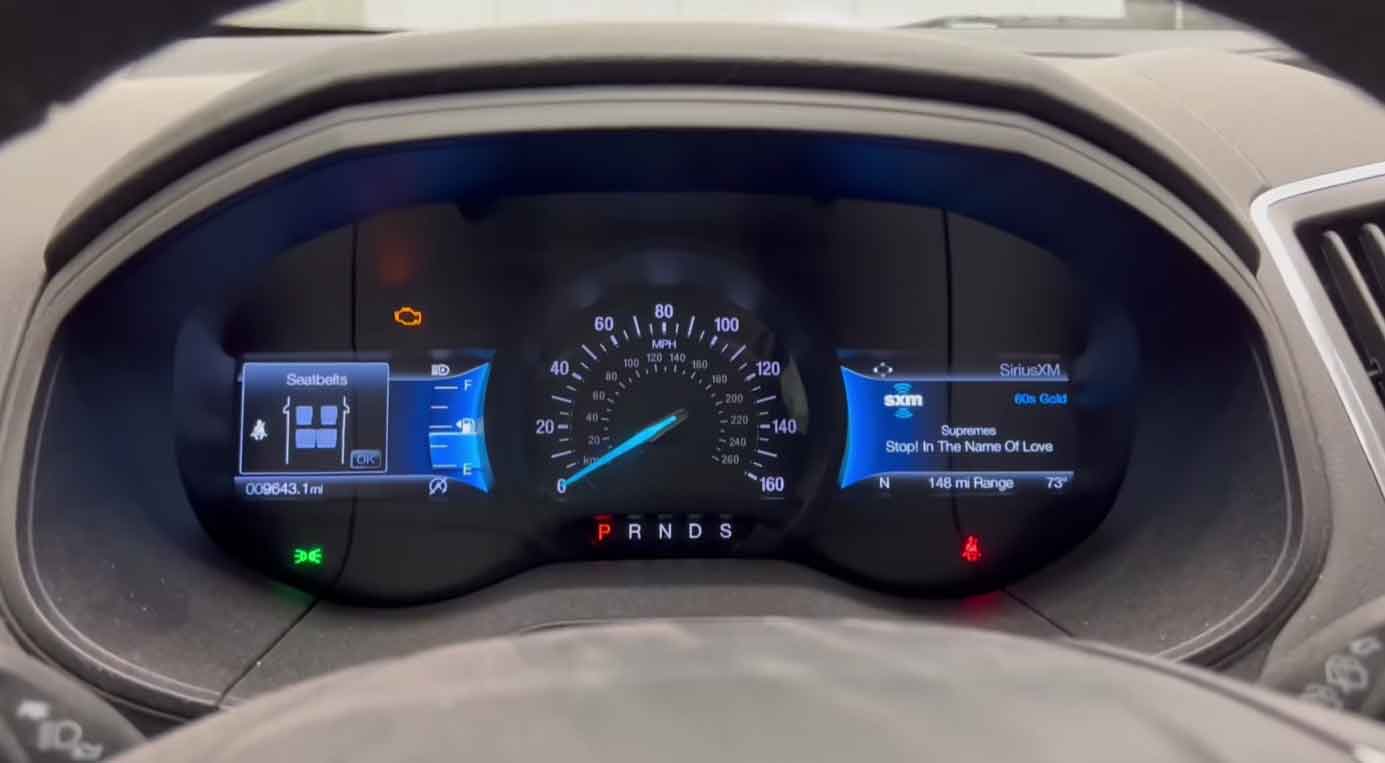
That glowing amber light on your Ford’s dashboard can be nerve-wracking. I’ve seen hundreds of worried drivers pull into my shop with the same question: “Is my car about to break down?”
After 15 years working on Fords, I can tell you this much. The check engine light doesn’t always mean disaster. But it does mean your car needs attention.
Your Ford’s computer system caught something wrong. It could be minor. It could be serious. The key is knowing what to look for.
In this guide, I’ll walk you through everything I’ve learned about Ford check engine lights. You’ll understand what’s happening under your hood. And you’ll know when to fix it yourself versus calling a mechanic.
Understanding Your Ford’s Check Engine Light
The check engine light sits right there on your instrument cluster. It looks like a little engine icon, glowing yellow or amber.
We mechanics call it the Malfunction Indicator Light, or MIL for short. Your Ford’s main computer (the engine control unit) turns it on when sensors detect a problem.
Think of it like your car’s way of saying “Hey, something’s not right here.”
Two Types of Warnings You Need to Know
From my shop experience, I tell customers about two different warning patterns:
Steady Light (Solid Glow)
When the light stays solid, you’ve got time. The issue isn’t immediately dangerous. But don’t put it off for months. I’ve seen small problems turn into expensive repairs when ignored.
You can still drive to work or the store. Just get it checked within a week or two.
Flashing Light (Blinking)
This one’s urgent. Pull over safely as soon as you can.
A flashing check engine light usually means the engine is misfiring badly. I’ve seen this damage catalytic converters that cost $1,500 to replace. The engine might even destroy itself if you keep driving.
Turn off the engine. Call for a tow truck. Don’t risk it.
Why Your Ford’s Check Engine Light Comes On
In my bay, I’ve diagnosed thousands of check engine codes. Most issues fall into a handful of common categories.
Let me share what I see most often in Fusion, Focus, and Escape models.
Problem #1: Gas Cap Not Sealed Right
This surprises people every time. About 20% of check engine lights I see are just loose gas caps.
When you fill up at the pump, the cap needs to click three times. That creates a tight seal. Your fuel system holds pressure, and a loose cap lets that pressure escape.
The computer detects this as a leak. Boom—check engine light.
I always check the gas cap first. It takes two seconds and saves diagnostic fees. Look for cracks in the rubber seal too. A worn cap costs $15 to replace.
Problem #2: Oxygen Sensor Wearing Out
These sensors sit in your exhaust pipe. They measure how much oxygen is in the exhaust gases.
Your Ford has at least two O2 sensors, sometimes four. They help the computer adjust the fuel mixture for best efficiency.
After about 80,000 miles, these sensors start failing. I replace them all the time in older Fords. The symptoms include:
- Poor gas mileage (you’re burning more fuel)
- Rough engine idle
- That check engine light
Replacement takes about 30 minutes per sensor in my shop. The part costs between $50 and $150 depending on which sensor failed.
Problem #3: Catalytic Converter Damage
This one hurts the wallet. The catalytic converter cleans up harmful gases before they leave your tailpipe.
It removes carbon monoxide, unburned fuel, and nitrogen oxides. Environmental protection rules require it on every car.
When it fails, you’ll notice:
- Loss of power going uphill
- Rattling noise from underneath
- Strong sulfur smell (like rotten eggs)
- Failed emissions test
In my experience, catalytic converters fail because other problems weren’t fixed. A bad oxygen sensor or misfiring engine damages the converter over time.
Prevention is key here. Fix small issues quickly.
Problem #4: Mass Airflow Sensor Getting Dirty
The MAF sensor measures incoming air entering your engine. It sits right after the air filter in the intake tube.
Your Ford’s computer uses this reading to calculate the perfect fuel amount. Too much or too little air throws everything off.
When I service cars with MAF issues, I see these symptoms:
- Engine stumbles when accelerating
- Car stalls at stop lights
- Hesitation when you press the gas
- Black smoke from the exhaust
Sometimes I can clean the sensor with special MAF cleaner spray. It costs about $12 at the parts store. Other times the sensor is dead and needs replacement.
Never touch the sensing element with your fingers. The oil from your skin damages it permanently.
Problem #5: Spark Plugs or Ignition Coils Failing
Spark plugs create the spark that ignites fuel in the cylinders. Ignition coils give them the power to do it.
Your Ford needs fresh spark plugs every 60,000 to 100,000 miles. The exact interval depends on your model year.
Worn spark plugs cause:
- Engine misfire (you feel it shaking)
- Hard starting in cold weather
- Drop in fuel economy
- That flashing check engine light I warned about
In my bay, I’ve pulled out spark plugs caked with carbon deposits. They can’t fire properly anymore. New plugs cost $8 to $30 each, and most Fords have four or six.
Ignition coils fail too, especially on high-mileage vehicles. I see this a lot in Focus models from 2012-2018. The coils develop cracks and start misfiring.
Problem #6: EGR Valve Clogged Up
The Exhaust Gas Recirculation valve helps reduce emissions. It recycles some exhaust gas back into the engine.
Over time, carbon builds up inside the valve. It gets stuck open or closed. Your engine doesn’t run right.
Signs of EGR problems include:
- Rough idle (engine vibrates)
- Hesitation during acceleration
- Stalling when you slow down
- Poor fuel economy
I can sometimes clean EGR valves using special cleaners. But if they’re too far gone, replacement is the only option.
Ford Escapes from 2008-2012 seem particularly prone to this issue. I keep several EGR valves in stock just for those models.
How to Diagnose Your Ford’s Problem
Before fixing anything, you need to know what’s actually wrong. Guessing costs money.
Every check engine light stores a diagnostic code in your car’s computer. We call these DTCs (Diagnostic Trouble Codes).
Using an OBD2 Scanner
You’ll need a code reader or scan tool. I use professional-grade scanners in my shop, but basic ones work fine for DIYers.
Here’s what I do:
- Find your OBD2 port (usually under the dashboard on the driver’s side)
- Plug in the scanner with the engine off
- Turn the key to “on” position (don’t start the engine)
- Read the codes on the scanner screen
Common codes I see include:
- P0420: Catalytic converter efficiency below threshold
- P0171/P0174: System too lean (not enough fuel)
- P0300-P0304: Engine misfire detected
- P0401: EGR flow insufficient
- P0455: Large evaporative leak (usually that gas cap)
Free code reading is available at most auto parts stores. O’Reilly, AutoZone, and Advance Auto will scan your car in the parking lot.
But remember—the code tells you where to start looking. It doesn’t always pinpoint the exact failed part.
Fixing Check Engine Light Problems Yourself
Some repairs are simple enough for home mechanics. Others need professional tools and expertise.
Let me break down what you can tackle in your driveway.
DIY Fix: Tighten or Replace Gas Cap
This takes 30 seconds. Remove the cap and check the rubber seal. Look for cracks or tears.
Clean any dirt around the filler neck. Reinstall the cap and turn it until you hear three clicks.
Drive for a day or two. The light should go off after a few trips if this was the problem.
If the seal is damaged, buy a new cap. Make sure you get the right one for your Ford model year. They’re not all the same.
DIY Fix: Clean MAF Sensor
I recommend this only if you’re comfortable working under the hood. It’s not hard, but you must be careful.
You’ll need:
- CRC MAF sensor cleaner (about $12)
- Phillips screwdriver or T20 Torx bit
- 10mm socket wrench
Steps from my shop manual:
- Disconnect the battery (always do this for electrical work)
- Remove the air intake tube
- Unplug the MAF sensor connector
- Remove two bolts holding the sensor
- Spray the sensing element with MAF cleaner (don’t touch it)
- Let it dry for 10 minutes
- Reinstall everything in reverse order
The engine might run rough for the first minute after starting. That’s normal while the computer relearns.
DIY Fix: Replace Spark Plugs
This job takes about an hour for a four-cylinder engine. You’ll need:
- New spark plugs (check your owner’s manual for the right type)
- Spark plug socket (usually 5/8″ or 16mm)
- Socket wrench with extension
- Anti-seize compound
- Dielectric grease
In my shop, I always replace plugs when the engine is cold. Hot engines can strip the threads.
Remove one plug at a time. This prevents mixing up the firing order. Check the old plug’s condition—it tells you how the engine is running.
Gap new plugs to specification (your manual lists this). Apply a tiny bit of anti-seize to the threads. Don’t over-tighten. They just need to be snug.
When to Call a Professional
Some repairs need specialized equipment or expertise. I tell customers to seek professional help for:
- Catalytic converter replacement (requires lifting the car and cutting exhaust)
- Oxygen sensor replacement on hard-to-reach sensors (can be in tight spots)
- Computer programming or updates
- Any electrical diagnosis beyond basic codes
- Transmission-related codes
Your safety matters more than saving a few bucks. If you’re not confident, bring it to a trusted mechanic.
What These Repairs Will Cost You
I always give customers realistic price estimates. Here’s what I charge in my shop, which is typical for most areas.
Your location might cost more or less, but these are good ballpark figures.
| Problem | Parts Cost | Labor Cost | Total Range |
|---|---|---|---|
| Gas Cap Replacement | $10-$25 | $0 (DIY) | $10-$25 |
| Oxygen Sensor | $60-$180 | $50-$120 | $110-$300 |
| MAF Sensor | $130-$280 | $40-$100 | $170-$380 |
| Spark Plugs (set of 4) | $35-$120 | $80-$200 | $115-$320 |
| Ignition Coils (one) | $70-$150 | $50-$100 | $120-$250 |
| EGR Valve | $100-$280 | $80-$180 | $180-$460 |
| Catalytic Converter | $400-$2,000 | $150-$500 | $550-$2,500 |
Dealer prices run 20-40% higher than independent shops. I’m an independent, so I can keep costs down.
Always get a written estimate before authorizing repairs. Good shops won’t mind.
Ford Models Most Affected
From years under the hood, I’ve noticed certain Ford models show up more often with check engine lights.
Here’s what I see in my bay:
| Ford Model | How Often I See It |
|---|---|
| F-150 | 15% of repairs |
| Escape | 12% of repairs |
| Explorer | 11% of repairs |
| Focus | 10% of repairs |
| Fusion | 9% of repairs |
| Edge | 8% of repairs |
| Mustang | 7% of repairs |
| Ranger | 6% of repairs |
| Taurus | 5% of repairs |
| Expedition | 4% of repairs |
The Focus and Fusion models from 2012-2016 have a reputation for ignition coil problems. I stock extras just for those years.
Escape models with the 1.5L and 2.0L EcoBoost engines sometimes develop carbon buildup issues. This triggers multiple check engine codes.
Knowing your specific model’s weak points helps you watch for early warning signs.
Preventing Future Check Engine Lights
The best repair is the one you never need. I’ve learned that regular maintenance prevents most check engine light issues.
Here’s my advice from the shop:
Follow the Maintenance Schedule
Your owner’s manual lists when to service what. Don’t skip it. Oil changes, air filters, and spark plugs all prevent bigger problems.
I see so many expensive repairs that started with skipped maintenance.
Use Quality Fuel
Top-tier gasoline has better detergents. It keeps your fuel system cleaner. I recommend brands that meet TOP TIER standards.
Cheap gas might save you a dollar per fill-up. But it costs more in carbon buildup over time.
Address Small Problems Quickly
That rough idle? The slight hesitation? These are early warning signs.
In my experience, customers who fix small issues right away never face the big repairs. The ones who wait end up with four-figure bills.
Keep Your Air Filter Fresh
A dirty air filter makes the engine work harder. It throws off the air-fuel mixture. This triggers check engine codes.
Check it every oil change. Replace it when it’s dirty. They only cost $15-$30.
Resetting the Light After Repairs
After fixing the problem, you need to clear the code. The light won’t turn off by itself right away.
In my shop, I use my professional scanner to clear codes. But you have other options:
Method 1: Disconnect the Battery
Remove the negative battery cable for 15 minutes. This resets the computer.
Downside: You’ll lose radio presets and clock settings. The computer needs to relearn your driving patterns.
Method 2: Drive Several Cycles
If you fixed the actual problem, drive normally for 50-100 miles. The computer runs self-tests. When everything passes, it turns the light off automatically.
This is my preferred method. It proves the fix worked.
Method 3: Use a Code Reader
Any OBD2 scanner with code-clearing ability can do this. Connect it, select “clear codes,” and confirm.
The light should turn off immediately. If it comes back on quickly, the problem wasn’t really fixed.
When to Get Emergency Help
Most check engine lights can wait a day or two. But some situations need immediate attention.
Pull over and shut off the engine if you see:
- Flashing check engine light (engine misfire)
- Check engine light plus temperature warning (overheating)
- Check engine light plus oil pressure warning
- Strange noises along with the light
- Smoke from under the hood
- Strong fuel smell in the cabin
In these cases, call for a tow. Driving might cause permanent engine damage.
I’ve seen customers ignore flashing lights and blow their engines. A $200 tow beats a $6,000 engine replacement every time.
My Final Thoughts
After servicing hundreds of Fords with check engine lights, I’ve learned one thing. The light is your friend, not your enemy.
It’s an early warning system. It catches problems before they strand you on the highway.
Yes, repairs cost money. But they cost far less when you catch them early.
Start with the simple stuff. Check that gas cap. Use a code reader to see what’s wrong. Some fixes are easy enough for any car owner.
For the complex repairs, find a mechanic you trust. Ask questions. Get written estimates. A good shop will explain everything clearly.
Your Ford is built to last. With proper care and quick attention to warning lights, it’ll serve you reliably for years.
Keep this guide handy. Next time that amber light glows, you’ll know exactly what to do.
Stay safe on the road. And remember—that little light is trying to help you, not scare you.