
Monday to Saturday - 9:00 am -18:00 pm

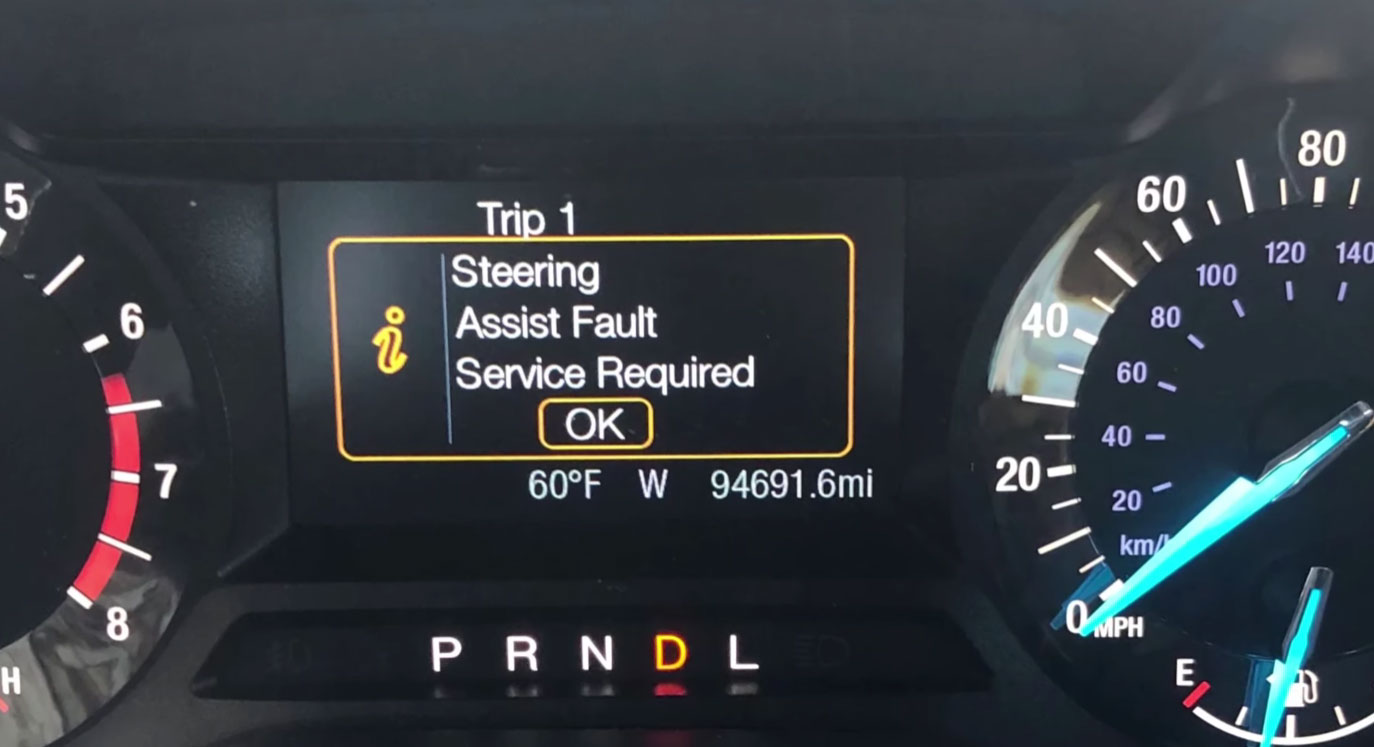
If your Ford Fusion is showing a “Power Steering Assist Fault” warning on the dashboard, you’re probably worried. You should be.
Here’s the short answer: No, it is not safe to drive with a power steering assist fault. The steering becomes very hard to turn, especially at low speeds. This makes parking and tight turns dangerous. You should stop driving and get it fixed.
But there’s more to know. Some faults are temporary. Some are serious recalls. This guide breaks down everything you need to know to stay safe.
What Does This Warning Mean?
The “Power Steering Assist Fault” message appears when something goes wrong with your Fusion’s steering system.
Your Fusion has electric power steering. This means an electric motor helps you turn the wheel. Without it, you have to turn the wheel manually. This takes much more arm strength.
When the warning appears, the electric motor has stopped working. Your car is now in manual steering mode.
Think of it like this: Imagine driving a shopping cart with one bad wheel. You can still steer it, but you have to work much harder. That’s what manual steering feels like.
Is It Really Unsafe?
Yes. Here’s why:
At low speeds, the steering gets very hard. Parking becomes nearly impossible. You might struggle to pull into a parking space or turn at a 4-way stop.
On the highway, it’s slightly easier because you’re turning less. But if you need to make a quick maneuver—swerving to avoid something—you might not be able to turn fast enough.
In an emergency, you’re at real risk. If a child runs into the street or a car pulls out suddenly, your slow steering could cause a crash.
Ford even says this on their recall notices: “Loss of power steering assist increases the risk of a vehicle crash.”
Between 2010 and 2024, NHTSA (the government safety agency) received over 2,500 complaints about Fusion power steering failures. Some drivers reported crashes. A few got injured.
Bottom line: Drive it only to a repair shop. Don’t take it on the highway. Don’t treat it as a long-term solution.
Why Your Fusion Lost Power Steering
The steering didn’t just break for no reason. Several things can cause this fault to appear.
Low Power Steering Fluid
This is the easiest cause to check.
Your power steering system uses fluid to work. It’s like the hydraulic fluid in a car jack. When fluid gets low, the system struggles.
Check your fluid level:
- Open the hood
- Find the power steering fluid reservoir (a clear plastic bottle on the driver’s side engine)
- Look at the markings on the side
- The level should be between MIN and MAX
- If it’s below MIN, add the correct fluid (check your owner’s manual for the type)
Low fluid usually means you have a leak. Look under the car or under the hood for wet spots. Power steering fluid is clear to light red.
If you top it off and the light goes away, great. But watch for it to drop again. That leak needs fixing.
Faulty Electrical Connection
This is the most common cause in older Fusions.
Your Fusion has wiring that connects the power steering module to the steering motor. If this connection is loose or corroded, it can’t send the signal to help you steer.
You can’t fix this yourself. You need a scan tool to find the exact problem.
Battery Voltage Problems
Your power steering system needs good electrical power. If your battery is weak or dying, the steering system may shut down to protect itself.
Quick test: Does your dashboard feel dimmer than usual? Is the radio cutting out? These are signs of a weak battery.
A weak battery should show other warnings too—your check engine light might turn on, and the car might start slowly.
Steering Motor Sensor Fault
The motor has sensors that tell it how hard to help you steer. If a sensor breaks, the motor stops working.
This requires dealer diagnosis and repair.
Steering Gear or Rack Problems
Inside your Fusion’s steering system is the steering rack. This is what actually turns your wheels. If it breaks or wears out, the power steering stops.
This is usually a $1,000+ repair.
Check These Things First
Before you panic or spend money on a dealer visit, try these simple steps.
Step 1: Check Your Battery
A dying battery causes many power steering faults.
- Turn off the car
- Look at your dashboard lights—do they seem dimmer?
- Try starting the car—does it crank slowly?
- Do other systems feel weak (windows, wipers)?
If yes, you might just need a new battery ($100–$200).
Step 2: Check Power Steering Fluid
Follow the steps in the “Low Power Steering Fluid” section above.
Adding fluid is cheap. A leak will show you if there’s a bigger problem.
Step 3: Try a Simple Reset
Some Fusions have temporary electrical glitches. Try this:
- Turn off the engine
- Open the driver’s side door
- Wait 30 seconds
- Close the door
- Start the car again
If the light stays gone, it was just a glitch.
Step 4: Listen for Strange Noises
Start the car and turn the steering wheel all the way left, then all the way right.
Do you hear:
- Whining sounds?
- Grinding noises?
- Squealing?
These noises suggest mechanical problems inside the steering system.
Ford Fusion Power Steering Recalls
Ford has issued several recalls for power steering problems. Your Fusion might be included.
2010–2012 Models (Most Common)
Affected years: 2010–2012
Problem: The electrical connection inside the steering module can fail. The steering motor loses power suddenly while driving.
What Ford does: Dealers check for fault codes. If found, they replace the steering gear or update the software, free of charge.
Your action: Check your vehicle’s VIN on safercar.gov or call Ford at 1-866-436-7332.
2011–2013 Models (Sensor Fault)
Affected years: 2011–2013
Problem: The steering motor’s sensor can fail, causing the system to shut down.
What Ford does: Dealers replace the steering gear at no cost.
Your action: Same as above—check your VIN.
2013–2016 Models (Corrosion Problem)
Affected years: 2013–2016 (certain areas only)
Problem: In snowy regions, road salt corrodes the bolts holding the steering motor. The motor can detach.
Where it applies: Only in states that use road salt: the Northeast, Midwest, and parts of the Mountain West. If you live in the South or West, this doesn’t apply to you.
What Ford does: Dealers replace bolts and apply protective sealer. If bolts are broken, they replace the entire steering gear at no cost.
Your action: Check your VIN. This recall only applies if your car was built in the affected states.
How To Check Your VIN
- Write down your VIN (Vehicle Identification Number). It’s on your insurance card, registration, or the driver’s side dashboard.
- Go to safercar.gov
- Enter your VIN
- See all recalls for your car
- If your Fusion is listed for power steering, contact your Ford dealer
Most recalls are free. If your Fusion has been recalled, Ford pays for everything.
What Repairs Cost
If your car is not under recall, here’s what you might pay out of pocket.
Battery Replacement
Cost: $100–$200 Easiest fix. Some auto parts stores install it free.
Power Steering Fluid Top-Off
Cost: $20–$50 You can do this yourself if you buy the fluid ($10–$20).
Software Update
Cost: Dealer visit ($200–$400 for diagnosis + update) Sometimes the power steering module just needs a software reset. This is the cheapest real fix.
Steering Gear Replacement
Cost: $800–$1,200 (parts + labor) This is a major repair. The entire steering system component gets replaced. Labor is expensive because it takes 4–6 hours.
Steering Rack Replacement
Cost: $1,200–$2,000 Even bigger than steering gear replacement.
Note: These are average prices. Independent mechanics are usually $300–$500 cheaper than dealerships. But dealerships have the right diagnostic tools and can clear fault codes properly.
Common Mistakes Owners Make
Mistake 1: “I’ll Just Drive It Until It Gets Worse”
Why this is wrong: Power steering can fail completely without warning. You could lose all steering assist at 55 mph. This is dangerous.
The right move: Get it checked within a few days. Don’t take it on the highway.
Mistake 2: “The Warning Disappeared, So It’s Fixed”
Why this is wrong: Sometimes the fault clears itself temporarily. This doesn’t mean it’s fixed. It will come back.
A real fix means the cause is gone. A temporary fix means the problem is waiting.
The right move: Even if the warning disappears, get it scanned. A mechanic can read the fault code to see if it’s serious.
Mistake 3: “I Can’t Afford to Fix It, So I’ll Just Keep Driving”
Why this is wrong: You’re risking your safety and your passengers’ safety. You also risk a serious accident that could cost your insurance or even liability if you hit someone.
The right move: Call Ford customer service at 1-866-436-7332. If you’re under recall, it’s free. If not, many dealerships offer payment plans.
Mistake 4: “I’ll Go to the Cheapest Shop I Can Find”
Why this is wrong: Power steering diagnosis requires the right equipment. A cheap shop might replace expensive parts that don’t need replacing. Or they might miss the real problem.
The right move: Go to a Ford dealership or a certified independent mechanic with a good reputation. Ask for a diagnosis in writing before any work starts.
Mistake 5: “This Is a Lemon. I’ll Just Sell the Car.”
Why this is wrong: You’re selling a car with a known problem. In many places, you have to tell the buyer about it (disclosure laws). You could face legal trouble.
The right move: Get it fixed first, then sell it as fixed. Or fix it and keep it if repairs are under recall (free).
FAQ: Your Questions Answered
Q1: What If the Warning Pops Up Intermittently?
A: Intermittent warnings are actually more common than constant ones. They usually mean the electrical connection is loose or corroded. It works some days, fails other days.
This doesn’t make it safer. Get it diagnosed soon. Intermittent faults often get worse over time.
Q2: Can I Drive to the Mechanic, or Should I Tow It?
A: If the steering is working right now (the warning cleared), you can drive to a nearby mechanic (within 5–10 minutes). Avoid highways and heavy traffic.
If steering is hard right now, or if you don’t feel confident, call a tow truck. It’s safer and not that expensive ($50–$150).
Q3: Is Power Steering The Same As Assisted Steering?
A: Yes. “Power steering assist” and “power steering” are the same thing. They both mean the electric motor is helping you turn the wheel.
Q4: Does This Happen on All Fusions?
A: No. Early Fusions (2010–2013) have this problem more often than newer ones. Ford fixed the design after the recalls.
Newer Fusions (2014+) have fewer power steering problems. They still happen, but less often.
Q5: Will Ford Fix This For Free?
A: If you’re under recall (which depends on your VIN and year), yes, it’s completely free.
If you’re not under recall, you pay. The cost depends on the problem. Start with a diagnostic ($200–$400) to find out what’s actually wrong.
Q6: How Long Does a Power Steering Repair Take?
A: A software update takes 30 minutes to 2 hours.
A steering gear replacement takes 4–8 hours (so an overnight stay at the shop, or a full business day).
Your mechanic can give you a time estimate after diagnosis.
Q7: What If I Ignore the Warning?
A: The system might fail completely while you’re driving. You could lose steering assist without warning.
In traffic, this is a serious accident risk.
You might also damage other parts of the steering system by driving on a broken component. This makes repairs even more expensive.
Q8: Are There Any Temporary Fixes?
A: Some shops offer a “temporary software reset” or “module reprogram.” This might work for a few weeks or months.
But it’s not a real fix. The underlying problem (bad connection, weak battery, sensor failure) is still there.
Think of it like putting a bandage on a cut that needs stitches. It buys you time, but it won’t solve the problem.
If you need a quick fix while you save money for repairs, a reset is better than nothing. But plan to get the real repair done within 2–3 months.
What To Do Next
Immediately (Today)
- Check your VIN on safercar.gov to see if you’re under recall. This takes 5 minutes.
- Check your power steering fluid level (see Step 2 above). Top it off if low.
- Note your symptoms. When does the warning appear? Does it come and go? Does steering feel hard? Write these down to tell your mechanic.
Within 3 Days
- Call your Ford dealer or a trusted mechanic and describe the problem. Ask for a diagnostic appointment.
- Get a written diagnosis. Don’t pay for repairs without knowing what’s wrong.
- Ask about recall coverage. Even if you’re not sure, the dealer can check.
Before You Leave the Shop
- Get a written repair estimate. Know the total cost before work starts.
- Ask how long repairs take. Plan your transportation.
- Request the old parts. Keep them as proof the work was done.
Avoid This
- Don’t drive the car on the highway while the fault is active
- Don’t ignore the warning hoping it goes away
- Don’t go to an unknown repair shop without checking reviews first
- Don’t let anyone charge you if your car is under recall
The Bottom Line
A power steering assist fault is serious. It’s not safe to ignore, and it’s not safe to drive on for long.
But it’s also fixable. Most Fusions have this issue covered by recall. If yours doesn’t, repairs are expensive but not impossible.
The key is to act fast. Get it diagnosed. Find out if you’re under recall. Then get it fixed.
Your safety depends on being able to steer your car. Don’t put this off.
Have a Fusion with power steering problems? Call your dealer today. If you’re in the affected recall years, it’s free. If not, at least get a diagnosis so you know what you’re dealing with.
Drive safe. Get it fixed.