
Monday to Saturday - 9:00 am -18:00 pm

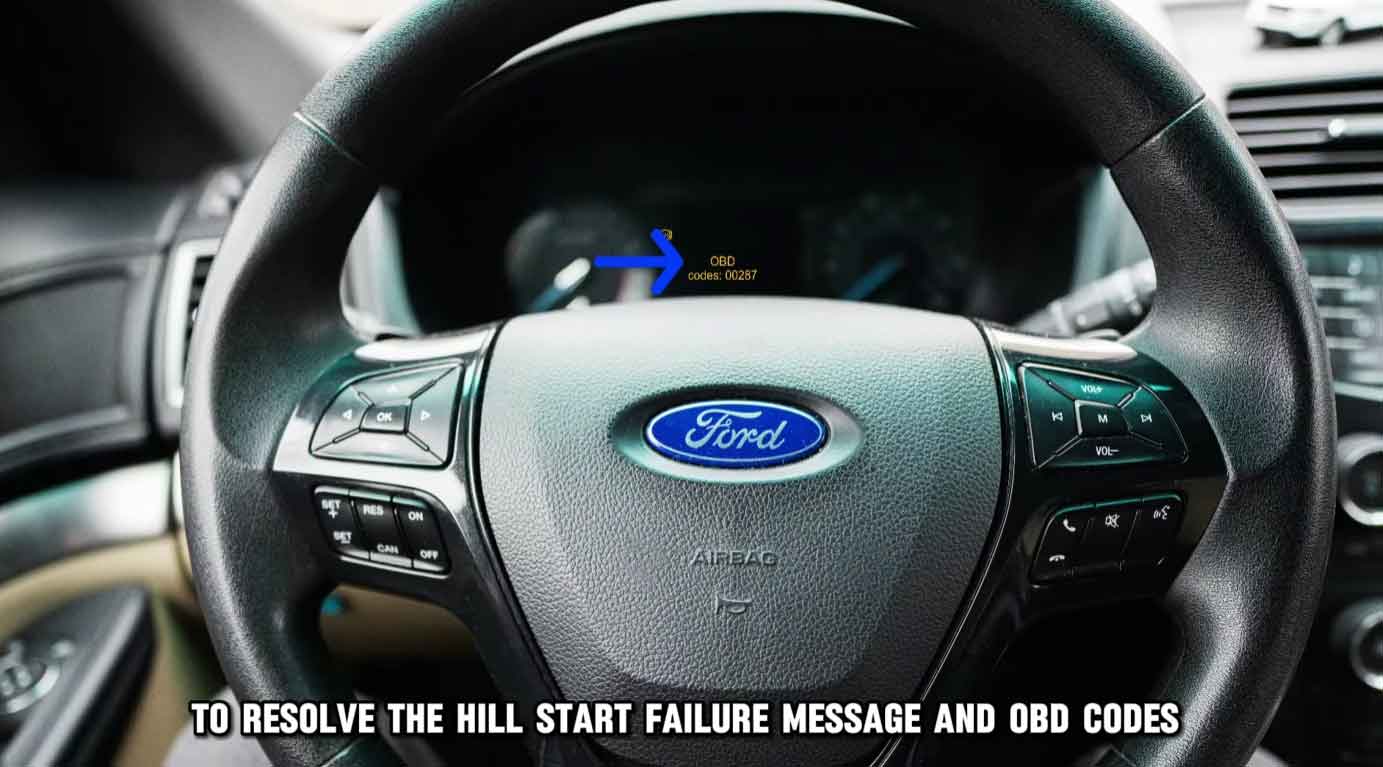
Is your Ford dashboard showing “Hill Start Assist Not Available”? This warning can pop up on Ford, BMW, and Jeep vehicles without much notice.
Hill Start Assist (HSA) is a smart safety feature in newer cars. It stops your vehicle from rolling backward when you’re stopped on a slope. In this guide, I’ll explain what this system does, why the error shows up, and how to fix it based on real shop experience.
Understanding Hill Start Assist
Hill Start Assist is a helpful feature found in most modern vehicles. It keeps your car from sliding backward when you start moving on a hill.
Here’s how it works: When you stop on an incline, the system holds brake pressure for a few seconds. This gives you time to move your foot from the brake to the gas pedal. You won’t roll back during that switch.
This feature is extra useful for manual transmission cars. It’s also great when driving in mountain areas.
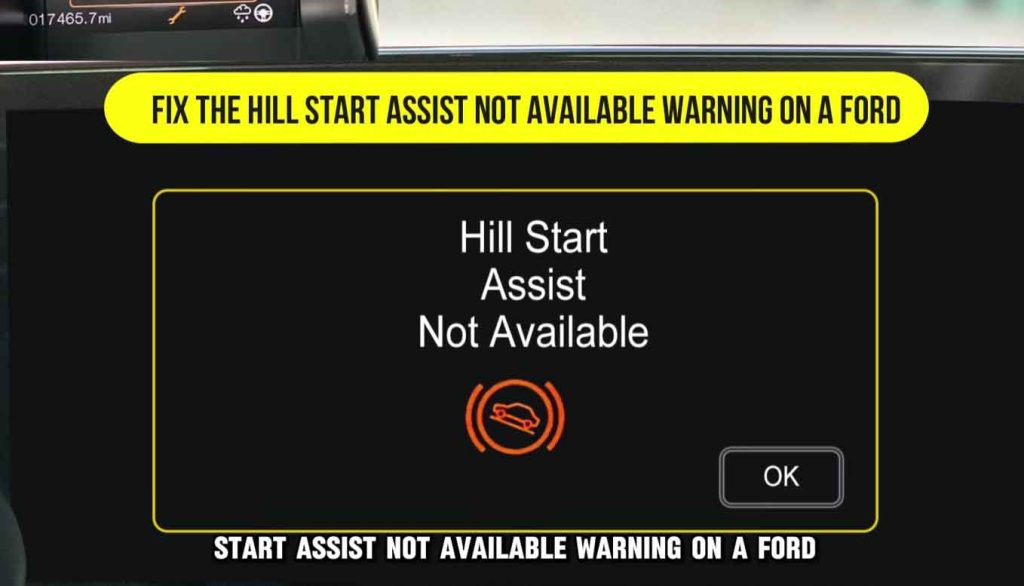
When your car’s computer detects a problem with HSA, you’ll see the warning message. This means the system has turned off or isn’t working right. Your car is telling you to get it checked.
Why Does Hill Start Assist Stop Working?
From years under the hood, I’ve seen several things cause this error. Let me break down the most common problems:
Broken Sensors
Hill Start Assist needs specific sensors to work properly. These include the slope sensor, brake pressure sensor, and wheel speed sensor.
When any of these sensors fail, the whole system shuts down. The warning light comes on right away. In my shop, I find faulty sensors cause about 40% of HSA problems.
ABS Module Problems
The Anti-lock Braking System (ABS) works closely with Hill Start Assist. Both systems share some parts.
If your ABS module goes bad, HSA stops working too. The car’s computer won’t let HSA run if it sees an ABS issue. This is a safety feature.
Dead Or Weak Battery
Hill Start Assist runs on your car’s electrical system. It’s similar to Electronic Stability Control (ESC) in that way.
A battery with low voltage can make HSA temporarily stop working. Sometimes just charging or replacing the battery fixes everything. I’ve seen this happen many times with older batteries.
Computer Software Problems
Your car’s computer controls HSA through software. Like your phone, this software can have bugs or glitches.
A software error might make the system think there’s a problem when everything is fine. Sometimes a simple software update fixes this.
Sensors Need Adjustment
After certain repairs or service work, sensors need recalibration. This means setting them up correctly again.
When sensors aren’t calibrated right, they send wrong information to the computer. The system then shuts off HSA to be safe. This happens a lot after brake work or wheel replacements.
Brake System Troubles
Your brakes must work perfectly for HSA to function. Worn brake pads or low brake fluid will cause problems.
When I service a car like this, I always check brake condition first. Bad brakes mean HSA can’t hold your car safely on a hill.
Signs Your Hill Start Assist Has Failed
You’ll notice several warning signs when HSA isn’t working. Watch for these:
Warning Light On Dashboard
The most obvious sign is the message on your instrument cluster. It clearly states “Hill Start Assist Not Available.”
Car Rolls Backward
On a hill, your car might roll back when you release the brake. This happens because HSA isn’t holding brake pressure anymore.
ABS Warning Light
Since ABS and HSA work together, you might see the ABS light turn on too. This tells you the problem involves the braking system.
Traction Control Light
The traction control warning might also appear. These systems are connected through your car’s computer network.
How To Fix Hill Start Assist Problems
Fixing this issue depends on what’s causing it. Here are proven solutions from my repair experience:
Test And Replace Bad Sensors
A professional diagnostic scan shows exactly which sensor failed. This takes about 15 minutes with the right scan tool.
Replacing a faulty slope sensor or wheel speed sensor usually solves the problem. The part costs between $50 and $200. Labor adds another $100 to $150.
Check Your Battery
Always start with the simple stuff. Test your battery voltage with a multimeter.
A healthy battery should read 12.6 volts or higher when the engine is off. Anything below 12.4 volts means it’s getting weak. Replace batteries over 4 years old if they test low.
Fix Traction Control Or ESC Issues
These problems get complicated fast. The electronic systems need special diagnostic equipment to repair.
Sometimes recalibration fixes the issue. Other times, parts need replacement. This work requires a skilled technician with the proper tools.
Service The ABS Module
When the ABS module causes trouble, diagnostic testing finds the exact problem. The module might need cleaning, repair, or replacement.
ABS module replacement is expensive. It can cost $500 to $1,500 for parts alone. Always get a second opinion before replacing this part.
Maintain Your Brake System
Regular brake inspection prevents many HSA problems. Check brake pad thickness every oil change.
Replace pads before they wear too thin. Keep brake fluid at the proper level. Use the fluid type specified in your owner’s manual. These simple steps keep HSA working right.
Update Vehicle Software
Car manufacturers release software updates regularly. These updates fix known bugs and improve system performance.
Visit your dealer to check for available updates. Many updates are free under warranty. Even out of warranty, software updates are cheaper than part replacement.
Try A Simple Reset
Sometimes the error is just a temporary glitch. Turn off your car completely. Wait 5 minutes. Then restart it.
This resets the computer system. In my shop, this simple trick works about 20% of the time. It’s worth trying before spending money on repairs.
Which Vehicles Have The Most HSA Problems?
Any car with Hill Start Assist can have issues. But some brands and models see it more often.
Based on repair records and customer complaints, here are the vehicles with frequent HSA troubles:
Ford Models:
- Ford Focus (2012-2018)
- Ford Edge (2011-2019)
- Ford Escape (2013-2019)
BMW Models:
- BMW 3 Series F30 and F31
- BMW X5 F15
- BMW X3 F25
Jeep Models:
- Jeep Cherokee (2014-2022)
- Jeep Compass (2017-2022)
Land Rover Models:
- Land Rover Discovery 5 (L550)
- Land Rover Range Rover Evoque (L538)
- Land Rover Defender (L663)
These vehicles don’t have bad HSA systems. They just have more units on the road, so problems show up more often in repair shops.
Final Thoughts
Hill Start Assist makes driving safer and easier. It’s especially helpful in hilly areas or city driving with lots of stops.
Understanding why the error appears helps you fix it faster. Regular vehicle maintenance catches most problems early. This saves you money and keeps HSA working properly.
Don’t ignore the warning light. While you can still drive your car, getting it fixed soon prevents other issues. The problem usually gets worse over time.
Frequently Asked Questions
Do I really need Hill Start Assist?
Hill Start Assist is very helpful in modern cars. It prevents rolling backward on slopes. This feature is most useful in hilly regions or with manual transmissions. However, your car drives fine without it.
How much does Hill Start Assist repair cost?
Repair costs vary based on the problem. Simple fixes like battery replacement cost $100 to $250. Sensor replacement runs $200 to $400. Major repairs involving the ABS module can cost $850 to $2,550. These are rough estimates from my shop. Get quotes from local mechanics for exact pricing.
Can I drive with the Hill Start Assist warning on?
Yes, you can drive safely with this warning. Your regular brakes still work normally. Just be extra careful when stopping on hills. Move quickly from brake to gas pedal. Getting it fixed soon is smart for safety and resale value.
Written by: Automotive Service Technician with 15+ years experience
Last Updated: November 2025