
Monday to Saturday - 9:00 am -18:00 pm

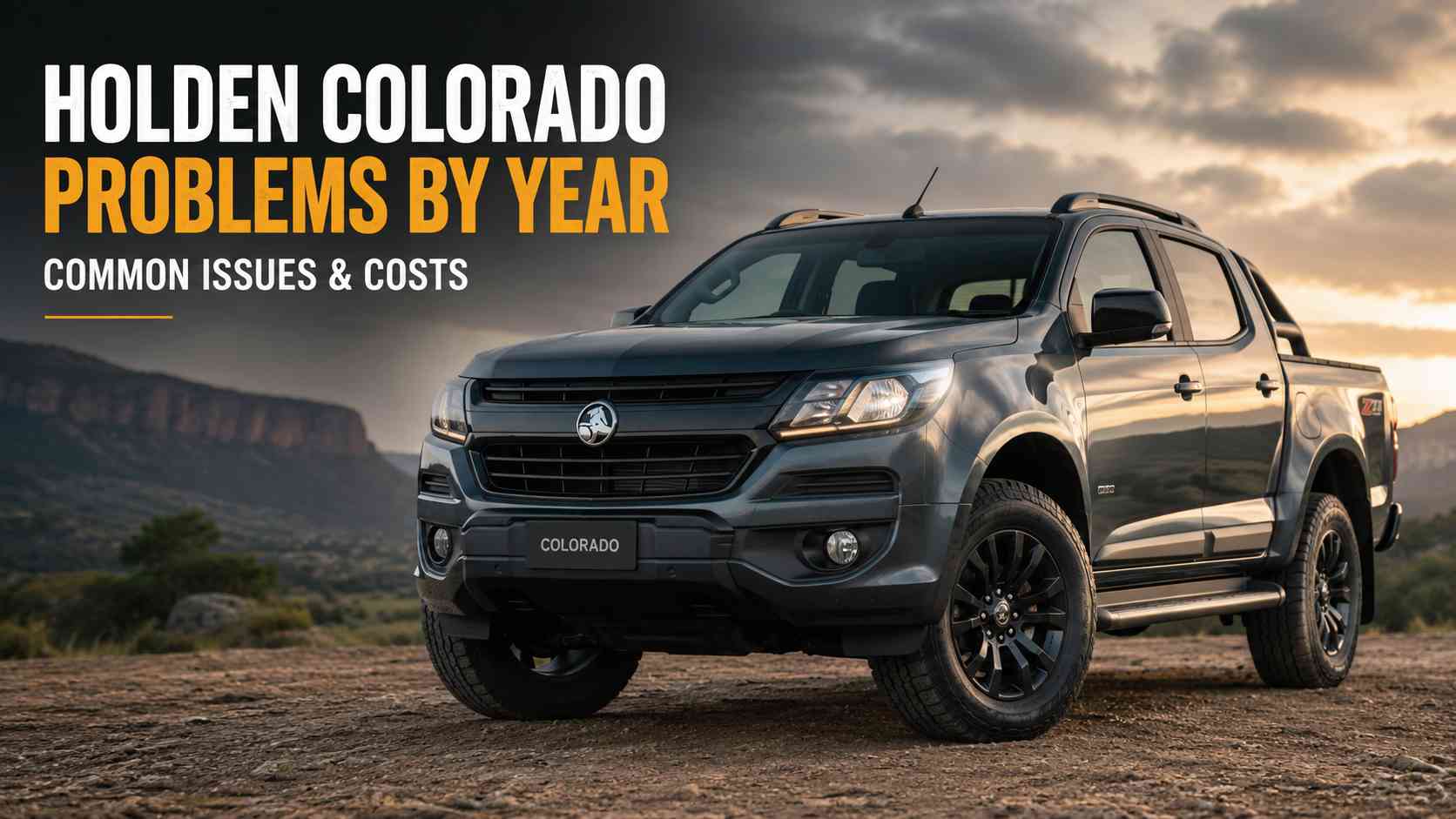
The Holden Colorado has a solid reputation as a tough workhorse. But it’s not perfect.
If you’re thinking about buying a used Colorado, or you already own one, you need to know what can go wrong. I’ve worked on dozens of these utes over the years. Some problems are cheap fixes. Others can cost thousands.
In this guide, I’ll walk you through the common Holden Colorado problems by model year. You’ll learn what to look out for, what repairs cost, and how to avoid expensive surprises.
Quick Overview of Holden Colorado Generations
The Holden RG Colorado was sold in Australia from 2012 to 2020. It replaced the Holden Rodeo and shared its bones with the Chevrolet Colorado sold overseas.
Here’s what powered these utes:
- 2012-2013: 2.8L turbo diesel (LWH engine), 132kW, 440Nm
- 2014-2020: 2.8L Duramax II turbo diesel (LWN engine), 147kW, 500Nm
- Transmission: 6-speed automatic (6L50) or 5/6-speed manual
- Towing capacity: Up to 3,500kg
The 2016 model got a significant facelift. Better interior. Revised exterior. More safety tech. The 2017 update brought Euro 5 emissions compliance.
General Motors pulled the plug on Holden in 2020. The Colorado died with the brand.
Most Common Holden Colorado Problems
Let me cut straight to it. Here are the five issues I see most often:
1. Transmission Shudder (Torque Converter Failure)
This is the number one complaint. Bar none.
The 6-speed automatic transmission develops a shudder when the torque converter locks up. You’ll feel it most between 40-80 km/h. It’s like driving over a rumble strip on a smooth road.
The cause? The torque converter clutch wears out. Fluid breakdown speeds this up.
Some Colorados develop this issue as early as 50,000 km. Others make it past 100,000 km before trouble starts.
2. DPF (Diesel Particulate Filter) Blockages
The diesel particulate filter catches soot from the exhaust. It needs to get hot enough to burn off this buildup. That process is called regeneration.
If you only drive short trips around town, the DPF never gets hot enough. Soot builds up. The filter clogs.
When this happens, you’ll see a warning message on the dash. Performance drops. Fuel economy tanks.
3. Oil Consumption
The 2.8L diesel is known for drinking oil. Many owners report adding a litre between services.
Holden addressed this by changing the recommended oil from 5W-30 to 5W-40. They also updated the dipstick design on some models.
If you’re buying used, check the oil cap. A sticker showing 5W-40 means the fix was applied.
4. Rust on Chassis and Body Panels
This one is serious. Over 10,000 Colorados were recalled in 2019 for rust problems.
The chassis paint had a defect. It cracked and let rust set in. Affected vehicles were built between 2012 and 2016.
Some owners also report rust spots appearing on body panels. Holden called this “fallout” and often blamed the owner’s location.
5. Fuel Injector Failures
The common rail diesel system runs at extremely high pressure. Injectors can fail after 70,000-100,000 km.
Warning signs include:
- Hard starting
- Rough idle
- Excessive smoke
- Loss of power
- Engine going into limp mode
A failed injector can damage the piston if you keep driving. Get it checked immediately.
Problems by Model Year (2012-2020)
2012-2013 Holden Colorado Problems
These early models have the most issues. They were the first of the RG series.
Common problems:
- Fuel pipe rubbing against wiring harness (recall issued)
- Oil consumption higher than later models
- Transmission shudder develops earlier
- Suspension squeaking from shock absorber pins
- Water leaks into cabin through roof-mounted brake light
Best to avoid? These years have more risk. Buy only with a full service history.
2014 Holden Colorado Problems
The 2014 model got the upgraded Duramax II engine. More power. More torque. But also new problems.
Common problems:
- Fifth gear jump-out on manual models (recall issued)
- Alternator cable fire risk (major recall for 26,000 vehicles)
- Seatbelt bolt issues
- Oil consumption continues (service bulletin released)
What to check: Make sure all recalls were completed. Ask for paperwork.
2015-2016 Holden Colorado Problems
These years refined the formula. Still had inherited issues.
Common problems:
- Torque converter shudder remains
- DPF blockages if used for city driving
- Transmission software issues (recall for 2015-2017 models)
- Chassis rust (part of 2019 recall)
- Dipstick giving inaccurate readings (service bulletin issued)
Improvements: Holden released revised shock absorber pins to fix suspension squeaking.
2017 Holden Colorado Problems
The 2017 facelift brought fresh styling and Euro 5 compliance. Some problems remained.
Common problems:
- Transmission shudder
- DPF issues on short-trip vehicles
- Torque converter failures continuing
- Some injector failures reported
Good news: By 2017, Holden had addressed many teething problems. Build quality improved.
2018-2020 Holden Colorado Problems
The final years saw fewer major issues. But they weren’t problem-free.
Common problems:
- Torque converter clutch wear (still happens)
- DPF blockages for city drivers
- Electric window failures
- Interior trim quality complaints
Best years? 2018 onwards are generally more reliable. Fewer recalls. Better refinement.
Major Recalls You Should Know About
The Holden Colorado had several serious recalls. Check that any used vehicle has had these completed.
April 2015: Fire Risk (26,170 vehicles)
The alternator cable could rub against a steel bracket. The insulation would wear through. This could cause a short circuit and fire.
Affected models were built from September 2013 to January 2015.
July 2015: Seatbelt Bolt Missing (4,197 vehicles)
A bolt securing the rear seatbelt anchor bracket may not have been fitted during production.
September 2016: Seatbelt Retractor (2,714 vehicles)
The front seatbelt retractor bolt may not have been properly tightened.
2017: Transmission Software (10,000+ vehicles)
Transmission software could cause shifting issues or gear slippage. Affected models were built between 2015 and 2017.
2019: Chassis Rust (10,000+ vehicles)
Chassis paint defects could cause cracking and rust. Affected vehicles were built between 2012 and 2016.
Repair Cost Breakdown
Here’s what you can expect to pay for common Holden Colorado repairs. These are Australian estimates.
| Problem | Repair | Cost (AUD) |
|---|---|---|
| Transmission shudder | Fluid flush only | $150-$400 |
| Transmission shudder | Torque converter replacement | $1,500-$3,500 |
| Transmission failure | Full rebuild/replacement | $4,000-$8,000 |
| DPF blockage | Professional cleaning | $400-$800 |
| DPF failure | Replacement | $800-$8,000 |
| Fuel injector | Single injector replacement | $300-$500 |
| Fuel injectors | Full set replacement | $1,200-$2,000+ |
| Oil consumption | Switch to 5W-40 oil | $100-$150 |
| Rust repair | Minor panel work | $500-$2,000 |
| Rust repair | Chassis treatment | $1,000-$5,000+ |
Important: Many repairs are covered under warranty or extended warranty programs. Holden knew about the torque converter problem and often covered repairs beyond standard warranty.
If you’re a second owner, you may still be covered. Ask the dealer to check.
Common Mistakes Owners Make
I’ve seen too many Colorado owners make these errors. Don’t be one of them.
Mistake 1: Ignoring the Transmission Flush
The automatic transmission fluid needs regular changing. GM says it’s “sealed for life.” That’s rubbish.
Change the fluid and filter every 40,000-50,000 km. Use the correct spec fluid. This prevents torque converter problems.
Mistake 2: Short-Trip Driving Without Highway Runs
Diesels with DPF systems need regular highway driving. At least 30 minutes at highway speeds every week or two.
If you only drive around town, the DPF clogs. Then you’re up for expensive cleaning or replacement.
Mistake 3: Using the Wrong Oil
The 2.8L diesel is picky about oil. Use low-ash diesel oil that meets Dexos 2 specifications.
Wrong oil accelerates wear and causes DPF problems.
Mistake 4: Skipping Injector Cleaning
Diesel injectors benefit from quality fuel and regular cleaning additives. Use a reputable fuel system cleaner every 10,000 km.
Poor fuel quality clogs injectors faster.
Mistake 5: Not Checking Oil Between Services
The 2.8L can consume oil. Check your level every 1,000 km or before long trips.
Running low on oil causes serious engine damage.
How to Check a Used Holden Colorado
Planning to buy a used Colorado? Here’s my inspection checklist.
Before the Test Drive
- Check for recalls: Use the VIN to verify all recalls are completed
- Service history: Full records are essential
- Oil cap: Look for 5W-40 sticker (means oil consumption fix applied)
- Underbody rust: Get under there and inspect the chassis
- DPF warning: Check if the DPF light is on or has been recently
During the Test Drive
- Transmission shudder: Drive at 40-80 km/h on a smooth road
- Gear changes: Feel for smoothness or hesitation
- Engine smoke: Check mirrors for unusual exhaust smoke
- Warning lights: Watch the dash carefully
- Starting: Does it crank easily when cold?
Red Flags
Don’t buy if you see:
- Heavy transmission shudder
- DPF warning light
- Black smoke from exhaust
- Rust on chassis rails
- Missing service records
- Oil sludge under filler cap
FAQ
Is the Holden Colorado a reliable vehicle?
Overall, yes. The 2.8L Duramax engine is solid and can last 300,000+ km with proper maintenance. The main weakness is the 6-speed automatic transmission. Keep up with fluid changes and it should serve you well.
Which Holden Colorado years are best to buy?
The 2018-2020 models are generally the most reliable. They had the fewest recalls and benefited from years of refinements. The 2017 facelift models are also good options.
Which Holden Colorado years should I avoid?
The 2012-2014 models have the most issues. Multiple recalls. Higher oil consumption. More transmission problems reported. If buying from these years, ensure all recalls are completed and get a pre-purchase inspection.
How long does a Holden Colorado transmission last?
With proper fluid changes every 40,000-50,000 km, the 6-speed automatic can last 200,000+ km. Without maintenance, torque converter problems can appear as early as 50,000 km.
What does it cost to fix the Colorado transmission shudder?
A transmission fluid flush costs $150-$400 and fixes many cases. If the torque converter is damaged, expect $1,500-$3,500 for replacement. Full transmission rebuild runs $4,000-$8,000.
Can I drive with a blocked DPF?
Not recommended. A blocked DPF reduces power and damages other components. If the warning light comes on, drive at highway speeds for 30+ minutes. If that doesn’t clear it, get professional cleaning.
Are Holden Colorado parts still available?
Yes. GM committed to supplying parts for at least 10 years after Holden’s closure. Spare parts are available through authorised service centres and aftermarket suppliers.
What oil should I use in a Holden Colorado diesel?
Use 5W-40 low-ash diesel oil that meets Dexos 2 specifications. Holden updated the recommendation from 5W-30 to reduce oil consumption.
Final Thoughts
The Holden Colorado is a capable ute. It can tow heavy loads. It handles Australian conditions well. The 2.8L Duramax engine is tough when maintained properly.
But you need to know about the weak points.
The torque converter issue is real. Regular fluid changes help prevent it. DPF problems hit owners who don’t drive on highways regularly. Rust affected early models.
If you’re buying used, stick to 2017 or later models when possible. Always check recall status. Get a pre-purchase inspection from someone who knows these vehicles.
Maintain it right, and a Colorado will give you years of reliable service.
Got questions about a specific Colorado? Drop a comment below. I’ll help where I can.
Stay safe on the road.
This article was written by the Mechanic Voice team. We’re qualified mechanics with hands-on experience working on Holden Colorado vehicles across all model years.