
Monday to Saturday - 9:00 am -18:00 pm

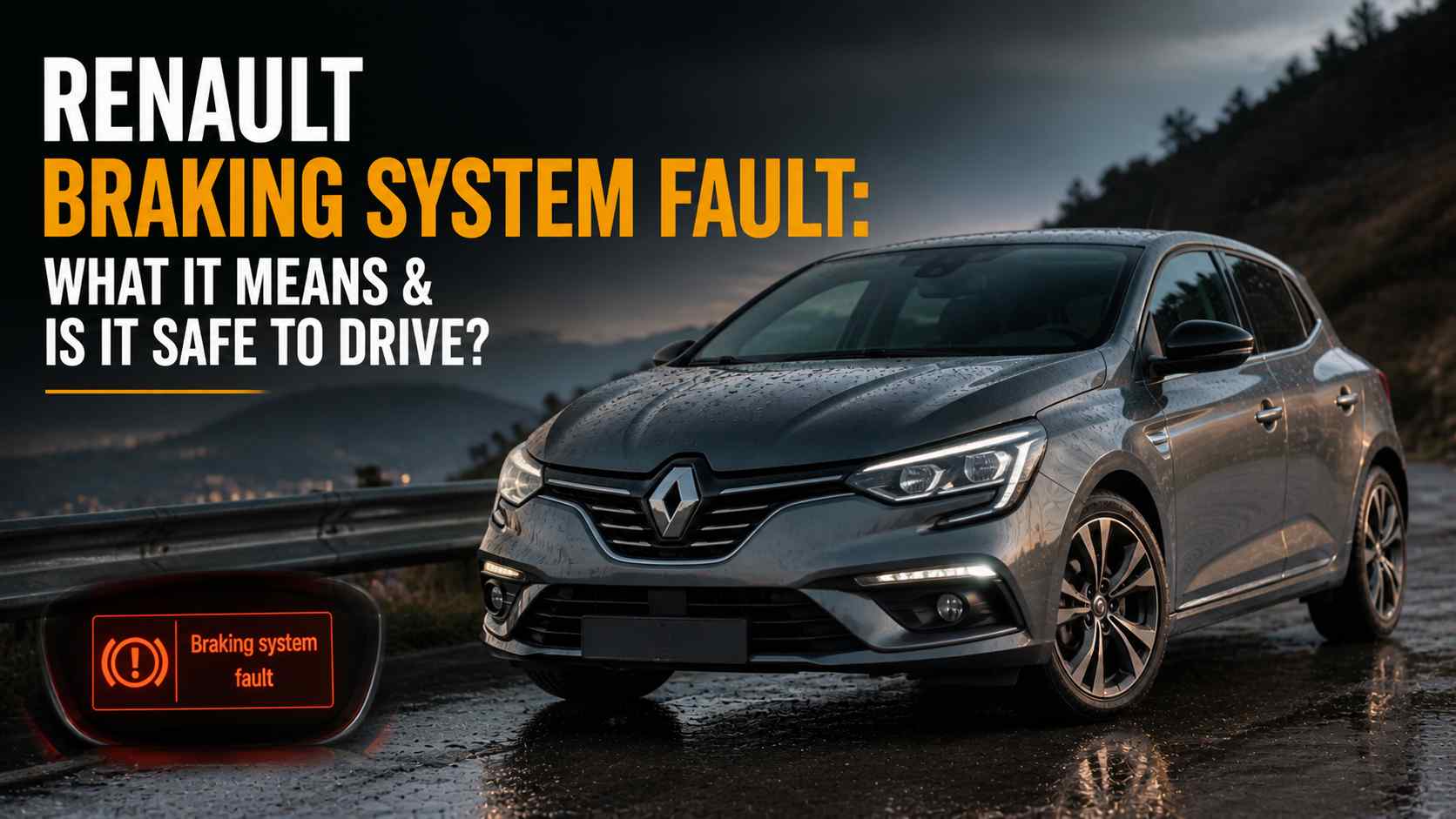
You’re driving your Renault. Suddenly, a warning flashes on your dashboard: “Braking System Fault.”
Your heart skips a beat. What does this mean? Can you keep driving?
Don’t panic. I’ve seen this warning hundreds of times in the shop. Most of the time, the fix is simpler than you think.
In this guide, I’ll explain exactly what causes this warning. You’ll learn when it’s safe to drive—and when you need to stop immediately. I’ll also show you simple checks you can do yourself before heading to a mechanic.
Let’s get your Renault sorted.
What Does “Braking System Fault” Mean?
Your Renault has a computer brain called the ECU. It monitors everything—including your brakes.
When the ECU detects a problem with the braking system, it sends a warning to your dashboard. This warning might say:
- “Braking System Fault”
- “STOP” with a brake symbol
- A red exclamation mark in a circle
The warning usually comes with a beep. Sometimes the ABS light turns on too.
This doesn’t always mean your brakes have failed. It means the computer found something wrong. The problem could be minor. Or it could be serious.
Your brakes have many parts:
- Brake fluid
- Brake pads
- Brake discs (rotors)
- Calipers
- ABS sensors
- Master cylinder
- Brake lines
A fault in any of these parts can trigger the warning.
Is It Safe to Drive With This Warning?
Here’s the honest answer: It depends.
If only the ABS light is on, you can usually drive carefully to a garage. Your regular brakes should still work. But your anti-lock system won’t help in an emergency stop.
Stop driving immediately if:
- Both the brake warning light AND ABS light are on
- The brake pedal feels soft or spongy
- The pedal goes to the floor
- You hear grinding or scraping sounds
- The car pulls to one side when braking
- You see “STOP” on the dashboard
These signs mean your brakes could fail. Pull over safely. Call for roadside assistance.
You can drive carefully to a garage if:
- The warning flashes briefly then disappears
- Your brakes feel normal
- Only the ABS light is on
- The warning appeared after going over a bump
Even in mild cases, don’t ignore the warning. Get it checked within a day or two.
7 Common Causes of Renault Brake Faults
1. Low Brake Fluid
This is the number one cause I see. It’s also the easiest to fix.
Brake fluid is like blood for your brakes. Without enough fluid, the brakes can’t build pressure. They won’t stop your car properly.
The fluid level drops for two reasons:
- Your brake pads are worn (fluid fills the space where the pads used to be)
- You have a leak somewhere
Renault vehicles are known for having sensitive fluid level sensors. Even a slight drop triggers the warning.
2. Worn Brake Pads
Brake pads press against the disc to stop your car. They wear down over time. That’s normal.
Modern Renaults have brake pad sensors. These little wires detect when the pads get too thin. When triggered, you’ll see the warning light.
Signs your pads are worn:
- Squealing or squeaking when you brake
- Grinding noise (metal on metal)
- Takes longer to stop
- Visible pad thickness less than 3mm
3. Faulty ABS Sensor
Each wheel has an ABS sensor. It tells the computer how fast that wheel is spinning.
If a sensor fails, the ABS system shuts down. The brake warning light comes on.
ABS sensors often fail because of:
- Dirt and brake dust buildup
- Corrosion from road salt
- Broken wires
- Damage from potholes
The warning might come and go if the sensor is dirty. A good cleaning sometimes fixes it.
4. Weak or Old Battery
This one surprises many drivers.
Your Renault’s brake system is electronic. It needs steady power. An old or weak battery can cause voltage drops.
When voltage drops, the ABS module gets confused. It triggers a false warning.
If your battery is more than 4 years old, this could be the culprit. Many Renault owners report the brake warning disappearing after a battery change.
5. Corroded Brake Components
Moisture is the enemy of brakes.
Over time, water gets into brake parts. Metal starts to rust. Sensors get corroded. Connections become unreliable.
This is especially common on:
- Rear brake sensors
- Caliper slide pins
- Brake lines
- Electrical connectors near wheels
Cars in wet climates or coastal areas suffer more from corrosion.
6. Faulty Brake Fluid Sensor
The sensor in your brake fluid reservoir can fail. It sits in the fluid all day, every day. Eventually, it wears out.
When the sensor fails, it sends wrong information to the ECU. You get a warning even though your fluid level is fine.
This is a common Renault issue. Many owners on forums report this exact problem.
7. ABS Pump or Module Failure
This is the expensive one.
The ABS pump controls brake pressure to each wheel. If it fails, your brakes won’t work properly.
Signs of a failing ABS pump:
- Brakes feel uneven
- Car pulls to one side when stopping
- “No communication” errors on diagnostic tools
- Rear brakes stick on (common on Renault Clio)
ABS module failure is more common on Renault Clios from 2012-2018.
How to Check Your Brakes at Home
You can do these simple checks before visiting a mechanic.
Check 1: Brake Fluid Level
- Open your bonnet (hood)
- Find the brake fluid reservoir—it’s a small plastic container near the back of the engine bay
- Look at the side of the container
- Fluid should be between MIN and MAX marks
If the fluid is low, you can top it up. Use DOT4 brake fluid. Check your cap—it tells you the correct type.
Important: Low fluid often means worn brake pads. Check the pads next.
Check 2: Listen for Strange Sounds
Start your car. Drive slowly. Apply the brakes gently.
Do you hear:
- Squealing? (Pads might be worn)
- Grinding? (Pads are completely worn—stop driving)
- Clicking? (Could be a loose component)
Check 3: Test the Brake Pedal
With the engine running, press the brake pedal.
- Does it feel firm? Good.
- Does it feel spongy or soft? Problem.
- Does it sink to the floor? Stop driving immediately.
Check 4: Visual Inspection
Look through your wheel spokes. You should see the brake disc and pad.
The pad should be at least 3mm thick. If you can barely see any pad material, it’s time for new pads.
Check 5: Reset the System
Sometimes the warning is a glitch. Try this:
- Turn off your engine
- Disconnect the negative battery cable
- Wait one minute
- Reconnect the cable
- Start the car
If the warning stays off, it was likely a false alarm. But keep an eye on it.
How Much Will Repairs Cost?
Here’s what you might pay for common brake repairs. Prices are estimates for the UK and US.
| Repair | UK Cost | US Cost |
|---|---|---|
| Brake fluid top-up | £10-20 | $15-30 |
| Brake pad replacement (one axle) | £100-200 | $150-300 |
| Brake disc replacement (one axle) | £150-300 | $200-400 |
| ABS sensor replacement | £80-150 | $100-200 |
| Brake pad sensor | £20-50 | $30-70 |
| ABS module repair/replacement | £300-800 | $400-1,000 |
| Brake fluid flush | £50-100 | $70-150 |
Labour costs vary. Independent garages charge less than Renault dealers.
Tip: If you’re handy, brake pads and sensors are DIY-friendly repairs. ABS work needs a professional.
Which Renault Models Are Most Affected?
Some Renaults have more brake issues than others.
Renault Clio (2012-2018)
The ABS pump and module commonly fail. This causes rear brakes to stick. The ABS light stays on permanently.
Renault Captur
Owners report intermittent “Braking System Fault” warnings. Usually caused by:
- Sensitive brake fluid sensor
- Low fluid from pad wear
Renault Megane (Mk3)
The warning often flashes briefly then disappears. Common causes:
- Dirty ABS sensors
- Worn rear brake pads
- Fluid level just touching the minimum mark
Renault Scenic
Family-focused vehicles with lots of electronics. ABS and brake sensor issues are common.
Renault Trafic
Commercial vans that work hard. Brake pad wear happens faster due to heavy loads.
Common Mistakes Drivers Make
Mistake 1: Ignoring the Warning
The light came on. Then it went off. Must be nothing, right?
Wrong. Intermittent warnings often get worse. What starts as a dirty sensor becomes a failed sensor. What starts as low fluid becomes air in the brake lines.
Get it checked early. Save money later.
Mistake 2: Topping Up Fluid Without Checking Pads
Brake fluid goes down as pads wear. If you keep topping up without checking pads, you’re masking the real problem.
When you finally replace the worn pads, pushing the caliper pistons back can overflow the reservoir. This makes a mess and damages paint.
Mistake 3: Using the Wrong Brake Fluid
DOT3, DOT4, DOT5—they’re not the same.
Most Renaults use DOT4. Check your reservoir cap or owner’s manual.
Never mix DOT5 (silicone-based) with other types. It will destroy your brake system.
Mistake 4: Driving “Just a Little Bit Longer”
Brakes are not optional. They’re the only thing stopping 1,500 kg of metal from hitting something.
If your brake pedal feels wrong, stop driving. No journey is worth the risk.
Mistake 5: Clearing the Code Without Fixing the Problem
Some people use an OBD2 scanner to clear the warning light. The light goes off. Problem solved?
No. The problem is still there. The light will come back. And the underlying issue might get worse.
FAQ
What does “Braking System Fault” mean on a Renault?
It means your car’s computer has detected a problem with the braking system. This could be low fluid, worn pads, a faulty sensor, or an issue with the ABS. The warning tells you to get your brakes checked.
Can I still drive my Renault with the brake warning light on?
It depends on the symptoms. If only the ABS light is on and your brakes feel normal, you can drive carefully to a garage. If the brake pedal feels soft, spongy, or goes to the floor, stop driving immediately and call for assistance.
Why does my Renault brake warning come on then go off?
This usually happens when brake fluid is right at the minimum level. Fluid sloshes around when you turn or brake. When it drops below the sensor, the warning appears. When it rises again, the warning goes off. Top up your fluid and check your brake pads.
How do I reset the brake warning light on my Renault?
First, fix the underlying problem. Then the light should go off on its own. Some warnings clear after you turn the car off and on. If the light persists after repairs, you may need a diagnostic scan to reset the system.
How much does it cost to fix a Renault braking system fault?
Costs range from £10 for a fluid top-up to over £500 for ABS module repairs. Most common fixes (pads, sensors, fluid) cost between £100-200 at an independent garage.
Is a brake system fault covered under warranty?
If your Renault is under manufacturer warranty, brake defects may be covered. Wear items like pads and discs usually aren’t covered. Check your warranty terms or ask your dealer.
Can a low battery cause a brake system fault?
Yes. Renaults rely on electronics for braking systems. A weak battery causes voltage drops that confuse the ABS module. If your battery is old, replacing it might fix the warning.
How often should I check my Renault’s brake fluid?
Check it monthly. A quick glance at the reservoir takes seconds. Top up if it’s near the minimum mark. Replace the fluid every 2-4 years—it absorbs moisture over time.
Final Thoughts
A “Braking System Fault” warning on your Renault isn’t always an emergency. But it’s never something to ignore.
Here’s what to do right now:
- Assess your brakes—do they feel normal?
- Check your brake fluid level
- Look for obvious signs of wear
- Get to a garage within 24-48 hours if brakes feel fine
- Call for help immediately if something feels wrong
Most brake faults have simple fixes. Low fluid. Worn pads. Dirty sensors. A 30-minute repair can save you from a dangerous situation.
Your brakes are your most important safety feature. Give them the attention they deserve.
Stay safe on the road.
Have questions about your Renault’s brakes? Drop a comment below. We’re here to help.