
Monday to Saturday - 9:00 am -18:00 pm

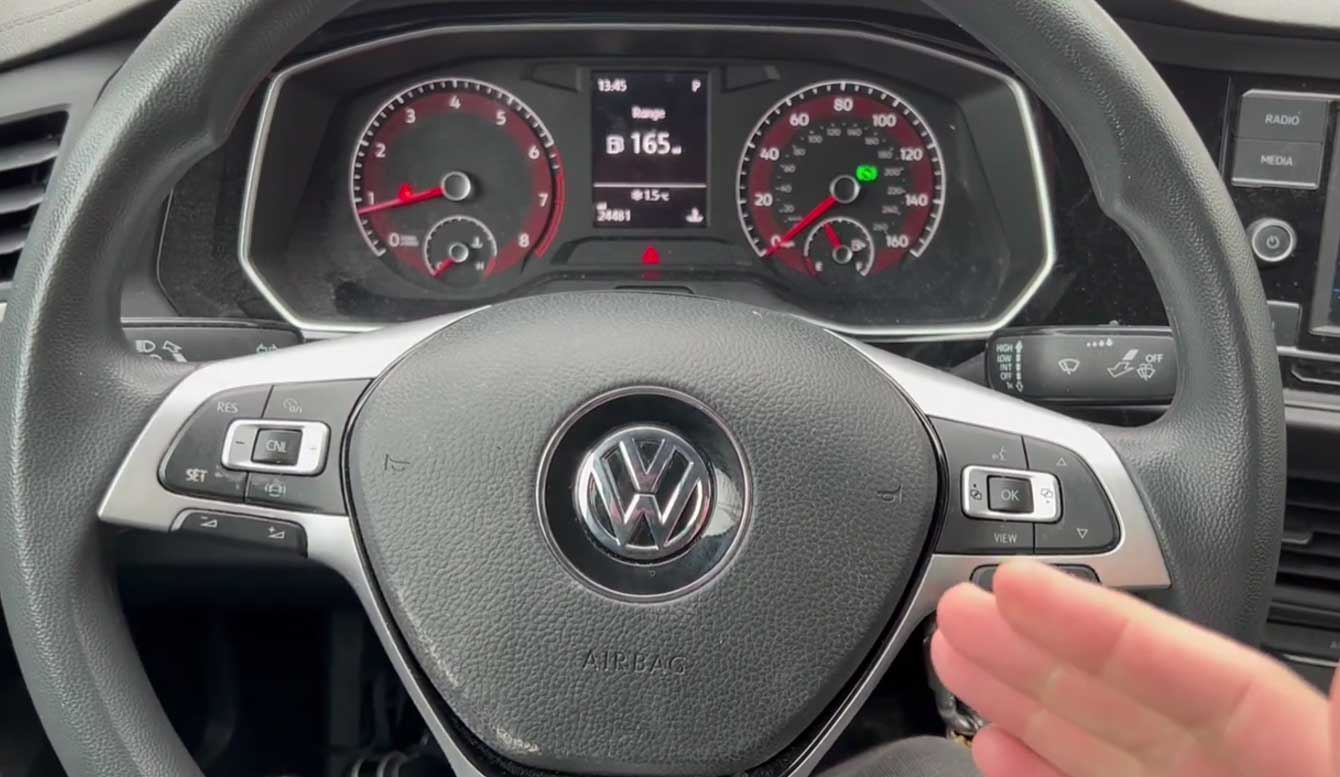
Your Volkswagen’s dashboard just lit up with a coolant warning. Your heart sinks. Can you drive to the garage? Will your engine blow up? Should you pull over now?
I’ve seen panicked VW owners ignore this light for weeks. I’ve also seen others panic and call a tow truck when a simple top-up would fix it.
The truth is simpler than you think. But you need to know the difference between two types of warnings. And you need to know right now if your car is actually dangerous to drive.
In this guide, you’ll learn:
- What your VW’s coolant warning actually means
- Why there are two different warnings (and why that matters)
- Whether you can drive to the shop safely
- How to check your coolant yourself
- What causes these warnings in VWs
- Common mistakes that make the problem worse
Let’s get straight to the point.
The Two Coolant Warnings (And Why They’re Different)
Here’s what most guides get wrong: they lump all coolant warnings together.
Your VW actually has two separate warnings. They look different. They mean different things. And they need different responses.
Coolant Level Warning: Shows a thermometer in coolant. Usually blue or white. This means your coolant fluid is low.
Coolant Temperature Warning: Shows a thermometer with a red warning symbol. This means your engine is overheating.
Think of it like a car’s fuel tank. One warning says “you’re low on fuel.” The other says “your fuel pump is on fire.” Very different problems.
Let me explain each one.
Coolant Level Warning: The Safe One
What It Means
Your coolant level has dropped below the minimum mark. The sensor in your coolant reservoir detected this and triggered the warning.
This is the less urgent of the two warnings.
It does NOT mean your engine is hot. It just means you don’t have enough coolant fluid in the system.
Why Your Coolant Level Drops
Normal reasons:
- Seasonal temperature changes (coolant contracts in winter, expands in summer)
- Your cooling system is just low and needs a top-up
- Coolant evaporates over time (especially in hot weather)
Problem reasons:
- Your system has a small leak (hose, connection, or water pump)
- Radiator is cracked
- Head gasket is failing (rare, but serious)
The warning doesn’t tell you which one it is. That’s your job to figure out.
Is It Safe to Drive?
Short answer: Usually yes, but carefully.
If the warning just came on and your temperature gauge is normal, you can drive to a garage. Keep the distance short (under 10 miles). Watch your temperature gauge like a hawk.
Do NOT ignore it. Driving on low coolant is like running your car on fumes. Eventually, the system overheats. Then you’ve got a real problem.
What to Do Right Now
- Pull over somewhere safe
- Let your engine cool for 10 minutes (coolant is boiling hot)
- Open your bonnet (hood)
- Find the coolant reservoir (usually a translucent plastic tank, marked “coolant” or with a snowflake symbol)
- Check the level against the min/max marks
- Top it up with the correct coolant for your VW
- Close the radiator cap carefully
- Check again after your engine cools
Important: If the level drops again within a week, you have a leak. Get it checked.
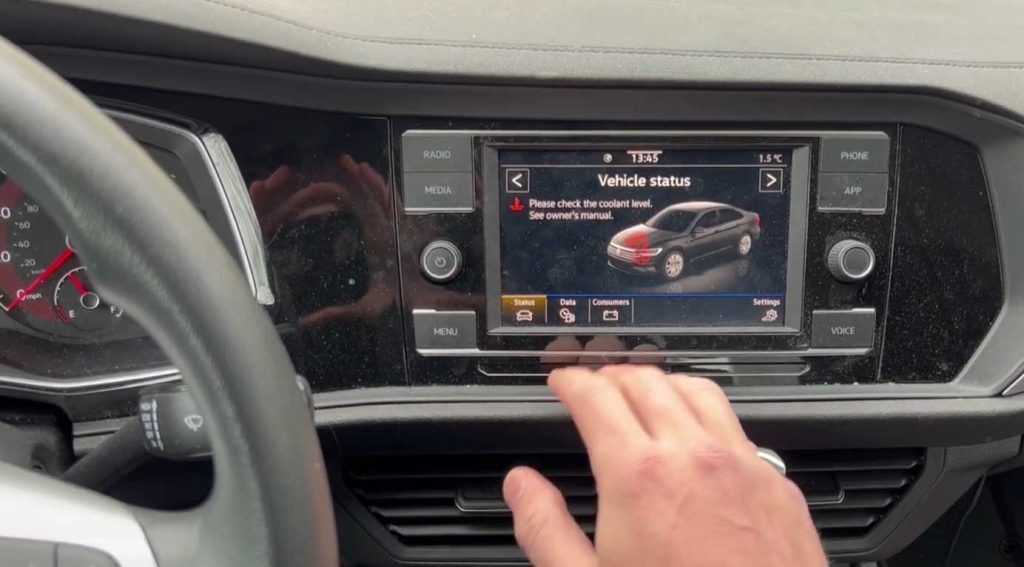
Coolant Temperature Warning: The One That Needs Attention
What It Means
Your engine temperature has hit the red zone. It’s overheating. Right now.
This is the serious one. Your engine can suffer permanent damage if you keep driving.
The Difference Between “Low Coolant” and “Overheating”
Low coolant = not enough fluid in the system.
Overheating = your engine is running too hot, which can happen because:
- You’re out of coolant (and the system can’t cool anymore)
- Your thermostat is stuck
- Your water pump has failed
- Your radiator fan isn’t working
- Your radiator is clogged
All of these end the same way: your engine gets dangerously hot.
Is It Safe to Drive?
Short answer: No. Pull over immediately.
Driving an overheating engine is like driving with the brakes on fire. You might make it a few miles. But you’re gambling with thousands of pounds of engine damage.
Coolant boils. Metal expands. Gaskets blow. Cylinder heads crack. These repairs cost £1,000–£3,000+.
When your temperature warning comes on:
- Turn off the air conditioning (it makes the engine hotter)
- Turn the heating on full blast (it pulls heat away from the engine)
- Reduce speed and drive gently to the nearest safe place
- Pull over and turn off the engine
- Wait 20 minutes before opening the bonnet (steam will burn you)
- Call a mechanic or breakdown service
Do not drive further unless the temperature returns to normal and stays there.
Can You Drive with a Coolant Warning?
It depends on which warning.
Coolant Level Warning
Can you drive? Yes, short distances only.
How far? Up to 10 miles if you’re in a safe area with repair shops nearby.
How do you know it’s safe? Your temperature gauge stays in the normal zone. Not creeping up. Not in the red.
What do you do? Drive slowly. No motorway speeds. Keep watching the temperature gauge. Get to a garage as soon as possible.
What if the temperature starts climbing? Pull over immediately. Turn off the engine. This is now a temperature warning scenario.
Coolant Temperature Warning
Can you drive? No.
How far? Get to the nearest safe place and stop.
Why? Every mile you drive with an overheating engine increases the risk of permanent damage. You’re not saving money. You’re gambling it away.
What do you do? Follow the steps in the section above. Call a breakdown service if you’re far from a garage.
How to Check Your Coolant
This takes five minutes and could save you a breakdown call.
What You Need
- Your VW’s manual (to find the right coolant type)
- Coolant (the correct type for your VW)
- A funnel (optional but helpful)
- Time for the engine to cool (at least 10 minutes after turning it off)
Step-by-Step
Step 1: Let the engine cool
Hot coolant is under pressure and will burn you badly. Wait at least 10 minutes. 30 minutes is better.
Step 2: Open your bonnet
Pull the bonnet release inside your car, then lift from the front.
Step 3: Find the coolant reservoir
It’s usually a translucent plastic tank on the side of the engine bay. Look for the snowflake or “coolant” symbol on the cap. It’s normally white or yellow.
Do NOT confuse it with your water washers reservoir (smaller, usually clear).
Step 4: Check the level
Look at the side of the tank. There are min and max marks. Your coolant should be at or slightly above the min mark when cold, and between min and max when hot.
If it’s below the min mark, you need to top it up.
Step 5: Top it up carefully
- Use the correct coolant for your VW (usually G12 or G13, depending on the model year)
- Unscrew the cap slowly (pressure may have built up)
- Use a funnel to pour coolant in
- Don’t overfill—stop at the max mark
- Screw the cap back on firmly
Step 6: Check after a week
If the level drops again, you have a leak. Get it inspected by a mechanic.
What Coolant Does Your VW Need?
VW uses three main coolant types:
- G11 (older cars): Green. Being phased out.
- G12 (common): Red or pink. Standard in most modern VWs.
- G13 (newest): Violet or purple. Some newer models use this.
Do NOT mix them. They’re not compatible. Using the wrong type can damage your cooling system.
Check your manual or the coolant cap itself (it usually says G12 or G13).
If you’re not sure, ask a VW dealer or bring the manual to any auto parts shop. They’ll find the right one.
Common Causes in Volkswagens
VWs are reliable cars. But they have common cooling system problems. Here’s what I’ve seen most often.
Coolant Level Drops (Low Coolant Warning)
Small leak in a hose
Rubber hoses crack with age. A pinhole leak means coolant drips slowly. You might not even see it on your driveway. But the level drops over weeks.
Faulty coolant sensor
The sensor that triggers the warning can fail. Sometimes it says “low” when you actually have plenty. Sometimes it says nothing when you’re actually low.
Water pump seal wearing out
The water pump circulates coolant. The seal around it can wear out and weep slowly. This is a slow leak that builds into a bigger problem.
Radiator leak
Radiators corrode from the inside out. You might see coolant weeping from the bottom or sides. Or it might be internal, and you only notice the level dropping.
Head gasket failure (rare)
This is serious. Coolant leaks into the combustion chamber and burns off. You won’t see a puddle under your car, but the level keeps dropping. Other signs include white smoke from the exhaust and a milky appearance to your engine oil.
Engine Overheating (Temperature Warning)
Coolant level too low
This is the number one cause. No coolant = no cooling = hot engine.
Thermostat stuck closed
The thermostat controls coolant flow. If it sticks shut, coolant can’t reach the radiator. Your engine heats up fast.
Radiator fan not working
Your VW has an electric cooling fan. It should kick in when the engine gets warm. If the fan doesn’t spin, the radiator can’t shed heat.
Clogged radiator
Dirt and debris block the airflow through the radiator. The radiator can’t cool the coolant effectively.
Water pump failure
The pump moves coolant around the system. If it fails, coolant sits still and doesn’t cool.
Common Mistakes VW Owners Make
I see these mistakes all the time. They make the problem worse.
Mistake 1: Ignoring the warning for weeks
“It’s just a light. It’ll go away.”
Nope. That light is your car’s way of saying “I need help.” Ignoring it is like ignoring a pain in your chest. Eventually, something breaks.
What to do instead: Check your coolant level within 24 hours. If it’s low, top it up. If it drops again, get it inspected.
Mistake 2: Opening the radiator cap immediately
Your mate does this. He opens the cap right after turning off the engine.
The cooling system is pressurized and boiling hot. Coolant sprays out. It burns skin badly.
What to do instead: Wait at least 10 minutes. 30 minutes is safer. And when you do open it, turn the cap slowly to release pressure gradually before unscrewing fully.
Mistake 3: Driving hard to “cool down” the engine
“I’ll just drive faster and get more airflow.”
Wrong. Driving hard creates more heat. It’s the opposite of what you need.
What to do instead: Slow down. Turn off air conditioning. Turn on heating. Drive gently to the nearest safe place.
Mistake 4: Mixing coolant types
“Coolant is coolant, right?”
No. VW’s G11, G12, and G13 are not compatible. Mixing them can cause rust, clogs, and seal damage.
What to do instead: Always use the type specified in your manual. When in doubt, ask.
Mistake 5: Ignoring a repeated coolant drop
“It’s just low. I’ll keep topping it up.”
If your coolant level drops every week or month, you have a leak. Topping it up is a band-aid. The real problem is still there.
What to do instead: After topping it up twice, get the system inspected by a mechanic. A leak finder dye costs about £50 and saves you thousands in engine damage.
Mistake 6: Driving on the motorway with a coolant warning
“It’s only an hour away.”
Motorway speeds create more heat. An already-stressed cooling system will fail.
What to do instead: If the warning comes on, pull off the motorway immediately. Find a garage or call breakdown cover.
FAQ
1. Can I drive to a VW dealer with a coolant level warning?
It depends on the distance. If the dealer is within 5 miles and your temperature gauge is normal, yes. But top up your coolant first. If it’s further, consider calling a breakdown service. The risk isn’t worth it.
2. What’s the difference between the coolant level warning and the temperature warning?
Level warning: You’re low on coolant fluid. Usually safe to drive short distances if the temperature gauge is normal. Temperature warning: Your engine is overheating. Pull over immediately. Continuing to drive risks serious engine damage.
3. My coolant level keeps dropping but I don’t see any puddles under my car. What’s wrong?
You likely have a slow leak. It could be in a hose, the water pump seal, or the radiator. A leak finder dye (available at any garage) will show exactly where. Without fixing it, your engine will eventually overheat. Get it inspected.
4. Is it safe to top up coolant while the engine is running?
No. Always turn off the engine and let it cool first. The system is pressurized when running. You could burn yourself or damage the system.
5. My VW overheats only when sitting in traffic. Why?
The radiator fan isn’t keeping up. In traffic, airflow through the radiator is low. The fan should spin faster to compensate. If it doesn’t, the engine heats up. This could be a failing fan motor, a broken thermostat, or a clogged radiator. Get it checked soon.
6. Can I use any red coolant, or does it have to be VW coolant?
It should be VW G12 or G13 (red/pink). Generic red coolants might work, but VW coolants are formulated for your car’s seals and metals. To be safe, use the correct type. It costs a few pounds more and prevents corrosion.
7. My coolant warning came on after I topped it up. Why?
The sensor might be faulty. If you topped it up to the correct level and the warning persists, the sensor could be stuck. Alternatively, you might have an air pocket in the system. Try running the engine for a few minutes with the heater on full. If the warning persists, get the sensor checked.
8. Should I flush my coolant regularly?
Yes, but not because of the warning. Regular coolant flushes (every 2–3 years) keep your cooling system clean and prevent rust. But if your warning light is on, that’s a separate issue—either low level or overheating. Don’t confuse routine maintenance with an active problem.
Conclusion
A coolant warning on your VW isn’t the end of the world. But it does need attention.
Here’s what to remember:
If it’s a level warning (blue thermometer): Check your coolant. Top it up if it’s low. If it drops again, get it inspected for a leak. You can usually drive to a garage safely if the temperature gauge is normal.
If it’s a temperature warning (red thermometer): Pull over immediately. Let the engine cool. Call a breakdown service if needed. Do not drive further unless the gauge returns to normal.
Your next step: Look at your warning light right now. Which one is it? Check your manual if you’re unsure. Then check your coolant level using the steps above.
Coolant problems catch you off guard, but they’re fixable if you act quickly. Ignore them, and you’ll be looking at a £2,000+ engine repair.
Don’t ignore it. Your VW will thank you.