
Monday to Saturday - 9:00 am -18:00 pm

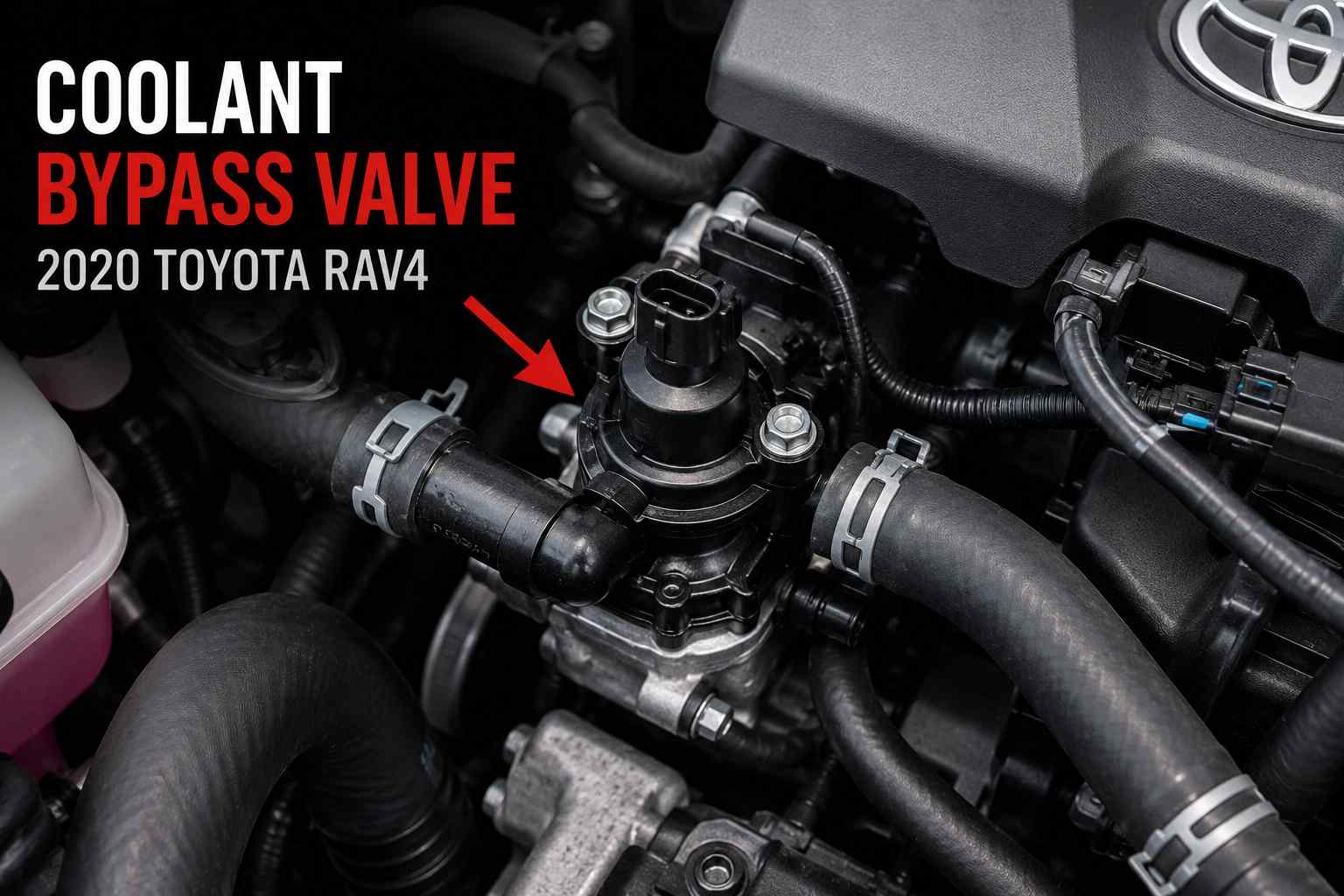
If you own a 2020 Toyota RAV4, you may have seen the dreaded “Engine Maintenance Required” message pop up on your dashboard. In many cases, the culprit is a small but important part called the coolant bypass valve.
This valve has caused headaches for thousands of RAV4 owners. The good news? It’s usually not a safety emergency. And Toyota now offers free repairs for many affected vehicles.
In this guide, I’ll explain exactly what this valve does, why it fails, and what you should do if yours goes bad.
What Does the Coolant Bypass Valve Do?
The coolant bypass valve controls the flow of hot coolant to your heater core. The heater core is the small radiator behind your dashboard that warms the air inside your cabin.
Here’s how it works in plain terms:
When you turn on the A/C and set it to cold, the valve closes. This stops hot coolant from flowing to the heater core. With no hot coolant flowing, your A/C works more efficiently because it doesn’t have to fight the heat from the heater core.
When you want heat, the valve opens. Hot coolant flows to the heater core and warms your cabin.
The valve also helps your engine warm up faster on cold mornings. By controlling coolant flow, your engine reaches its ideal operating temperature more quickly. This improves fuel economy and reduces emissions.
The engine’s computer (ECM) controls the valve electronically. It reads the coolant temperature and your climate control settings to decide when to open or close the valve.
Where Is the Coolant Bypass Valve Located?
On the 2020 RAV4 with the 2.5L engine, the coolant bypass valve sits at the back of the engine, near the firewall.
It’s mounted on the driver’s side, close to the top of the engine. You’ll find it near the master cylinder (the brake fluid reservoir).
The valve has an electrical connector and two coolant hoses attached to it. One hose goes to the heater core. The other runs down to the transmission cooler.
This location is awkward to reach. That’s why replacement at a dealer costs so much in labor. You can’t see the rear hose clamp from above. Many mechanics have to work by feel or access it from below.
Symptoms of a Failed Coolant Bypass Valve
The most common sign is the “Engine Maintenance Required – Visit Your Dealer” message on your dashboard.
Note: This is different from the regular “Maintenance Required” light that means you need an oil change.
Other symptoms include:
A/C blows less cold air. If the valve is stuck open, hot coolant keeps flowing to the heater core even when you want cold air. Your A/C has to work harder.
Heater works poorly or blows cold air. If the valve is stuck closed, coolant can’t reach the heater core. You get weak or no heat.
Warning message appears when A/C is on. Many owners notice the message only shows up when they turn on the air conditioning. Turn off the A/C, and the message goes away temporarily.
Diagnostic trouble code P268115. This code means “Engine Coolant Bypass Valve Circuit Short to Battery or Open.” A scan tool will show this code if the valve has failed.
Slow engine warm-up. If the valve fails open, your engine takes longer to reach operating temperature on cold days. This can hurt fuel economy.
Why Do These Valves Fail?
The coolant bypass valve in the 2020 RAV4 is made of plastic. Inside, there’s an electrical solenoid that controls the valve.
The most common failure happens when the plastic housing cracks. Coolant seeps into the electrical connector and causes a short circuit.
This triggers the P268115 trouble code and the dashboard warning message.
The valve may fail due to:
- Heat cycling. The valve heats up and cools down constantly. Over time, this causes the plastic to become brittle and crack.
- Vibration. The valve’s mounting location puts it in a spot with significant engine vibration.
- Manufacturing defect. Toyota has acknowledged the issue with a Customer Support Program. Many owners believe the original design was simply not durable enough.
Failures seem random. Some valves fail at 20,000 miles. Others last past 100,000 miles. There’s no clear pattern.
Is It Safe to Drive With a Bad Coolant Bypass Valve?
In most cases, yes. You can safely drive with a failed coolant bypass valve for a while.
However, you need to check two things first:
- No visible coolant leak. If the valve is cracked and leaking coolant externally, that’s a bigger problem. Check for puddles under your car or a sweet smell from the engine bay.
- Engine temperature stays normal. Watch your temperature gauge. If it stays in the normal range, you’re okay.
When the valve fails in the open position (which is most common), your heater still works. Hot coolant flows normally through the system.
The main downsides of driving with a failed valve:
- Your A/C won’t cool as efficiently
- Slightly worse fuel economy on cold starts
- That annoying dashboard message won’t go away
I’ve seen owners drive for months—even years—with a bad valve and no engine damage. But I still recommend getting it fixed when you can.
If your engine starts overheating or you see actual coolant leaking, stop driving and get it repaired immediately.
How to Test If Your Coolant Bypass Valve Is Bad
Here’s a simple home test:
- Start your car with the climate control set to heat (temperature turned up all the way).
- Turn off the car.
- Start it again with the A/C off.
- Check if the “Engine Maintenance Required” message appears.
If the message only shows up when you turn on the A/C, the coolant bypass valve is almost certainly the problem.
You can also check with a scan tool. The diagnostic code P268115 points directly to the bypass valve circuit.
If you have a multimeter, you can test the valve’s resistance. Disconnect the electrical connector and measure across the two pins. A good valve should read between 22-28 ohms at room temperature. If it reads open circuit or very low resistance, the valve is bad.
Toyota Customer Support Program (Free Repairs)
In December 2024, Toyota released Customer Support Program 24TE04. This program covers free coolant bypass valve replacement for qualifying vehicles.
Vehicles covered:
- 2019-2021 Toyota RAV4 (gas and hybrid)
- Built before February 2021
- Under 100,000 miles
Similar coverage applies to some Camry, Corolla, and Lexus models from the same era.
What’s covered:
If your vehicle qualifies and shows the “Engine Maintenance Required” warning with the P268115 trouble code, Toyota will replace the valve at no charge.
The repair takes about 2 hours at the dealer.
How to get the free repair:
- Call your local Toyota dealer
- Ask if your VIN qualifies for CSP 24TE04
- Schedule an appointment
Bring printed information about the program if your dealer isn’t aware of it. Some dealers have been slow to recognize it.
Already paid for the repair?
If you paid out of pocket before the program existed, you may be eligible for reimbursement. Contact the Toyota Brand Engagement Center at 1-800-255-3987.
Replacement Cost: Dealer vs DIY
At a Toyota dealer:
- Parts: $100-$160 for the valve and hose assembly
- Labor: $400-$700
- Total: $600-$900
Some dealers charge over $850 for this repair.
At an independent shop:
- Parts: $80-$160
- Labor: $150-$300
- Total: $250-$450
DIY replacement:
- Parts: $33-$80 (aftermarket) or $100-$160 (OEM from dealer)
- Tools: Basic hand tools, possibly a coolant bleeder kit
- Time: 1-3 hours depending on experience
The DIY difficulty is moderate. The valve itself is easy to access from above. The hard part is removing the rear hose clamp. You can’t see it—you have to work by feel.
Many owners have successfully done this repair in their driveway with basic tools and patience.
Part numbers:
- OEM valve with hose: 16260-F0010 (original) or 16260-F0300 (updated version)
- Aftermarket options are available on Amazon for $33-$50
If you do it yourself, you’ll need to bleed the cooling system afterward to remove air pockets.
Common Mistakes and Myths
Myth: The “Maintenance Required” light means the same thing.
No. The regular “Maintenance Required” light is just a reminder for your oil change. The “Engine Maintenance Required – Visit Your Dealer” message is different. It indicates an actual problem detected by the engine computer.
Myth: A bad bypass valve will destroy your engine.
Not usually. If the valve fails in the open position (most common), coolant still flows normally. Your engine won’t overheat. The main issues are reduced A/C efficiency and an annoying warning message.
Myth: You must replace it immediately.
You can drive with a failed valve if there’s no coolant leak and the engine temperature stays normal. But don’t ignore it forever. Get it fixed when practical.
Mistake: Ignoring a visible coolant leak.
If coolant is leaking externally from the cracked valve, that’s more serious. Low coolant can cause overheating. Check your coolant reservoir regularly.
Mistake: Not bleeding the cooling system after replacement.
After installing a new valve, you must bleed the air out of the cooling system. Air pockets can cause overheating or weak heat. Follow Toyota’s procedure or use a coolant bleeder funnel.
Mistake: Paying full price at a dealer for a covered repair.
Check if your vehicle qualifies for Toyota’s Customer Support Program first. Many 2019-2021 RAV4s get this repair for free.
FAQ
What is the coolant bypass valve on a 2020 RAV4?
The coolant bypass valve is an electronically controlled valve that regulates hot coolant flow to the heater core. It opens to allow heat in the cabin and closes when you use A/C to improve cooling efficiency.
Why does my RAV4 say “Engine Maintenance Required”?
In most 2019-2021 RAV4s, this message appears when the coolant bypass valve fails. The valve’s internal circuit shorts out, triggering code P268115 and the warning message.
Can I drive my RAV4 with a bad coolant bypass valve?
Yes, in most cases. If there’s no visible coolant leak and your engine temperature stays normal, you can drive safely. The main effects are weaker A/C performance and the persistent warning message.
How much does it cost to replace the coolant bypass valve?
At a dealer: $600-$900. At an independent shop: $250-$450. DIY: $33-$160 for parts only. Many RAV4s built before February 2021 qualify for free repair under Toyota’s Customer Support Program.
Is there a recall for the RAV4 coolant bypass valve?
There’s no official recall, but Toyota issued Customer Support Program 24TE04 in December 2024. This provides free repairs for qualifying 2019-2021 RAV4s with the failed valve condition.
How do I know if my RAV4 qualifies for free repair?
Your 2020 RAV4 qualifies if it was built before February 2021 (check the door jamb sticker), has under 100,000 miles, and shows the “Engine Maintenance Required” warning with code P268115. Contact your dealer with your VIN to confirm.
Where is the coolant bypass valve located?
It’s at the back of the engine on the driver’s side, near the top. It’s mounted close to the firewall and master cylinder. The location makes it awkward to access, which is why dealer labor charges are high.
Can I replace the coolant bypass valve myself?
Yes, with moderate mechanical skill. The valve is accessible from the top. The hardest part is reaching the rear hose clamp, which you can’t see. Many owners complete the job in 1-3 hours. You’ll need to bleed the cooling system afterward.
Final Thoughts
The coolant bypass valve issue on the 2020 RAV4 is frustrating but manageable. Toyota has acknowledged the problem and offers free repairs for many affected vehicles.
If you see the “Engine Maintenance Required” message, don’t panic. Check if you qualify for Toyota’s Customer Support Program first. If not, get quotes from both dealers and independent shops.
For DIY-minded owners, this repair is doable with patience and basic tools. Just remember to bleed the cooling system properly when you’re done.
The most important thing is to watch for actual coolant leaks. As long as your coolant level is good and the engine temperature stays normal, you have time to plan your repair.
Have questions about your RAV4’s coolant bypass valve? Drop a comment below and I’ll do my best to help.