
Monday to Saturday - 9:00 am -18:00 pm

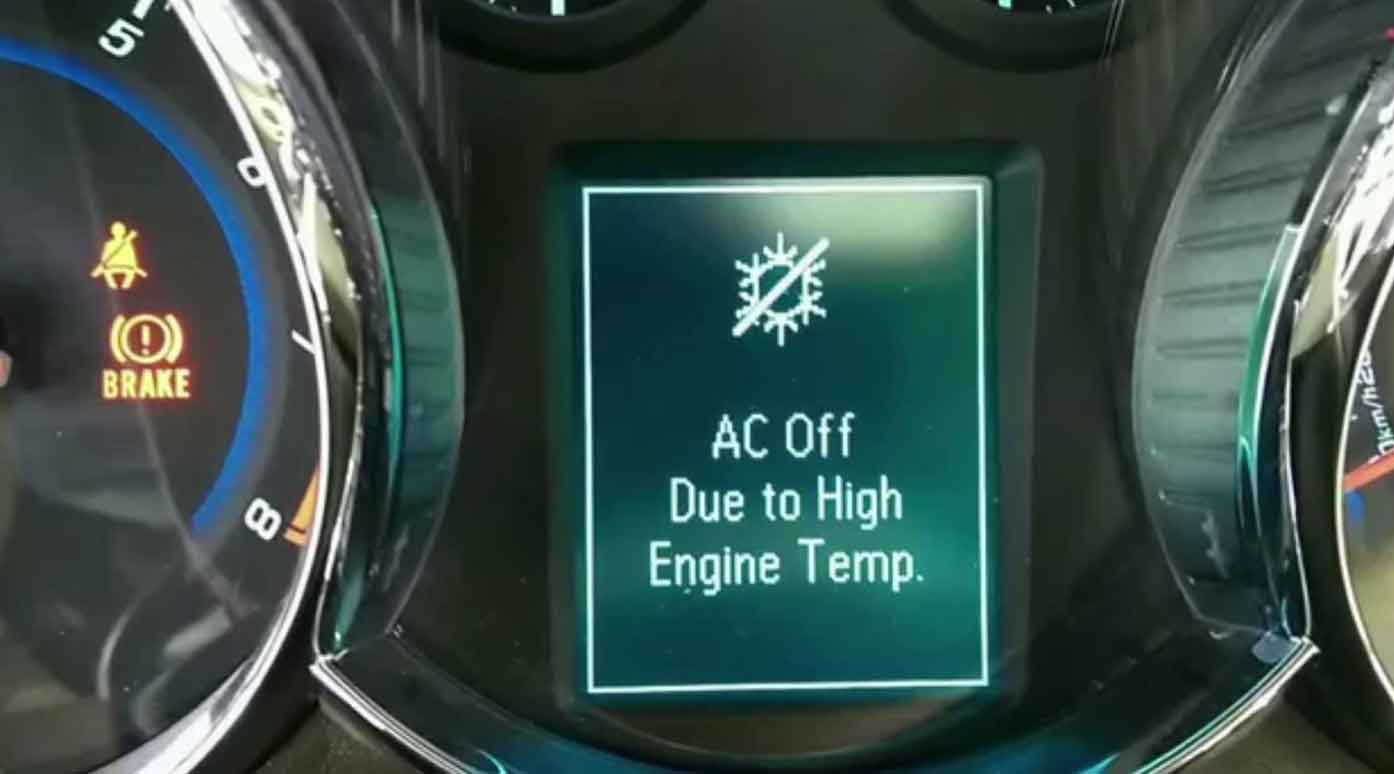
You’re driving your Chevy Cruze on a hot summer day. Suddenly, the AC stops working. The dashboard shows a warning: “AC Off Due to High Engine Temp.”
This is frustrating. But don’t worry. I’ve fixed this problem dozens of times in my shop.
In this guide, I’ll show you exactly what causes this issue. You’ll also learn how to fix it yourself.
What Does “AC Off Due to High Engine Temp” Mean?
This warning is your car’s safety system at work. When the engine gets too hot, the computer shuts off the AC.
Why does it do this? The AC system puts extra load on your engine. When the engine is overheating, it needs all available power to cool down.
Your Cruze is protecting itself from serious damage. This is actually a good thing. It prevents engine failure.
From years under the hood, I can tell you this: Don’t ignore this warning. It means something is wrong with your cooling system.
Common Causes of High Engine Temperature in Chevy Cruze
Let me walk you through the main culprits. These are the issues I see most often.
1. Low Coolant Level
This is the number one cause in my experience. Your engine needs coolant to stay cool.
When coolant is low, the engine can’t regulate temperature properly. The result? Overheating.
Check your coolant reservoir. It’s usually a white or translucent plastic tank under the hood. The level should be between the MIN and MAX marks.
If it’s low, you have a leak somewhere. Don’t just top it off and forget about it.
2. Faulty Thermostat
The thermostat controls coolant flow through your engine. It opens when the engine gets warm. It closes when the engine is cold.
When it fails, it often gets stuck closed. This blocks coolant from circulating. Your engine temperature shoots up fast.
In my shop, I’ve replaced hundreds of thermostats on Cruze models. It’s a common weak point, especially after 60,000 miles.
3. Broken Cooling Fan
Your Cruze has electric cooling fans. They pull air through the radiator when you’re driving slow or idling.
If the fan motor dies, your engine overheats quickly in traffic. You’ll notice the problem gets worse when you’re not moving.
I always test the fans with a scan tool. Sometimes it’s the fan itself. Other times, it’s the fan relay or a blown fuse.
4. Clogged Radiator
The radiator removes heat from the coolant. Over time, it can get clogged inside or outside.
Internal clogs happen from rust and sediment. External clogs come from bugs, leaves, and road debris.
When I service a car like this, I inspect the radiator carefully. A clogged radiator can’t do its job properly.
5. Bad Water Pump
The water pump pushes coolant through your engine. If it fails, coolant stops flowing.
Common signs include coolant leaks near the front of the engine. You might also hear a grinding or whining noise.
Water pump failure is serious. It can cause rapid overheating and engine damage.
6. Leaking Coolant Hoses
Rubber hoses carry coolant throughout your engine. These hoses crack and leak over time.
Look for wet spots under your car. Check all visible hoses for cracks, bulges, or soft spots.
The upper and lower radiator hoses are the most common leak points. But don’t forget the smaller heater hoses.
7. Defective Coolant Temperature Sensor
Sometimes the engine isn’t actually overheating. The sensor is lying to the computer.
A bad sensor sends false readings. The computer thinks the engine is hot when it’s not.
I use my diagnostic scanner to check sensor readings. If the sensor shows 250°F but the engine feels cool, it’s probably faulty.
How to Diagnose the Problem
Let me show you my diagnostic process. You can do most of these checks yourself.
Step 1: Check Coolant Level
Start here. Pop the hood when the engine is completely cold.
Find the coolant reservoir. Check if the level is between MIN and MAX.
Never open the radiator cap when the engine is hot. You could get burned by hot coolant spray.
Step 2: Look for Visible Leaks
With the engine cold, inspect underneath your car. Look for puddles or wet spots.
Coolant is usually bright green, orange, or pink. It has a sweet smell.
Check all hoses and connections. Feel them with your hands. They should be firm, not mushy.
Step 3: Watch the Temperature Gauge
Start the engine and let it warm up. Watch the temperature gauge on your dashboard.
It should gradually rise to the middle. If it climbs into the red zone, you have a real overheating problem.
If it stays normal but you still get the warning, suspect a sensor issue.
Step 4: Listen for the Cooling Fans
When the engine is warm, the cooling fans should kick on. You’ll hear them running.
If you don’t hear them, turn on the AC. This forces the fans to run. If they still don’t work, you found your problem.
Step 5: Use a Scan Tool
An OBD2 scanner is cheap and helpful. You can buy one for $25 at any auto parts store.
Plug it into the port under your dashboard. Check for error codes. Common codes include:
- P0128: Thermostat problem
- P0217: Engine overheating
- P0597: Thermostat heater control circuit
- P0118: Coolant temperature sensor issue
These codes point you toward the exact problem.
Step-by-Step Fix Guide
Now let’s fix the problem. I’ll cover the most common repairs.
Fix 1: Add Coolant and Stop Leaks
If coolant is low, you need to add more. But first, find the leak.
Tools needed:
- Correct coolant type (Dex-Cool for most Cruze models)
- Flashlight
- Paper towels
Steps:
- Let the engine cool completely
- Open the coolant reservoir cap
- Fill to the MAX line with proper coolant
- Start the engine and let it warm up
- Watch for leaks while the engine runs
- If you find a leak, replace the damaged hose or component
Small hose leaks are easy to fix. Just replace the bad hose. Bigger leaks might need professional help.
Fix 2: Replace the Thermostat
A bad thermostat needs replacement. This is a moderate DIY job.
Tools needed:
- Socket set
- New thermostat and gasket
- Coolant
- Drain pan
- Scraper for old gasket
Steps:
- Drain some coolant from the radiator
- Locate the thermostat housing (follow the upper radiator hose to the engine)
- Remove the bolts holding the housing
- Take out the old thermostat
- Clean the gasket surface completely
- Install the new thermostat with fresh gasket
- Bolt everything back together
- Refill coolant and burp the system
In my shop, this job takes about an hour. The thermostat itself costs $15-30.
Fix 3: Replace Cooling Fan or Relay
If the fan isn’t working, check the fuse first. It’s the easiest fix.
For fuse check:
- Find your fuse box (usually under the hood)
- Look for the cooling fan fuse (check your owner’s manual)
- Pull it out and inspect it
- If the metal strip is broken, replace it
For fan motor replacement:
- Disconnect the battery
- Unplug the fan electrical connector
- Remove the bolts holding the fan assembly
- Lift out the old fan
- Install the new fan
- Reconnect everything
Fan motors cost $50-150 depending on your year. The relay is only $10-20.
Fix 4: Clean or Replace Radiator
External cleaning is easy. Internal cleaning or replacement is harder.
External cleaning:
- Spray the radiator with a garden hose from the engine side
- Push water through the fins to remove debris
- Be gentle – don’t bend the fins
For replacement:
- Drain all coolant
- Disconnect hoses from radiator
- Unbolt the radiator from its mounts
- Lift it out carefully
- Install new radiator
- Reconnect hoses and refill coolant
New radiators cost $100-200. Installation takes 2-3 hours.
Fix 5: Replace Water Pump
Water pump replacement is a bigger job. If you’re not comfortable, take it to a shop.
Tools needed:
- Socket set
- Torque wrench
- New water pump and gasket
- Coolant
The water pump is usually driven by the timing belt or serpentine belt. On some Cruze engines, you need to remove several accessories to access it.
This is one job where I recommend professional help unless you’re experienced. A mistake can cause major engine damage.
Fix 6: Replace Coolant Temperature Sensor
This is an easy fix if the sensor is the problem.
Tools needed:
- Deep socket (usually 19mm)
- New sensor
- Thread sealant
Steps:
- Locate the sensor (usually near the thermostat housing)
- Unplug the electrical connector
- Unscrew the old sensor with your deep socket
- Apply thread sealant to the new sensor threads
- Screw in the new sensor and tighten
- Plug in the connector
The sensor costs $15-30. This is a 10-minute job.
Prevention Tips from a Mechanic
Let me share what I tell my customers. These tips prevent overheating problems.
Regular Coolant Changes
Coolant breaks down over time. It loses its ability to prevent corrosion and regulate temperature.
Change your coolant every 30,000 miles or 3 years. Use only the correct type for your Cruze.
I’ve seen engines with 10-year-old coolant. The insides are corroded and clogged. Don’t let this happen to you.
Inspect Hoses Annually
Once a year, squeeze every coolant hose you can reach. They should feel firm.
If a hose feels soft, squishy, or has visible cracks, replace it. Don’t wait for it to fail.
Hoses are cheap. Towing and repairs are expensive.
Keep the Radiator Clean
Every oil change, take a quick look at your radiator. Make sure air can flow through it.
If you see bugs or debris, spray it out gently. This takes 2 minutes and prevents overheating.
Watch Your Temperature Gauge
Pay attention to your gauge while driving. You’ll notice problems early this way.
If the needle moves higher than normal, something is wrong. Don’t keep driving and hope it goes away.
Fix Small Leaks Immediately
A small coolant leak will become a big leak. I promise you this.
If you see spots under your car or smell coolant, find the leak right away. A $20 hose is better than a $3,000 engine.
When to See a Mechanic
Some problems need professional help. Here’s when to call a shop.
See a mechanic if:
- You can’t find the leak
- The problem keeps coming back
- You need to replace the water pump
- The engine overheats severely
- You see white smoke from the exhaust (blown head gasket)
- You’re not comfortable doing the repairs
In my shop, most overheating repairs cost $150-800. It depends on the problem. Water pump jobs are on the higher end. Thermostat replacement is usually under $300.
Don’t let cost stop you from fixing it. A $500 repair is better than a $5,000 engine replacement.
Frequently Asked Questions
Can I drive with this warning on?
No. Stop driving as soon as it’s safe to do so.
Continued driving with an overheating engine causes permanent damage. You could crack the head gasket, warp the cylinder head, or seize the engine.
I’ve seen people destroy their engines in 5 minutes of overheating. Don’t risk it.
Why does it only happen in traffic?
This points to a cooling fan problem. In traffic, you’re not getting airflow through the radiator.
The fans should compensate for this. If they’re not working, the engine overheats when you’re moving slowly or stopped.
How much does it cost to fix?
It depends on the cause:
- Coolant top-off: $0-20
- Thermostat: $150-300
- Cooling fan: $200-450
- Radiator: $300-600
- Water pump: $400-800
- Temperature sensor: $100-200
These are average prices including parts and labor.
Can I use water instead of coolant?
Only in an emergency to get home. Water doesn’t protect against freezing or corrosion.
It also boils at a lower temperature than coolant. Your engine needs real coolant to work properly.
Always use 50/50 mix of coolant and distilled water. Or buy pre-mixed coolant.
Will this damage my AC system?
No. The AC turns off to protect your engine, not because of AC problems.
Once you fix the overheating issue, your AC will work normally again. The computer will allow it to turn back on.
Final Thoughts
The “AC Off Due to High Engine Temp” warning is serious. But it’s usually fixable without huge expense.
Start with the simple checks. Look at coolant level, check for leaks, and test the cooling fans.
Most Cruze owners can handle basic fixes like adding coolant or replacing a thermostat. For bigger jobs, find a trustworthy mechanic.
From my experience, catching these problems early saves thousands of dollars. Don’t ignore the warning signs.
Your Cruze is telling you something is wrong. Listen to it. Fix the problem now, and you’ll have many more miles of reliable driving ahead.
Stay cool out there. And keep that engine running at the right temperature.