
Monday to Saturday - 9:00 am -18:00 pm


Introduction
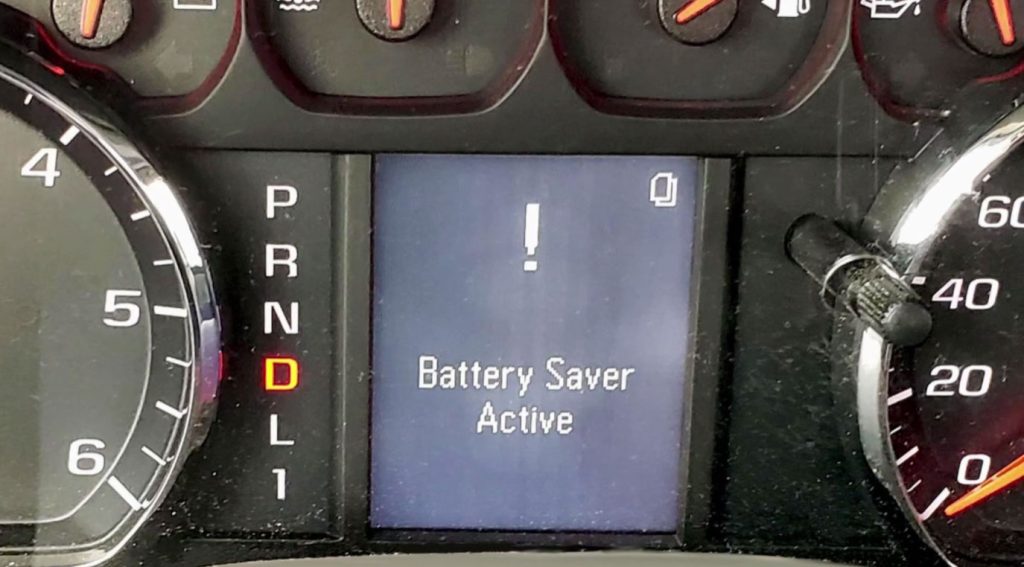
You’re driving your Chevy Impala. Suddenly, a message pops up on your dashboard: “Battery Saver Active.” Your air conditioning cuts out. Your radio goes quiet. Your heart sinks.
What just happened?
Don’t panic. You’re not alone. This warning appears on thousands of Impalas every year. And I’ve seen it in my shop more times than I can count.
Here’s the good news: it’s fixable. But you need to act fast, because this warning means your car’s battery and charging system aren’t working together properly.
In this guide, I’ll explain exactly what “Battery Saver Active” means, why your Impala is showing it, and what you need to do to fix it. By the end, you’ll understand your car’s electrical system better and know exactly which parts might be causing the problem.
Let’s start with the basics.
What Does “Battery Saver Active” Actually Mean?
When your Impala’s dashboard shows “Battery Saver Active,” Chevy’s computer has detected a serious problem: your battery voltage has dropped below 11.7 volts.
That’s dangerously low.
A healthy car battery should sit at about 12 to 12.5 volts when the engine is off. When your engine is running, the alternator kicks in and charges the battery to 13.5 to 14.5 volts. That’s normal.
But when voltage drops below 11.7 volts, your car’s computer automatically goes into survival mode. It starts shutting down non-essential systems to save power.
This is where you notice the problem:
Your air conditioning stops working. Your radio cuts out or gets quieter. Your headlights may dim. Your power windows slow down. Your heated seats turn off. Even your windshield wipers might not work at full speed.
This isn’t a glitch or a random warning. Your car is literally trying to save itself from dying on the road.
Think of it like this: Your battery is a fuel tank. When it’s empty, the engine stops. Your Impala’s computer saw the tank getting dangerously low, so it shut off everything that burns fuel except the bare essentials needed to keep the engine running.
The system is smart. But it’s also a red flag.
If your voltage drops much lower than 11.7 volts—say, below 10.5 volts—your engine will stall. You’ll be stranded.
So if you see this warning, you have a window of time to fix the problem before your car dies completely. That window might be hours. It might be days. But it will close.
Why Your Impala Shows This Warning
Here’s how your Impala’s electrical system is supposed to work:
- The battery stores electrical energy.
- When you start the car, the battery powers the starter motor and ignition.
- Once the engine runs, the alternator takes over.
- The alternator generates electricity to run all your car’s systems and recharge the battery.
- A battery current sensor tells the computer if this is working properly.
When everything works, voltage stays at 13.5 to 14.5 volts. No problems.
But if something breaks in this chain, voltage drops. The battery current sensor detects the drop. The computer sees the low voltage. And “Battery Saver Active” appears on your screen.
The problem is somewhere in your charging system.
This could be the battery itself. Or the alternator. Or the cables connecting them. Or the sensor reporting bad information.
Your job is to find out which one.
The Five Main Causes
I’ve been a mechanic for years. I’ve seen this warning hundreds of times. And it comes down to five main culprits.
Cause #1: Weak or Dead Battery
This is the most common reason.
Batteries wear out. They don’t last forever. Most car batteries are good for 3 to 5 years. After that, they start to fail.
When a battery gets old, it can’t hold a full charge anymore. You might see voltage at 11.5 volts or lower even after the alternator has been charging for a while.
If the battery is really weak, it drops below 11.7 volts, and boom—Battery Saver Active.
How to spot it: The car might be hard to start. The engine cranks slowly. The headlights are dim even when the engine is running and the alternator is charging.
The fix is simple: Replace the battery.
But here’s the catch. Some people replace the battery and the warning comes back a few days later. That usually means the battery wasn’t the real problem. The problem is something else—like a bad alternator—that was draining the battery in the first place.
Cause #2: Failing Alternator
The alternator is the engine of your car’s electrical system. When it fails, the battery can’t recharge properly.
A healthy alternator outputs about 13.5 to 14.5 volts while the engine is running. But a failing alternator might only put out 12 volts or less. That’s not enough to charge the battery.
So your battery gets drained. Voltage drops. Battery Saver Active shows up.
How to spot it: Your headlights dim at red lights but brighten when you accelerate. The battery light comes on. The warning appears after driving for a while, not right at startup.
The fix: Replace the alternator.
But here’s a trick: Sometimes the problem isn’t the alternator itself. Sometimes it’s the serpentine belt that spins the alternator. If the belt is loose or broken, the alternator can’t spin fast enough to charge the battery.
Check the belt first before spending $500 on a new alternator.
Cause #3: Bad Battery Current Sensor
This is where things get tricky.
Your Impala has a small black sensor clamped around your positive battery cable (or sometimes the negative cable). It has three small wires attached to it.
This is the battery current sensor.
Its job is to measure how much electrical current is flowing into and out of your battery. It sends a signal to your car’s computer to let it know the charging system is working.
But this sensor sits in a corrosive environment right next to the battery. Heat, moisture, and salt air can damage it over time.
When the sensor goes bad, it sends the wrong signal to your computer. The computer thinks the battery is draining even if the alternator is charging perfectly. So it shows “Battery Saver Active” even though there’s nothing wrong.
This is one of the trickiest diagnoses because the battery and alternator might test fine.
How to spot it: You see the warning message, but your battery tests okay. The alternator tests okay. Everything looks good at the auto parts store—but the warning keeps coming back.
The fix: Replace the battery current sensor.
The sensor usually costs $50 to $150, depending on your model year. Replacing it is moderately difficult. You have to disconnect the battery cables, locate the sensor, remove it, and install a new one.
Cause #4: Loose or Corroded Battery Terminals and Cables
This one catches a lot of people off guard.
Your battery has two cables: the positive cable (usually red) and the negative cable (usually black). These cables connect the battery to the rest of your car’s electrical system and the engine ground.
If these connections are loose or corroded with white, blue, or green crusty buildup, electricity can’t flow properly from the battery to the alternator or to your car’s systems.
Voltage drops because of resistance in the corroded connection.
How to spot it: Look at your battery terminals. Do they have crusty buildup? Can you wiggle the cables by hand? Is there white or blue corrosion?
The fix: Disconnect the cables, clean the terminals with a wire brush, and reconnect them tightly. You might need to replace the cables if they’re too corroded.
This is a 15-minute fix that costs almost nothing. Try it before you spend money on new parts.
Cause #5: Broken or Loose Serpentine Belt
Your serpentine belt is a rubber belt that spins your alternator, power steering pump, air conditioning compressor, and water pump.
If this belt breaks or gets loose, the alternator stops spinning. When the alternator doesn’t spin, it can’t generate electricity.
Your battery doesn’t recharge. Voltage drops. Battery Saver Active appears.
How to spot it: Look under the hood. You might see a belt that’s cracked, frayed, or hanging loose. You might hear a squealing sound when you start the engine. Or the alternator might not be spinning when the engine runs.
The fix: Tighten the belt or replace it if it’s damaged.
This is usually a $100 to $300 repair, depending on your Impala model and whether you do it yourself.
How to Diagnose the Problem {#diagnosis}
Now that you know the five main causes, here’s how to figure out which one is affecting your Impala.
Step 1: Get a Voltage Reading
Grab a digital multimeter. You can buy one for $20 at any auto parts store.
Turn off the engine. Touch the red probe to the positive battery terminal and the black probe to the negative terminal. Read the voltage.
A healthy battery sitting overnight should be 12 to 12.5 volts.
Now start the engine and let it idle. Take another reading.
A healthy charging system should read 13.5 to 14.5 volts.
If the reading is below 13.5 volts while the engine is running, your alternator might not be charging properly.
If the reading is way below 11.7 volts, your battery is in trouble.
Step 2: Check Your Battery Terminals
Pop open your hood. Look at the battery terminals where the cables connect.
Are they clean and shiny? Or are they covered with white, blue, or green corrosion?
Can you wiggle the cable by hand? If so, they’re too loose.
Clean any corrosion with a wire brush. Make sure both connections are tight. You should not be able to pull the cable off without effort.
Then test the voltage again. Sometimes that’s all it takes.
Step 3: Inspect the Serpentine Belt
Look at the belt that runs around your pulleys. Is it cracked? Frayed? Hanging loose?
Spin the belt by hand if you can reach it. Does it move freely? Or does it feel like it’s slipping?
If the belt is damaged or loose, tighten it or replace it.
Step 4: Test the Battery at an Auto Parts Store
Most auto parts stores will test your battery for free.
They use a load tester to see how your battery performs under stress. A good battery should pass this test. A failing battery will not.
If your battery fails, replace it.
But remember: If you replace the battery and the warning comes back, the real problem is probably your alternator or sensor.
Step 5: Have the Alternator Tested
If the battery is good, the terminals are clean, and the belt is tight, the problem is likely your alternator.
You can have an auto parts store test this too. Or you can take your car to a mechanic.
A good alternator should output at least 13.5 volts at idle.
If it’s putting out less than that, it’s failing and needs to be replaced.
Step 6: Consider the Battery Current Sensor
If everything else tests good—the battery, the alternator, the belt, the terminals—but the warning keeps coming back, the problem is probably the battery current sensor.
This sensor sits on your positive battery cable (or sometimes the negative cable). It’s the black plastic part with three small wires.
You can have a mechanic test it with a diagnostic scanner. Or you can replace it and see if that fixes the problem.
The sensor usually costs $50 to $150, which is much cheaper than other repairs.
Common Mistakes Owners Make {#mistakes}
After 20+ years of turning wrenches, I’ve seen people make these mistakes over and over.
Mistake #1: Ignoring the Warning
Some owners see the “Battery Saver Active” message and think, “I’ll deal with it later.” They keep driving for days or weeks.
Don’t do this. Your car will eventually strand you on the side of the road. Fix it now while you still have power.
Mistake #2: Replacing Parts Without Diagnosing
I’ve seen owners replace their battery, then their alternator, then their battery again—spending hundreds of dollars—when the real problem was a $20 corroded terminal.
Before you buy anything, check the voltage and the battery terminals first.
Mistake #3: Getting the Battery Current Sensor on Backward
This sensor is directional. It has to be installed the right way. If you install it backward, it sends the wrong signal to the computer and causes the warning to come back.
Look for a small arrow or tab on the sensor. It should point toward the battery terminal, not away from it.
Mistake #4: Connecting the Battery Cables Wrong After Replacement
If you’ve had your battery cables replaced or if a mechanic swapped them, the sensor might not be threaded through both cables anymore.
The current has to flow through the sensor in both directions for it to read correctly. If only one cable is threaded through, the sensor sends bad data.
Mistake #5: Not Fixing the Real Problem
Some people get the battery tested. It fails. They replace the battery. The warning goes away for a week.
Then it comes back.
That means the real problem—usually a bad alternator—is still there. The new battery just masked it temporarily.
If the warning comes back after a battery replacement, your alternator is probably failing.
Frequently Asked Questions {#faq}
Q: Is it safe to drive with “Battery Saver Active” showing?
A: Not for long. This warning means your voltage is critically low. You can probably drive a few more miles, but your car will stall soon. If you see this warning, drive straight to a mechanic or auto parts store. Don’t stop for other errands.
Q: Why does the warning go away when I restart the car?
A: Sometimes restarting resets the sensor reading. But the problem is still there. When the voltage drops again, the warning comes back. This usually means the battery current sensor is faulty or the charging system isn’t working.
Q: Can a battery current sensor fail without other problems showing?
A: Yes. A bad sensor can send false signals to your computer even if the battery and alternator are fine. This causes the “Battery Saver Active” warning to appear when there’s no actual problem with charging. If all your other systems test good, suspect the sensor.
Q: How much does it cost to fix this?
A: It depends on the cause. Cleaning corroded terminals is free. Replacing a battery is $100 to $200. Replacing an alternator is $300 to $600. Replacing a battery current sensor is $50 to $150. Replacing a serpentine belt is $100 to $300. Have it diagnosed first before you spend money.
Q: Will this cause damage to my engine?
A: No. But if your voltage gets too low, your engine will stall. Once it stalls, you’ll need a jump start to get it running again. And repeated stalling can strain your starter motor over time.
Q: Can I just disconnect this warning light?
A: You could, but you shouldn’t. The warning light is there for a reason. If you ignore it and your battery dies while you’re driving, you could lose power steering, power brakes, and your ability to steer or stop safely. This is a safety issue, not a cosmetic one.
Q: My battery is only one year old. Why is it showing low voltage?
A: A new battery shouldn’t be failing. If it’s showing low voltage, the problem is probably not the battery itself. It’s probably your alternator isn’t charging it, or your battery current sensor is sending a bad signal. The battery isn’t the culprit—it’s being drained by a broken charging system.
Q: Do I need a fancy scan tool to diagnose this?
A: Not for basic troubleshooting. A $20 multimeter and visual inspection can solve 80% of these problems. You only need a professional scan tool if you suspect the battery current sensor is bad and want to confirm it before buying a new one.
What to Do Next {#next-steps}
Here’s your action plan:
Today:
- Get a multimeter and check your battery voltage. Write down the numbers.
- Pop your hood and look at the battery terminals. Are they corroded or loose?
- Look at the serpentine belt. Is it cracked or loose?
This Week:
If the voltage is below 11.7 volts while the engine is running, or if you saw corrosion or a loose belt:
- Take your car to an auto parts store and get the battery tested for free.
- If it fails, replace the battery.
- If it passes, get the alternator tested.
- If that passes too, suspect the battery current sensor. Have a mechanic diagnose it or replace it yourself.
If the Problem Persists:
If you’ve done all of this and the warning still appears, take your Impala to a trusted mechanic. You might need a professional diagnostic scan to find the exact problem.
Final Thoughts
“Battery Saver Active” isn’t a random warning. It’s your Impala telling you that something in the charging system is broken.
The good news is that these problems are fixable. And most of them are affordable if you catch them early.
The bad news is that if you ignore the warning, your car will die. And that could leave you stranded on a highway, late at night, in bad weather.
Don’t let that happen.
If you see this warning, act today. Check your voltage. Clean your terminals. Get your battery tested. The hour you spend now could save you from a $500 tow truck bill and a day without your car.
Your Impala will thank you. And so will your wallet.
Need help diagnosing your Impala? Drop a comment below with your symptoms. I’ll do my best to point you in the right direction based on what you’re seeing.
Found this helpful? Share it with other Impala owners. Someone in your network is probably seeing this warning right now.
Safe driving.