
Monday to Saturday - 9:00 am -18:00 pm

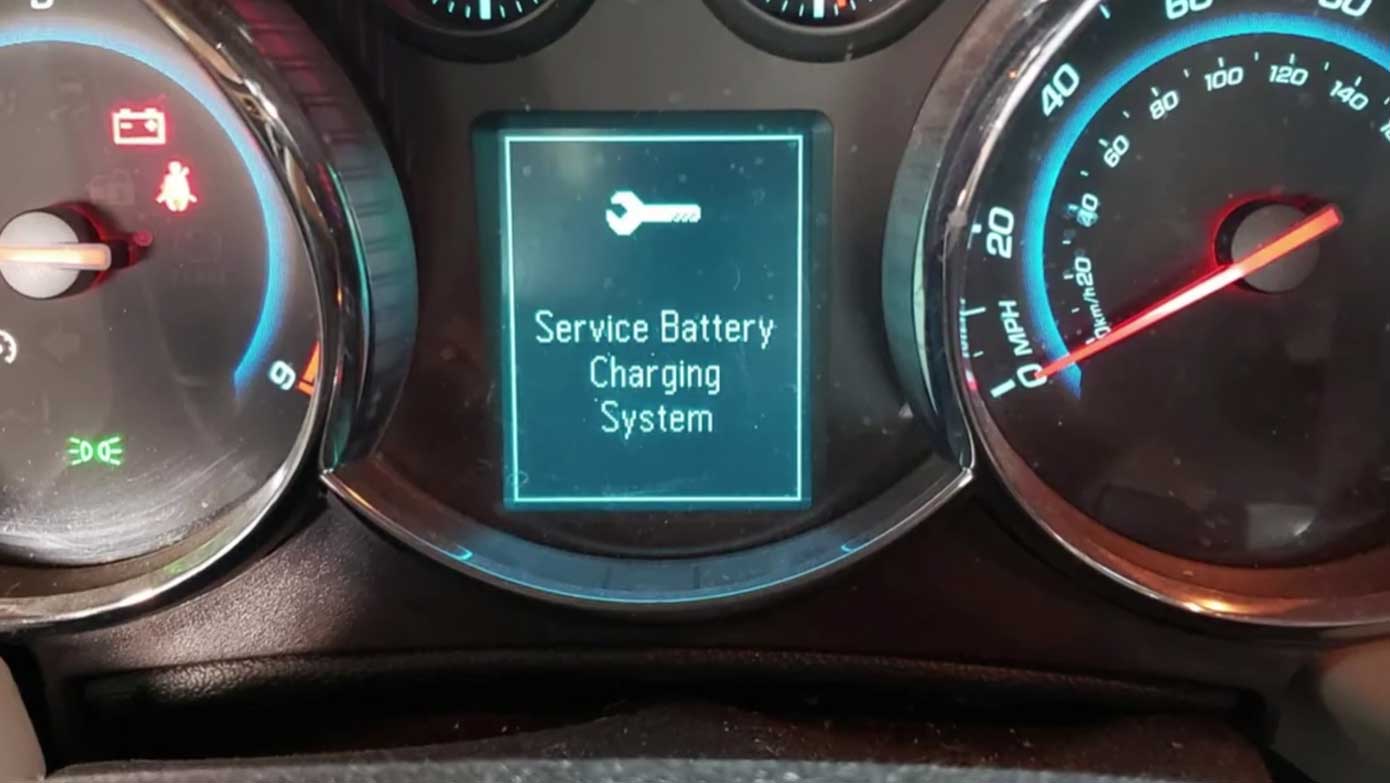
You’re driving your Chevy Traverse when a light shows up on your dashboard. It says “Service Battery Charging System.” Your stomach drops. What does this mean? Will your car die on the road?
Here’s the truth: This warning doesn’t mean your car will fail today. But it does mean something in your charging system isn’t working right. Your battery isn’t getting charged the way it should.
In this guide, I’ll explain exactly what this warning means, why it happens, how to fix it, and what it costs. I’ll also share what many Traverse owners get wrong about this problem, so you don’t waste money replacing parts you don’t need.
By the end, you’ll know exactly what to do when you see this warning
What the Charging System Doe
Your battery gets your car started. But once the engine runs, it can’t power everything by itself. That’s where the alternator comes in.
The alternator is a small generator mounted on your engine. As the engine runs, a belt spins the alternator. This spinning motion creates electricity. That electricity charges your battery and powers your lights, stereo, air conditioning, and every electrical system in the car.
The charging system includes four main parts:
- Battery – Stores electricity
- Alternator – Creates electricity
- Serpentine belt – Spins the alternator
- Wiring and connections – Transfers electricity
If any of these parts fails, your battery won’t charge. Eventually, your car stops running.
Why You See This Warning
Your Traverse has a computer that watches the charging system. It measures voltage going into the battery. Normal voltage is between 13.5 and 14.5 volts when the engine runs. If voltage drops below 13.2 volts for more than a few minutes, the computer triggers the warning.
This warning tells you one thing: Your alternator isn’t charging your battery properly.
The warning shows up on your dashboard as either:
- “Service Battery Charging System”
- “Service Charging System”
- A battery icon with a light
Don’t ignore it. Your car is running on battery power alone, which won’t last long.
Top Causes of the Charging System Warning
I’ve seen this problem hundreds of times. Here are the real causes, ranked by how often I find them.
1. Bad Alternator (Most Common)
The alternator is the culprit about 70% of the time.
Alternators wear out. They spin thousands of times a minute. The internal parts—bearings, coils, the voltage regulator—eventually fail.
Signs of a failing alternator:
- The warning appeared suddenly
- You hear a grinding or whining noise from the engine
- Headlights dim when stopped
- Car struggles to start
- You see smoke from under the hood
An alternator usually lasts 100,000 to 150,000 miles. If your Traverse is older or has high mileage, this is your problem.
2. Dead or Dying Battery
This is second most common, especially on Traverse models with high-mileage original batteries.
A battery naturally dies over time. Chevy recommends replacing batteries every 3 to 5 years. If yours is older than that, it’s failing.
A dead battery won’t hold a charge. The alternator works correctly, but it can’t keep the weak battery charged. The computer sees low voltage and shows the warning.
Signs of a bad battery:
- The car cranks slowly when starting
- Warning shows up after days of sitting parked
- Battery is over 5 years old
- You replaced it more than once in the last 3 years
3. Corroded or Loose Battery Terminals
This one surprises most owners. A loose or corroded connection can cause charging to fail.
When you look at your battery, you see two cable terminals—one red (positive), one black (negative). If these connections are corroded or loose, electricity can’t flow properly. The alternator charges fine, but the current can’t reach the battery.
What it looks like:
- White, blue, or green crusty material on the terminals
- Cables that wiggle easily
- One side of the terminal feels hot
This is an easy fix and costs almost nothing.
4. Broken or Worn Serpentine Belt
The serpentine belt is a rubber belt about the size of your thumb. It spins the alternator as the engine runs.
If this belt breaks or slips, the alternator stops spinning. No spin, no power.
Signs of a belt problem:
- Squealing noise from the engine
- A burning rubber smell
- Belt looks frayed or cracked (if you can see it)
5. Faulty Wiring or Connectors
The alternator connects to your battery through heavy wires and connectors. If a wire is melted, corroded, or disconnected, power can’t transfer.
This is more common than most people think. Some Traverse models have a 200-amp fuse link between the alternator and battery. If this link fails, charging stops instantly.
Red flags:
- Burnt-looking wires near the battery
- Connectors that feel loose
- Recent accident or water damage
6. Bad Battery Current Sensor
Newer Traverses (2018+) have a battery current sensor. It’s a small black box near the battery that measures charging voltage.
If this sensor fails, your computer gets wrong readings. It thinks the alternator isn’t working when it actually is.
This sensor is less common but important to check if you’ve already replaced the alternator and battery.
7. Failing Voltage Regulator
The voltage regulator sits inside the alternator. It controls how much electricity the alternator produces.
If it fails, the alternator either overcharges (too much voltage) or undercharges (too little). Either way, your computer shows the warning.
How to Diagnose the Problem
Don’t replace parts guessing. Test first. Here’s exactly how a mechanic diagnoses this.
Step 1: Get a Free Load Test
Most auto parts stores test batteries and alternators for free. Drive to a nearby shop—NAPA, AutoZone, Advance Auto Parts, or O’Reilly.
They’ll connect a device called a load tester to your battery. It measures whether your battery holds a charge under load (like when the starter is cranking).
They’ll also test the alternator output. A good alternator produces around 14 to 14.5 volts at 1000 RPM with the engine running.
What to tell them: Say your Traverse is showing “Service Battery Charging System.” Ask them to load test both the battery and alternator. Ask for the voltage readings.
Step 2: Check Battery Terminals Yourself
Pop the hood. Look at the battery terminals (the posts on top of the battery).
Are they clean and shiny? Or covered in crusty, corroded material?
If corroded, grab a wire brush and hot water (or battery terminal cleaner from an auto parts store). Scrub the terminals and posts until they’re shiny. Then reconnect the cables tight.
Start the engine. Does the warning go away? Problem solved. Cost: $0.
Step 3: Inspect the Serpentine Belt
Look at the belt that runs across the front of the engine. Does it look cracked? Frayed? Are the edges shredded?
If yes, it needs replacing. This is usually a $100 to $200 part, but the belt may not be your only problem. Have a mechanic check the alternator and battery first.
Step 4: Get a Professional Diagnosis
If the free tests don’t tell you clearly what’s wrong, take your Traverse to a mechanic you trust.
A real scan with a professional diagnostic machine costs $80 to $150. The mechanic will run a full charging system test and read any stored codes. They’ll tell you exactly which part is failing.
This is worth the money. You avoid replacing the wrong part.
How to Fix It
Fixes depend on what’s causing the warning. Here’s what each fix looks like.
Fix #1: Replace the Alternator
This is the most common fix.
Your Traverse will need the alternator removed and replaced. On most models, this takes 2 to 3 hours of labor.
The hard truth: The alternator on a Traverse is not in an easy spot. You may need to remove the power steering hose, coolant hose, or upper radiator hose to access it. Some owners say it took them 6 hours as a DIY job.
I recommend having a professional do this unless you’re very comfortable working on engines.
After replacement:
- Ask the mechanic to test the charging system voltage
- Make sure it reads 13.5 to 14.5 volts at idle
- Ask them to clear the warning code
Fix 2: Replace the Battery
If the battery tests bad, replace it.
Always use an AGM (Absorbent Glass Mat) battery for a Traverse. These are designed for modern electrical systems. Regular lead-acid batteries won’t work as well.
Charge the new battery overnight before installation. This is important. Putting a new alternator on a dead or weak battery can damage the alternator.
Cost: $100 to $300 for the battery itself, depending on quality.
Fix 3: Clean Battery Terminals
If corrosion is the problem, this is a 10-minute fix.
- Disconnect the negative cable first (always negative first)
- Disconnect the positive cable
- Scrub both terminals and posts with a wire brush and water
- Rinse and dry completely
- Reconnect positive cable first, then negative
- Start the engine and test
Cost: $0 to $15 if you buy terminal cleaner.
Fix 4: Replace the Serpentine Belt
If the belt is cracked or worn, replace it.
A new belt costs $30 to $80. Labor is 1 to 2 hours. This is a good time to replace the belt while the alternator is being worked on, since the belt has to come off anyway.
Cost: $150 to $400 total.
Fix 5: Repair or Replace Wiring
If a wire is melted or corroded, a mechanic must repair or replace it.
This varies wildly in price. A simple corroded connector might cost $50. A whole wire harness might cost $300 to $500.
Ask your mechanic: If they find a wiring problem, can they repair it or must they replace the whole harness? This affects cost.
Fix 6: Replace Battery Current Sensor
This is only on newer Traverses. If this sensor fails, replacement is usually $200 to $400 in labor and parts.
It’s a small repair, but you need a professional with a scan tool to diagnose it correctly.
Repair Costs Explained
Here’s what you can expect to pay. Prices vary by location, shop, and whether you use OEM (Chevy original) parts or aftermarket.
Alternator Replacement (Most Common)
- Parts cost: $150 to $400 (OEM) or $130 to $250 (aftermarket)
- Labor: $250 to $500 (2-3 hours)
- Total: $400 to $900 at an independent shop
- Total: $600 to $1,200 at a dealership
Money-saving tip: Ask if your mechanic recommends OEM or quality aftermarket. Many aftermarket alternators come with lifetime warranties.
Battery Replacement
- Parts cost: $100 to $300 (new AGM battery)
- Labor: $50 to $100 (30 minutes to 1 hour)
- Total: $150 to $400
Serpentine Belt Replacement
- Parts cost: $30 to $80
- Labor: $100 to $200 (1-2 hours)
- Total: $150 to $280
Full System Diagnosis
- Cost: $80 to $150 for a scan and full charging system test
This is cheaper than guessing and replacing the wrong part.
Combined: Alternator + Battery + Belt
If you need all three (common for high-mileage Traverses):
- Independent shop: $700 to $1,400
- Dealership: $1,000 to $1,800
Common Mistakes Owners Make
I see these mistakes all the time. Don’t make them.
Mistake 1: Replacing the Alternator Without Testing the Battery
You see the warning, assume it’s the alternator, and pay $700 to replace it. Two weeks later, the warning comes back.
The real problem was the battery. A dead battery makes the alternator work harder. It can’t keep up, and the warning comes back.
What to do instead: Load test the battery BEFORE replacing the alternator. If the battery is weak, replace it first. Charge it overnight. Then check if you still need a new alternator.
Mistake 2: Buying the Cheapest Alternator You Can Find
You save $100 on a cheap alternator. Six months later, it fails again. Now you’re out $200 in labor twice.
Buy a quality alternator with a warranty. Spend the extra money. It lasts longer.
Best choice: OEM (Chevy original) or a name brand like Bosch with a 3-year warranty.
Mistake 3: Ignoring a Loose Battery Cable
You feel like something’s loose at the battery terminal. You ignore it. The warning stays.
Spend 5 minutes tightening the cable. This fixes it 30% of the time.
Mistake 4: Continuing to Drive With the Warning On
The warning is flashing. You think you can make it a few more days to the mechanic.
Don’t risk it. Your car is running on battery power. If the alternator fails completely, the battery will die while you’re driving. You’ll lose power steering, power brakes, and all electrical systems. This is dangerous.
Finish your trip to the mechanic if you’re close. Otherwise, call a tow truck.
Mistake 5: Replacing the Battery With a Wrong Type
You buy a regular lead-acid battery at a discount store.
Chevy Traverses are designed for AGM batteries. A regular battery doesn’t support the modern charging system. The warning comes back, or the new battery fails early.
Always buy an AGM battery for a Traverse. They cost a little more, but they last longer.
Mistake 6: Not Clearing the Warning Code
You have a new alternator installed. But the warning stays on.
The computer needs the code cleared. Any mechanic can do this with a scan tool in 2 minutes.
Make sure this is part of your repair. Ask: “Will you clear the code after replacement?”
FAQ
Q: Can I drive my Traverse with this warning?
A: Short distances, yes. Long highway trips, no. Your car is running on battery alone. The battery will eventually die, leaving you stranded. Get to a mechanic within a day or two. If the warning appears while you’re driving, turn off non-essentials (radio, AC, headlights if safe) to save battery power. Get to a safe place to stop.
Q: How long until my Traverse dies completely?
A: Impossible to say. It depends on your battery, how much you’re driving, and what electrical systems you’re using. Some owners drive for weeks with the warning. Others die after a few hours. Don’t count on luck. Get it fixed.
Q: Is this a Traverse recall?
A: No official recall, but Chevy dealerships know this is a common issue. Some Traverses (especially 2018-2022 models) have a known problem with the negative battery cable. Ask your dealer if your Traverse is affected. They may replace the cable for free or cheap even out of warranty.
Q: Should I replace the alternator and battery at the same time?
A: Only if both are bad. If the battery tests good, don’t replace it. But if the battery is over 4 years old and the alternator is being replaced, some mechanics recommend replacing both. Ask your mechanic.
Q: Can a loose cable cause this warning?
A: Yes, 100%. Before you approve a big repair, have the mechanic check all battery cables and ground connections. A loose negative cable causes this warning on Traverses. It’s an $20 fix if that’s the problem.
Q: What’s the difference between OEM and aftermarket alternators?
A: OEM means Chevy original. Aftermarket means another company made it. OEM is usually more expensive ($200-$400 more) but built to exact Chevy specs. Quality aftermarket (Bosch, Denso) is cheaper but reliable if it has a warranty. Cheap no-name alternators fail fast.
Q: Why do some owners have to replace the alternator twice?
A: Usually because the battery wasn’t replaced first. A dead battery forces the alternator to work overtime. Even a new alternator gets damaged charging a bad battery. Always test the battery. Replace it if needed. Then replace the alternator.
Q: Can a shop test the charging system for free?
A: Yes. Most auto parts chains (AutoZone, NAPA, O’Reilly, Advance Auto) test charging systems for free. It takes 10 minutes. They’ll give you voltage readings. This is worth doing before you pay $700 to replace anything.
What to Do Right Now
Here’s your action plan.
Today
- Don’t panic. This warning doesn’t mean your car will die today. You have time.
- Stop using the car for long trips. Don’t drive 50+ miles. Stick to short local trips until it’s fixed.
- Turn off non-essentials while driving. Radio, AC, heated seats, and extra lights drain the battery. Minimize them until the warning is gone.
- Check battery terminals yourself. Pop the hood. Look at the battery. Are the cables tight? Is there corrosion? Tighten any loose cables. Scrub any corrosion. This takes 10 minutes and fixes the problem 30% of the time.
This Week
- Get a free charging system test. Drive to an auto parts store. Ask for a battery and alternator load test. Write down the voltage readings they give you (should be 14.5V when the engine runs).
- Call a mechanic you trust. Describe the warning. Tell them the test results from the parts store. Ask if they can fit you in for a proper diagnosis ($80-$150). Don’t just replace parts.
When You See the Mechanic
- Ask them to load test everything. Battery, alternator, serpentine belt condition, all wiring.
- Get it in writing. What part is failing? Why? What’s the repair cost? How long will it take?
- Ask about warranties. If they replace the alternator, how long is the warranty? (Should be at least 1 year)
- Have them clear the code. After repair, make sure they scan the computer and clear the warning code.
Conclusion
The “Service Battery Charging System” warning on your Chevy Traverse means your alternator isn’t charging your battery properly. But it doesn’t tell you which part is the problem.
That’s why you test first, replace second.
Get a free test at an auto parts store. If that doesn’t show the problem clearly, take your Traverse to a mechanic for a proper diagnosis. Spend $100 on diagnosis now. Avoid spending $700 replacing the wrong part.
Most likely, you’ll need a new alternator ($400-$900) or a new battery ($150-$400). Much less likely, you just need to tighten a cable ($0).
Don’t ignore this warning. Don’t keep driving hundreds of miles. Get it fixed this week, and you’ll be fine. Your Traverse will run for another 100,000 miles.
Questions? Take your car to a certified mechanic. They’ll test it properly and give you a straight answer on what needs replacing.
This article reflects real diagnostic experience from professional mechanics working on Chevy Traverses. Repair costs and times vary by location and condition. Always get a proper diagnosis before authorizing repairs.