
Monday to Saturday - 9:00 am -18:00 pm

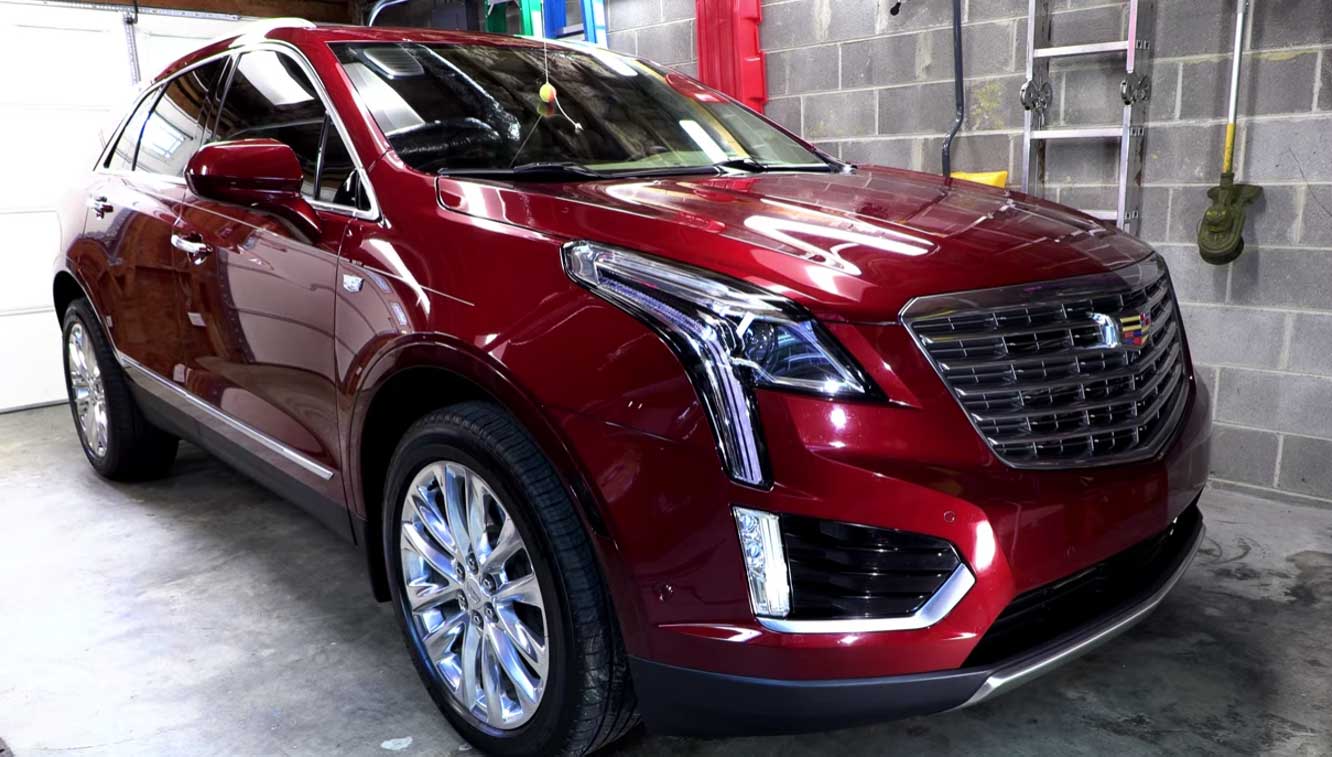
Your Cadillac just lit up a warning that says “Service Stability System.” Your heart sinks. You’re wondering: Can I drive it? Will something break? Do I need to pull over right now?
Here’s the truth: It depends. A stability system warning doesn’t always mean you’re in danger. But it does mean something needs attention.
In this article, I’ll explain what your Cadillac’s stability system actually does, why the warning appears, whether it’s safe to drive, and what you should do next. By the end, you’ll know exactly what’s happening under the hood—and whether you need to call a mechanic today or can wait until tomorrow.
What Is Your Cadillac’s Stability System?
Your Cadillac’s stability control system (called StabiliTrak by General Motors/Cadillac) is a safety feature that helps keep your car under control.
Here’s what it does: When your car starts to slide or skid, the system kicks in automatically. It applies the brakes to individual wheels and adjusts engine power to keep your car pointed where you want it to go.
Think of it like this—your car’s four wheels have a mind of their own. The stability system is the bouncer that stops them from doing anything stupid.
Why You Need It
On wet roads, gravel, or when you corner too fast, your tires can lose grip. Without stability control, your car would spin out or slide sideways. With it, the system catches the problem before it becomes a crash.
Cadillac’s version uses sensors on each wheel, a steering angle sensor, and a yaw sensor (which measures how much the car is rotating). All of this data runs through a computer that makes split-second decisions.
What “Service” Means
When the warning says “Service Stability System,” it’s not saying the system is actively working. It’s saying the system has found a problem with itself. The computer detected a fault in one of the sensors or the system’s electronics.
This is important: Your stability system is offline. That safety feature you’re used to having is not working. That’s why Cadillac wants you to know about it.
Why Did the Warning Light Come On?
The stability system warning appears when the car’s onboard computer detects a fault code. This could be from any of these sensors or components:
- Wheel speed sensors (four of them, one at each wheel)
- Steering angle sensor
- Yaw rate sensor
- Throttle position sensor
- The stability control module itself
- Wiring or electrical connections
The warning does not tell you which one is broken. It just tells you something is wrong. That’s why you need proper diagnosis.
Common Trigger Scenarios
After hitting a pothole or curb: You may have damaged a wheel speed sensor. These are mounted on the brake assembly and get hit by salt, dirt, and road debris. A hard impact can knock one loose or break it.
After an accident or collision: Any impact to the undercarriage can damage sensors or wiring. Even a minor fender-bender can trigger this.
After tire changes or wheel work: If someone replaced your tires or rotated them, they may have accidentally disturbed a sensor or disconnected a wiring harness. This is actually common.
In very cold weather: Cold can temporarily affect sensor performance, but this usually clears once the car warms up.
After sitting unused for weeks: Corrosion on sensors or battery drain can cause old faults to surface.
Is It Safe to Drive?
Short answer: Usually yes, but with caution.
Your Cadillac will still drive. The engine, brakes, steering, and transmission all work normally. The stability system is the only thing offline.
When You Can Drive Normally
- City streets and normal highway driving
- Dry, clear weather
- You’re not in a hurry or driving aggressively
You’ll be fine on your regular commute. Millions of people drive cars without stability control all the time (older cars, classics, budget vehicles). It’s not like a brake failure.
When You Should Be Careful
- Rain or wet roads (this is when stability control matters most)
- Curves at speed
- Gravel, dirt, or slippery surfaces
- Winter conditions
- Towing or heavy loads
- Night driving (visibility is already reduced)
In these conditions, your car is more likely to skid or lose traction. Without stability control to help, the risk goes up. You need to drive slower and more carefully.
When You Should NOT Drive
- If the warning appears while you’re braking hard or turning
- If your car feels unstable, pulls to one side, or loses grip
- If warning lights for ABS or brakes also appear alongside the stability warning
These are different problems. Pull over safely and call for help.
Real-World Example
Last year, I had a customer with a Cadillac CTS who got the stability warning on a Tuesday afternoon. He drove it carefully for three days until we could get him in the shop. The weather was dry. He took main roads, no highway. Nothing happened. On Friday, we found a loose wheel speed sensor at the front left—took 10 minutes to fix.
If he’d tried the same drive in heavy rain, we might be telling a different story.
Common Causes (And How to Check Them)
1. Loose or Damaged Wheel Speed Sensor
What it is: A small magnetic sensor bolted to your brake assembly. It reads how fast each wheel is spinning.
Why it fails: Road salt corrodes the sensor. Dirt and mud build up around it. Hard impacts damage it. These sensors are exposed to the elements constantly.
How to check:
- Get under each wheel (safely, with jack stands)
- Look at the brake assembly
- The sensor is a small cylinder, about the size of a dry-erase marker, usually with a wire running to it
- Check if it’s loose, cracked, or covered in thick corrosion
- Check if the wire is disconnected or damaged
Cost to fix: $150–$400 per wheel (sensor + labor)
DIY possible? Yes, if you’re comfortable under the car. It’s usually one bolt. But if the connector is corroded, you may need penetrating oil and patience.
2. Loose Battery Connection
What it is: A corroded or loose battery terminal can cause the car’s computer to lose power momentarily.
Why it matters: When the computer loses power, it forgets its settings and stores fault codes.
How to check:
- Open the hood
- Look at both battery terminals (positive and negative)
- Is there white, blue, or green crusty corrosion?
- Try wiggling the cable clamps by hand
- Do they move, or are they tight?
Cost to fix: Free if it’s just loose. $20–$50 if you need to clean it.
DIY possible? Absolutely. Disconnect the negative terminal first. Clean the terminals and clamps with baking soda and water. Reconnect. This fixes roughly 10% of stability warnings.
3. Recent Tire Changes or Wheel Work
What it is: Someone rotated your tires, replaced them, or worked on your brakes. A sensor got bumped or a connector came loose.
How to check:
- Think back: Did you recently have tire work done?
- Get under the car at one wheel
- Follow the wire from the wheel speed sensor to the connector
- Is the connector fully seated, or is it loose?
Cost to fix: Free. Just push the connector in fully.
Why this happens: Tire shops are fast. They don’t always reconnect sensors carefully. It’s not malicious—just rushed work.
4. ABS Module or Wiring Fault
What it is: The ABS (anti-lock braking) system and stability control share the same computer module. A fault in ABS can trigger a stability warning.
Why it fails: Corrosion in the wiring under the car. Accidents that bend the ABS module. Contaminated brake fluid.
How to check:
- Look for exposed wiring under the car or near the wheels that looks damaged, pinched, or corroded
- This is harder to DIY—you need a scan tool to know for sure
Cost to fix: $300–$1,500 depending on what’s wrong
DIY possible? Not usually. You need diagnostic equipment.
5. Faulty Steering Angle Sensor
What it is: A sensor in your steering column that tells the stability system which direction the wheels are pointed.
Why it fails: Older Cadillacs (especially 2005–2015 models) are known for this sensor failing.
How to check:
- You can’t check this without a scan tool
- But if you have a 2010 Cadillac CTS or SRX and just got the warning, this is a common culprit
Cost to fix: $200–$600
DIY possible? No, this requires calibration equipment.
Common Mistakes Drivers Make
Mistake 1: Ignoring It Completely
Some drivers see the light and think, “It’s just a light. I’ll ignore it.”
Wrong. Stability control helps in emergencies. When you need it most—like a sudden rainstorm or an emergency maneuver—it won’t be there. The problem usually gets worse, not better. And on some Cadillacs, the stability system can go into “limp mode” where it limits engine power.
Mistake 2: Assuming It’s Expensive
Many drivers think, “Stability system warning = $3,000 repair.”
Not true. Fifty percent of the time, it’s a $20 battery terminal or a loose sensor connector. Even the expensive repairs (a new ABS module) are usually under $1,500.
Get it diagnosed before you panic about the bill.
Mistake 3: Driving Aggressively on Wet Roads
“The light is on, but it’s just rain. I drive fine.”
You might drive fine. But stability control is specifically designed for rain and wet roads. That’s when it matters most. Wet roads + no stability control = higher crash risk.
If the warning is on and it’s raining, slow down and take it easy.
Mistake 4: Disconnecting the Battery to “Reset” It
Some drivers disconnect the battery hoping the warning will go away.
It might. For about 100 miles. Then it comes back because you never fixed the actual problem.
The fault code will reset, but the underlying issue is still there. You’ve just delayed the diagnosis.
Mistake 5: Assuming a Mechanic Can’t Diagnose It Without a Dealer
“I need to go to a Cadillac dealer. My local mechanic can’t help.”
False. Any shop with a diagnostic scan tool can pull the fault code and tell you what’s wrong. A good independent shop can often fix it cheaper than a dealer.
FAQ
Q: Will My Car Get Worse if I Keep Driving With the Warning On?
A: Not usually. The system is offline, but it’s not hurting anything by being offline. However, you’re driving with reduced safety. And on some Cadillacs, the stability control module can shut down other systems if it detects repeated faults, which might trigger a limp mode. Get it checked within a week.
Q: Can a Bad Battery Cause This Warning?
A: Yes. A low or dying battery can cause the car’s computer to reset and lose its stability system calibration. This is one of the easiest fixes. Replace your battery and the warning may disappear.
Q: Should I Go to a Dealer or an Independent Mechanic?
A: An independent mechanic with a modern scan tool can diagnose this for $80–$150. A dealer will charge more. If it’s under warranty, go to the dealer. If not, try an independent shop first. Either way, you need a proper diagnosis before any repair.
Q: How Much Does It Cost to Fix?
A: It depends on the cause. If it’s a loose sensor connector, free. If it’s a wheel speed sensor, $150–$400. If it’s an ABS module, $800–$1,500. If it’s just corrosion on the battery terminal, $0–$50. You can’t know without a diagnostic scan.
Q: Is It Safe to Drive on the Highway?
A: In normal conditions, yes. In rain, snow, or heavy traffic where you might need to brake or swerve hard, take extra care. Stability control matters most in emergencies. If you lose grip on the highway without it, the consequences are worse.
Q: Will My Car Fail an Inspection?
A: Depends on your state or country. In most of the US, a warning light alone won’t fail an inspection unless it’s safety-critical (like brakes or airbags). But check your local rules. In the UK, an active warning light on your dashboard can result in an MOT failure if it relates to emissions or safety systems.
Q: How Long Can I Drive With This Warning?
A: A few days to a week if conditions are good. If it’s been on for more than a week, get it diagnosed. You’re not doing any favors to yourself by waiting.
Q: Can I Disable the Stability System Myself?
A: Most Cadillacs have an off button (usually on the center console). You can turn off stability control manually if you want. But this doesn’t fix the warning—it just silences it. The system is still faulted. Don’t do this as a workaround.
What to Do Next
Step 1: Drive Carefully (If You Must Drive)
If you need to use your car before you can get it fixed, drive conservatively. Avoid wet roads and highway speeds if possible. No aggressive cornering.
Step 2: Get a Diagnostic Scan
Call a local independent mechanic or your dealer. Ask for a diagnostic scan of the stability control system. This costs $80–$150 and tells you exactly what’s wrong.
Don’t let anyone repair anything until you know the diagnosis.
Step 3: Get a Quote
Once you know the problem, get a repair quote. Compare prices between an independent shop and a dealer. Don’t assume the dealer is more expensive—sometimes they’re competitive.
Step 4: Schedule the Repair
Most stability system faults take 1–3 hours to fix. Your car will be done the same day.
Step 5: After the Repair
Ask the mechanic to clear the fault code and test drive the car. The warning light should be gone. If it comes back immediately, something wasn’t fixed properly.
Final Thoughts
A “Service Stability System” warning on your Cadillac is not an emergency. Your car will still drive. But it is a sign that a safety system needs attention.
Nine times out of ten, it’s something simple: a loose sensor, a corroded battery terminal, or a disconnected wire. Even the expensive fixes (an ABS module replacement) are manageable.
The worst thing you can do is ignore it and hope it goes away. It won’t. Get it diagnosed this week, find out what’s wrong, and get it fixed. Then you’ll have your safety system back where it belongs—working quietly in the background, ready to help when you need it.