
Monday to Saturday - 9:00 am -18:00 pm

Introduction
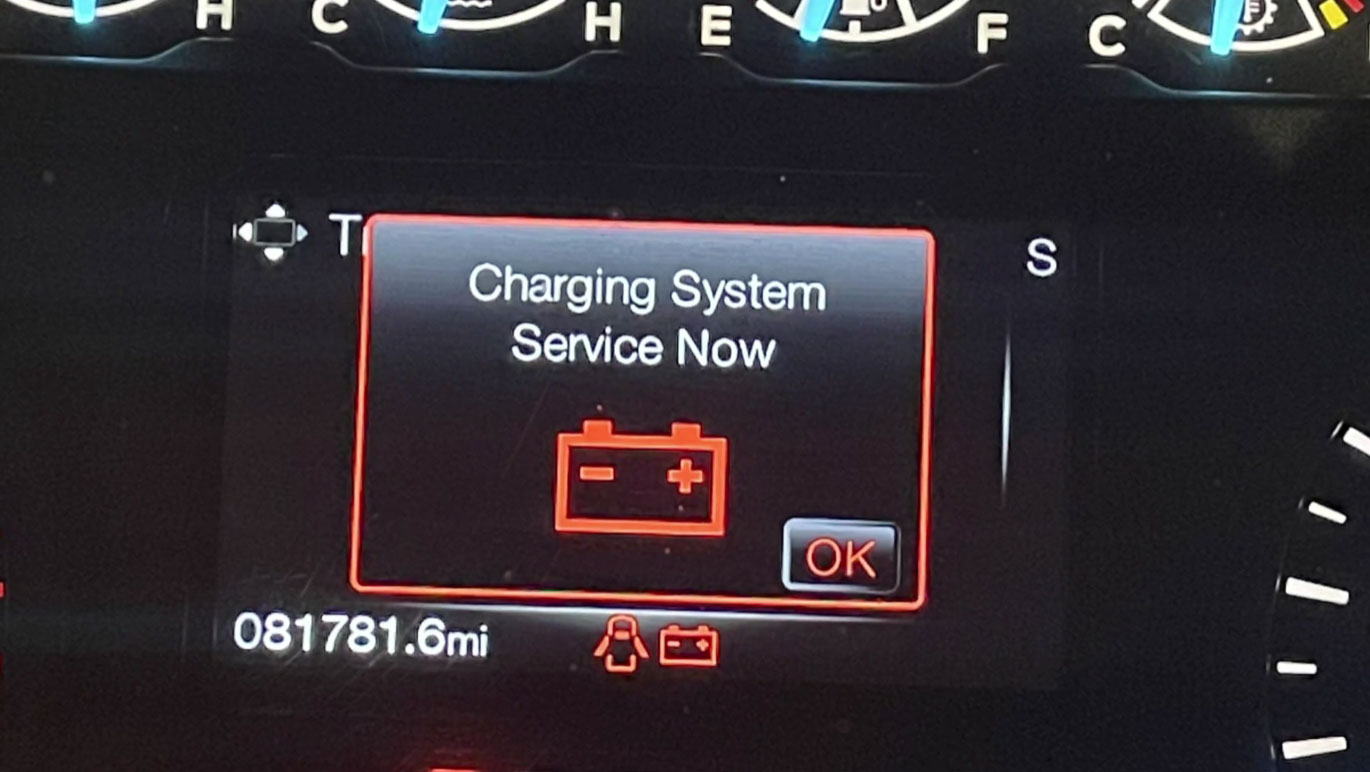
You’re driving your Ford. The dashboard lights up. You see “Charging System Service Now.”
Your heart sinks. You have questions. Right now.
Is this an emergency? Can you drive to the shop, or do you need a tow truck? Will your car die on the highway?
I’ve been a mechanic for over 20 years. I’ve seen this warning hundreds of times. The good news: it’s not always a disaster. But it does need attention. Soon.
In this article, you’ll learn:
- What this warning actually means
- Whether it’s safe to drive
- What causes it
- How much it typically costs
- What to do right now
Let’s start with the basics.
What “Charging System Service Now” Means
Your Ford is telling you that the charging system isn’t working properly.
That’s it. Something in the system that charges your battery while you drive is broken or failing.
It does NOT mean:
- Your battery is dead (yet)
- Your car will definitely stop running
- You need a tow truck immediately
It DOES mean:
- Your battery is losing charge while you drive
- Eventually, you’ll run out of power
- You need to get it fixed soon
Think of it like this: Your battery is a gas tank. Your charging system is the fuel pump. The warning means the pump is broken. You can still drive on what’s in the tank, but you won’t refill it. Eventually, you’ll empty.
Is It Safe to Drive?
Here’s the honest answer: it depends.
You CAN usually drive short distances. If you’re 5 minutes from home or a mechanic, go. Keep the drive short and steady.
You should NOT take long trips. Highway driving at night? No. City driving 30 miles away? No. Your battery will die, and you’ll be stranded.
Signs your battery is actually draining:
- Headlights get dimmer as you drive
- Dashboard lights fade
- Engine starts to run rough
- The car finally stops
If you see any of these while driving, pull over safely. Turn off the air conditioning, radio, and headlights. Drive slowly to the nearest mechanic or safe location.
The real risk: You won’t know when you’ll run out of power. It might be 10 minutes. It might be 2 hours. Don’t gamble on a long drive.
What Causes This Warning
Ford’s charging system warning triggers when the computer detects low voltage from the alternator.
Here are the most common causes:
Bad Alternator
This is the #1 reason you see this warning.
The alternator is a generator that makes electricity while the engine runs. When it fails, it stops charging the battery.
How long do alternators last? Usually 80,000 to 150,000 miles. Some last 200,000. Some fail at 40,000.
Signs of a failing alternator:
- Dim headlights that get worse when you turn on the AC
- Battery warning light stays on
- Clicking when you try to start the car
- Burning smell (rare, but serious)
I had a customer last month with a 2019 Ford Escape. The alternator was completely dead. The car ran for about 3 miles on battery alone, then died on her way to work.
Loose or Corroded Battery Cables
Your battery connects to the car with two thick cables: positive (red) and negative (black).
If these are loose or covered in white/blue corrosion, the connection fails. The alternator can’t charge properly.
This is the cheapest fix. Usually, it’s just cleaning the terminals. Cost: $0 to $50 if you do it yourself, or $100 if a shop does it.
Bad Battery
Sometimes the battery itself is shot.
If the battery can’t hold a charge, the alternator works fine, but the warning still comes on. The voltage stays low no matter what.
Batteries typically last 3 to 5 years in the US. Longer in cooler climates. Shorter in hot areas.
Worn Serpentine Belt
The serpentine belt drives the alternator. No belt, no alternator spinning, no charge.
If this belt breaks, you’ll lose power steering, air conditioning, and charging all at once. You’ll hear a loud squeal or squeaking before it breaks.
Cost: $150 to $400, depending on your Ford model.
Faulty Voltage Regulator
Inside the alternator is a voltage regulator. This tiny part controls how much electricity the alternator makes.
If it fails, the alternator either makes too much voltage (and burns out electrical parts) or not enough (and your battery drains).
This is less common than a bad alternator, but it happens.
How the Charging System Works (In Plain English)
I need to explain this briefly. It’s important you understand what’s happening.
When your engine is off: Your battery powers everything: headlights, dashboard, radio, the engine starter.
When your engine is running: The alternator (a small generator) spins and makes electricity. This electricity:
- Powers everything in the car (lights, radio, computer)
- Charges the battery back up
- Provides extra power for accessories
The voltage regulator makes sure the alternator doesn’t make too much or too little voltage. It’s like the cruise control for your electrical system.
The battery acts as a backup. If demand is high (like starting a cold engine), the battery helps. When demand is low and the engine is running, the alternator keeps the battery charged.
When something in this chain breaks, the warning comes on.
Common Mistakes Drivers Make
I see these all the time:
Mistake #1: Ignoring It and Hoping It Goes Away
It won’t.
The charging system won’t magically fix itself. You’ll eventually lose power. That’s when people call me. They’re stranded on the side of the highway in the dark.
Get it checked within a week.
Mistake #2: Assuming It’s “Just the Battery”
Many drivers think “charging system = battery is bad.”
Wrong. The battery is often fine. It’s usually the alternator.
Don’t buy a new battery until the shop tests it. A full test takes 15 minutes and costs nothing.
Mistake #3: Driving Long Distances Anyway
“I’ll just make it to the mechanic two towns over.”
No. You won’t. Pull over, call a tow, or drive to the closest shop.
I’ve had three customers this year stranded in parking lots. Two of them were only 20 minutes from a shop.
Mistake #4: Not Getting the Real Problem Fixed
Some shops will replace the battery, and the warning goes away for a day. Then it comes back.
Why? They didn’t fix the alternator. The new battery just drains faster.
Ask your shop: “Are you testing the alternator, or just replacing the battery?”
Mistake #5: Waiting Too Long to Charge Before Driving
If your battery does drain while driving, don’t try to jump-start and drive again immediately.
Let the car sit for 10 minutes with the engine running. This gives the alternator time to charge the battery back up.
What to Do Right Now
Step 1: Keep Driving to a Safe Location
If you see this warning while driving:
- Don’t panic
- Turn off the AC and radio (saves battery power)
- Turn off headlights if it’s daytime
- Drive slowly to the nearest mechanic
Step 2: Call a Shop
Call a trusted mechanic or Ford dealership. Tell them: “I have a ‘Charging System Service Now’ warning.”
They’ll usually fit you in that day or the next morning.
Step 3: Don’t Drive More Than Necessary
Until it’s fixed, treat your Ford like it has a broken gas pump. Short trips only.
Step 4: If Your Car Dies
If the battery completely drains and you’re stuck:
- Turn on hazards
- Call roadside assistance or a tow truck
- Do NOT try to push-start it (that won’t work with a dead battery)
Repair Costs
Here’s what you can expect:
Alternator Replacement
Cost: $400 to $800
This is the most common repair. Labor is 1 to 3 hours, depending on the Ford model.
A new alternator (aftermarket) costs $200 to $400. A rebuilt one costs $150 to $300. OEM (Ford) parts cost more.
Labor adds $200 to $400.
Example: 2018 Ford F-150. Bad alternator. $600 total (parts + labor).
Battery Replacement
Cost: $100 to $300
A standard battery is cheap. AGM batteries (in some newer Fords) cost more.
Most shops charge $50 to $100 for installation.
Battery Cable Cleaning
Cost: $0 to $150
If corrosion is the problem, a shop might just clean the terminals. This takes 15 minutes.
Sometimes it’s free. Sometimes it’s $50.
Serpentine Belt
Cost: $150 to $400
Belt replacement is straightforward. Cost depends on your Ford model and engine.
Voltage Regulator
Cost: $200 to $500
If this tiny part is bad, the shop usually replaces the whole alternator. So the cost is similar to an alternator replacement.
Common Questions and Answers
Q: Is the “Charging System Service Now” warning the same as the battery light?
A: Yes, usually. Different Fords word it differently, but they’re both telling you the same thing: your charging system isn’t working.
Q: Can I drive 50 miles to my regular mechanic?
A: No. Get it fixed at the nearest shop. Fifty miles is too far. You’ll likely get stranded.
Q: Will my car start tomorrow morning if I leave it parked overnight?
A: Maybe. Maybe not. It depends on how much battery power is left. Don’t gamble. Get it fixed today.
Q: My battery is only 1 year old. Can’t it be something else?
A: Almost certainly. It’s the alternator or a connection problem. A new battery won’t help. Get the alternator tested.
Q: Should I go to the Ford dealership or an independent shop?
A: Either is fine for this repair. Dealerships cost more ($100 to $200 more in labor). Independent shops are cheaper but should be reputable. Ask for a warranty on parts and labor (usually 12 months).
Q: Can I replace the alternator myself?
A: If you’re experienced, maybe. For most people, no. It requires:
- Removing the serpentine belt
- Disconnecting electrical connections
- Unbolting the alternator
- Installing a new one
One mistake, and you break something else. Let a shop do it.
Q: How long does an alternator replacement take?
A: Usually 1 to 3 hours, depending on your Ford model. Some have the alternator in an easy spot. Others require removing the air intake or other components.
Q: Will this warning clear itself if I drive long enough?
A: No. The warning comes from a real electrical problem. Driving won’t fix it. Only a repair will.
Conclusion
Here’s what you need to remember:
“Charging System Service Now” means your car’s charging system is broken. It’s not an emergency like a brake failure, but it’s urgent. Don’t ignore it.
It’s usually safe to drive short distances to a mechanic, but not safe for long trips. Your battery will eventually die.
The most common cause is a failing alternator. Don’t assume it’s the battery. Get it tested.
Call a mechanic today. This repair is straightforward. The cost is reasonable. The sooner you fix it, the sooner you stop worrying.
Don’t drive long distances until it’s repaired. You will get stranded. It’s not a question of if, but when.
If you see this warning right now, turn off unnecessary electronics and drive to the nearest shop. Keep it short. Get it fixed. Move on with your day.
You’ve got this. And if you have questions about your specific Ford, your mechanic is the best person to ask. They can look at your car directly and give you an accurate answer.
Have a Ford with this warning? Share your experience in the comments. What was causing it? How much did it cost to fix?