
Monday to Saturday - 9:00 am -18:00 pm

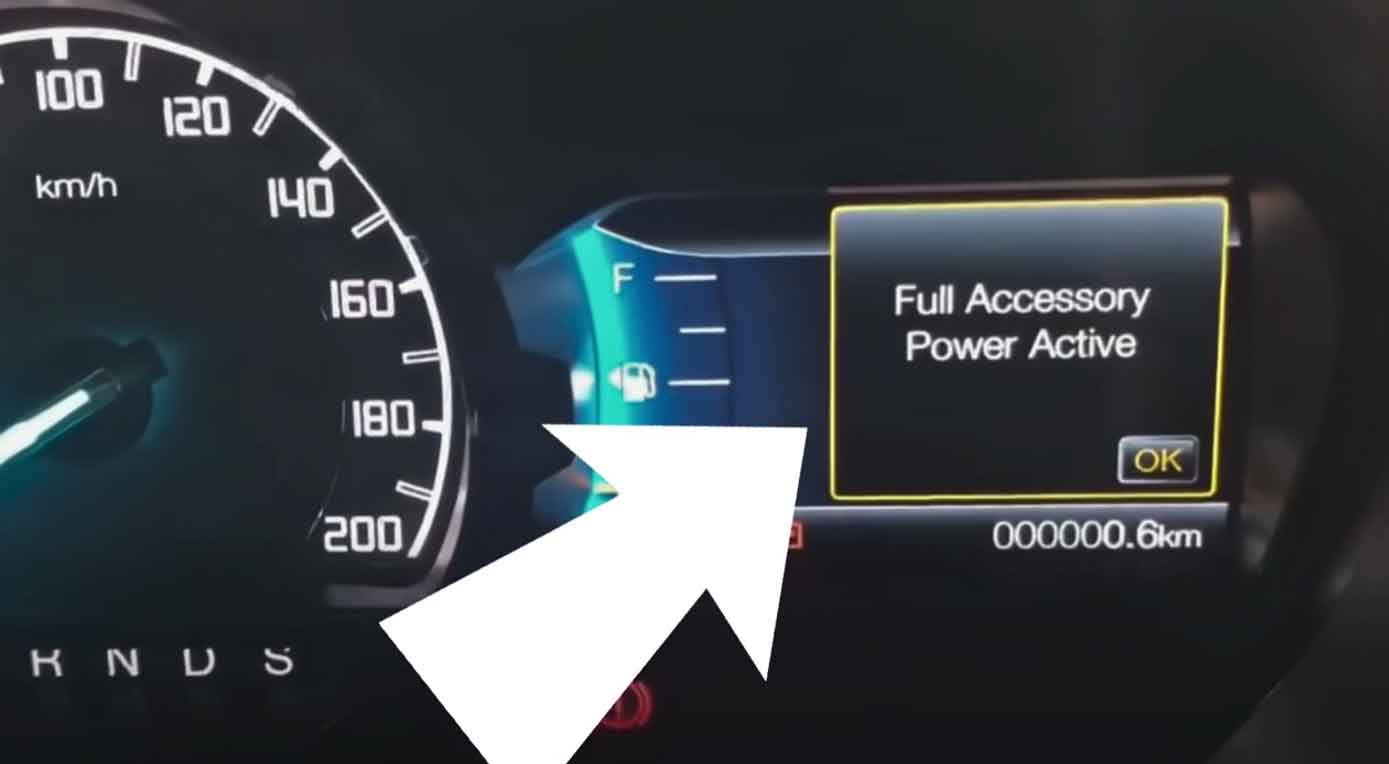
What Does “Full Accessory Power Active” Really Mean?
You turn your car key to the second position. You hear a click. The dashboard lights up like a Christmas tree.
That’s Full Accessory Power Active mode.
In my shop, I explain it like this: Your car has different power levels. Full Accessory Power is the middle setting between “off” and “engine running.”
Think of it like a dimmer switch for your car’s electrical system.
The Three Power Modes Every Car Has
Let me break this down the way I teach my apprentice mechanics.
Off Mode: Everything is dead. No lights, no radio, nothing. The battery saves its energy.
Accessory Mode: Some things work. Your radio plays. Windows go up and down. The dashboard shows information.
Full Power Mode: This happens when the engine runs. Everything gets full juice from the alternator.
From years under the hood, I’ve learned one thing. Most drivers don’t understand these modes exist.
What Works When Full Accessory Power Is Active?
Here’s what you can use in accessory mode:
Radio and infotainment system. You can listen to music all day (well, until the battery dies).
Power windows. Roll them up or down without starting the engine.
Interior lights. The dome light, reading lights, and dashboard displays stay on.
Power outlets and USB ports. Charge your phone while you wait in the parking lot.
Climate control display. You can see it, but the AC won’t blow cold air. That needs the engine running.
Dashboard gauges. Check your fuel level, odometer, and trip computer.
When I service a car, I always test accessory mode. It tells me if the ignition switch works properly.
What Doesn’t Work in Accessory Mode?
Some systems need the engine running. Here’s what stays off:
The air conditioning compressor won’t engage. You might see the controls, but no cold air comes out.
Power steering stays locked. Try turning the wheel—it’s like wrestling a bear.
Brake assist doesn’t work. The pedal feels hard as a rock.
The alternator doesn’t charge. Your battery slowly drains instead.
Fuel pump stays silent. The engine can’t start without fuel pressure.
I’ve seen people panic about these things. They think their car is broken. Nope—it’s working exactly as designed.
How to Activate Full Accessory Power
Different cars use different methods. Let me show you the most common ways.
Traditional Key Ignition
Insert your key. Turn it one click forward. Stop before you hear the starter crank.
That’s accessory mode.
Turn it one more click (without pushing the brake), and you get full accessory power. The dashboard does a full system check.
Push Button Start Vehicles
This one confuses people in my shop every single week.
Don’t touch the brake pedal. Just press the start button once. The car wakes up partially.
Press it again (still no brake). Full accessory mode activates.
Press it a third time while holding the brake. The engine starts.
Pro tip: Most cars with push-button start automatically turn off accessory mode after 20 minutes. This protects your battery.
Rotary Dial Systems
Some luxury cars use a dial instead of a button.
Twist it to the first position. That’s accessory mode.
The second position gives full accessory power.
Why Does This Mode Even Exist?
Good question. Here’s what it’s designed for.
Waiting in your parked car. You can listen to music without wasting gas or creating exhaust fumes.
Checking systems before starting. The car runs a self-test. Warning lights flash on, then off. This helps you catch problems early.
Using electronics without idling. Better for the environment and your fuel economy.
Emergency situations. If your engine dies, you still have some electrical power.
In my 15 years as a mechanic, I’ve used accessory mode hundreds of times. It’s perfect for checking codes with a scan tool before starting the engine.
The Battery Drain Problem Nobody Talks About
Here’s the thing mechanics know but dealers don’t always mention.
Full Accessory Power Active drains your battery. Fast.
A typical car battery lasts about 30-45 minutes in accessory mode. Maybe an hour if you’re lucky and have a new battery.
Run your radio, charge your phone, and use the headlights? You’ll drain it in 20 minutes.
I’ve jump-started dozens of cars because someone left it in accessory mode too long.
How to Avoid a Dead Battery
Set a phone alarm for 20 minutes. When it goes off, start the engine or turn everything off.
Don’t use headlights in accessory mode. They’re battery killers.
Avoid running the blower fan on high. It draws serious current.
If your battery is more than 3 years old, be extra careful. Older batteries have less capacity.
From my experience: Modern cars with big touchscreens drain batteries even faster. Those displays use a lot of power.
Warning Lights and Messages You Might See
When you activate Full Accessory Power, the dashboard goes crazy for a few seconds.
This is normal. The car is checking every system.
You might see these messages:
“Accessory Power Active” or “ACC Mode” on the display.
“Service Stabilitrak” or similar warnings (they’ll disappear after starting).
Battery voltage displayed (usually 12.4-12.8 volts when healthy).
“Key Fob Not Detected” if you have push-button start.
In my shop, customers panic about these warnings. I always tell them: “Wait until the engine starts. Then see what stays lit.”
Most warning lights are just the system saying “I’m checking myself.”
The Alternator Connection You Need to Understand
Here’s something important about how your car’s electrical system works.
The alternator is like a power plant for your car. It generates electricity when the engine runs.
In accessory mode, the alternator is off. You’re running on battery power alone.
This is why everything dims after a while. The battery voltage slowly drops.
When I diagnose electrical problems, I always check alternator output. A weak alternator can’t recharge the battery properly.
Symptoms of a bad alternator:
- Battery dies frequently
- Lights dim when idling
- Electrical accessories cut out randomly
- Battery warning light stays on
If you notice these signs, get your alternator tested. Most auto parts stores do it for free.
Different Cars, Different Systems
Not all accessory modes work the same way.
GM Vehicles (Chevrolet, GMC, Cadillac)
These often show “Accessory Power Active” right on the dashboard. Very clear.
They automatically shut off after 10 minutes to save the battery.
Ford Vehicles
Push the button twice without the brake. Simple system.
The MyFord Touch screen stays active but dims to save power.
Honda and Toyota
Very conservative with accessory power. They automatically shut off after 20 minutes.
Their systems draw less power than American cars, in my experience.
Luxury Brands (BMW, Mercedes, Audi)
Multiple accessory levels with different power-saving modes.
The computer manages everything automatically.
These are harder to drain completely because of smart power management.
Common Problems and How to Fix Them
From working on thousands of cars, I’ve seen these issues repeatedly.
Problem: Car Won’t Go Into Accessory Mode
Check the key fob battery first. Dead fob batteries cause this constantly.
Try the backup key if you have one.
Wiggle the steering wheel while pressing the button. Sometimes the steering lock gets stuck.
Problem: Accessory Mode Drains Battery Too Fast
Get a battery load test. Most batteries fail slowly, not suddenly.
Check for parasitic draw. Something might be staying on when it shouldn’t.
Inspect battery terminals. Corrosion causes voltage drop.
Problem: Some Accessories Don’t Work
Check the fuse box. Individual circuits can blow without affecting others.
Test the accessory relay. It controls power distribution.
When I see this problem, I use a multimeter to track down the dead circuit.
Using Accessory Mode Without Starting Your Engine
Here are safe ways to use this feature:
Waiting to pick someone up: Run the radio and fan for 15-20 minutes max.
Lunch break in your car: Set a timer. Start the engine every 20 minutes for 5 minutes to recharge.
Using a laptop with an inverter: Start the engine. Don’t rely on battery power alone.
Charging multiple devices: Modern cars have 150-watt power limits. Don’t exceed that.
Pro tip from my toolbox: I keep a small jumper pack in every vehicle I work on. Battery drains happen. Be prepared.
The Environmental and Fuel Economy Angle
Using accessory mode instead of idling your engine saves gas.
Idling burns about 0.2 gallons per hour. That’s roughly $0.80 worth of fuel every hour.
It also creates unnecessary emissions. Bad for air quality.
Modern engines don’t need to “warm up” by idling. Start and drive gently. That’s better for everything.
In my shop, I encourage customers to use accessory mode when parked for short periods.
Advanced: Reading the Electrical System
If you want to go deeper, here’s what mechanics look at.
Battery voltage in accessory mode: Should be 12.4-12.8 volts on a healthy battery.
Voltage drop over time: Should decrease slowly, not plummet.
Current draw: Most cars use 3-5 amps in accessory mode. More than 7 amps means something’s wrong.
I use a tool called a multimeter to measure these values. Every serious DIYer should own one.
They cost $20-50 at any hardware store.
What Happens If You Leave It On Overnight?
I get this call at least once a month.
Someone left their car in accessory mode. Battery died completely.
Here’s what to do:
Jump-start the car or use a portable jumper pack.
Let the engine run for at least 30 minutes. The alternator needs time to recharge the battery.
Drive the car, don’t just idle. Driving charges faster.
If the battery won’t hold a charge after this, it might be damaged. Deep discharges kill batteries.
Personal story: My own truck battery died this way. I was testing a new radio install. Got distracted. Completely drained it. Had to replace the battery because it wouldn’t hold a charge anymore.
Professional Tips for Car Longevity
From my years under the hood, here’s what keeps cars running longer:
Replace your battery every 4-5 years. Don’t wait for it to die at the worst possible time.
Clean battery terminals yearly. Corrosion creeps up slowly.
Test your alternator annually. Catching problems early saves money.
Don’t abuse accessory mode. It’s convenient but hard on the battery.
Keep your key fob battery fresh. Change it every 1-2 years.
Final Thoughts From a Working Mechanic
Full Accessory Power Active is a useful feature. But like any tool, you need to understand it.
Use it wisely. Don’t drain your battery. Pay attention to warning lights.
Most importantly, maintain your electrical system. A healthy battery and alternator make everything work better.
In my shop, I always say this: “Your car’s electrical system is like your home’s power grid. Take care of it, and it’ll take care of you.”
When something doesn’t work right in accessory mode, that’s your car talking to you. Listen to it.
Get it checked before a small problem becomes an expensive repair.
Need help with your car’s electrical system? This guide covers the basics, but every vehicle is different. When in doubt, consult a certified mechanic who can diagnose your specific situation. Regular maintenance beats emergency repairs every time.