
Monday to Saturday - 9:00 am -18:00 pm

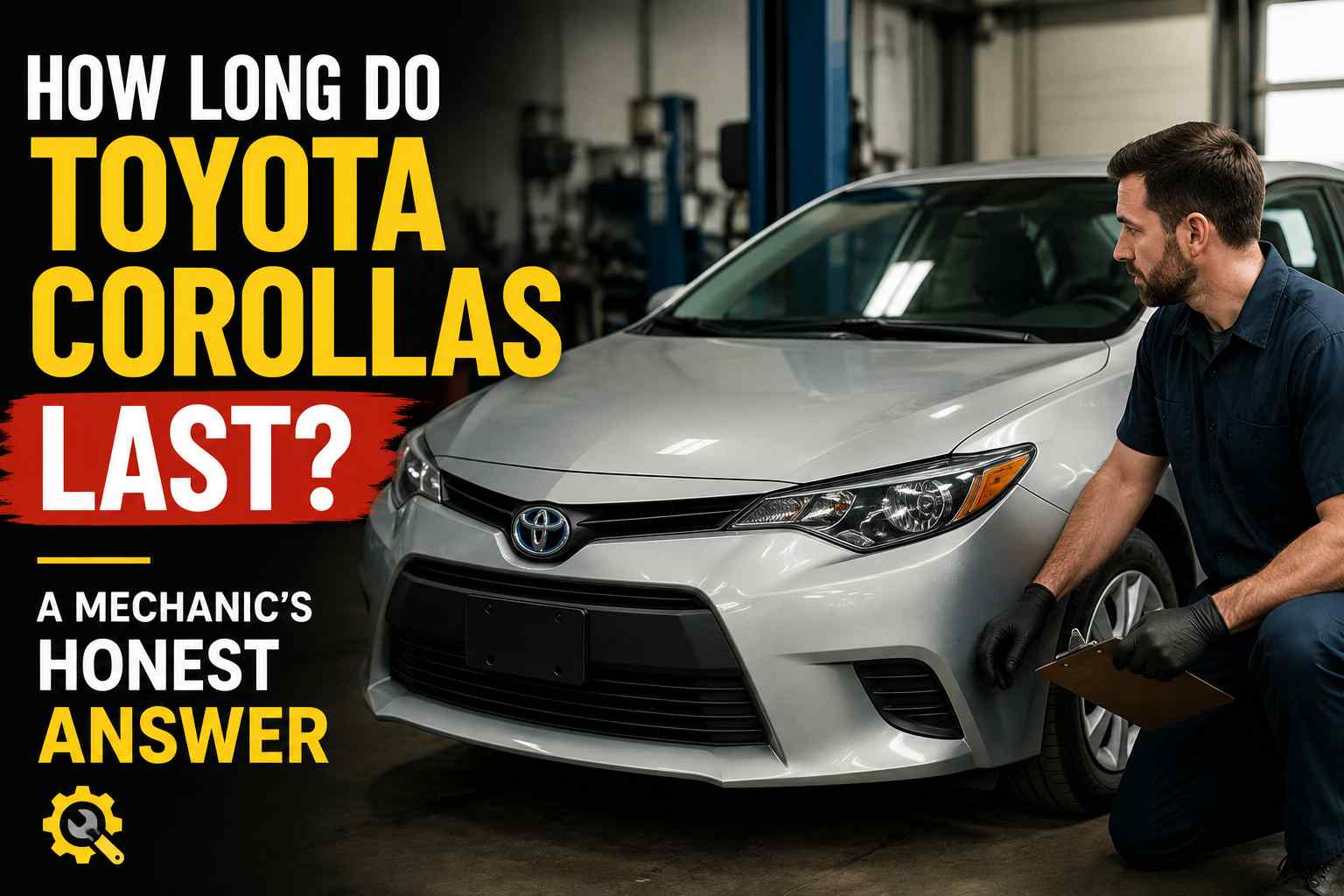
If you’re thinking about buying a Toyota Corolla, you want to know one thing: how long will it actually last?
Here’s the short answer: A well-maintained Toyota Corolla can easily reach 200,000 to 300,000 miles. Some owners have pushed their Corollas past 400,000 miles with the original engine and transmission.
I’ve been working on cars for years. Corollas are some of the easiest cars to keep running. They’re simple, they’re cheap to fix, and they just don’t quit.
In this guide, I’ll explain exactly how long you can expect your Corolla to last. I’ll cover what makes them so reliable, which model years to watch out for, and how to squeeze every possible mile out of yours.
Average Toyota Corolla Lifespan
The average Toyota Corolla lasts between 200,000 and 300,000 miles. In terms of years, that’s roughly 15 to 20 years of ownership with regular driving.
Here’s how to think about it: The average American drives about 12,000 to 15,000 miles per year. At that pace, a Corolla should last you at least 15 years before you need to start worrying about major repairs.
Lifespan by the numbers:
- Minimum expected: 200,000 miles
- Typical well-maintained: 250,000 to 300,000 miles
- Exceptional examples: 400,000+ miles
- Average years of ownership: 10 to 20 years
These aren’t fantasy numbers. These are real-world results I’ve seen from Corolla owners who simply followed the maintenance schedule.
Why Do Corollas Last So Long?
There’s a reason Toyota Corollas have a legendary reputation. It comes down to four things.
Simple, Proven Engineering
Toyota doesn’t chase flashy technology with the Corolla. They use simple, time-tested parts. The engines are basic four-cylinders that have been refined over decades. Less complexity means fewer things can break.
Conservative Design Choices
Toyota engineers are cautious. They don’t release major changes until they’ve been tested thoroughly. That’s boring for car reviewers, but it’s great for reliability.
Affordable Repairs
When something does break on a Corolla, it’s cheap to fix. Parts are everywhere. Any mechanic can work on it. You’re not stuck paying dealer prices for special tools or hard-to-find components.
High Build Quality
Toyota has strict quality control. They catch problems during manufacturing, not after cars hit the road. The fit and finish on Corollas is consistent year after year.
Real-World High-Mileage Examples
Want proof that Corollas last? Here are some documented high-mileage Corollas.
481,000+ miles on a 2019 Corolla Hybrid A delivery driver in the US has a 2019 Corolla Hybrid with over 481,000 miles. He drives about 700 miles per day for work. The car still runs on its original battery pack and engine. His secret? Oil changes every 5,000 to 7,000 miles and regular walk-around inspections.
606,500 miles on a 1990 Corolla One owner bought a 1990 Corolla with 204,500 miles on it. He drove it for years and hit 606,500 miles total. The only major work was an engine rebuild after he forgot to replace the oil cap and ran the engine dry. The manual transmission never gave him trouble.
436,000 miles on a daily driver A Corolla owner shared online that his car has 436,000 miles on it. Repairs included one AC compressor, one starter, one radiator, and a few sensors. Everything else was just normal maintenance items like brakes and fluids.
300,000+ miles from multiple owners Stories of Corollas reaching 300,000 miles are common on Toyota forums. Many owners report only needing to replace starters, brakes, and basic wear items.
Best and Worst Model Years
Not every Corolla is created equal. Some years are more reliable than others.
Best Years to Buy
These model years have the best track records:
- 2019-2021: Modern safety features, refined design, excellent reliability scores. The 2019 model received a J.D. Power Quality score of 92 out of 100.
- 2015-2018: Solid performers with few complaints. The valvematic engine issues from early years were fixed by late 2015.
- 2011-2013: Highly dependable with very few major problems reported.
- Pre-2000 models: The older Corollas from the 1990s are considered bulletproof. If you find one that’s been maintained, it can still run strong today.
Years to Avoid or Inspect Carefully
These years had more reported issues:
- 2009-2010: These had recalls for airbag problems, steering issues, and some owners reported excessive oil consumption and water pump failures.
- 2002-2003: Known for excessive oil consumption in some engines and transmission problems.
- 2014: More complaints about interior quality issues, dashboard rattling, and valvematic actuator problems in early production models.
The 2009 Corolla has the most complaints overall. If you’re buying a used one from this year, get a thorough pre-purchase inspection.
Common Problems That Shorten Lifespan
Even reliable cars have weak points. Here are the main issues I’ve seen on Corollas.
Excessive Oil Consumption
Some Corollas, especially 2000-2003 and 2009 models, can burn oil faster than normal. This happens because of piston ring design in those years. If you don’t check your oil regularly, you could run the engine low and cause serious damage.
Fix: Check your oil every 1,000 miles. Top off as needed. If it’s burning more than a quart between changes, have a mechanic inspect it.
Starter Failure Around 100,000 Miles
Starters on Corollas tend to wear out around 100,000 to 125,000 miles. You’ll notice slow cranking or clicking when you turn the key.
Fix: This is a normal wear item. Budget $200 to $400 for a replacement. It’s not a sign your car is dying.
Check Engine Light from EVAP System
The evaporative emission system triggers the check engine light on many Corollas from 1998 to 2016. It’s often a faulty gas cap or a blocked charcoal canister.
Fix: Start with a new gas cap ($15 to $30). If that doesn’t work, have the EVAP system inspected.
12-Volt Battery Issues in Hybrids
Corolla Hybrids can have problems with the small 12-volt auxiliary battery going flat. This happens if you take lots of short trips or leave the car sitting for weeks.
Fix: Drive the car regularly. If the battery dies repeatedly, replace it. This is not the main hybrid battery.
Minor Interior Quality Problems
Some owners report rattling dashboards, squeaky brakes, and occasional issues with locks and infotainment systems. These are annoying but don’t affect the car’s longevity.
Maintenance That Keeps Your Corolla Running
Want your Corolla to hit 300,000 miles? Follow this schedule.
Every 5,000 Miles
- Oil and filter change
- Tire rotation
- Brake inspection
- Check all fluid levels
Every 15,000 Miles
- Inspect cooling system and top off coolant
- Check ball joints and steering components
- Inspect brakes more thoroughly
- Examine exhaust system
Every 30,000 Miles
- Replace cabin air filter
- Replace engine air filter
- Check fuel system
- Inspect front differential oil (if applicable)
Every 60,000 Miles
- Check all drive belts
- Inspect and possibly change transmission fluid
- Check spark plugs (replace around 60,000-100,000 miles)
Every 100,000 Miles
- Replace coolant
- Replace spark plugs if not done earlier
- Inspect timing chain tensioner
- Consider replacing the starter proactively
Pro tip: Synthetic oil can extend your oil change intervals to 7,500 or even 10,000 miles. But if you do a lot of short trips, city driving, or live in extreme climates, stick to 5,000-mile changes.
Toyota Corolla vs. Honda Civic: Which Lasts Longer?
This is the big question. Both are legendary for reliability. Here’s how they compare.
Reliability ratings:
- Toyota Corolla: 4.5 out of 5.0 (ranks #1 among compact cars)
- Honda Civic: 4.5 out of 5.0 (ranks #3 among compact cars)
Average annual repair costs:
- Corolla: $362
- Civic: $368
Real-world differences:
The Corolla edges out the Civic slightly in long-term dependability. Between 2016 and 2020, Corollas had fewer reported engine, steering, and transmission issues than Civics.
However, both cars can easily reach 200,000+ miles with proper care. The Civic offers a sportier driving experience. The Corolla offers slightly lower ownership costs and a more conservative design.
Bottom line: You can’t go wrong with either. If maximum longevity is your top priority, the Corolla has a slight edge. If you want a more fun drive, the Civic might suit you better.
Signs Your Corolla Is Reaching the End
Even the most reliable car will eventually need major work. Watch for these signs.
Major Engine Problems
- Blue smoke from the exhaust (burning oil internally)
- Knocking or tapping sounds that don’t go away
- Consistent overheating despite repairs
- Compression loss in multiple cylinders
Transmission Failure
- Slipping between gears
- Harsh or delayed shifting
- Grinding noises when changing gears
- Transmission warning light that won’t clear
Rust and Body Rot
In northern climates, rust can kill a Corolla before the engine gives out. Look for rust on the frame, subframe, and floor pans. Surface rust on body panels is cosmetic. Structural rust is dangerous.
When Repairs Exceed Value
Here’s my rule: If a single repair costs more than half the car’s value, it’s time to think about replacement. A Corolla worth $3,000 that needs a $2,000 transmission isn’t a good investment.
Common Myths About Corolla Longevity
Let me clear up some misconceptions.
Myth: High mileage means the car is worn out
Truth: A 150,000-mile Corolla with full service records is often a better buy than a 75,000-mile car with no maintenance history. How the car was maintained matters more than the odometer.
Myth: You need to change oil every 3,000 miles
Truth: Modern Corollas using synthetic oil can go 5,000 to 10,000 miles between changes. Check your owner’s manual. Changing oil too often just wastes money.
Myth: Dealer service is required for longevity
Truth: Any qualified mechanic can service your Corolla. You don’t need to pay dealer prices. Just keep records of all work done.
Myth: Older Corollas are always better
Truth: 1990s Corollas were extremely reliable, but they also lacked modern safety features. Newer Corollas (2015+) are just as reliable and much safer in a crash.
FAQ
How many miles can a Toyota Corolla last?
A Toyota Corolla can last 200,000 to 300,000 miles with regular maintenance. Many owners report reaching 300,000+ miles on the original engine and transmission. Exceptional examples have exceeded 400,000 and even 500,000 miles.
Is a Toyota Corolla with 200,000 miles worth buying?
It depends on maintenance history and condition. A 200,000-mile Corolla with documented service records can still have years of life left. Get a pre-purchase inspection. Check for rust (especially in northern states). Budget for potential starter and suspension repairs.
How long do Toyota Corolla engines last?
Corolla engines typically last 250,000 to 300,000 miles. With meticulous oil changes and cooling system maintenance, some engines reach 400,000+ miles. The key is never letting the oil run low and addressing overheating immediately.
What is high mileage for a Toyota Corolla?
For most cars, 100,000 miles is considered high mileage. For a Corolla, that’s just getting broken in. I’d consider 200,000+ miles to be high mileage for a Corolla. Even then, many still run reliably.
Do Toyota Corollas have expensive repairs?
No. Corollas have some of the lowest repair costs of any car. Average annual maintenance runs about $300 to $400. Parts are affordable and widely available. Most repairs don’t require special tools or dealer service.
Which Toyota Corolla year is most reliable?
The 2011-2013 and 2019-2021 model years are considered the most reliable. They have the fewest complaints and best owner satisfaction scores. The 2019 Corolla scored 92 out of 100 on J.D. Power’s quality ratings.
How often should I change the oil in my Corolla?
Change the oil every 5,000 to 7,500 miles for synthetic oil, or every 5,000 miles if you drive in harsh conditions. Harsh conditions include frequent short trips, extreme temperatures, dusty roads, or lots of stop-and-go traffic.
Can a Toyota Corolla last 20 years?
Yes. Many Corollas last 20 years or more. At average driving of 12,000 miles per year, a 20-year-old Corolla would have about 240,000 miles. This is well within the typical lifespan of a maintained Corolla.
Final Thoughts
The Toyota Corolla has earned its reputation as one of the longest-lasting cars on the road. Expect 200,000 to 300,000 miles from a well-maintained example. Some go much further.
Here’s what matters most:
- Change your oil on schedule. This is the single biggest factor in engine longevity.
- Don’t ignore warning lights. Small problems become expensive problems when ignored.
- Keep records. Documented maintenance makes the car worth more and helps you track what’s been done.
- Address rust early. In salt-belt states, rust is the real killer. Wash the undercarriage in winter.
If you’re shopping for a used Corolla, aim for 2011-2013 or 2019-2021 model years. Avoid 2009 unless it’s been inspected thoroughly. Any Corolla with a solid service history is likely a good bet.
Corollas aren’t exciting. They’re not fast. But they get you where you need to go, year after year, without drama or expensive surprises. That’s exactly why millions of people choose them.
Have questions about your Toyota Corolla? Drop them in the comments below. We read every one.