
Monday to Saturday - 9:00 am -18:00 pm

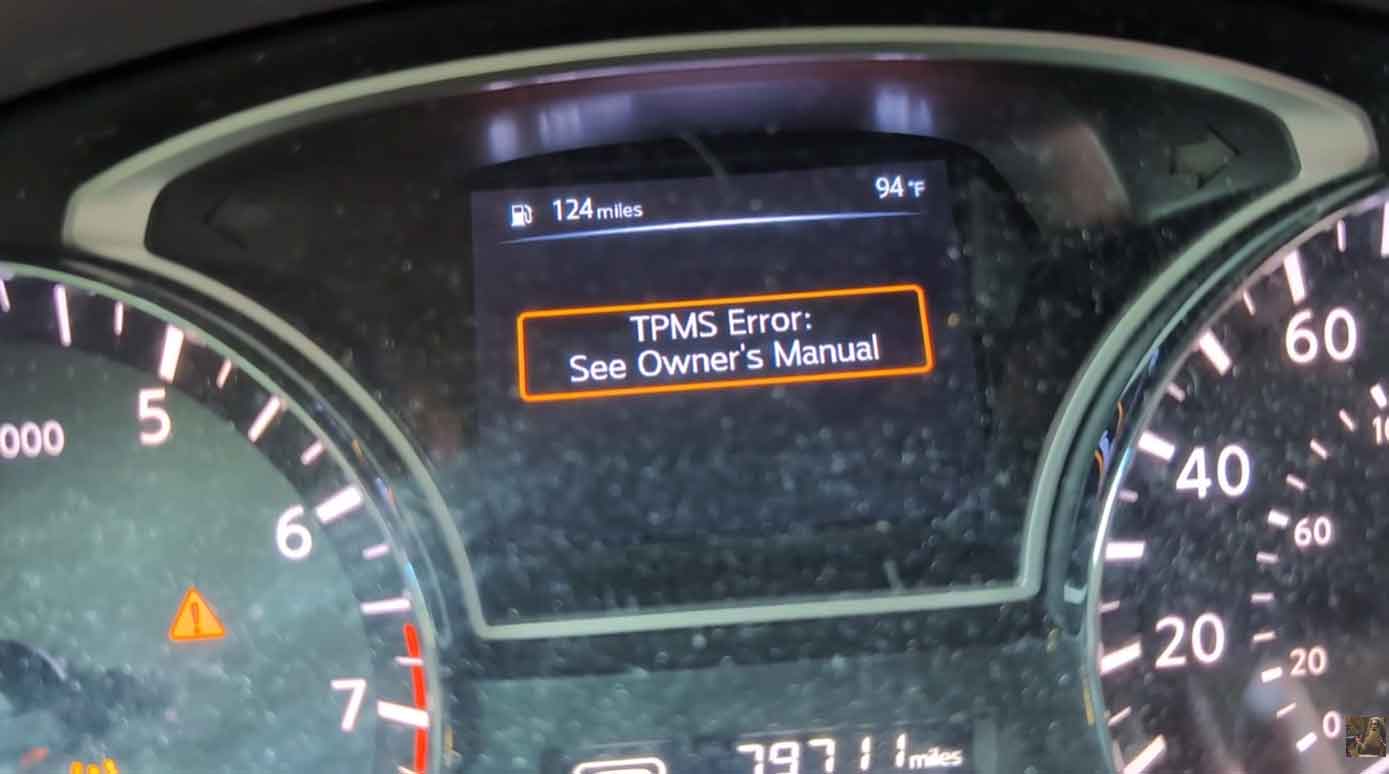
What Is a TPMS Error in Your Nissan Altima?
A TPMS error means your Tire Pressure Monitoring System has detected a problem. This system keeps track of the air in your tires. When something goes wrong, a warning light appears on your dashboard.
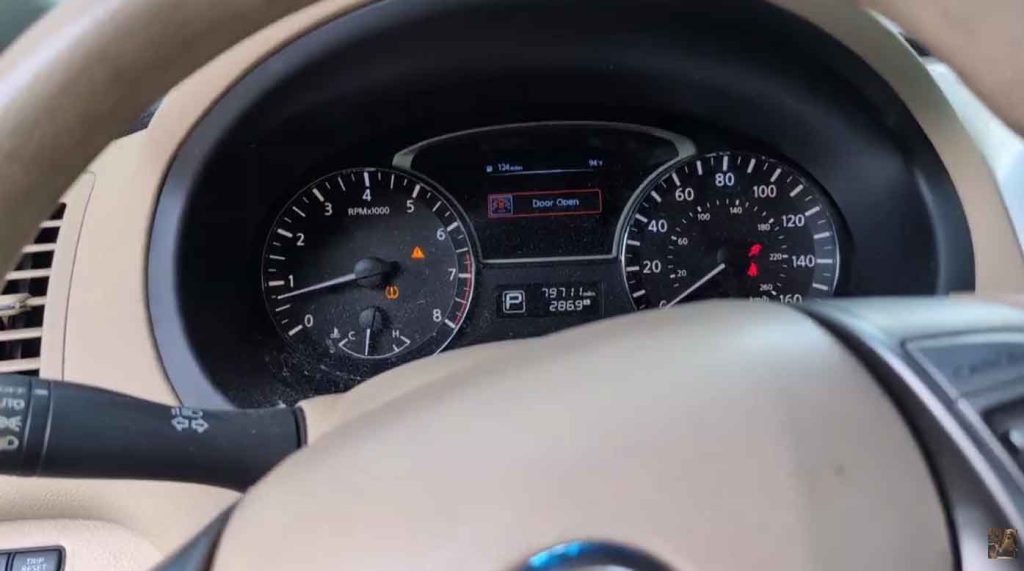
In my shop, I see Nissan Altima owners dealing with this issue almost daily. The light looks like a horseshoe with an exclamation point inside. Sometimes you’ll see the letters “TPMS” light up instead.
This error can mean different things. Your tire pressure might be too low. Or one of the sensors might have stopped working. Either way, you shouldn’t ignore it.
Why Does the TPMS Light Come On?
From years under the hood, I’ve found several common causes:
Low Tire Pressure – This is the most common reason. Cold weather can drop your tire pressure quickly. Even a small leak can trigger the warning.
Dead Sensor Battery – Each tire has a small sensor inside. These sensors run on batteries that last about 5-10 years. When the battery dies, the light comes on.
Damaged Sensor – Hitting a pothole or curb can break a sensor. I’ve replaced many sensors after drivers hit road hazards.
After Tire Rotation – Sometimes the system needs to relearn where each tire is located. The light might come on after a tire rotation.
Faulty TPMS Module – Rarely, the main computer module can fail. This is less common but possible.
Quick Fixes You Can Try First
When I service a car like this, I always start with the simple fixes. Here’s what you should do:
Check Your Tire Pressure
Use a tire pressure gauge to check all four tires. You can buy one at any auto parts store for less than $10. I keep a digital gauge in my toolbox because it’s more accurate.
Your Nissan Altima needs specific pressure levels. Check the sticker on the driver’s door jamb. It tells you the exact PSI (pounds per square inch) for your tires.
Most Altimas need around 32-35 PSI. Check when the tires are cold for the best reading.
Add Air If Needed
If your tires are low, add air at a gas station. Many stations have free air pumps. Some charge a quarter or two.
Fill each tire to the recommended pressure. Don’t overinflate. Too much air is just as bad as too little.
After filling, drive your car for about 10 minutes. The TPMS light should turn off on its own.
How to Reset the TPMS on Your Nissan Altima
Sometimes the light stays on even after fixing the pressure. You need to reset the system. Here are four methods that work:
Method 1: Drive and Wait
This is the easiest way. Drive your Altima at 50 mph or faster for 10 minutes. The system will reset itself.
Next time you start the car, the light should be off. This works about 70% of the time in my experience.
Method 2: Use the Reset Button
Your Altima has a TPMS reset button. It’s usually under the steering wheel near the hood release.
Here’s what to do:
- Turn the ignition to “On” but don’t start the engine
- Press and hold the reset button
- Keep holding until the TPMS light blinks three times
- Release the button
- Start the car and wait 20 minutes
The system will recalibrate during this time.
Method 3: Overinflate and Deflate
This method forces a complete reset. I use it when the other methods don’t work.
- Inflate all tires to 3 PSI over the recommended pressure
- Deflate them completely (yes, all the way)
- Include the spare tire if your Altima has a sensor there
- Reinflate each tire to the correct pressure
This tells the system to start fresh with new readings.
Method 4: Battery Disconnect
This is the nuclear option. It clears all computer codes.
- Turn off your car
- Open the hood
- Use a wrench to disconnect the positive battery cable (red one)
- Turn the key to “On” and honk the horn for 3 seconds
- This drains remaining power
- Reconnect the battery
Be careful with this method. It will also reset your radio presets and clock.
When the Sensor Needs Replacement
Sometimes a reset won’t fix the problem. The sensor itself might be dead or broken.
In my shop, I use a TPMS scan tool to check each sensor. This tool costs about $150, so most people don’t own one. But any tire shop or mechanic has one.
The scan tool tells me:
- Which sensor isn’t working
- The battery level in each sensor
- If the sensor is sending signals
A replacement sensor costs $40-$80 per tire. Labor adds another $20-$40 per wheel.
When I service a Nissan Altima with sensor problems, I recommend replacing all four if they’re old. Sensors usually fail around the same time. You don’t want to come back next month for another sensor.
Preventing Future TPMS Errors
Here’s what I tell my customers to avoid this problem:
Check tire pressure monthly – Don’t wait for the light. Use your gauge every month. Temperature changes affect pressure.
Inspect tires regularly – Look for nails, cuts, or bulges. Catching problems early saves money.
Replace sensors during tire changes – When buying new tires, ask about sensors. Old sensors might not last through another set of tires.
Keep valve caps tight – Those little caps protect the valve from dirt and moisture. Missing caps can cause slow leaks.
Be gentle with curbs – Sensors mount inside the wheel. Hitting curbs hard can break them.
Understanding Proper Tire Pressure
Many drivers don’t realize how important correct pressure is. In my years as a mechanic, I’ve seen the difference it makes.
Benefits of proper inflation:
- Your tires last longer
- You get better gas mileage
- Your car handles better in turns
- Stopping distance improves
- Less chance of a blowout
Problems from low pressure:
- Tires wear on the edges
- Poor traction in rain
- Reduced fuel economy
- Risk of tire failure at highway speeds
Problems from high pressure:
- Tires wear in the center
- Rough ride quality
- Less grip on the road
- Higher chance of damage from potholes
The difference between correct and incorrect pressure might only be 3-5 PSI. But that small amount matters a lot.
Special Notes for Nissan Altima Owners
From working on hundreds of Altimas, I’ve noticed some model-specific issues:
2013-2018 Altimas – These models sometimes have issues with the TPMS module itself. A software update at the dealer might fix persistent problems.
2019-2023 Altimas – Newer models have better sensors. But they’re also more expensive to replace.
Winter driving – Cold temperatures make the light come on more often. For every 10-degree drop in temperature, tire pressure drops about 1 PSI.
If you live in a cold climate, expect the TPMS light in winter. Just check and adjust your pressure.
When to Visit a Professional
Some TPMS problems need expert help. Visit a mechanic or tire shop if:
- The light stays on after trying all reset methods
- You hear a hissing sound from a tire
- A tire looks visibly low or flat
- The light flashes for 60 seconds then stays solid
- You recently hit something hard
A flashing TPMS light means the system itself has failed. This isn’t just low pressure. The computer can’t communicate with the sensors.
When I see a flashing light, I know we need to dig deeper. It usually means a bad sensor or module problem.
Cost of TPMS Repairs
Here’s what you might pay to fix TPMS issues:
Tire pressure check and fill – Free to $5 at most shops
TPMS reset – Free to $20 (often free if you buy other services)
Single sensor replacement – $60-$120 including labor
All four sensors – $200-$400 total
TPMS module replacement – $300-$500 (rare but possible)
Diagnostic scan – $20-$50 if done separately
Many tire shops include TPMS service with tire purchases. Ask about this when shopping for new tires.
Final Thoughts on TPMS Maintenance
The TPMS in your Nissan Altima is a safety feature. It warns you before small problems become big ones.
Don’t ignore the warning light. Even if you’re busy, take 10 minutes to check your tires. A simple pressure check could prevent a blowout on the highway.
Keep a tire gauge in your glove box. Check pressure when filling up with gas. Make it part of your routine.
In my shop, I’ve seen too many expensive repairs that started with an ignored TPMS light. A $5 can of air could have prevented a $200 tow truck bill.
Your Altima’s TPMS is smart. It’s watching over your safety every mile you drive. Listen to it when it speaks up.
Stay safe on the road. Keep those tires properly inflated. And if you can’t figure out the TPMS error yourself, find a trusted mechanic who can help.