
Monday to Saturday - 9:00 am -18:00 pm

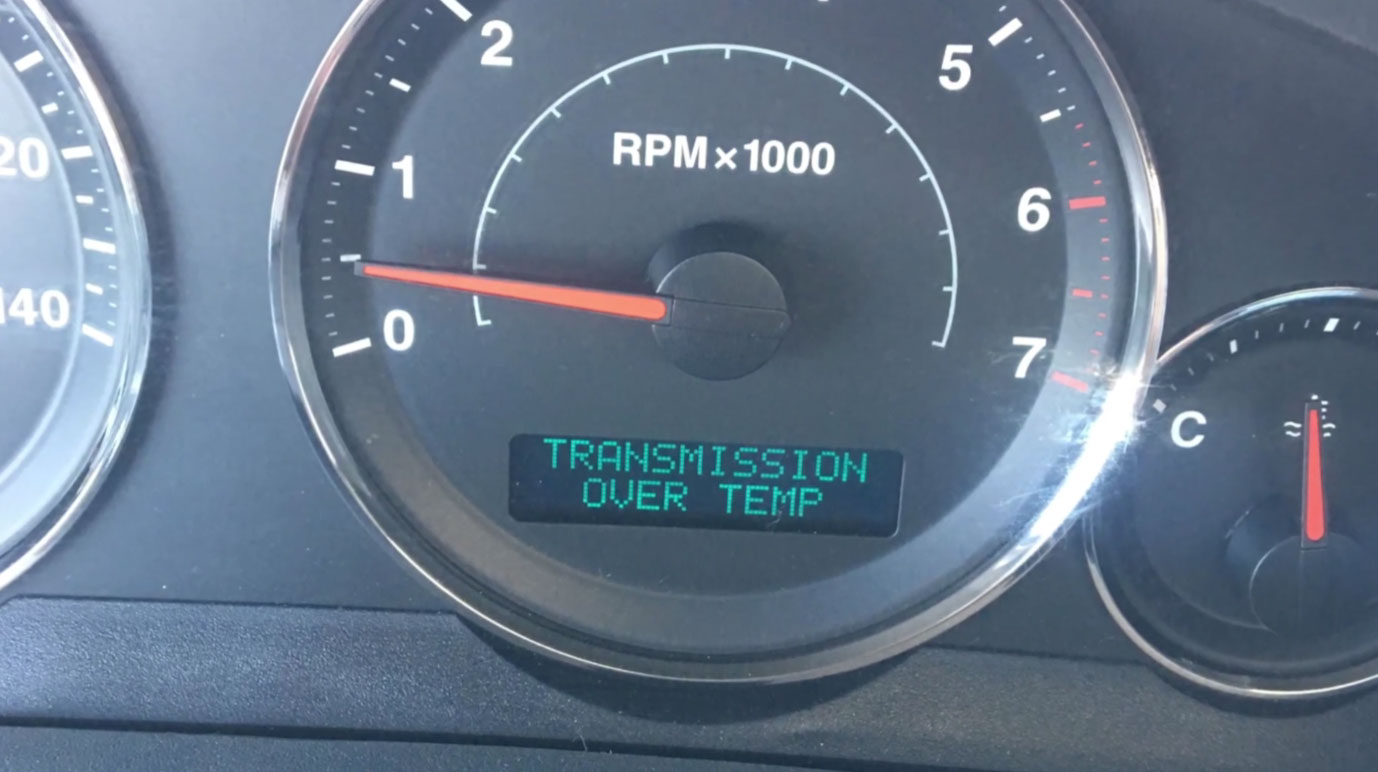
Your Jeep Commander’s dashboard lights up. You see “Transmission Over Temp” or a similar warning. Your heart sinks. Is your transmission failing? Can you keep driving home? Will this cost you thousands?
The good news: this warning is your Jeep’s way of protecting itself. The bad news: you can’t ignore it.
I’ve worked on hundreds of Jeeps. I’ve seen transmission over-temperature warnings happen for small reasons and serious ones. In this guide, I’ll explain exactly what this warning means, whether it’s safe to drive, and what you should do right now.
By the end, you’ll know:
- Why your transmission is overheating
- Whether you can keep driving
- What fixes cost
- How to prevent this in the future
What Does “Transmission Over Temp” Mean?
Your transmission is a complex machine. It has fluid inside—kind of like the oil in your engine. This fluid keeps everything lubricated and cool.
When that fluid gets too hot, your Jeep warns you. The warning triggers when internal sensors detect temperatures above a safe level.
Why does this matter?
Transmission fluid breaks down when it’s hot. Once it breaks down, it can’t do its job properly. The gears grind harder. Metal parts rub together. Things wear out faster. Eventually, your transmission fails completely.
Your Jeep’s warning system is designed to stop this before serious damage happens. It’s a safety feature, not a sign you’re already ruined.
What “Over Temp” Really Means
“Over temp” means the fluid temperature has crossed into the danger zone—usually above 200°F (93°C). Some Jeeps warn at slightly different temperatures, but the principle is the same.
Think of it like your engine overheating. You wouldn’t keep driving if your coolant temperature climbed into the red zone. Same logic applies here.
Is It Safe to Drive with This Warning?
Short answer: No. Not long distances. Pull over safely and stop.
Here’s why.
Your Jeep is already warning you that damage is starting. Continuing to drive makes that damage worse. Every mile you drive with this warning is shortening your transmission’s life.
Can you drive to the mechanic?
Maybe. If the mechanic is close (less than 5 miles), you can limp there slowly. But stop frequently. Turn off the air conditioning. Let the transmission cool. Do not drive aggressively.
What if you’re on the motorway?
Get to the next exit. Pull over safely. Call for roadside assistance or a recovery truck. Do not sit in traffic with this warning active.
Why is this different from other warning lights?
Because transmission damage happens fast once overheating starts. Your engine might overheat and still run—it’s designed to handle some heat. Your transmission fluid doesn’t work the same way. Once it’s hot, it degrades rapidly.
I’ve seen drivers ignore this warning for just 20 miles. Then they needed a £3,000–£5,000 transmission repair instead of a simple fix that would have cost £500.
Common Causes in Jeep Commanders
Not all over-temperature warnings mean the same thing. Some fixes are simple. Some are expensive. Let me break down what I see most often.
1. Low Transmission Fluid
This is the most common cause. And the easiest to fix.
Your transmission relies on fluid to cool itself. No fluid = no cooling = overheating.
Why does fluid run low?
- Slow leak in the pan, lines, or seals
- Never been checked (many owners don’t know how)
- Age and wear on seals
Check your fluid level first. This takes 5 minutes. I’ll explain how below.
2. Dirty or Old Transmission Fluid
Fluid gets dirty over time. It picks up metal particles and sludge. Dirty fluid doesn’t cool as well as clean fluid.
When was your last transmission service?
Most Jeep Commanders need a fluid and filter change every 60,000–100,000 miles. Many owners skip this. That’s a mistake.
Dirty fluid loses its cooling ability. It also burns hotter. This is why old Jeeps overheat more often.
3. Stuck Thermostat in the Transmission Cooler
Your transmission has its own cooling system. A thermostat controls fluid flow through the cooler.
Sometimes this thermostat gets stuck. Fluid doesn’t flow through the cooler. Temperature spikes.
How often does this happen?
Less common than low fluid, but not rare. If your fluid is clean and full, this is the next thing to check.
4. Clogged Transmission Cooler
The transmission cooler sits in front of your radiator. Dirt, bugs, and debris clog it up.
When it’s clogged, fluid can’t flow through to cool down. Temperature rises.
Can you clean it yourself?
Sometimes. If it’s surface dirt, yes. If it’s internal sludge, you need a professional flush.
5. Bad Water Pump (Engine Cooling System)
Wait—why is the engine cooling system relevant?
Because many Jeep Commanders share cooling lines between the engine and transmission. If your engine’s water pump fails, your transmission cooler doesn’t get cool water. Your transmission overheats.
Check your engine temperature gauge. If both your engine and transmission are hot, your engine’s cooling system is the culprit.
6. Towing or Heavy Use
I see this a lot. A driver buys a used Commander and immediately tows a trailer. Transmission wasn’t designed for that, or the fluid is already worn out.
Towing generates heat. Worn fluid can’t handle it.
Is your Commander rated for towing?
Check your manual. Most Commanders can tow, but only with proper fluid and maintenance.
7. Failed Transmission Sensor
Sometimes the warning light lies. The sensor fails and triggers a false alarm.
How do you know if it’s a false alarm?
- Transmission shifts normally
- No slipping or hesitation
- Temperature gauge reads normal
- No burning smell
If all that checks out, it might be the sensor. But don’t assume—get it checked before you ignore the warning.
What to Do Right Now
You see the warning. You’re worried. Here’s your step-by-step action plan.
Step 1: Pull Over Safely
If you’re driving, find a safe place to stop. Don’t panic. This isn’t an explosion risk. But don’t delay getting off the road.
Step 2: Check Your Transmission Fluid Level
This is crucial. Here’s how to do it.
What you need:
- Your Jeep’s manual (to find the dipstick)
- A clean rag or paper towel
- 5 minutes
The steps:
- Park on level ground. Let the engine idle for 2 minutes (don’t turn it off yet).
- Open the hood and locate the transmission dipstick (check your manual for the exact location).
- Pull the dipstick out. Wipe it clean with the rag.
- Push it back in fully. Pull it out again.
- Look at the level marks. Is the fluid between the minimum and maximum marks?
What the color tells you:
- Bright red = good
- Dark red or brown = old, needs changing
- Black = very old, definitely needs changing
If the level is low: Don’t drive. You need a leak repair or a top-up first. Call a mechanic or roadside assistance.
If the level is normal: Move to step 3.
Step 3: Turn Off the Air Conditioning
Air conditioning puts extra load on your engine, which generates more heat overall. Turn it off. Open the windows if you need ventilation.
Step 4: Drive Slowly to a Mechanic
If the fluid level is normal and you’re close to a mechanic (under 5 miles), drive there slowly. No motorway speeds. No aggressive acceleration.
If you’re far from a mechanic, call for recovery. Don’t risk it.
Step 5: Get a Proper Diagnosis
Don’t let a mechanic replace your entire transmission without investigating the cause first. Make them:
- Check the fluid level and condition
- Scan for fault codes
- Test the transmission temperature sensor
- Inspect for leaks
- Check the transmission cooler
This takes 1–2 hours and costs £80–£150. It’s worth it.
How to Fix It (And How Much It Costs)
The fix depends on the cause. Here’s what to expect.
Low Fluid (Leak)
The fix: Find the leak. Seal or replace the leaking part.
Cost: £150–£400
Parts involved: Transmission pan gasket, cooler lines, seals
Time: 1–3 hours
Is this an emergency? Yes. Stop driving until it’s fixed.
Dirty Fluid
The fix: Full transmission fluid and filter change (flush).
Cost: £200–£400
What’s included: New fluid, new filter, pan removal and cleaning
Time: 2–3 hours
Do I need this? Yes, if your fluid is dark. This often solves over-temp warnings.
Stuck Thermostat
The fix: Replace the transmission thermostat or cooler assembly.
Cost: £300–£600
Time: 2–4 hours
Is it common? Not very. But if your fluid is clean and level is good, this is likely.
Clogged Cooler
The fix: Clean or replace the transmission cooler.
Cost: £400–£800 (replacement); £200–£300 (professional cleaning)
Time: 2–4 hours
Can I flush it myself? Only if you’re experienced. Otherwise, let a pro do it.
Failed Transmission Sensor
The fix: Replace the temperature sensor.
Cost: £150–£300
Time: 30 minutes to 1 hour
Is this likely? Only if everything else checks out normal.
Engine Cooling System Problem
The fix: Depends on what’s wrong. Water pump, thermostat, or radiator replacement.
Cost: £300–£800
Time: 2–4 hours
How do I know it’s the engine system? Your engine temperature gauge also climbs.
How to Prevent This in the Future
Once you’ve fixed this, don’t let it happen again.
Follow the Service Schedule
Check your manual. Most Commanders need transmission service every 60,000–100,000 miles.
What should be done:
- Fluid and filter change
- Pan cleaning
- Cooler inspection
Stick to this. It’s cheaper than a repair.
Check Fluid Level Regularly
Every month, check your transmission fluid. Takes 5 minutes. Can catch a leak early.
What to look for:
- Level between min and max marks
- Bright red color
- No burning smell
Don’t Skip Engine Cooling Maintenance
Your transmission cooling depends on your engine cooling system. Service your radiator and water pump on schedule.
Avoid Towing Until Fluid is Fresh
If you want to tow, get a fresh transmission fluid service first. Worn fluid can’t handle the extra heat.
Don’t Ignore the First Warning
If you see “Transmission Over Temp” once, don’t assume it’s fixed because it goes away. Get it diagnosed. Something caused it.
Common Mistakes and Myths
I hear these all the time. Let me set the record straight.
Myth 1: “I Can Just Keep Driving and Monitor It”
Wrong. Every mile with this warning damages your transmission. The damage is cumulative and permanent.
Myth 2: “It’s Just a Sensor. The Transmission Is Fine”
Maybe. But you can’t know without diagnosis. Don’t assume.
Myth 3: “Adding More Fluid Will Fix It”
No. If the level is already normal, adding more won’t help. You need to find the cause.
Myth 4: “Transmission Fluid Lasts Forever”
Wrong. It degrades over time and mileage. Change it on schedule.
Myth 5: “I Don’t Need to Check My Transmission Fluid”
Definitely wrong. Check it monthly. Low fluid is the #1 cause of this warning.
Myth 6: “Jeep Commanders Always Have Transmission Problems”
Not true. Most are reliable if maintained properly. But they do need regular fluid changes.
FAQ
Q: Can I drive my Jeep Commander home if the transmission is over temp?
A: Only if home is less than 5 miles away and you drive slowly. Stop frequently to let it cool. If you’re further away, call for recovery. It’s not worth the risk.
Q: How long does it take to fix a transmission over-temp problem?
A: Depends on the cause. A fluid change takes 2–3 hours. A leak repair takes 1–4 hours. A cooler replacement takes 3–4 hours. Get a diagnosis first to know the real timeline.
Q: Will my transmission fail if I ignore this warning?
A: Yes, eventually. The longer you drive with this warning, the closer you get to complete failure. You could be fine for 50 miles. Or it could fail in 5 miles. Don’t gamble.
Q: How much does it cost to fix?
A: Anywhere from £150 (fluid top-up) to £800 (cooler replacement). Most common fixes cost £200–£400. A full transmission rebuild costs £2,000–£5,000. Catch it early.
Q: Is the transmission over-temp warning the same as the transmission hot warning?
A: Usually yes. Different Jeeps use different wording, but they mean the same thing: the fluid is too hot. Treat both the same way—pull over and diagnose.
Q: Can I flush my transmission fluid myself to fix this?
A: Only if you’re experienced with transmissions. The process requires special equipment and knowledge. Most owners should take it to a mechanic. It’s not worth the risk of mistakes.
Q: Why does my transmission overheat when I’m towing?
A: Because towing generates extra heat. Your transmission works harder. Worn fluid can’t dissipate that heat. Always use fresh fluid before towing, and check that your Commander is rated for the load.
Q: What’s the difference between transmission over-temp and transmission slipping?
A: Over-temp is about heat. Slipping is about the gears not catching properly (you feel RPMs climb without acceleration). Over-temp can cause slipping if it damages the fluid, but they’re different problems.
Conclusion
“Transmission Over Temp” is your Jeep Commander’s way of saying, “Stop. Something’s wrong. Fix me before I break completely.”
Here’s what you need to do:
- Pull over safely. Don’t keep driving.
- Check your fluid level. Nine times out of ten, it’s low or dirty.
- Get a diagnosis. Don’t let anyone replace your transmission without checking the simple stuff first.
- Fix the cause. Whether it’s a leak, old fluid, or a cooler problem, get it sorted.
- Maintain it going forward. Regular fluid changes prevent this.
The good news: most transmission over-temp problems are fixable for under £500. The bad news: ignoring this warning can turn a £500 fix into a £5,000 replacement.
You’ve got this. Get it checked today.