
Monday to Saturday - 9:00 am -18:00 pm

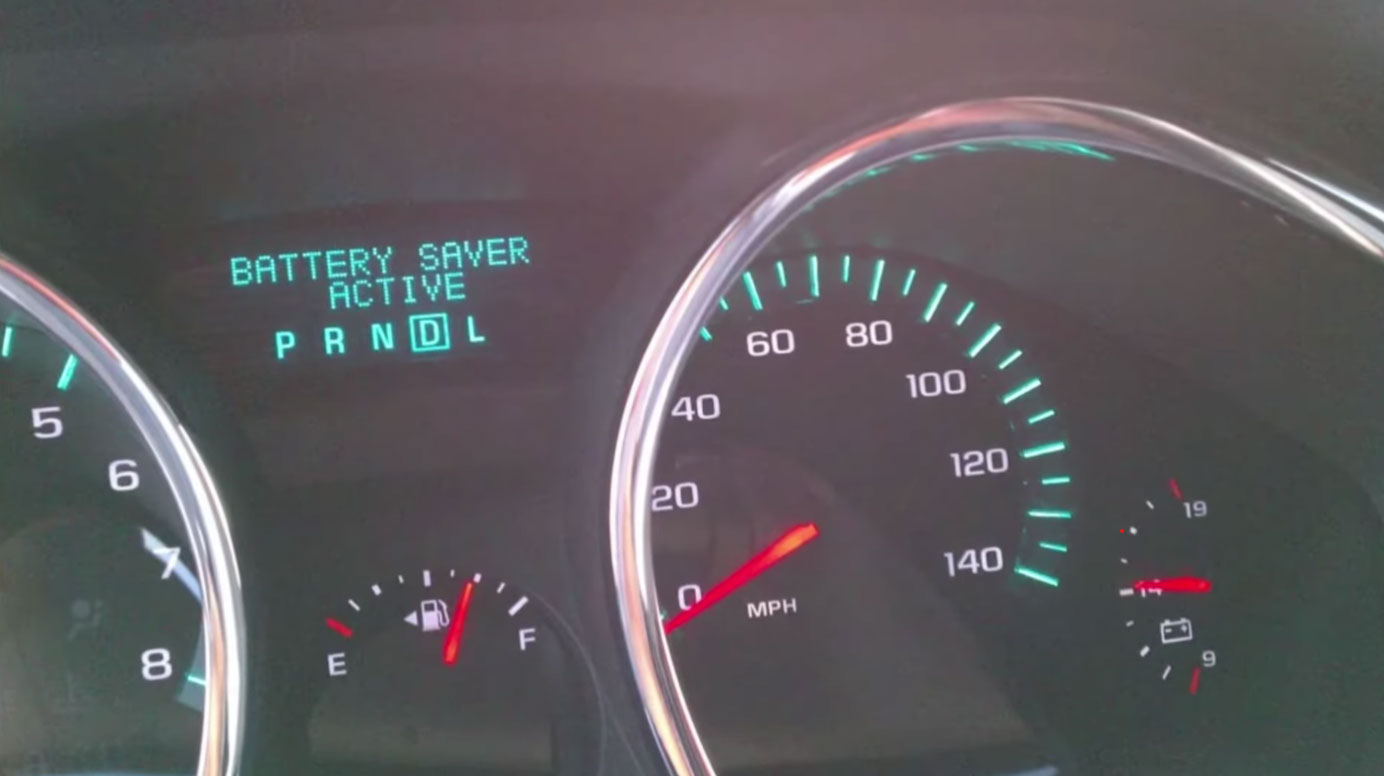
Battery Saver Active is a warning message that appears on your Chevy Cruze dashboard when your car’s electrical system detects a problem. It’s not a breakdown. But it is your car telling you something needs attention.
In this guide, you’ll learn exactly what this message means, why it appears, whether it’s safe to drive with it on, and what to do next. I’ve worked on hundreds of Cruzes with this warning, and I’ll walk you through the real causes and fixes.
The short answer: You can usually drive carefully to a mechanic. But don’t ignore it for weeks.
What Battery Saver Active Actually Means
Battery Saver Active is Chevy’s way of protecting your battery. When your car detects that the battery is draining faster than normal, it kicks in automatically.
Think of it like a safety guard. Your car senses trouble and limits power to non-essential systems to save battery charge. It’s not a malfunction—it’s a feature trying to keep you from getting stranded.
The message appears on your instrument cluster (dashboard screen). Sometimes you’ll see it flash briefly. Other times it stays on while you drive.
What’s actually happening: Your alternator (the part that charges the battery while the engine runs) isn’t doing its job properly. The car realizes it needs to cut power to things you don’t need right now—things like seat heaters, infotainment systems, or extra cabin lights.
This buys you time. It keeps the battery charged enough to start the engine and keep you moving safely.
Why Your Chevy Cruze Triggers This Warning
1. A Weak or Failing Alternator
This is the most common cause. I see it in about 7 out of 10 Cruzes with this warning.
Your alternator is a generator. While your engine runs, it produces electricity to charge the battery and power your electrical systems. If it fails or weakens, the battery doesn’t charge. The car senses this and activates Battery Saver mode.
Signs of alternator trouble:
- Battery Saver Active warning appears
- Lights dim while driving
- Dashboard lights flicker
- Battery warning light comes on
- Car feels sluggish or slower to start
An alternator typically lasts 80,000 to 150,000 miles. Chevy Cruzes from 2011–2019 are especially prone to alternator issues.
2. A Damaged Battery
A weak battery can trigger this warning too.
If your battery is old, damaged, or failing, it can’t hold a charge well. Even a good alternator can’t keep up. The car sees the voltage dropping and activates Battery Saver.
How old is your battery? Check under the hood. Most batteries have a date code on top—usually a letter and number (like “C22” for March 2022). If it’s older than 3–4 years, it’s worth checking.
3. Corroded Battery Terminals
Dirt and corrosion on your battery terminals block the electrical connection.
When terminals are corroded, electricity can’t flow freely from the battery to the rest of your car. Your alternator works fine, but the car thinks the battery isn’t charging. Battery Saver kicks in.
This is easy to check yourself. Pop your hood. Look at the battery’s positive and negative terminals. If you see crusty white, blue, or green buildup, that’s corrosion.
4. A Broken Serpentine Belt
The serpentine belt drives your alternator. If it snaps or slips, your alternator stops working.
You’ll usually hear a squealing sound before this happens—that’s the belt slipping. If the belt breaks completely, you’ll see Battery Saver almost immediately.
5. Faulty Wiring or Bad Ground
Sometimes the problem is a loose wire or bad electrical ground. If the circuit connecting the battery to the alternator is damaged, the car can’t detect proper charging.
This is less common but happens, especially after accidents or rough repairs.
6. The Alternator Connector Is Loose
Chevy Cruzes sometimes have loose connectors on the alternator. A wire wiggling loose causes the same effect as a bad alternator.
This one’s a quick fix—it just needs to be reconnected and secured properly.
Is It Safe to Drive?
Yes, you can drive. But with caution.
Battery Saver Active doesn’t mean your car will stop. It means your car is protecting itself so it doesn’t stop. As long as your battery has charge and your engine is running, you’re safe to drive.
However:
- Don’t go on long road trips
- Drive directly to a mechanic
- Turn off non-essential systems (heat, radio, headlights if daylight)
- Avoid heavy traffic where you’ll sit idle
The real risk: If you sit with the engine off—say, in a parking lot with the radio on—your battery will drain faster. You might not be able to start the engine again.
What Happens When Battery Saver Is Active
When this mode engages, your car automatically disables certain electrical systems:
Things that get turned off or reduced:
- Heated seats and heated steering wheel
- Air conditioning (sometimes reduced)
- Infotainment screen brightness
- Interior ambient lighting
- Phone charger power output
- Seat adjustments
- Some safety features (in extreme cases)
Things that stay on (always):
- Engine and fuel injectors
- Power steering
- Brake lights
- Headlights
- Airbags
- ABS (anti-lock brakes)
Your car prioritizes safety and engine function. Everything else is negotiable.
How to Fix It
Step 1: Check Your Battery Terminals
This is free and takes 2 minutes.
Open your hood. Look at the battery. You’ll see two posts—one red (positive) and one black (negative). There should be a cable clamp attached to each one.
If the terminals are corroded:
- Buy a cheap battery terminal cleaner (about $5)
- Or use baking soda and water
- Scrub the terminals until they’re clean
- Reconnect the clamps firmly
Try starting the car. The warning might disappear.
Step 2: Check the Battery Age
If your battery is over 4 years old, get it tested. Most auto parts stores test batteries for free.
A weak battery often causes this warning. A $100–$150 battery replacement solves it.
Step 3: Have the Alternator Tested
This is where most problems lie.
A mechanic can test your alternator in 15 minutes. They’ll use a multimeter to measure the voltage it’s producing. A good alternator charges at 13.5–14.5 volts. A failing one might only produce 12 volts or less.
Alternator replacement costs:
- Parts: $200–$400
- Labour: $100–$300
- Total: $300–$700 (depending on location and your Cruze’s year)
Step 4: Check the Serpentine Belt
While the mechanic is under the hood, have them inspect the serpentine belt. It should be smooth and tight, not cracked or frayed.
A belt replacement is $150–$300 and takes about an hour.
Step 5: Inspect Wiring and Connectors
If the alternator tests fine and the battery is good, the problem might be a loose wire or connector.
A mechanic will trace the charging circuit and tighten any loose connections. This usually takes 30 minutes.
Common Mistakes Owners Make
Mistake 1: Ignoring It and Hoping It Goes Away
I’ve had customers drive for weeks with Battery Saver on. One day, the battery dies completely, and they’re stranded on the highway.
Don’t do this. Get it checked within a week.
Mistake 2: Assuming It’s Always the Battery
Many people buy a new battery when the real problem is a dead alternator.
A $100 battery won’t help if your alternator isn’t charging. Get the alternator tested first.
Mistake 3: Driving on the Motorway for Long Distances
Your Cruze can run longer while Battery Saver is active because the alternator still works somewhat. But it’s not generating enough power.
Long drives put stress on the battery. You might run out of power and break down far from help.
Mistake 4: Running Electrical Devices When Parked
With Battery Saver active, your battery is already weak. Don’t sit in a car park with the radio on or the engine off.
You’ll drain the battery completely and won’t be able to start.
Mistake 5: Not Tightening the Battery Clamps
After checking your terminals, people forget to tighten the cable clamps. Loose clamps create resistance and trigger the warning again.
Clamps should be tight enough that you can’t move them by hand.
FAQ
Q: Can I drive to work with Battery Saver Active? A: Yes, short distances are fine. Just don’t make it a habit. Drive directly to a mechanic instead.
Q: Will my car suddenly stop? A: Unlikely. Battery Saver is designed to keep your car running. Just don’t rely on it for long trips.
Q: Does Battery Saver damage my engine? A: No. Your engine is fine. The warning is about the electrical system, not the engine itself.
Q: How long can I drive with this warning on? A: That depends on the cause. A weak alternator might let you drive for days (with caution). A completely dead alternator might last hours. Don’t test it.
Q: Will it turn off on its own? A: Only if you fix the underlying problem. Turning off the car and restarting might clear the warning temporarily, but it’ll return.
Q: Can I turn off Battery Saver mode? A: No. It’s an automatic safety feature. You can’t disable it.
Q: Is Battery Saver Active the same as the battery warning light? A: Not exactly. Battery Saver is a message. The battery warning light is a separate red light shaped like a battery. If you see both, the problem is more serious.
Q: What if I just clear the warning with a scan tool? A: The warning will come back. Clearing codes doesn’t fix the problem—it just hides the message.
Common Myths About Battery Saver Active
Myth: It means your battery is completely dead. Truth: It means your battery isn’t charging properly. There’s still power, but something’s wrong with the charging system.
Myth: You need to pull over immediately. Truth: You can drive safely. Just don’t go on long road trips.
Myth: Only old cars get this warning. Truth: Chevy Cruzes from 2011 onwards can experience this. It’s an electrical system issue, not a sign of an old car.
What to Do Next
Today:
- Check your battery terminals for corrosion
- Make sure the negative terminal is tight
- Note when the warning appeared (after cold weather? After a long drive?)
This week:
- Take your Cruze to a mechanic
- Have the alternator tested (it’s free at most shops)
- Have the battery tested
- Ask the mechanic to check the serpentine belt
Don’t:
- Drive long distances
- Sit with the engine off and systems running
- Ignore the warning for more than a week
Conclusion
Battery Saver Active is your Chevy Cruze’s way of telling you the charging system isn’t working right. It’s almost always the alternator, a weak battery, or corroded terminals.
The good news? This isn’t an emergency. You can drive safely to a mechanic. The fix usually costs $300–$700 and takes a few hours.
The bad news? Don’t ignore it. A weak battery can strand you miles from help, and alternator problems get worse over time.
Get it checked this week. It’s not worth the risk.