
Monday to Saturday - 9:00 am -18:00 pm

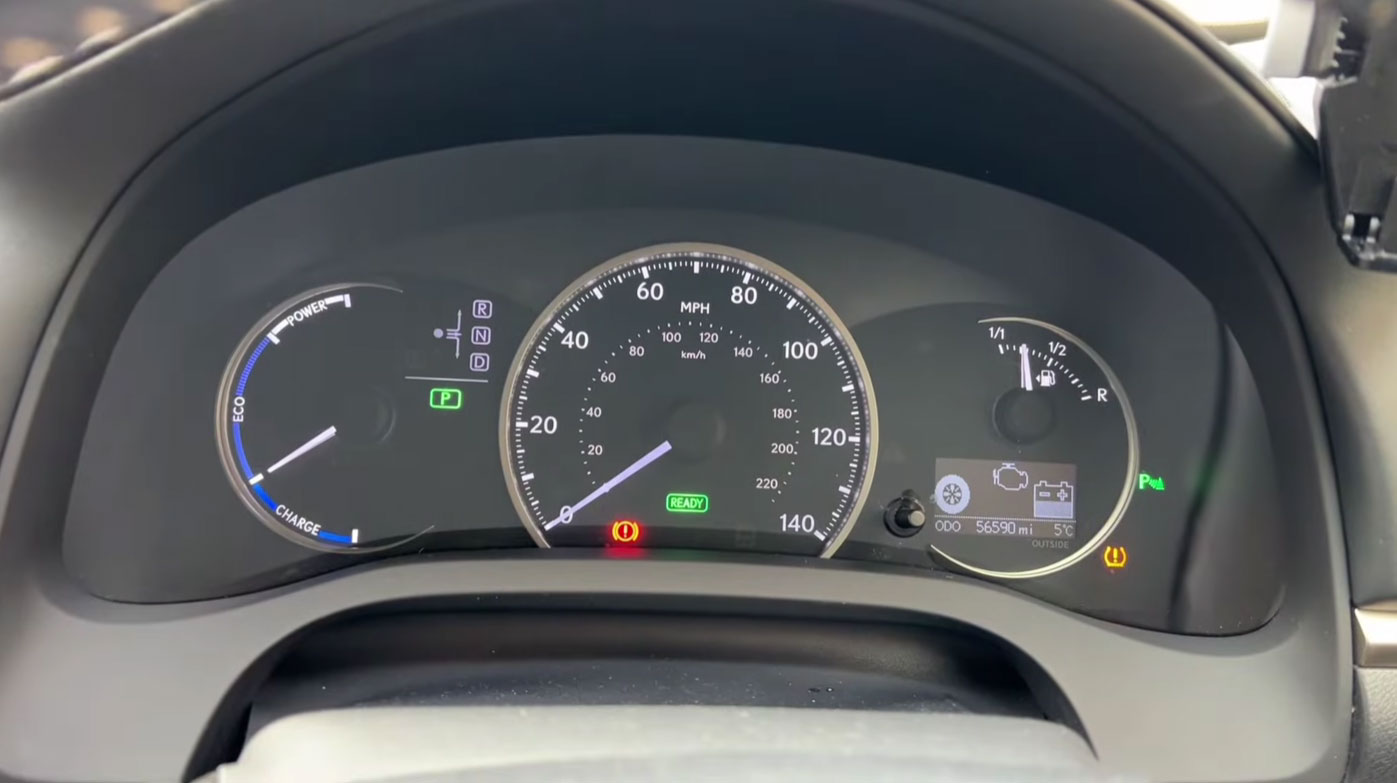
You check your tires. They’re full. You pump them to the exact number on your door jamb. The light is still on. Now you’re wondering if something is seriously wrong—or if your Lexus is just being stubborn.
You’re not alone. This happens to thousands of Lexus owners every year. The good news? Most of the time, nothing is broken. There’s almost always a simple explanation, and you might even fix it yourself without spending a dime at the mechanic.
Let me walk you through exactly why this happens and what you can actually do about it.
How Your Lexus Tire Pressure System Works
Your Lexus has a system called TPMS—that stands for Tire Pressure Monitoring System. It’s basically a set of tiny sensors in each wheel that constantly check how much air is in your tires.
When you start your car, the TPMS wakes up and reads the pressure in all four tires. If any tire is low (usually below 25 pounds per square inch, or PSI), a warning light pops on your dashboard.
The system is smart enough to know the difference between a slightly soft tire and a genuinely flat one. It’s designed to keep you safe by letting you know before something becomes dangerous.
But here’s the thing: the sensors can only report what they measure right now. They don’t know if you just pumped your tire or if the tire was low three days ago. This is where confusion often starts.
Why the Light Stays On (Even When Your Tires Look Full)
A tire that feels firm to the touch is not the same as a tire at the correct pressure. You can’t squeeze a tire and know for certain how much air is inside. That’s what the sensors are for.
But the real reason the light won’t turn off is usually something else. Here are the actual culprits.
Temperature and Pressure Drop (The #1 Reason)
Air expands when it gets warm and shrinks when it gets cold. Think of it like a balloon in the sun versus a balloon in a freezer. The same amount of air takes up more space when it’s hot and less space when it’s cold.
Your tires do the same thing.
This is the most common reason your TPMS light stays on, and it catches people off guard all the time.
Say you drive on a warm day and your tires read 35 PSI (the pressure is fine). That night, the temperature drops to freezing. Your tire pressure drops too—maybe down to 31 or 32 PSI. Your TPMS light turns on because the system sees the pressure is lower than it should be.
You check your tires the next morning and think they look fine. But the sensors are telling the truth. The cold made the pressure drop, and now it’s legitimately below the recommended level.
When the sun comes back out and the day warms up, the pressure climbs again, and the light might go off on its own. This is why Lexus owners in cold climates get so frustrated with this light in winter. It’s not broken. It’s working exactly as designed.
The fix is simple: check your tire pressure in the morning, on a cold day, before the sun has warmed things up. This gives you the most accurate reading. If the pressure is low, pump it up a few PSI higher than recommended—maybe to 37 or 38 PSI instead of 35. This gives you a buffer as temperatures change throughout the day.
Your TPMS Sensor Is Dead or Dying
Every TPMS sensor has a battery inside it. These batteries don’t last forever. In most Lexus vehicles, they last between five and seven years. After that, the battery dies, and the sensor stops working.
When a sensor stops working, the TPMS light often stays on, no matter what you do to the tire. The light is trying to tell you the sensor isn’t communicating anymore, not that the tire is low.
This is sneaky because it feels like a tire problem, but it’s actually a sensor problem. You can pump your tires to 40 PSI and the light will still be on because the broken sensor isn’t reading anything.
If you’ve had your Lexus for more than five years and the light won’t go away, a dead TPMS sensor is very likely the issue. This one requires a trip to a mechanic or dealership, but it’s not expensive. A new sensor usually costs between 50 and 150 dollars, plus labor.
Your Tire Pressure Monitor Needs to Be Reset
Some Lexus models have a tire pressure monitoring system that needs to be manually reset. The reset button is usually under the steering wheel or in the driver’s side door jamb.
After you pump your tires to the correct pressure, you need to press and hold this button until the light blinks and goes off. If you skip this step, the light stays on even though your tires are fine.
Check your owner’s manual for the exact location of your reset button and the correct procedure. Most of the time, it takes less than 30 seconds.
There Actually Is a Slow Leak
Sometimes the most obvious answer is the right one. Your tire might have a very slow leak that lets air escape over several days.
A tire with a slow leak will feel firm for the first day or two after you pump it. But by the third or fourth day, it’s lost enough pressure that the TPMS light turns on.
To check for a slow leak, pump your tire to the correct pressure, then mark the tire with a piece of tape or write the PSI on it with a marker. Check it again 24 hours later. If it’s dropped more than a couple of PSI, you have a leak.
Slow leaks can come from a puncture (sometimes so small you can’t see it), a bad valve stem, or a leak where the tire meets the wheel. A mechanic or tire shop can find this with soapy water. They spray the tire with a special soap solution. Bubbles form where air is escaping.
The Right Way to Check Your Tire Pressure
Before you do anything else, check your tires the correct way.
You need an actual tire pressure gauge. Don’t guess by feel. Buy one at any gas station, pharmacy, or auto parts store for five or ten dollars.
Check your tires when they’re cold—that means in the morning before the car has been sitting in the sun, or at least three hours after you’ve finished driving. Hot tires read higher than cold tires.
The correct pressure for your specific Lexus is printed on a sticker inside the driver’s side door jamb, not on the tire itself. The number on the tire is the maximum pressure the tire can safely hold. Your door jamb has the number your Lexus actually needs.
Check all four tires. Write down what you find.
If all four are within 2 PSI of the recommended number, your tires are fine. If one is noticeably lower than the others, you might have a leak.
When You Actually Need a Mechanic
Some things you can fix yourself. Some things you can’t.
You can fix it yourself if the problem is cold weather (check tire pressure when it’s warm), a forgotten reset (press the reset button), or a slow leak you can see (take it to a tire shop for a patch, which costs 15 to 25 dollars).
You need a mechanic or dealership if:
The TPMS light stays on even after you’ve checked and re-pumped all four tires, and the weather has warmed up. This usually means a sensor is broken.
You find a puncture or damage to the tire that’s too big to patch. You’ll need a new tire.
The tire keeps losing pressure and you can’t find where it’s leaking. A professional can locate it with soapy water.
You’ve tried the reset button and it didn’t work. The system might need diagnostic testing.
A dealership can read your TPMS system with a special computer to tell you exactly which sensor (if any) is broken. Independent mechanics can usually do this too, often for less money.
Simple Prevention Tips
Check your tire pressure once a month, especially as seasons change. This catches problems early.
When the weather shifts from fall to winter or winter to spring, your tire pressure will change. Be ready for it.
If you live somewhere with very cold winters, add 2 or 3 extra PSI to your tires in November. This gives you a cushion as temperatures drop.
Have your TPMS sensors checked when you get new tires. Most tire shops will do this for free or a small fee.
Pay attention to which tires are losing pressure. If it’s always the same tire, that’s a leak. If it’s all four tires, it’s probably temperature or a system reset issue.
The Takeaway
A tire pressure light that won’t turn off is frustrating, but it’s almost never an emergency. In most cases, it’s one of three things: cold weather dropped your pressure, you need to reset the system, or a sensor battery died.
Start by checking your tire pressure the right way on a cold morning. If they’re all at the recommended PSI and the light still won’t turn off, try the reset button if your Lexus has one.
If the problem persists after that, schedule a checkup with a mechanic. They can tell you in five minutes whether it’s a sensor, a leak, or something else. Most of the time it’s cheap to fix.
Don’t drive around ignoring the light for months hoping it goes away. It won’t. But don’t panic either. Thousands of Lexus owners have had this exact problem, and almost all of them learned it was simple to solve.
Get it checked. Find out what’s actually happening. Then you’ll know exactly what to do.