
Monday to Saturday - 9:00 am -18:00 pm

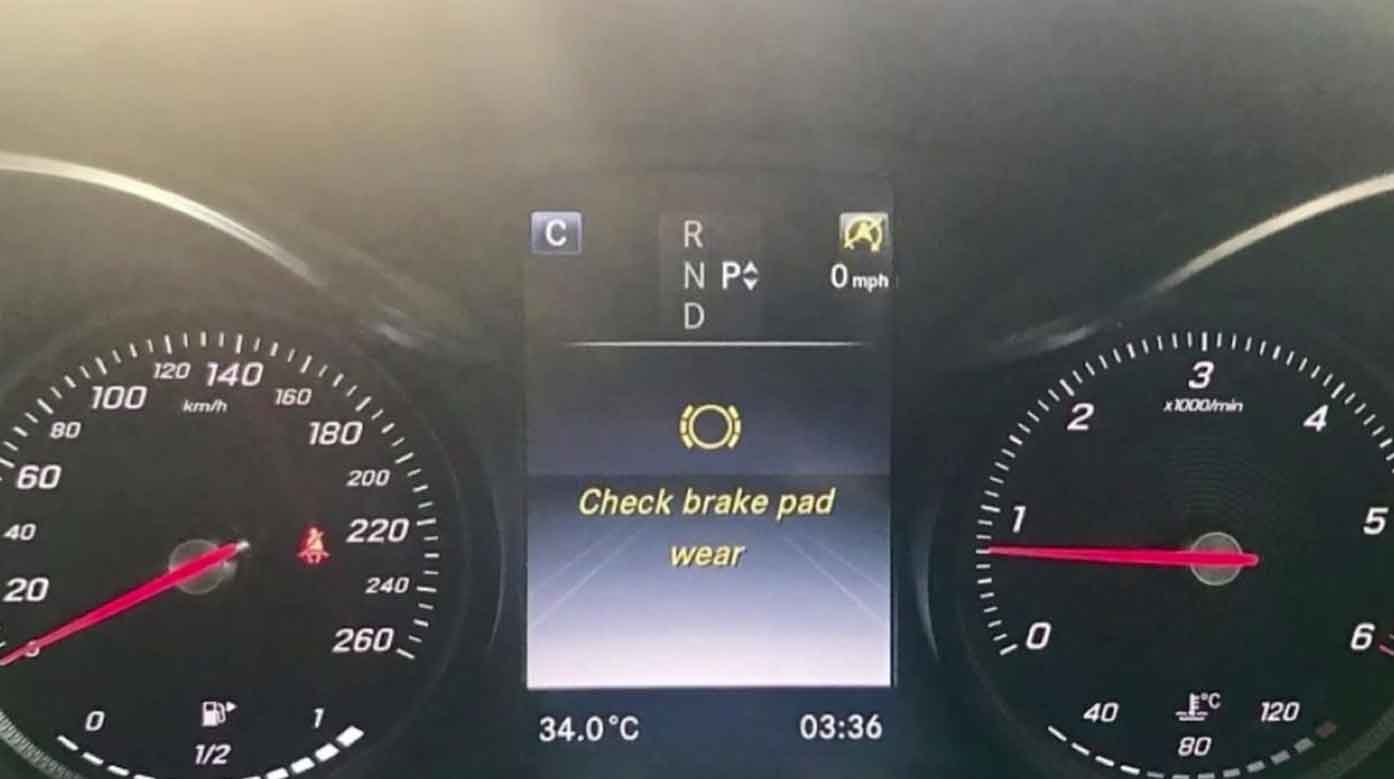
Your Mercedes dashboard just lit up with a “Check Brake Pad Wear” message. Don’t panic. This is actually your car looking out for you. Let me walk you through what’s happening and how to fix it.
What Does the “Check Brake Pad Wear” Warning Mean?
The brake pad warning is your Mercedes telling you something simple. Your brake pads are getting thin. They need attention soon.
In my shop, I see this warning all the time. It’s one of the smartest features Mercedes builds into their cars. The system monitors your brake pad thickness constantly. When the pads wear down to about 3mm, the warning triggers.
Think of brake pads like the eraser on a pencil. Every time you stop, a little bit wears away. Eventually, you need a new eraser. Same idea here.
Your Mercedes uses sensors embedded in the brake pads. These sensors touch the brake rotor when the pad gets too thin. That’s when you see the dashboard message.
Why Is This Warning So Important?
From years under the hood, I can tell you this warning saves lives. Worn brake pads are dangerous. They reduce your stopping power significantly.
Here’s what happens when brake pads wear out completely. The metal backing plate starts grinding against your brake rotors. This creates a horrible screeching sound. More importantly, it destroys your rotors.
New brake pads might cost you $300 to $500. But if you ignore the warning and damage the rotors? Now you’re looking at $800 to $1,200 or more. I’ve seen customers learn this the hard way.
Worn brakes also increase your stopping distance. In an emergency, those extra few feet matter. That could be the difference between a close call and a collision.
Common Causes of Brake Pad Wear
Let me share what causes brake pads to wear down in Mercedes vehicles.
Normal Driving Wear
Every time you press the brake pedal, friction creates heat. This heat wears down the pad material. It’s completely normal. Most Mercedes brake pads last between 30,000 to 70,000 miles.
Aggressive Driving Habits
Do you brake hard frequently? This chews through brake pads faster. I’ve seen drivers replace pads at 20,000 miles because of harsh braking.
City Driving vs Highway Driving
Stop-and-go traffic wears pads quickly. Highway cruising is easier on brakes. When I service a car from the city, the pads are usually more worn than a highway commuter’s car.
Heavy Loads
Carrying heavy cargo regularly? This puts extra stress on your braking system. The added weight requires more stopping force.
Brake Pad Quality
Not all brake pads are created equal. Cheaper aftermarket pads often wear faster than OEM Mercedes parts. I always recommend sticking with quality components.
Other Signs Your Brake Pads Need Replacement
The dashboard warning isn’t the only clue. Watch for these symptoms too.
Squealing or Squeaking Noises
Hear a high-pitched squeal when braking? That’s your wear indicator tab. It’s a small metal piece designed to make noise. This warns you before the sensor triggers.
Grinding Sound
A grinding noise is bad news. This means you’re past the warning stage. Metal is now hitting metal. Get to a shop immediately.
Vibration in the Brake Pedal
Feel pulsing or shaking when you brake? Your pads might be worn unevenly. Sometimes this indicates warped rotors too.
Longer Stopping Distance
Does your Mercedes take longer to stop than usual? Worn pads reduce friction. This extends your stopping distance dangerously.
Brake Pedal Feels Soft or Spongy
A mushy brake pedal can signal several issues. Worn pads are one possibility. This could also indicate air in the brake lines.
How to Fix the Brake Pad Wear Warning
Let’s talk about the solution. Fixing this warning is straightforward.
Step 1: Get a Professional Inspection
Don’t guess about brake condition. Take your Mercedes to a qualified technician. We use a brake gauge to measure pad thickness precisely.
During inspection, I check several things:
- Remaining pad thickness on all four wheels
- Brake rotor condition and thickness
- Brake fluid level and quality
- Brake line integrity
- Caliper operation
Step 2: Replace Worn Brake Pads
If your pads measure 3mm or less, replacement is necessary. This isn’t a DIY job unless you have proper tools and experience.
The replacement process involves:
- Lifting the vehicle safely
- Removing the wheels
- Retracting the brake caliper
- Removing old pads
- Installing new pads and sensors
- Lubricating slide pins
- Reinstalling everything properly
Step 3: Resurface or Replace Rotors
I always inspect rotors during brake service. If they’re scored or below minimum thickness, they need replacement. Smooth rotors can sometimes be resurfaced.
Step 4: Reset the Warning System
After installing new pads, the warning must be cleared. This requires a diagnostic scanner. The system won’t reset automatically in most Mercedes models.
How Often Should You Check Your Brake Pads?
I recommend brake inspections every 10,000 miles. This catches problems early.
During oil changes, ask your technician to check brake pad thickness. Most shops do this as part of their multi-point inspection.
Pay attention to how your brakes feel and sound. You drive your car daily. You’ll notice changes before anyone else.
Cost of Fixing the Brake Pad Warning
Let’s talk money. Brake pad replacement costs vary.
For a Mercedes, expect to pay:
- Front brake pads: $300 to $500 (parts and labor)
- Rear brake pads: $250 to $450 (parts and labor)
- Rotors (if needed): $400 to $800 additional
Prices depend on your Mercedes model. An S-Class costs more than a C-Class. Premium performance models use more expensive components.
Yes, you can find cheaper options. But I’ve seen too many comebacks from bargain brake jobs. Quality parts and proper installation are worth the investment.
Can You Drive With the Brake Pad Warning On?
Technically, yes. Practically, you shouldn’t drive far.
The warning gives you some time. You have maybe 1,000 to 2,000 miles before serious problems develop. But why risk it?
I’ve had customers ignore this warning for months. One woman came in after the grinding started. Her rotors were destroyed. A $400 brake job became a $1,200 repair.
Schedule service within a week of seeing the warning. That’s my professional recommendation.
Preventing Premature Brake Pad Wear
From my experience, these tips extend brake pad life significantly.
Use Engine Braking
When going downhill, downshift to a lower gear. This uses engine compression to slow down. It saves your brakes tremendously.
Anticipate Stops
Look ahead while driving. Start slowing down earlier. Gentle, gradual braking is easier on pads than last-second hard stops.
Reduce Speed
Faster speeds require more braking force. Slowing down 5 mph can extend brake life noticeably.
Maintain Proper Brake Fluid
Brake fluid absorbs moisture over time. This reduces braking efficiency. Change your brake fluid every 2 to 3 years.
Use Quality Brake Pads
When replacement time comes, choose OEM or premium pads. They last longer and perform better.
Don’t Ignore Your Mercedes Warning System
Your Mercedes brake pad warning exists for good reason. German engineering thought of everything. The sensors, the dashboard alert, the whole system works together.
I’ve been turning wrenches for over 15 years. I’ve seen what happens when people ignore warning lights. Brake warnings are especially critical.
Your brakes are your primary safety system. They’re more important than your airbags or seatbelts. Those only help after an accident. Good brakes prevent accidents entirely.
When that warning appears, take action. Find a reputable Mercedes technician. Get the inspection done. Replace what needs replacing.
Your wallet will thank you. More importantly, your family will stay safe.
Finding the Right Shop for Brake Service
Not all shops are equal when it comes to Mercedes brake work.
Look for these qualifications:
- ASE certified technicians
- Experience with European vehicles
- Proper diagnostic equipment
- Good customer reviews
- Warranty on parts and labor
An independent Mercedes specialist often provides better value than the dealer. But both should have qualified technicians.
Ask questions before authorizing work. A good shop explains everything clearly. They show you the worn parts. They give you options.
Final Thoughts From Under the Hood
The “Check Brake Pad Wear” warning is your friend. It’s preventive maintenance at its best.
Don’t treat it like the check engine light that some people ignore for years. Brakes are different. They’re safety-critical.
In my shop, brake jobs are routine. We do several every day. It’s straightforward work when caught early. The parts are readily available. The labor is reasonable.
Wait too long, and simple becomes complicated. Affordable becomes expensive. Safe becomes dangerous.
Take care of your Mercedes. It’s a precision machine that rewards proper maintenance. Keep those brake pads fresh. Keep that warning light off. Keep yourself and others safe on the road.
That’s what 15 years in this business has taught me. Listen to your car when it talks to you. It knows what it needs.
Now get that brake service scheduled. Your Mercedes is waiting.