
Monday to Saturday - 9:00 am -18:00 pm

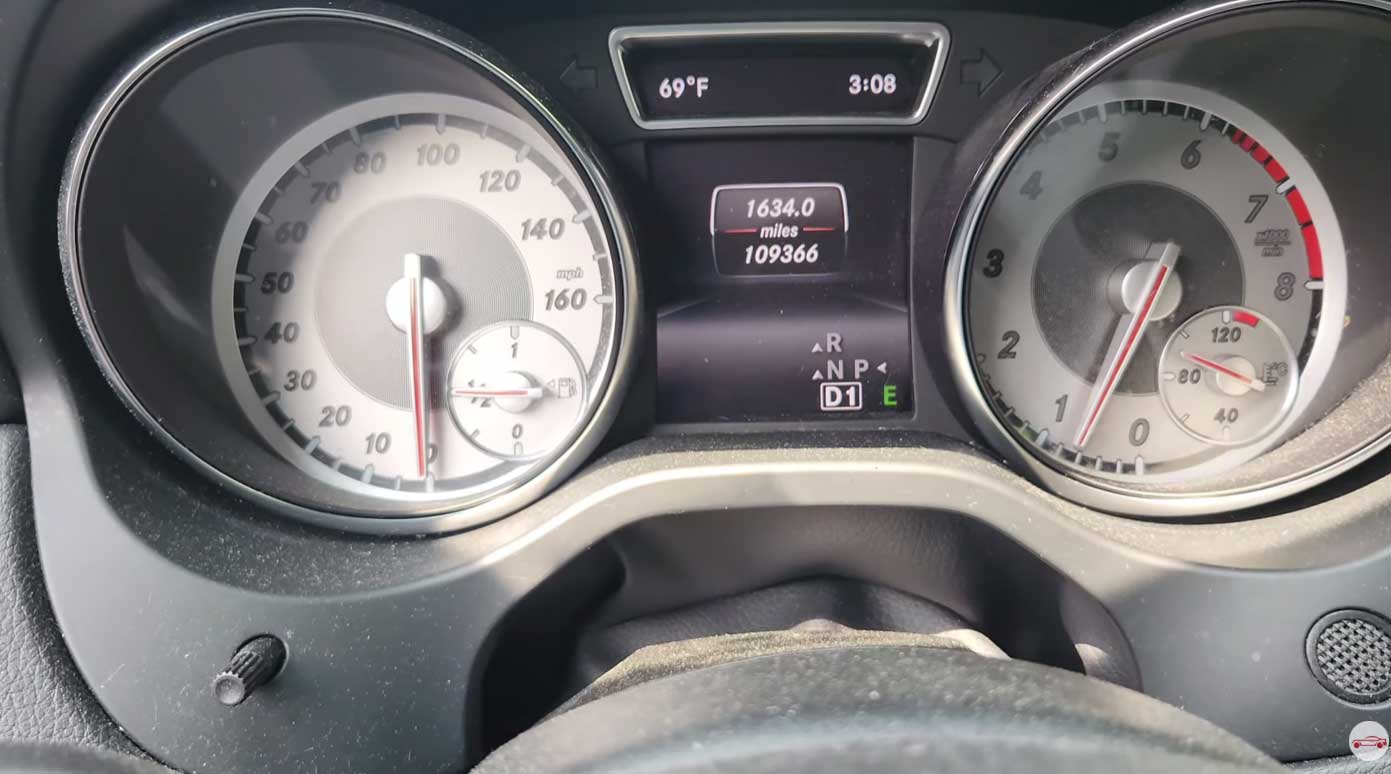
Your Mercedes pulls up to a red light. The engine should shut off. But it doesn’t. The green ECO light on your dashboard is yellow, not green. Your fuel savings are gone.
You’re not alone. Mercedes ECO start-stop problems are common. But here’s the good news: most of the time, it’s fixable. And you probably don’t need a $500 dealer visit.
In this guide, I’ll explain what your start-stop system is actually doing, why it stops working, and how to fix it yourself.
What Is ECO Start-Stop Anyway?
Let me start simple. ECO start-stop is exactly what it sounds like.
Your engine stops when you stop. It restarts when you move again.
Why? To save fuel and cut emissions. When you’re sitting at a red light, your engine is burning gas and doing nothing useful. So Mercedes tells the engine to shut off. When you lift your foot off the brake, the engine fires back up in a fraction of a second.
How much fuel does it save? In city driving, you can get up to 15% better fuel economy. In highway driving, almost nothing. It’s a city-traffic tool.
The Green Light vs. Yellow Light
Your dashboard shows an ECO symbol. When it’s green, start-stop is ready to use. When it’s yellow (or amber), it’s disabled. The system has decided something isn’t right.
That yellow light is what brings most people here.
Why It Stops Working (The Real Reasons)
Here’s what dealers often don’t tell you: Mercedes has about 15 different checks before allowing start-stop to work.
One condition fails, the whole system shuts down.
The most common problems are:
1. Battery Voltage Is Too Low
This is the number one reason. Your start-stop system needs a strong battery. Not just strong enough to start the engine, but strong enough to power all the extras while the engine is off.
A healthy Mercedes battery should hold around 12.6 volts when the engine is off and 13.8-14.2 volts when it’s running.
If your battery is below 12.6V, start-stop won’t work.
Why does this happen? Age. Three to five years of use drains any battery. Or you don’t drive enough. Short trips don’t fully charge the battery.
2. The Auxiliary Battery (The Secret Problem)
Most people don’t know this, but many Mercedes models have a second, smaller battery. It’s called the auxiliary battery.
This small battery keeps your backup systems running and is dedicated to start-stop. If this battery fails or isn’t charging, start-stop stops working.
The auxiliary battery is often an AGM (Absorbent Glass Mat) battery. These are expensive and can fail in 3-4 years.
3. Engine Temperature Isn’t Right
Your engine needs to warm up before start-stop works.
Mercedes has a rule: if the engine is cold, shut off the system. You need the engine to reach normal operating temperature first.
How long does this take? In a cold morning in winter, maybe 5-10 minutes. In summer, it’s faster.
If you only take short drives, your engine might never reach full temperature. The yellow light stays on.
4. Cabin Temperature Is Wrong
Here’s one people find annoying: if your heating or air conditioning isn’t happy, start-stop shuts down.
If the cabin is too hot or too cold, or the heating/AC is working hard to reach your set temperature, Mercedes keeps the engine running to power these systems.
Once the cabin reaches your comfort setting, start-stop can restart.
5. The Alternator Isn’t Charging Properly
If your alternator is weak or failing, it won’t send enough power back to the battery while you drive.
Your battery won’t stay charged. Start-stop gets disabled.
This is less common, but it happens. If you’ve had a weak battery for months, your alternator might be struggling too.
6. Sensor or Software Problems
Mercedes uses sensors to check brake status, door lock position, hood position, and seatbelt. If any of these sensors fails or gives bad information, start-stop shuts down.
Also rare: if your Mercedes had a software update done wrong, or the wrong software version installed, start-stop might not work.
The Weak Battery Problem
Let me focus on battery issues because it’s 80% of start-stop problems.
Signs your battery is the culprit:
- Start-stop used to work but stopped suddenly
- You don’t drive much (short trips only)
- You haven’t replaced the battery in 3-5 years
- You’ve noticed slow cranking when starting the engine
- The ECO light goes yellow even after long drives
- You’ve recently installed a dashcam or other device that drains power
How to test your battery:
You don’t need a fancy tool. Any auto parts store (in the US and UK) will test your battery for free. They’ll check the voltage and the charge capacity.
If the voltage is under 12.6V when the engine is off, your battery needs replacement.
If it’s between 12.6V and 13V but dropping fast, it’s dying.
How to fix it:
Replace the battery. For Mercedes, use an AGM battery (not a standard wet battery). AGM batteries are designed for start-stop systems.
After replacement, you may need a “battery reset” or adaptation using Mercedes diagnostic software (XENTRY). Your mechanic or dealer can do this. It tells the car’s computer that a new battery is installed.
Important: Don’t buy a cheap battery and expect it to last. Mercedes is picky about battery quality. Cheap batteries fail fast in start-stop systems.
Temperature and Comfort Settings
Here’s a fix that costs nothing.
If your ECO light is yellow in winter, it might just be cold.
How to troubleshoot:
- Turn off your heating/air conditioning for a moment
- Drive the car for 5-10 minutes to let the engine warm up completely
- Turn the climate control back on and set it to a moderate temperature
- Wait another 2-3 minutes
The ECO light should turn green.
If it stays yellow even in summer, or after 15 minutes of driving, the problem is something else.
The AC drain problem:
If you’re blasting the air conditioning hard in hot weather, it uses a lot of electrical power. Mercedes might disable start-stop to keep the battery charged for AC duty.
This is normal behavior. It’s the system protecting itself.
The parking lot test:
Leave your Mercedes parked for a week without driving it. Don’t let any devices drain the battery (dashcams, OBD trackers, etc.).
Come back and start the engine. Let it idle for 10 minutes. Does the ECO light turn green? If yes, your battery needs regular charging by driving.
If it stays yellow, you have a deeper problem.
Sensor Issues and Other Failures
Sometimes the battery is fine, but something else is blocking start-stop.
Check these:
Hood sensor: Is your hood fully closed? Not just closed—really latched. A slightly open hood disables start-stop.
Seatbelt: Your seatbelt must be fastened for start-stop to work. This is a safety feature.
Door lock: Make sure your driver’s door is fully shut. A partially open door also disables it.
Brake light switch: This is the most common sensor failure. If your brake light switch is bad, the car doesn’t know when you’re braking, so it can’t activate start-stop.
Fault codes: Some Mercedes models hide warning messages. If there’s a fault code stored in the computer (even a small one), the system might disable start-stop until it’s fixed.
How to check for fault codes:
Take your car to a mechanic with a Mercedes diagnostic scanner. A basic scan often costs $50-100. The scanner will read the fault codes and tell you exactly what’s wrong.
This is faster and cheaper than guessing.
Software updates:
Check your Mercedes service history. Has the software been updated in the last year? If not, visit your dealer and ask about updates related to start-stop or battery management.
Many issues are fixed by software updates. They’re often free if your car is under warranty.
How to Fix It (Step by Step)
Here’s the order I’d follow if my Mercedes had this problem:
Step 1: Battery test (free)
Go to an auto parts store. Have your main battery tested. If it’s weak, replace it with an AGM battery. This fixes 80% of problems.
Cost: $150-300 for battery and installation.
Step 2: Wait and drive properly
After a new battery, drive your car for 30 minutes on a highway or mix of roads. Don’t just do short trips around town.
The alternator needs time to fully charge the new battery. This can take 1-2 hours of driving, not just 15 minutes.
Step 3: Check for obvious problems
Make sure the hood is latched. Check that your seatbelt latches fully. Make sure no doors are open.
Test the ECO light again.
Step 4: Auxiliary battery check
If you still have the problem and you have an older Mercedes (2010 and up), the auxiliary battery might be failing.
This is harder to test yourself. You need a mechanic to check the auxiliary battery voltage separately.
Cost to replace: $200-400 depending on the model.
Step 5: Diagnostic scan
If nothing above worked, get a proper diagnostic scan. A scanner will tell you exactly what the car is upset about.
Cost: $50-150 for the scan itself.
Step 6: Repair based on the scan results
Once you know the real problem, fix it. It might be an alternator, a brake switch, a sensor, or a software issue.
This is where knowing the fault code saves you money. You’re not replacing parts randomly.
Common Mistakes People Make
Myth 1: “I’ll just turn it off and leave it off.”
True, you can press the ECO button every time you start your car to disable start-stop. But this doesn’t fix the problem. Your car is telling you something is wrong. Ignoring it might hide a bigger electrical issue building up.
Myth 2: “A cheap battery will work fine.”
Wrong. Mercedes is sensitive about battery quality. A cheap battery might last one season in a start-stop system. You’ll spend more money replacing it twice than buying one good battery.
Myth 3: “I need to go to the dealer.”
Not always. A mechanic can test your battery, scan for faults, and replace parts just as well as a dealer. You’ll save hundreds of dollars.
Myth 4: “It’s dangerous to drive without start-stop working.”
It’s totally safe. Start-stop is just a fuel-saving feature. Your car drives exactly the same with it off. You’ll use slightly more fuel, that’s all.
Myth 5: “I’ll wait until the next service to get it checked.”
If you’re seeing a yellow ECO light, your battery is probably weak. Don’t wait. A weak battery can strand you. Get it checked before it dies completely.
Myth 6: “Dashcams don’t affect start-stop.”
Some dashcams and OBD devices drain power even when the car is off. If your battery is already weak, adding a dashcam can push it over the edge. Check if devices are draining power when the engine is off.
FAQ
Q: Can a cold day make the ECO light turn yellow?
A: Yes. In winter, the ECO light often stays yellow until the engine and cabin warm up. If you only drive short distances in cold weather, it might never turn green. This is normal. On longer drives, it should switch to green once the engine is warm.
Q: Is the auxiliary battery expensive to replace?
A: Yes. An auxiliary battery for a Mercedes can cost $200-400 parts and labor combined. This is why some people delay fixing it. But if it’s bad, start-stop won’t work until you replace it.
Q: What if my battery is fine but start-stop still won’t work?
A: Get a diagnostic scan. Something else is wrong—a sensor, the alternator, or a software issue. A scan reveals the exact problem. Then you fix that specific thing instead of guessing.
Q: Will replacing the battery fix start-stop for sure?
A: In 80% of cases, yes. But if the problem is a sensor or software, the battery replacement won’t help. That’s why testing the battery first is the smart move.
Q: Do I need to go to Mercedes for a software update?
A: Probably yes. Software updates are usually done by a dealer with their special equipment. Independent mechanics can sometimes do this, but not all have the tools. Ask your local shop first.
Q: Can I just disable start-stop permanently with a code change?
A: Technically, yes. Some independent shops can code out the start-stop function. But I don’t recommend it. The yellow light means your car is trying to tell you something is wrong. Ignoring it can hide real problems like a dying alternator or a bad sensor.
Q: Is start-stop hard on the engine or starter motor?
A: No. Mercedes engineered the starter and engine to handle millions of start-stop cycles. The system is designed for this. The starter won’t wear out faster. The engine is fine too.
Q: How often should I replace the battery in a Mercedes with start-stop?
A: Every 3-5 years, depending on your climate and how much you drive. In hot climates or if you drive short trips mostly, batteries die faster—closer to 3 years. In moderate climates with longer trips, 4-5 years is normal.
Conclusion
Your Mercedes ECO start-stop is disabled because your car detected something wrong. Most of the time, it’s a weak battery. Sometimes it’s temperature, a sensor, or the alternator.
Here’s what to do right now:
- Have your battery tested for free at any auto parts store
- If it’s under 12.6 volts, replace it with a quality AGM battery
- Drive the car properly for 30+ minutes to let the new battery charge
- Check that your hood, doors, and seatbelt are all secure
- If the ECO light still won’t turn green, get a diagnostic scan
The bottom line: This is fixable. You probably don’t need the dealer. A good independent mechanic can solve this for a fraction of the cost.
Your Mercedes wants to save you fuel. Let it. Fix the problem, and your start-stop will be back to work.