
Monday to Saturday - 9:00 am -18:00 pm

Road safety matters. Every driver wants protection when behind the wheel. Mercedes-Benz understands this need. That’s why they created the PRE-SAFE® system.
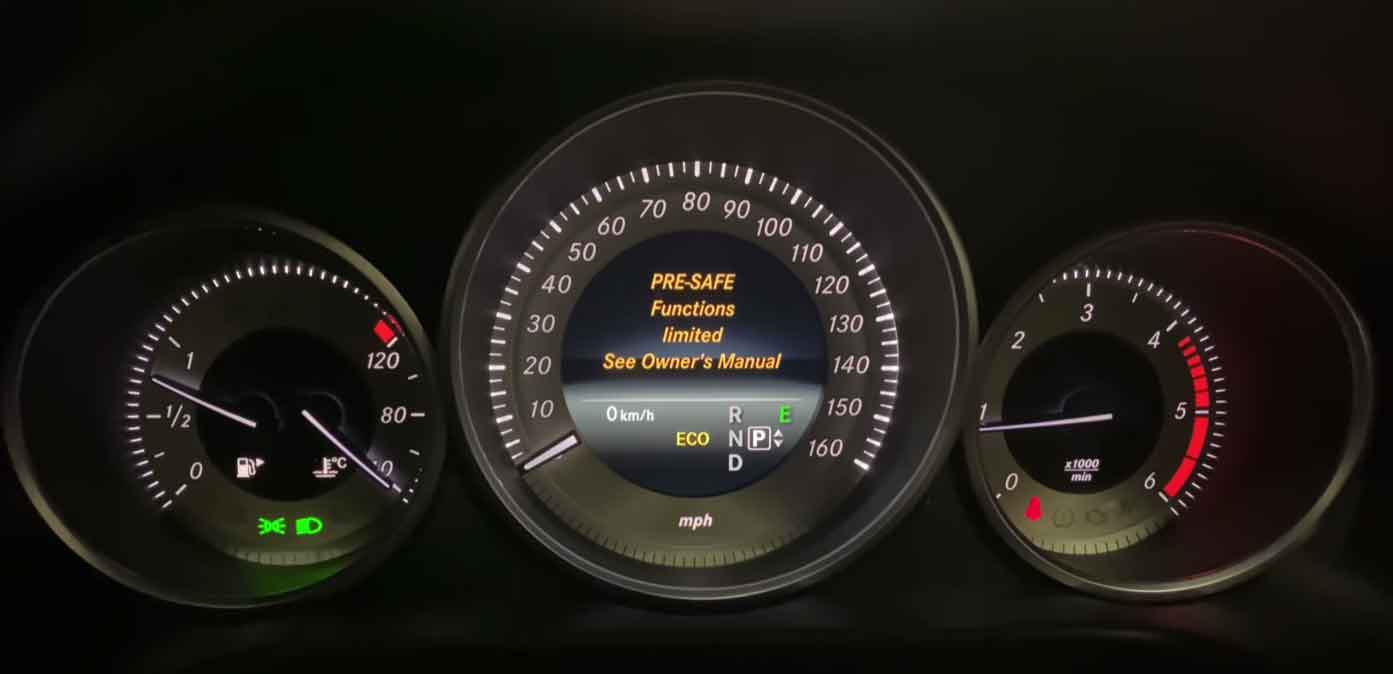
This advanced feature acts as your guardian angel on the road. It watches for danger before accidents happen. But sometimes, you’ll see a warning message pop up on your dashboard: “Pre-Safe Functions Limited.”
Don’t panic. I’m going to walk you through everything you need to know.
As a mechanic with over 15 years working on Mercedes vehicles, I’ve seen this issue countless times. In my shop, we fix it regularly. Today, I’ll share what causes it and how to solve it.
Which Mercedes Models Have This Feature?
Mercedes installed PRE-SAFE® in many of their popular models. Here’s the list:
Mercedes-Benz C-Class | Mercedes-Benz S-Class Mercedes-Benz E-Class | Mercedes-Benz CLA Mercedes-Benz GLA | Mercedes-Benz CLS Mercedes-Benz SL & SLC | Mercedes-Benz GLC X253 Hatchback C253 Coupe SUV | Mercedes-Benz GLS X164 X166 Mercedes-Benz GLE MLW166 C292 SUV |
If you drive any of these models, you have this technology protecting you.
What Is The PRE-SAFE® System?
Think of PRE-SAFE® as your car’s early warning system.
It constantly monitors what’s happening around your vehicle. Using sensors and cameras, it detects danger before a crash occurs. When trouble is coming, it takes action immediately.
The goal is simple: prepare your car and protect everyone inside.
From years under the hood, I’ve seen how this system saves lives. It’s truly remarkable technology.
Common Causes Of “Pre-Safe Functions Limited” Warning
When I service cars with this warning, I usually find one of these problems:
Seatbelt tensioner problems. The mechanism that tightens your seatbelt might be broken or unplugged. This happens more often than you’d think.
Damaged seat sensors. Wires under the seats get worn out or cut. Sometimes the seat feels stiff when you move it forward or back.
Weak battery power. A dying 12-volt battery causes all sorts of electrical gremlins. The PRE-SAFE® system needs strong, steady power to work right.
Previous fender bender. Even small accidents can trigger sensor malfunctions. The impact might seem minor, but it affects delicate components.
Near-miss incidents. Your car detected a potential crash but you avoided it safely. Sometimes the system stays triggered afterward.
Electrical connection issues. Corroded wires, blown fuses, or loose plugs will interrupt system operation. In my experience, this is the most common culprit.
Software bugs. Computer glitches happen in modern cars. A coding error can make the system act up without warning.
Failed motors or actuators. The small motors that adjust seats and belts can burn out over time. When they fail, the whole system goes limited.
How Does PRE-SAFE® Actually Work?
Let me explain this in simple terms.
Your Mercedes has sensors everywhere. They constantly measure what’s happening:
- Wheel speed sensors track if you’re sliding
- Brake pressure sensors detect panic stops
- Radar units watch the road ahead
- Cameras scan for obstacles
- Steering angle sensors monitor your turns
The system processes all this information in milliseconds. It looks for danger signs like sudden braking or loss of control.
When I diagnose these systems, I use a professional scan tool called XENTRY. It shows me exactly what each sensor is reporting. This helps me find problems quickly.
What Actions Does PRE-SAFE® Take?
When danger approaches, your Mercedes springs into action. Here’s what happens:
Windows and sunroof close automatically. This keeps debris out during a rollover. But don’t worry – the system won’t close on your fingers.
Brake pressure increases inside the calipers. Your car builds up pressure before you even hit the pedal. This improves stopping power dramatically.
Seatbelts tighten up snug. The system pulls you firmly against your seat. It also straightens the backrest. This creates the safest position for impact.
Hazard lights flash on. Other drivers see your warning lights instantly. They know something urgent is happening.
A special sound plays through speakers. The audio system generates pink noise to protect your hearing. Crashes are extremely loud. This prepares your ears.
When I test these features in the shop, it’s impressive to watch. Everything happens in less than a second.
Understanding PRE-SAFE® Sound
The pink noise is interesting technology.
If a collision becomes unavoidable, your car plays this short burst of sound. It’s not music or a beep. It’s a specific frequency that triggers your ear’s natural protection reflex.
This makes the impact noise less damaging to your hearing. Pretty clever, right?
What About PRE-SAFE® Brake?
Some Mercedes models include automatic emergency braking.
This feature uses radar to watch the road ahead. When it spots a critical situation developing, it takes over.
If you don’t react fast enough, the car applies partial braking for about 1.5 seconds. This gives you time to respond or reduces impact speed.
From working on these systems, I can tell you the radar units are sensitive. They need to stay clean and properly aimed.
Why The Warning Message Appears
The PRE-SAFE® system is sophisticated. Every component must work perfectly together.
When something goes wrong, your dashboard displays “Pre-Safe Functions Limited.” Here’s what I typically find:
Software problems. The control module gets confused by conflicting sensor data. Sometimes updates contain bugs that cause errors.
ABS or ESP system failures. PRE-SAFE® relies heavily on these systems. A bad wheel speed sensor or malfunctioning ESP module affects everything.
Harsh weather conditions. Heavy rain, snow, or ice can trigger false warnings. Sensors get covered or confused by the conditions.
Windshield replacement done wrong. The radar and camera mount in your windshield. If a glass shop installs it incorrectly, the calibration is lost.
In my shop, I see windshield issues constantly. Many glass technicians don’t understand Mercedes calibration requirements. This causes all kinds of problems.
How To Reset The PRE-SAFE® Warning
Here’s what you can try first:
Find the PRE-SAFE® button in your vehicle. Press and hold it for several seconds. Then release it.
Sometimes this clears the warning and restores normal operation.
But honestly? Most of the time, this doesn’t work.
When I service a car with this problem, I use diagnostic equipment. I scan for fault codes, check sensor operation, and verify system calibration.
If the warning keeps coming back after a reset, you need professional diagnosis. Don’t ignore it. This system protects your life.
My Professional Advice
After fixing hundreds of these systems, here’s what I recommend:
Don’t drive with this warning for long. Your safety features are compromised. Get it checked within a few days.
Find a qualified Mercedes specialist. General repair shops often lack the proper tools and training. You need someone with XENTRY or STAR diagnostic equipment.
Expect thorough testing. Proper diagnosis takes time. We check sensors, wiring, software versions, and calibration.
Budget for potential repairs. Depending on the cause, fixes range from simple resets to sensor replacement. Be prepared for various costs.
Consider weather and driving conditions. If the warning appeared during extreme weather, it might clear on its own. But still get it checked.
Final Thoughts
The “Pre-Safe Functions Limited” message protects you in two ways.
First, the system itself prevents accidents and reduces injuries. Second, the warning tells you when protection is compromised.
Mercedes built an incredible safety network using ABS, ESP, cameras, radar, and sensors. When everything works together, you’re surrounded by protection.
But like any complex system, things can go wrong. Sensors fail. Wires corrode. Software gets confused.
The key is addressing problems promptly. Don’t wait. Your safety depends on these systems working correctly.
From my years working on Mercedes vehicles, I’ve seen the PRE-SAFE® system save people from serious harm. It’s worth maintaining properly.
Common Questions About PRE-SAFE®
Why won’t my PRE-SAFE® system work?
Usually it’s a sensor malfunction, electrical issue, or software problem. A dead battery can also cause it. Professional diagnosis with scan tools will identify the exact cause.
What typically fails in this system?
In my experience, seatbelt tensioners, seat sensors, and electrical connections fail most often. Wheel speed sensors and ESP modules are also common culprits.
How do I clear Mercedes fault codes?
You need professional diagnostic equipment to properly clear codes. Simply disconnecting the battery doesn’t fix the underlying problem. The warning will return if the issue isn’t resolved.
Need help with your Mercedes PRE-SAFE® system? Find a qualified technician who specializes in Mercedes-Benz vehicles. They have the tools and knowledge to diagnose and repair these advanced safety systems properly.