
Monday to Saturday - 9:00 am -18:00 pm

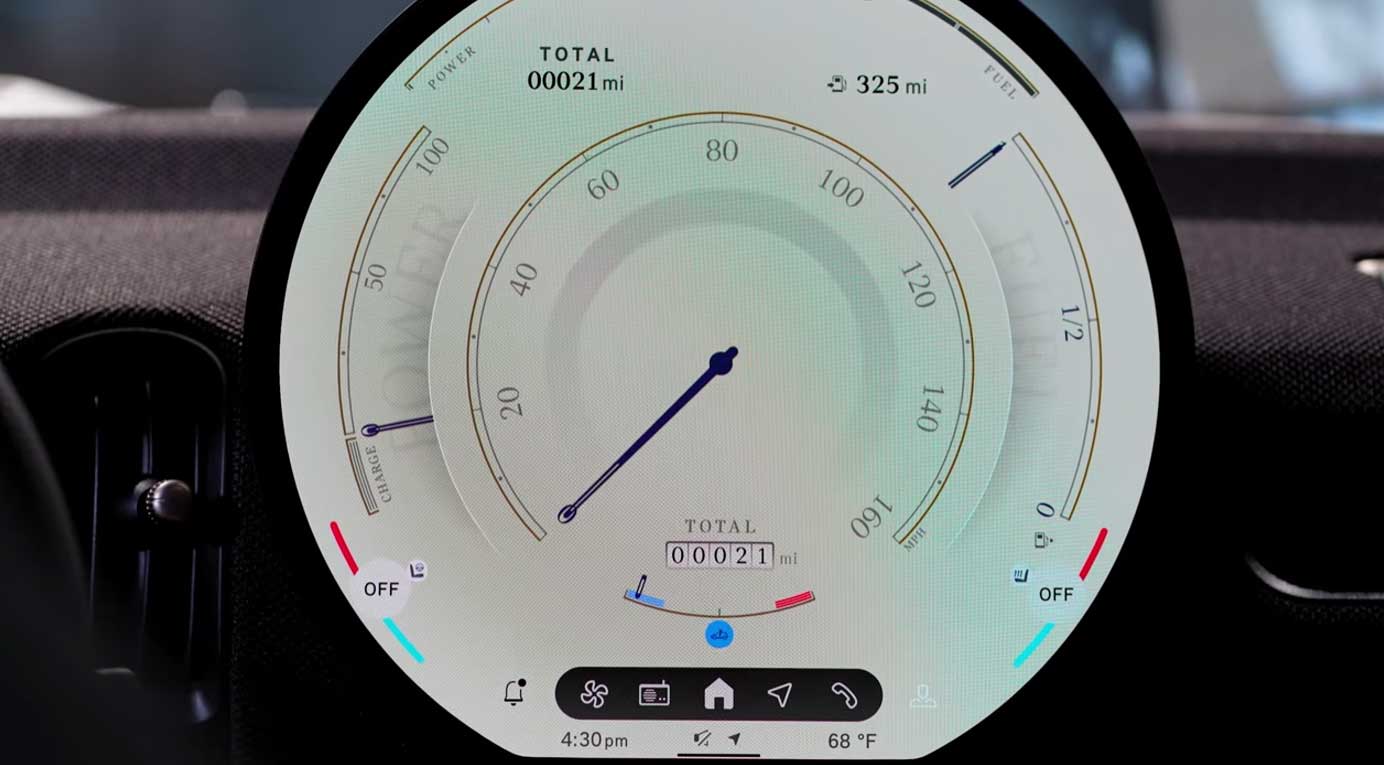
Your Mini Cooper is sitting at a traffic light. You press a button or flick a switch. Suddenly the car feels alive. The throttle snaps. The steering tightens. This is Sport Mode.
But here’s what most owners don’t know: Sport Mode isn’t just a gimmick. It’s a real change to how your engine, transmission, and suspension work together. If you’re buying a Mini, wondering whether your model has it, or unsure when to actually use it, this guide covers everything you need to know.
We’ll explain exactly what Sport Mode does, why it matters, when it makes sense to use it, and what mistakes you need to avoid. I’ve been working on Minis for years, and I’ve seen owners either get the most out of this feature or drain their fuel tank without understanding why.
What Sport Mode Actually Does
Let’s start simple. Sport Mode is not the same as switching the engine to a different fuel map or unlocking hidden horsepower. Instead, it changes how your car responds to your inputs. Think of it like switching from normal headlights to bright lights—the bulb is the same, but the setting changes what you see.
Sport Mode adjusts three critical things: throttle response, steering feel, and transmission behavior. On some models with adaptive suspension, it also stiffens the dampers. These aren’t engine changes. They’re electronic adjustments that make your Mini feel more connected to the road.
The throttle becomes quicker to react. The steering wheel becomes heavier and more responsive. And if you have an automatic transmission, it holds onto gears longer before upshifting. This combination creates what Mini calls the “go-kart feeling”—that’s the whole point of the brand.
On electric Minis (the Cooper SE), Sport Mode unlocks full torque instantly without delay. The difference is even more noticeable.
How to Find and Activate Sport Mode
The location of the Sport Mode control depends on your Mini’s age and model.
Newer models (2014 and later): Look at the base of your gear shifter. You’ll see a small toggle switch or lever. It usually has three positions or can be toggled up and down. Push or flick it to scroll through the options.
Older models (2007–2013): The switch is on the center console, usually near the Start/Stop button, or it might be a small knob around the gear shifter.
Newest models (2024+): Some Minis have moved to a lever-style switch on the lower dashboard. Your owner’s manual will show the exact location for your year.
When you switch modes, your dashboard will show an indicator—usually a red ring for Sport, a blue ring for Mid, or a green leaf for Green Mode. Some cars also show the word “SPORT” on the digital display.
Pro tip: You can switch modes while driving. You don’t need to pull over or stop. It takes about a second to take effect.
The Three Main Changes Sport Mode Makes
1. Throttle Response Gets Sharper
In Mid Mode, there’s a slight delay between when you press the gas pedal and when the engine responds. This is intentional. It prevents accidental over-acceleration and makes the car easier to control in traffic.
Sport Mode removes this delay. Your foot hits the pedal, and the engine jumps to the throttle instantly. There’s no buffer. You feel it immediately.
Why? Mini uses something called “throttle-by-wire.” Your pedal doesn’t mechanically pull the throttle open. Instead, it sends a signal to the engine’s computer, which then decides how much to open the throttle. In Sport Mode, that computer listens faster.
The practical result: When you accelerate on the highway or make a quick pass, the car responds without hesitation. In traffic or on slippery roads, this sharp response can be a problem (more on that later).
2. Steering Gets Heavier and More Responsive
In Mid Mode, the steering is already pretty sharp for a small car. In Sport Mode, it gets noticeably heavier. The power steering pump adds more resistance.
Why? Heavier steering gives you more feedback. It helps you feel what the wheels are doing. When you’re pushing hard into a corner, that feedback tells your hands what the car is doing. It’s the opposite of “numb” steering.
On models with adaptive damping (especially JCW models), the suspension also stiffens. This means the car doesn’t roll as much in corners. It feels more planted.
On a winding road, this makes a huge difference. The car feels more direct. Less body roll. More confidence.
On a straight highway? You’ll notice the steering is heavier, but it doesn’t make much practical difference.
3. Transmission Holds Gears Longer
This only applies to automatic transmissions. Manual drivers don’t get this feature—their control is already direct.
In Mid Mode, the transmission is programmed to shift up relatively early. This saves fuel and keeps the engine quiet. When you’re cruising at 55 mph, the transmission is in a high gear (like 6th or 7th).
In Sport Mode, the transmission holds lower gears longer. The engine spins faster (higher RPM) before shifting up. If you accelerate, it waits for higher RPM before deciding to shift. This means:
- Better acceleration because the engine stays in its power band.
- More engine braking when you lift off the gas.
- More exhaust note (you hear the engine more).
On some models with a traditional torque converter, you’ll also notice the transmission “locks up” more aggressively. This means the converter clutch engages harder, giving you a more direct feel.
For manual drivers: You already have full control. Sport Mode won’t change how your transmission works, but the sharper throttle response and tighter steering still apply.
Sport Mode vs Mid Mode vs Green Mode
It helps to see all three modes side by side.
| Feature | Green Mode | Mid Mode | Sport Mode |
|---|---|---|---|
| Throttle Response | Delayed and soft | Balanced, slight delay | Instant, no delay |
| Steering Feel | Light and easy | Natural and sharp | Heavy and responsive |
| Suspension (if equipped) | Soft | Balanced | Stiff |
| Transmission Shift Points | Early upshifts | Balanced | Late upshifts, longer holds |
| Fuel Economy | Best | Good | Worst |
| Engine RPM at Cruise | 1,000–1,200 RPM | 1,200–1,500 RPM | 2,000+ RPM |
| Coasting Feature (auto) | Yes, disconnects transmission | No | No |
| Traction Control | Full | Full | Reduced or adjustable |
| Best For | Long highway drives, city traffic | Everyday driving, mixed conditions | Spirited driving, fun roads |
Key takeaway: Mid Mode is the default for a reason. It’s the sweet spot. Green is for efficiency. Sport is for when you want to feel the car.
When to Use Sport Mode (Real Examples)
Here are actual situations where Sport Mode makes sense.
Use Sport Mode When:
Overtaking on a highway. You’re at 65 mph, and a truck is in your way. You want to pass quickly and safely. Switch to Sport Mode, and the throttle response snaps. The car accelerates immediately without hesitation. Once you’re past, you can switch back to Mid.
Driving on winding roads. You’re on a mountain road or a twisty back road. Sport Mode tightens the steering and stiffens the suspension. The car feels more connected. You have better feedback through the wheel. Cornering feels more precise.
Enjoying a spirited drive. Maybe it’s a nice Sunday. You’re not in a hurry. You just want to feel the car. The sharper throttle, tighter steering, and responsive transmission make it feel alive. This is what Sport Mode is made for.
Driving in wet conditions (if you’re experienced). Here’s where it gets tricky. Sport Mode reduces stability control. If you’re an experienced driver and you’re on a safe stretch of road (like a large empty parking lot learning how the car behaves), Sport Mode can help you feel what the tires are doing. But we’ll talk more about the safety side later.
Accelerating from a standstill onto a busy highway. When you need to merge quickly, the sharper throttle response helps. No delay. Just go.
Do NOT Use Sport Mode When:
Driving in heavy rain or ice. The reduced traction control can cause you to lose grip. The instant throttle response makes it easier to wheel-spin. Save Sport Mode for dry roads unless you really know what you’re doing.
In bumper-to-bumper traffic. The sharp throttle makes the car darty. You’ll be constantly making small corrections. It gets tiring. Mid Mode is better. You have more forgiveness.
During your break-in period. If your Mini is new, stick to Mid or Green for the first 1,000 miles. The engine needs time to seat the rings properly. Hard driving in Sport Mode puts stress on a new engine that hasn’t been properly broken in yet.
Towing (Countryman with towing package). Sport Mode isn’t designed for the additional loads of towing. Use Mid Mode.
When you’re tired or distracted. Sport Mode demands more attention. If you’re not in the right headspace to drive actively, leave it in Mid.
What Sport Mode Does to Your Fuel Economy
Let’s be direct: Sport Mode will reduce your fuel economy. But it’s more nuanced than you might think.
Why Fuel Economy Drops
There are two reasons:
1. Higher RPM at cruise speed. In Sport Mode, the engine idles faster. At 70 mph on the highway, your engine might be spinning at 2,000 RPM in Sport Mode instead of 1,200–1,500 RPM in Mid Mode. Higher RPM means more friction, more fuel consumption, and more heat.
2. You drive faster and harder. This is the psychological part. When Sport Mode is active, the car feels quicker. You naturally accelerate harder and drive faster. You pass cars that you would normally let pass you. That aggressive driving burns more fuel than conservative driving ever would.
Real Numbers
If you drove your Mini identically in both Sport and Mid Mode—same speed, same acceleration, same route—the difference would be small. Maybe 1–2 mpg worse.
But most people don’t do that. Most people switch to Sport Mode and drive harder. In that case, you might see a 5–10 mpg drop. Or more.
Owners report:
- Mid Mode highway cruising: 35–42 mpg (depending on the model)
- Sport Mode highway cruising: 28–35 mpg
- City driving in Sport Mode: Often drops to the mid-20s
The fuel tank on most Minis is about 11–12 gallons. If you lose 10 mpg, that’s one extra tank per 1,000 miles. That’s real money if you’re driving often.
The Green Mode Comparison
Green Mode takes the opposite approach. It softens the throttle, encourages early upshifts, and on automatics, it enables “coasting.” When you lift off the gas, the transmission disconnects from the engine, and you glide forward without engine braking. This saves significant fuel.
Most owners report Green Mode saves 3–5 mpg compared to Mid Mode. So the difference between Green and Sport Mode can be substantial.
Should You Avoid Sport Mode to Save Fuel?
Not necessarily. Here’s the thing: You buy a Mini because you enjoy driving it. If you spend all your time in Green Mode just to save a few dollars on gas, you’re missing the point of owning a fun car.
Use Sport Mode when the driving is worth it. Use Green Mode for your daily commute. Use Mid Mode for everything else. Balance fun and practicality.
Common Mistakes and Safety Issues
Mistake 1: Using Sport Mode in Bad Weather
The problem: Sport Mode reduces electronic stability control (traction control). The system intervenes less when wheels start to slip. Combined with the instant throttle response, this can cause:
- Wheel spin when accelerating.
- Reduced grip in cornering.
- Longer stopping distances in emergency situations.
The fix: Save Sport Mode for dry roads. In rain, snow, or ice, stay in Mid Mode. The traction control is more aggressive and will help you stay safe.
Mistake 2: Not Understanding the Throttle Is Sharper
The problem: You switch to Sport Mode while in traffic. Someone cuts you off. You jab the pedal as a reflex. The throttle responds instantly, and you accelerate too hard. You either hit the car in front or have to brake hard.
The fix: Remember that Sport Mode is unforgiving. Every input is more direct. If you use it in traffic, treat it like a manual transmission—small, deliberate inputs only.
Mistake 3: Thinking Sport Mode Adds Power
The problem: Some owners think Sport Mode increases horsepower or gives them more power. It doesn’t. The engine output is identical. What changes is how you feel the power.
The fix: Know what Sport Mode actually is. It’s a tuning of throttle response, steering, and transmission. Nothing more.
Mistake 4: Forgetting to Switch Back
The problem: You finish your spirited drive and forget to switch back to Mid Mode. You spend the next week driving in Sport Mode, wondering why your fuel economy is terrible and why the car feels so twitchy in traffic.
The fix: Make it a habit. When you’re done with spirited driving, immediately switch back. Some newer Minis default to Mid when you restart, but not all. Check your manual.
Mistake 5: Using Sport Mode While Fatigued
The problem: Sport Mode requires attention. The steering is heavy. The throttle is sharp. The transmission holds gears longer. On a long, boring highway, this gets tiring. You lose focus, and safety suffers.
The fix: On long drives, use Mid or Green. Sport Mode is for when you’re alert and actively engaged.
Sport Mode and Your Engine
One question every owner asks: Does using Sport Mode damage my engine?
Short answer: No, not if used properly.
Long answer: Sport Mode itself doesn’t change the engine. It doesn’t increase fuel pressure, ignition timing, or boost (on turbocharged models). The engine is calibrated to handle full-throttle acceleration in any mode. Your Mini’s engine is built to work hard.
What can cause damage:
- Extreme abuse. Constantly rev-limiting the engine, repeated full-throttle launches in hot weather, towing beyond capacity.
- Poor maintenance. Old oil, clogged air filters, and overdue services.
- Modifications without tuning. If you add an aftermarket exhaust without remapping the ECU, you can create problems.
Normal Sport Mode use—even spirited Sport Mode use—won’t hurt your engine. Mini designed the car to be driven this way.
About Break-In Periods
When your Mini is brand new, the engine’s internal parts are still settling. Piston rings, bearing surfaces, and valve seats need time to “seat” properly. During the first 1,000 miles, avoid sustained high-RPM running and Sport Mode use.
After 1,000 miles, you can use all modes normally.
Turbocharged Models (Mini Cooper S, JCW)
The Mini Cooper S and John Cooper Works models have turbochargers. Sport Mode doesn’t increase boost pressure (that’s controlled by the engine’s ECU based on load and conditions). But the sharper throttle response means you’re asking for more boost more aggressively.
This is fine. The turbo is designed for it. Just don’t forget that turbocharged engines need good oil and regular service. Turbo engines run hotter than naturally aspirated engines, so they’re more sensitive to maintenance.
Frequently Asked Questions
Q: Can I switch to Sport Mode while the car is parked?
A: Yes, you can. Switch the mode any time, engine running or not. However, it only takes effect when you’re actually driving.
Q: Will Sport Mode damage my transmission?
A: No. The transmission is designed to handle Sport Mode. The longer gear holds put stress on the drivetrain, but that’s within the design limits. Millions of Minis have used Sport Mode without transmission problems.
Q: My Mini doesn’t have Sport Mode. Can I add it?
A: It depends on your model year and what was ordered from the factory. Most base model Minis don’t have Sport Mode as an option. JCW models and Cooper S models usually come with it standard. You cannot easily retrofit it—it would require reprogramming the transmission and steering control modules, which is not a practical DIY job.
Q: How much does Sport Mode improve 0–60 times?
A: About 0.3–0.5 seconds. The sharper throttle response helps, and holding gears longer helps the transmission keep the engine in the power band. But it’s a small improvement, not dramatic. The main benefit is how it feels, not a measurable performance gain.
Q: If I’m on the highway at 70 mph in Sport Mode, when I take my foot off the gas, do I get engine braking?
A: Yes. You’ll feel the car slow down more noticeably when you lift off. This is because in Sport Mode, the transmission holds a lower gear, and the engine doesn’t spin down as quickly. On automatic Minis, you also lose the “coasting” feature, so there’s actual engine braking instead of neutral coasting.
Q: Does Sport Mode make the exhaust louder?
A: On some models, yes. JCW models and models with an Active Sound Design (ASD) system will sound louder and more aggressive in Sport Mode. On base models without ASD, there’s no difference in exhaust sound.
Q: Is it okay to leave my Mini in Sport Mode all the time?
A: Technically, yes. Nothing will break. But you’ll sacrifice fuel economy, and the sharper throttle response gets tiring in normal traffic. It’s not ideal. Use the right mode for the situation.
Q: What’s the difference between sport mode on an automatic vs. manual Mini?
A: Manuals don’t have transmission shift point control, so Sport Mode only affects throttle response, steering weight, and suspension stiffness. Automatics get the full experience, including the gear-holding behavior. Manuals are still fun in Sport Mode, but automatics feel the biggest difference.
Final Thoughts
Sport Mode is one of the best features on a Mini Cooper. It’s why people buy Minis in the first place—that go-kart feeling, that direct connection to the road.
Here’s what matters:
Know what it does. It sharpens the throttle, tightens the steering, and holds gears longer. It doesn’t add horsepower or damage your engine.
Know when to use it. Use it on fun roads, for highway passes, and when you want to feel the car. Skip it in bad weather, heavy traffic, and when you’re tired.
Expect the fuel economy hit. Plan for 5–10 mpg worse economy when you’re driving hard in Sport Mode. That’s the price of fun.
Drive it properly. Sport Mode demands attention. Every input matters more. If you’re not in the headspace to drive actively, stay in Mid Mode.
Enjoy it. This is the reason you bought a Mini. Use Sport Mode often. Drive the roads you love. Feel the connection. That’s what it’s built for.
The best drivers know when to be serious and when to have fun. Sport Mode is your invitation to have fun. Use it wisely.
Mechanic Voice Recommends:
- Check your owner’s manual for the exact location of the mode selector on your model year.
- Do a break-in period (first 1,000 miles) in Mid or Green before using Sport Mode regularly.
- Use Sport Mode on your favorite road at least once. You’ll understand why Minis have such a devoted following.
- Monitor your fuel economy by keeping an eye on your trip computer. You’ll start to understand your driving habits.
- Keep up with service intervals. Sport Mode use doesn’t require special maintenance, but regular oil changes become even more important.