
Monday to Saturday - 9:00 am -18:00 pm

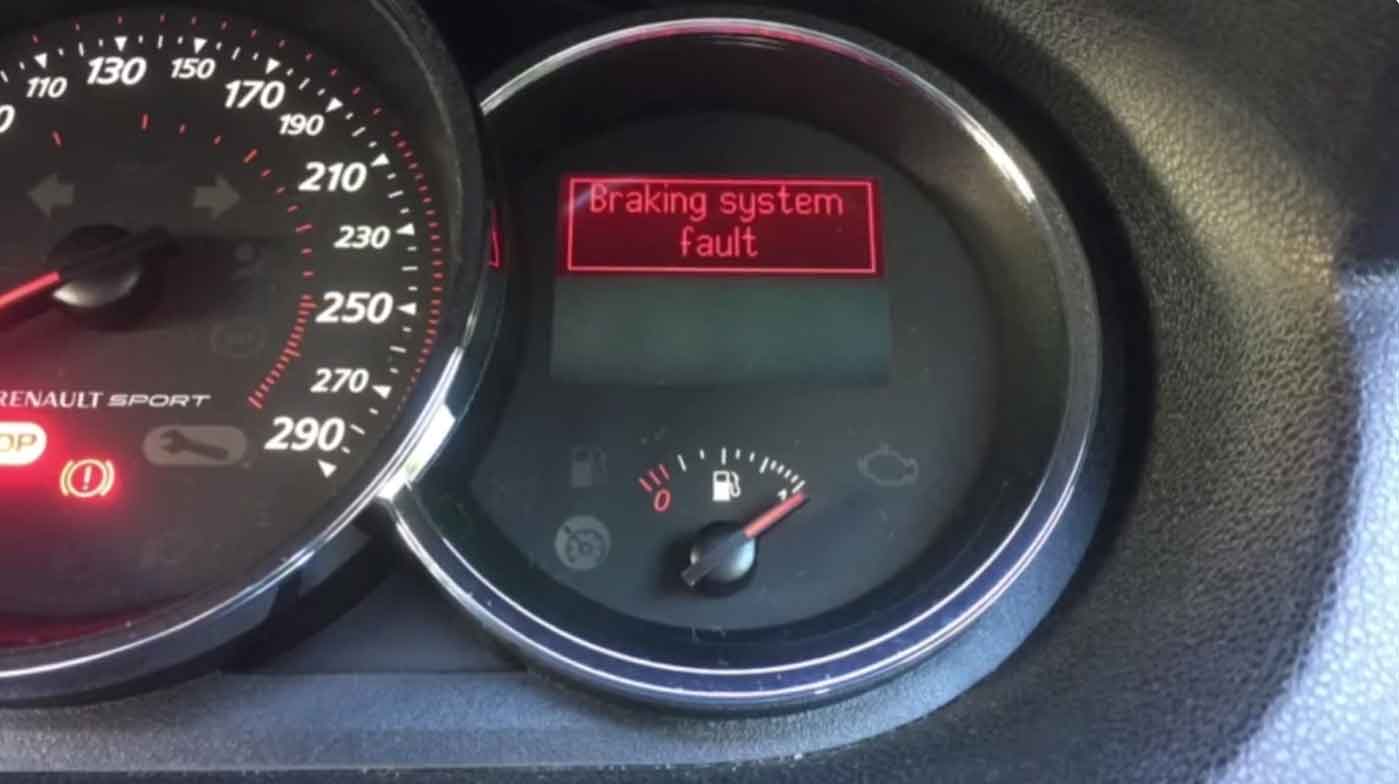
A “braking system fault” warning on your Renault dashboard means something’s wrong with your brakes. This is serious. Your car might not stop properly when you need it to. I’ve seen this issue dozens of times in my shop, especially on Renault Megane and Scenic models.
Don’t panic, though. Most brake faults are fixable. In this guide, I’ll walk you through what causes this warning and how to fix it. I’m sharing what I’ve learned from years working on Renault vehicles.
What Does Braking System Fault Mean in Your Renault?
Your Renault’s brake system has many parts working together. These include:
- Brake pads
- Brake rotors (discs)
- Brake calipers
- Master cylinder
- Brake lines and hoses
- Brake fluid reservoir
- ABS sensors and control module
When one of these parts fails, your car’s computer (ECU) notices. It turns on the brake warning light. This is your car’s way of saying “get help now.”
From my experience, ignoring this warning is dangerous. I’ve seen worn brake pads cause accidents. I’ve seen leaking brake fluid lead to complete brake failure. Your brakes keep you and your family safe. Take this warning seriously.
The most common brake problems I see are:
- ABS warning lights staying on
- Spongy brake pedal feel
- Grinding or squealing noises
- Car pulling to one side when braking
- Brake pedal vibrating
- Low brake fluid warnings
- Reduced stopping power
Related: If you’re also seeing engine warnings, check our guide on Renault engine problems.
How Do You Fix a Renault Brake System Fault?
First, don’t keep driving if your brakes feel wrong. Pull over safely when you can.
Here’s my quick diagnostic process:
Step 1: Check your brake fluid level. Open the hood. Find the brake fluid reservoir (usually near the firewall on the driver’s side). The fluid should be between MIN and MAX lines.
Step 2: Look at your brake pads through the wheel spokes. You should see at least 3mm of pad material. Less than that means they’re worn out.
Step 3: Check your battery voltage. Use a multimeter. It should read 12.4 volts or higher when the car is off. Low battery voltage confuses the brake sensors.
Step 4: Use an OBD-II scanner. This tool reads error codes from your car’s computer. I use one every day in my shop. They cost about $30 online and plug into the port under your steering wheel.
Watch this helpful video showing the diagnostic process:
[Video placeholder – diagnostic walkthrough]
The error codes will point you to the exact problem. Common codes include C1095 (ABS pump motor fault) and C1234 (wheel speed sensor issue).
What Causes Brake System Faults? (10 Common Reasons)
Let me explain each cause I see regularly in my shop.
1. Low or Contaminated Brake Fluid
Brake fluid is like blood for your brake system. When it’s low, your brakes don’t work right.
From years under the hood, I can tell you brake fluid gets low for two reasons:
Leak somewhere in the system. Check under your car for wet spots. Brake fluid feels oily and damages paint.
Worn brake pads. As pads wear down, the caliper pistons extend further. This uses more fluid from the reservoir. It’s normal, but you need to top it up.
Brake fluid also absorbs water over time. This lowers its boiling point. When I service a car like this, I test the fluid with a brake fluid tester. If it shows more than 3% water content, I replace it completely.
2. Worn Out Brake Pads
Brake pads are sacrificial parts. They wear down on purpose to protect your rotors.
Most pads last 30,000 to 70,000 miles. But city driving wears them faster. I’ve replaced pads at 20,000 miles on cars driven in stop-and-go traffic.
Signs your pads need replacing:
- Squealing or screeching sounds
- Grinding metal-on-metal noise
- Brake warning light on
- Less than 3mm pad thickness visible
- Car takes longer to stop
When pads get too thin, the metal backing plate hits the rotor. This damages the rotor badly. What could’ve been a $150 pad job becomes a $400 pad and rotor job.
3. Damaged or Warped Brake Rotors
Rotors are the metal discs your brake pads squeeze to stop the car. They handle extreme heat every time you brake.
Heat causes problems. Rotors can warp, crack, or develop grooves. In my shop, I check rotor thickness with a micrometer. Renault specifies minimum thickness for each model. Below that, the rotor is unsafe.
Warped rotors feel like a pulsing in the brake pedal. The car shakes when you brake. This happens from:
- Overheating (like riding the brakes downhill)
- Uneven pad wear
- Improper wheel torque
- Sudden cooling (like driving through a puddle with hot brakes)
4. Corroded Brake Components
Renault vehicles in wet climates face corrosion issues. Salt, moisture, and time eat away at metal brake parts.
I see this most on:
- Brake calipers (they seize up)
- Brake lines (they develop leaks)
- Caliper slide pins (they stick)
- Wheel cylinders on drum brakes
Corroded parts don’t move freely. Stuck caliper pins cause uneven pad wear. One pad wears out while the other stays thick. Your car pulls to one side when braking.
Prevention is key here. During routine service, I clean and lubricate all moving brake parts with high-temp brake grease.
5. Extreme Temperature Effects
Heat is the enemy of brake systems. Hard braking generates tremendous heat.
I’ve measured rotor temperatures over 600°F after aggressive driving. At these temperatures:
- Brake fluid can boil (causing vapor in the lines)
- Pads glaze over (becoming hard and slippery)
- Rotors warp or crack
- Rubber seals deteriorate
Cold weather causes problems too. Moisture in brake lines can freeze. Old brake fluid with water contamination is especially prone to this.
6. Skipped or Irregular Maintenance
Brakes need regular inspection. I recommend checking them every oil change (about every 5,000 miles).
When I service a car like this, I check:
- Pad thickness
- Rotor condition
- Fluid level and quality
- For leaks anywhere
- Caliper operation
- Brake hose condition
Skipping these checks means small problems become big expensive repairs. A $50 fluid change now prevents a $1,200 ABS module replacement later.
7. Overloading Your Vehicle
Every Renault has a maximum load rating. It’s on a sticker inside the driver’s door jamb.
Exceeding this weight puts extra stress on your brakes. The car has more momentum to stop. Pads and rotors wear faster. The brake system works harder.
I’ve seen people load up their Renault Kangoo van way beyond its rating. They come in wondering why they burned through brake pads in 15,000 miles.
8. Aggressive Driving Habits
Hard braking wears brakes faster. It’s simple physics.
When you drive aggressively:
- You brake harder and more often
- Brakes heat up more
- Pads and rotors wear faster
- Brake fluid degrades quicker
From my experience, smooth driving extends brake life significantly. Anticipate stops. Keep proper following distance. Coast to slow down when possible.
One of my regular customers drives gently. His Renault Clio brake pads lasted 80,000 miles. Another customer with the same car needed pads every 25,000 miles because he drove aggressively.
9. Low-Quality Replacement Parts
Not all brake parts are created equal. I learned this the hard way early in my career.
Budget brake pads might save you $30 today. But they wear out twice as fast. They create more dust. They squeal more. Some even damage your rotors.
I only install quality parts now. Brands like Brembo, Bosch, or OEM Renault parts. They cost a bit more upfront but last longer and perform better.
Cheap brake fluid is another problem. It absorbs water faster. It has a lower boiling point. Spend the extra $5 for DOT 4 fluid from a name brand.
10. Weak or Dead Battery
This one surprises people. A weak battery causes brake system fault warnings.
Your Renault’s ABS system and brake sensors need steady voltage. When battery voltage drops below 12 volts, sensors malfunction. They send false error codes to the ECU.
I test batteries with a load tester. If your battery is over 4 years old, it’s probably weak. Replace it.
Also check battery terminals. Corrosion here causes voltage drops. I clean terminals with a wire brush and baking soda solution.
Step-by-Step Solutions for Each Problem
Now let’s fix these issues. I’ll share exactly what I do in my shop.
Regular Brake Maintenance Schedule
Prevention beats repair every time. Here’s my recommended schedule:
Every 5,000 miles (with oil changes):
- Visual inspection of pads and rotors
- Check brake fluid level
- Look for leaks
Every 30,000 miles:
- Measure pad thickness
- Measure rotor thickness
- Test brake fluid moisture content
- Clean and lubricate caliper slide pins
Every 2 years:
- Complete brake fluid flush and replacement
This schedule prevents most brake problems. It’s what I do on my own Renault.
How to Check and Top Up Brake Fluid
Tools needed: None (just fluid if low)
Steps:
- Park on level ground. Turn off engine.
- Open hood. Locate brake fluid reservoir (black or white cap with brake symbol).
- Clean around the cap before opening. Dirt in brake fluid ruins the system.
- Check fluid level. It should be between MIN and MAX lines.
- If low, add DOT 4 brake fluid only. Pour slowly to avoid bubbles.
- Don’t overfill past MAX line.
- Replace cap tightly.
Important note: If fluid is very low, you have a leak. Don’t just top it up. Find the leak first.
Battery Inspection and Testing
Tools needed: Multimeter or battery tester
Steps:
- Turn off everything. Wait 2 hours after driving (lets battery rest).
- Set multimeter to DC voltage.
- Touch red probe to positive terminal. Black probe to negative terminal.
- Check reading:
- 12.6V or higher = good battery
- 12.4V to 12.6V = needs charging
- Below 12.4V = weak, probably needs replacement
- If battery is weak, charge it fully. Then test again.
- Check for corrosion on terminals. Clean with wire brush if needed.
I’ve fixed many “brake system faults” just by replacing an old battery. It’s worth checking first.
Managing Vehicle Load Properly
Check your vehicle’s load capacity. The sticker is inside the driver’s door frame.
Calculate your load:
- Add up all passenger weights
- Add cargo weight
- Subtract from maximum capacity
If you regularly haul heavy loads:
- Check brakes more often
- Replace pads earlier
- Inspect rotors for heat damage
- Consider upgrading to heavy-duty brake pads
Recognizing Warning Signs Early
Don’t ignore these symptoms:
Brake warning light on dash – Check fluid level immediately.
Grinding noise – You’re damaging rotors. Get help today.
Spongy pedal – Air in brake lines or leak. Dangerous. Don’t drive far.
Pedal goes to floor – Master cylinder failure. Don’t drive at all. Tow the car.
Vibration when braking – Warped rotors. Get it checked soon.
Car pulls left or right – Stuck caliper or uneven pad wear. Get it checked.
From years under the hood, I can tell you: catching problems early saves money. That squealing noise you’ve been ignoring? It just turned from a $200 pad job into a $500 pad and rotor job.
Using an OBD-II Scanner
An OBD-II scanner is your best diagnostic tool. They’re cheap now (under $30).
How to use it:
- Find OBD-II port under steering wheel (usually left side).
- Plug in scanner with engine off.
- Turn key to ON position (don’t start engine).
- Scanner powers up automatically.
- Select “Read Codes” or “Scan” option.
- Write down all codes shown.
- Look up codes online or in scanner manual.
Common Renault brake codes I see:
- C1095 – ABS hydraulic pump motor circuit fault
- C1234 – Wheel speed sensor malfunction
- C1165 – ABS inlet valve fault
- C0040 – Right front wheel speed sensor
The code tells you exactly where to look. No more guessing.
Proper Braking Technique
Good driving extends brake life. Here’s what I teach:
Keep proper following distance. The 3-second rule. Pick a landmark. When the car ahead passes it, count “one-thousand-one, one-thousand-two, one-thousand-three.” That’s minimum safe distance.
Look ahead. See traffic stopping early. You can coast and brake gently.
Brake progressively. Squeeze brakes gently at first. Increase pressure smoothly. No sudden jabs.
Don’t ride the brakes downhill. Shift to lower gear instead. Let engine braking do the work.
Avoid sudden stops. Plan ahead. Gradual stops create less heat and wear.
In traffic, leave space. Don’t creep forward constantly. Stay stopped longer. Fewer brake applications means longer life.
One more tip from my experience: brake before curves, not during them. This keeps your car stable and reduces brake wear.
When Should You See a Mechanic?
Some brake jobs are DIY-friendly. Others need professional help.
You can probably handle:
- Topping up brake fluid
- Checking pad thickness visually
- Testing battery voltage
- Cleaning battery terminals
- Scanning error codes
See a mechanic for:
- Brake fluid flush (needs special bleeding procedure)
- Pad replacement (requires proper tools and knowledge)
- Rotor resurfacing or replacement
- Any leak in brake lines
- ABS system repairs
- Caliper replacement
- Master cylinder issues
If you’re not 100% confident, see a professional. Brakes are life-or-death components. They’re not worth experimenting on.
In my shop, a typical brake service costs:
- Pad replacement (front): $150-$250
- Pad and rotor replacement (front): $300-$500
- Complete brake fluid flush: $80-$120
- ABS sensor replacement: $150-$250 per sensor
- Caliper replacement: $200-$400 per side
Prices vary by location and vehicle model. Always get quotes from multiple shops.
Final Thoughts
Renault braking system faults come from a few common causes. Low fluid, worn pads, damaged rotors, weak batteries, and poor maintenance top the list.
The good news? Most are preventable with regular care. Check your brakes every 5,000 miles. Replace fluid every 2 years. Drive smoothly. Use quality parts.
When that brake warning light comes on, don’t ignore it. Your safety depends on working brakes. Start with the simple checks I outlined. Check fluid level. Test battery. Scan for codes.
Still can’t solve it? Take your Renault to a certified mechanic. It’s worth the cost for peace of mind.
Remember, I’ve been working on these systems for years. The patterns I see repeat constantly. Take care of your brakes, and they’ll take care of you.
Stay safe out there.
FAQ – Frequently Asked Questions
What does braking system fault mean on my Renault?
It means your car’s computer detected a problem with the brake system. Something isn’t working correctly. Common causes include low brake fluid, worn brake pads, sensor failures, or battery issues. Don’t ignore this warning. Get it checked quickly.
Can I still drive with a brake system fault warning?
Not safely. Your brakes might not work properly when you need them. If the warning just came on and brakes feel normal, drive slowly to a safe place or mechanic. If brakes feel spongy, make grinding noises, or the pedal goes to the floor, don’t drive. Call a tow truck.
How much does it cost to fix a Renault brake system fault?
It depends on the problem. Simple fixes like topping up brake fluid cost nothing. Replacing front brake pads runs $150-$250. New pads and rotors cost $300-$500. ABS sensor replacement is $150-$250. Major repairs like master cylinder replacement can cost $500-$800.
How do I reset the brake system fault light on my Renault?
You can’t just reset it without fixing the problem. The light comes back on immediately. Fix the actual issue first (add fluid, replace pads, etc.). Then use an OBD-II scanner to clear the fault code. If the problem is truly fixed, the light stays off.
How often should I change my Renault’s brake fluid?
Every 2 years or 30,000 miles, whichever comes first. Brake fluid absorbs water over time. This lowers its boiling point and causes corrosion. Fresh fluid prevents many brake problems. It’s cheap insurance for brake system health.
What type of brake fluid does my Renault need?
Most Renault models use DOT 4 brake fluid. Check your owner’s manual to confirm. Never mix different types of brake fluid. Never use DOT 3 if your car requires DOT 4. Using the wrong fluid damages seals and causes brake failure.
Why does my brake pedal feel spongy after adding fluid?
There’s air in the brake lines. This happens if the fluid level got very low. Air compresses when you press the pedal. Fluid doesn’t. The result is a soft, spongy feeling. You need to bleed the brake system to remove all air. Take it to a mechanic for this.
How long do Renault brake pads last?
Typically 30,000 to 70,000 miles. City driving wears them faster (more braking). Highway driving extends life (less braking). Aggressive driving cuts life in half. Gentle driving can double it. Inspect pads every 5,000 miles to catch wear early.
Can a weak battery really cause brake system faults?
Yes, absolutely. I see this often. ABS sensors and brake control modules need proper voltage. When battery voltage drops below 12 volts, sensors malfunction. They send false error codes. The brake warning light comes on. Testing and replacing the battery often fixes the problem.
Should I replace brake rotors every time I replace pads?
Not always. Have them measured. Rotors have a minimum thickness specification. Above that, they can be reused (if not warped or damaged). Below that, they must be replaced. I typically replace rotors every other pad change. They last longer than pads but not forever.