
Monday to Saturday - 9:00 am -18:00 pm

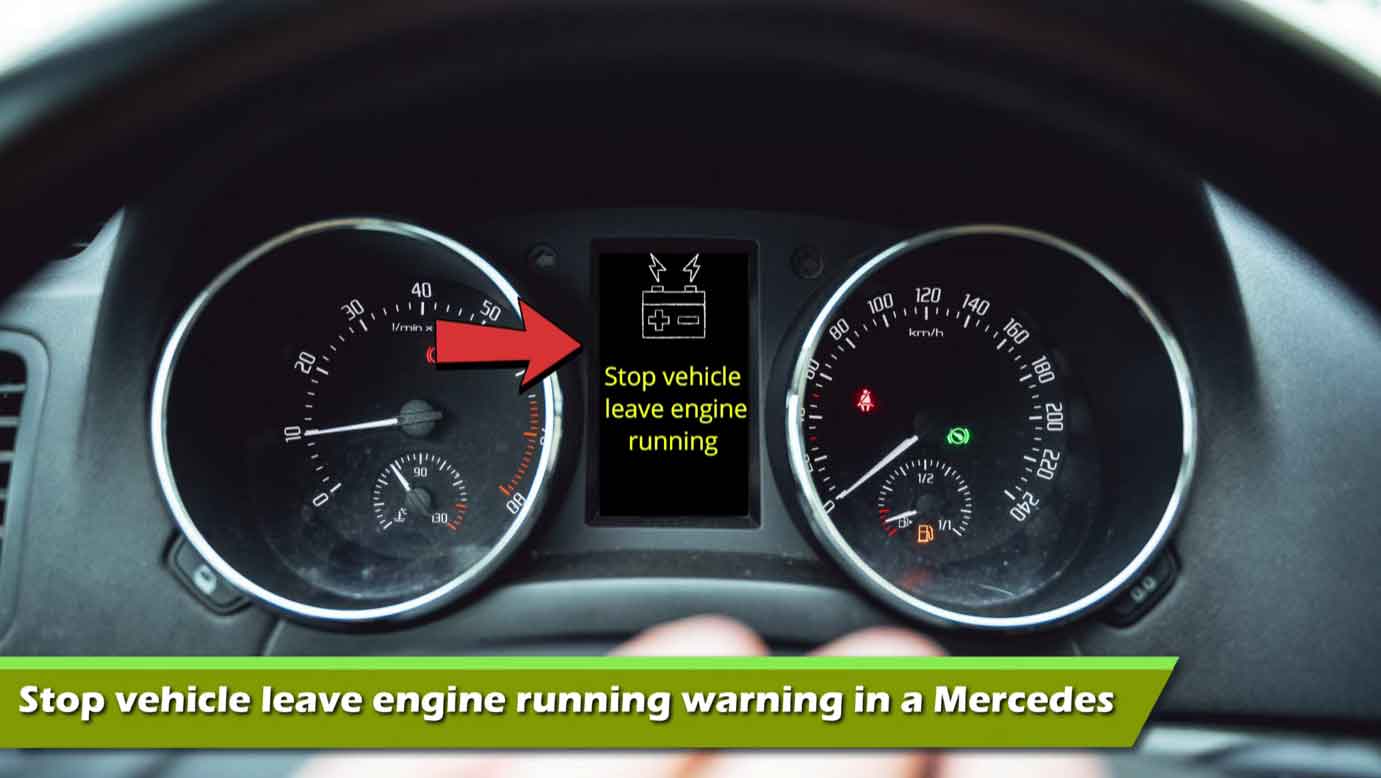
Has your Mercedes-Benz dashboard lit up with a message saying “stop vehicle, leave engine running”? You’re not alone. This warning pops up more often than you’d think. I’ve seen dozens of these cases in my shop over the years.
The good news? You can usually fix this problem yourself. You just need to know what’s causing it. In this guide, I’ll walk you through everything step by step.
I’ll explain what this warning means, why it appears, and how to make it go away. Let’s get started.
Understanding the Warning Message
This warning light tells you something’s wrong with your car’s electrical system. Your Mercedes is having trouble charging the battery properly.
When I service a car with this issue, it’s usually the charging system. The alternator might not be working right. Or the battery could be dying.
Your car’s computer watches the voltage levels constantly. When voltage drops too low, it triggers this warning. The system wants you to keep the engine running so the alternator can try to recharge the battery.
Think of it like your phone warning you about low battery. But in a car, losing power affects everything from your lights to your engine computer.
Quick Reset Method
Sometimes you can temporarily clear this warning. Here’s what I tell customers to try first.
Find a safe spot away from traffic. Pull over and park your Mercedes. Turn off the engine completely.
Wait about 30 seconds. Then restart your car.
Let it idle for 10 to 30 minutes. Keep the engine running the whole time. Watch your dashboard to see if the message disappears.
This works about half the time in my experience. It gives the alternator time to boost the battery charge. But it’s just a temporary fix.
If the warning comes back, you have a real problem. Time to check the electrical components.
Main Causes and How to Fix Them
From years under the hood, I’ve found five main reasons for this warning. Let me break down each one.
Dead or Weak Battery
Your battery should last 3 to 5 years. After that, it starts to wear out. Cold weather makes old batteries fail faster.
A weak battery can’t hold enough charge. Even if the alternator works fine, a bad battery triggers the warning.
How to Check It:
You need a multimeter for this test. You can buy one for $20 at any auto parts store.
Turn off your car. Connect the multimeter to the battery terminals. Red wire goes to positive, black to negative.
A healthy battery shows 12.6 volts. Anything below 12.4 volts means it’s weak.
Now start the engine. Check the voltage again while it’s running. It should read between 13.5 and 14.5 volts.
If it drops below 10 volts with the engine running, your battery is done. It needs replacement right away.
The Fix:
Replace the battery with a new one. Don’t try to save money with a cheap battery. Get a quality replacement that fits your Mercedes model.
When I install a new battery, the warning usually disappears immediately.
What It Costs:
Expect to pay $150 to $500 for a Mercedes battery. The exact price depends on your model and where you buy it.
Alternator Not Working
The alternator is your car’s power plant. It creates electricity while the engine runs. This electricity charges the battery and powers everything else.
When the alternator fails, your battery slowly drains. Eventually the voltage drops and triggers the warning.
In my shop, I’ve replaced hundreds of alternators. It’s one of the most common repairs on Mercedes vehicles.
How to Check It:
Use your multimeter again with the engine running. The voltage should stay between 13.5 and 14.5 volts.
If it reads lower, your alternator isn’t charging properly. If it’s higher than 15 volts, the voltage regulator inside the alternator is broken.
Listen for strange noises too. A failing alternator often makes grinding or whining sounds.
The Fix:
You’ll need to replace the alternator. This isn’t a beginner DIY job. The alternator is buried in the engine bay on most Mercedes models.
I recommend taking it to a qualified mechanic. They’ll remove the old alternator and install a new one.
What It Costs:
Parts and labor usually run $300 to $700. Your specific Mercedes model affects the final price.
Damaged Electrical Wires
Wires carry electricity from the alternator to the battery and throughout your car. These wires can get damaged over time.
Corrosion builds up on connections. Wires can crack or break. Loose connections cause voltage drops.
From experience, wire problems are tricky to find. You need to inspect carefully.
How to Check It:
Look at all visible wires near the battery and alternator. Check for green or white crusty buildup. That’s corrosion.
Look for cracked wire insulation. Check that all connections are tight.
A diagnostic scanner can help find hidden wire problems. These tools plug into your car’s computer port.
The Fix:
Clean corroded connections with a wire brush. Replace any damaged wires you find.
Tighten loose connections. Make sure battery terminals are snug.
Don’t ignore wire issues. They can cause electrical shorts or even fires.
Using Too Many Accessories
Modern cars have lots of devices that drain power. Phone chargers, GPS units, dash cams, and more.
I’ve seen customers with four devices plugged in at once. That puts huge stress on the electrical system.
If your battery is already weak, extra accessories push it over the edge.
How to Check It:
Unplug everything from your charging ports. Turn off the radio and GPS. Switch off all interior lights.
Wait a few minutes. See if the warning goes away.
If it does, you were simply using too much power.
The Fix:
Charge your battery fully before long trips. A battery charger costs about $50.
Use fewer accessories while driving. Only plug in what you really need.
Consider upgrading to a higher capacity battery if you use lots of devices.
Faulty Voltage Regulator
The voltage regulator controls how much power the alternator produces. It keeps voltage steady at the right level.
When this part fails, the alternator can’t regulate properly. You get too much voltage or too little.
Most modern alternators have the regulator built inside. You can’t replace it separately.
How to Check It:
Use your multimeter while the engine runs. Rev the engine from idle to 2000 RPM.
Watch the voltage reading. It should stay steady between 13.5 and 14.5 volts.
If voltage jumps around wildly, the regulator is bad.
The Fix:
Replace the entire alternator. The regulator can’t be fixed separately on most Mercedes models.
Prevention Tips
In my years as a mechanic, I’ve learned prevention is easier than repair. Here’s how to avoid this warning.
Clean your battery terminals every 6 months. Use a wire brush and baking soda solution. This prevents corrosion.
Have your alternator tested during oil changes. Most shops do this for free. It takes two minutes.
Check your drive belts regularly. The belt spins the alternator. A worn belt can’t transfer power properly. Replace cracked or glazed belts right away.
Inspect wiring when you change your oil. Look for damage or corrosion. Catch problems early.
Get your charging system tested once a year. This checks your battery, alternator, and wiring all at once. Many auto parts stores do this free.
Mercedes Models Most Affected
Certain Mercedes models get this warning more than others. Here’s what I see most often in my shop.
| Model | Years | Common Problems |
|---|---|---|
| C-Class (W205) | 2015-2020 | Alternator fails early, battery drains fast, wire corrosion |
| E-Class (W213) | 2016-2021 | Voltage regulator issues, battery dies young |
| S-Class (W222) | 2014-2019 | Alternator quits, old batteries |
| GLC-Class (X253) | 2016-2020 | Battery and alternator both fail, drive belt problems |
| GLE-Class (W166) | 2016-2021 | Alternator and regulator die, battery issues |
| GLS-Class (X166) | 2017-2021 | Electrical gremlins, alternator and battery trouble |
| A-Class (W177) | 2019-2021 | Alternator problems, battery wears out fast |
| CLA-Class (C118) | 2014-2020 | Alternator and belt issues, battery degrades |
| G-Class (W463) | 2015-2021 | Wire problems, alternator failures, voltage regulator |
| SL-Class (R231) | 2016-2019 | Alternator and battery fail, regulator issues |
If you own one of these models, pay extra attention to your charging system.
Final Thoughts
The “stop vehicle leave engine running” warning is serious. Don’t ignore it. Your car is telling you the electrical system needs help.
Most of the time, it’s either your battery or alternator. Both are fixable. The repair isn’t cheap, but it prevents bigger problems down the road.
A dead electrical system can strand you. It can also damage expensive computers in your Mercedes.
Fix the problem as soon as you see the warning. Regular maintenance prevents most charging system failures.
Take care of your Mercedes, and it’ll take care of you. I’ve seen these cars run for 200,000 miles with proper maintenance.
Frequently Asked Questions
What should I do first when I see this warning?
Pull over safely and keep your engine running. Don’t turn off the car. Check if you can see any obvious problems like a broken belt. Then decide if you can drive to a shop or need a tow.
Can I keep driving with this warning on?
No. Your battery will die completely. When that happens, your engine will stall. All electrical systems will fail. You could get stuck in traffic or on the highway.
How do I know if my alternator is bad?
Use a multimeter while the engine runs. You should see 13.5 to 14.5 volts. Lower than that means your alternator isn’t charging. You might also hear grinding noises from a failing alternator.
What tells me my battery is dying?
Watch for dim headlights. Your interior lights might flicker. The engine struggles to start. You hear clicking when you turn the key. Electrical features act weird or don’t work right.
Should I fix this myself or use a mechanic?
If you’re handy with tools, you can test the battery and check connections yourself. But alternator replacement is tough on most Mercedes models. I recommend a professional mechanic for that job.