
Monday to Saturday - 9:00 am -18:00 pm

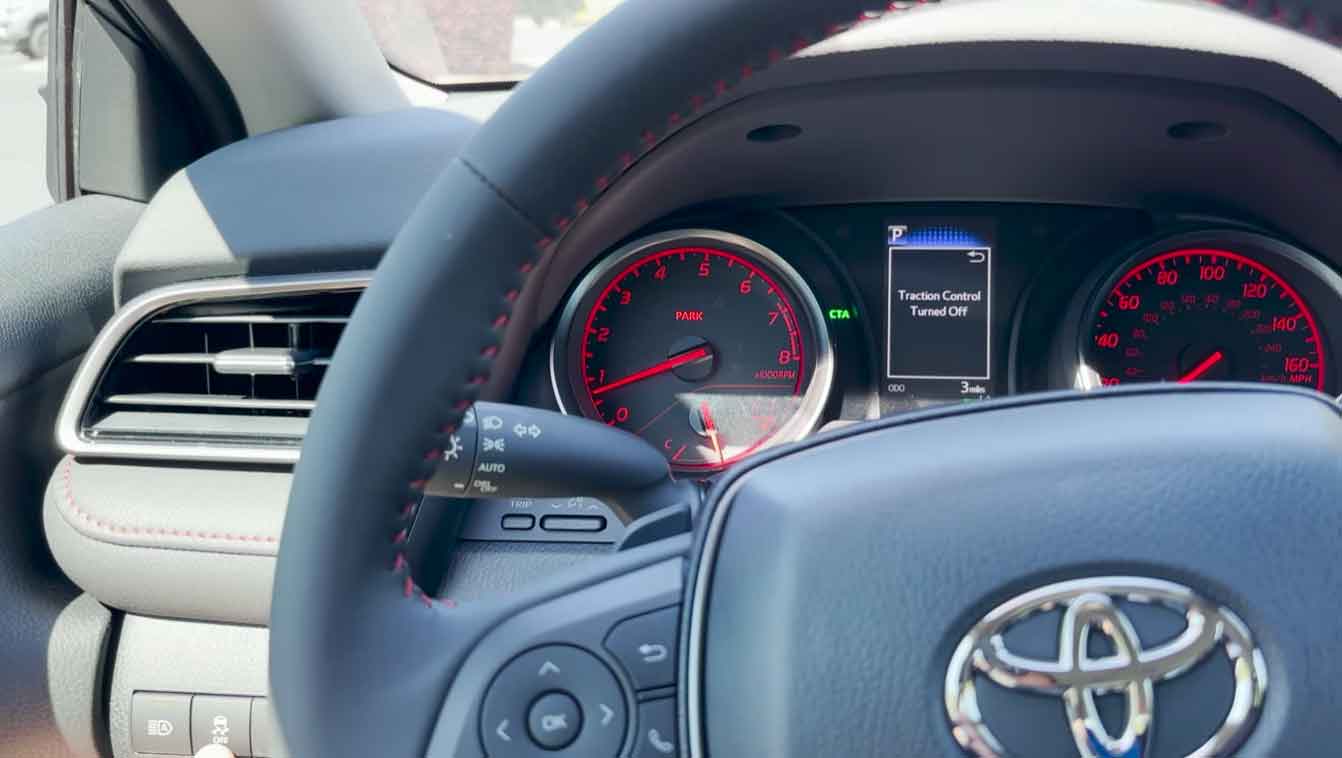
Your car starts spinning its wheels on ice. You feel the vehicle sliding sideways. Then suddenly, everything stabilizes on its own. That’s traction control doing its job.
From years under the hood, I’ve seen how this simple system saves drivers every winter. It works quietly in the background. Most people don’t even know it’s there until they need it.
Today, I’ll break down everything about traction control. You’ll learn what it does, when it activates, and why that dashboard light comes on. Let’s get started.
What Is Traction Control?
Traction control stops your wheels from spinning when they lose grip. It’s a safety feature built into modern vehicles.
Think of it this way. When you step on the gas too hard on ice, your wheels spin freely. They can’t grab the road. TCS detects this instantly and fixes it.
The system doesn’t create more grip. It just prevents your wheels from spinning uselessly. This helps you keep control of the vehicle.
In my shop, I explain it like this to customers: TCS is like a smart assistant. It watches your wheels constantly. When one starts spinning faster than it should, the system takes action immediately.
How TCS Actually Works
The process happens in milliseconds. Here’s what goes on behind the scenes.
Step 1: Constant Monitoring
Your car has sensors at each wheel. These sensors measure how fast each wheel spins. They send this data to the car’s computer dozens of times per second.
When I hook up my diagnostic scanner, I can see these readings in real time. It’s fascinating to watch.
Step 2: Detecting Wheel Slip
The computer compares all four wheel speeds. If one wheel suddenly spins much faster than the others, something’s wrong. That wheel has lost traction.
This happens on slippery surfaces. Snow, ice, mud, wet leaves – they all reduce grip. Your wheel spins but the car doesn’t move forward properly.
Step 3: Taking Corrective Action
Once the system spots a problem, it acts fast. It uses two main methods:
Applying the brakes: The system gently brakes the spinning wheel. This slows it down until it matches the other wheels.
Reducing engine power: The computer tells the engine to produce less power temporarily. With less power going to the wheels, they stop spinning so fast.
These corrections happen automatically. You might feel a slight pulsing through the pedals. That’s normal.
The Connection to ABS
Traction control shares many parts with your anti-lock braking system. Both systems use the same wheel sensors. They also use the same hydraulic brake components.
This is why problems with ABS often affect traction control too. When I diagnose one system, I always check the other.
Understanding the TCS Warning Light
That yellow light on your dashboard tells an important story. Let me explain what it means.
Normal Operation
When you start your car, the TCS light turns on briefly. This is just a system check. The light should turn off within a few seconds.
While driving on slippery roads, the light might blink rapidly. This is actually good news. It means the system is working. Your wheels are slipping and TCS is correcting the problem.
Warning Signs
If the light stays on constantly, you have a problem. The system has detected a fault. It may have shut itself off for safety reasons.
From my experience, this happens more often in winter. Road salt and moisture get into electrical connections. This causes false error codes.
Don’t ignore a steady TCS light. Get it checked soon. While your car is safe to drive, you’ve lost an important safety feature.
Common Problems That Trigger the Light
In my years of diagnosing these systems, I see the same issues repeatedly. Here are the top five:
1. Faulty Wheel Speed Sensors
These sensors get dirty or damaged. They sit right behind your wheels where they face constant abuse. Road debris, salt, and moisture all attack them.
I clean these sensors during routine brake jobs. It prevents many problems.
2. Damaged ABS Control Module
The computer that runs the system can fail. This is expensive to fix but thankfully rare. Moisture intrusion causes most module failures.
3. Broken Wiring
Wires running to the wheel sensors get damaged. They scrape against parts or corrode from road salt. Even a small break triggers the warning light.
4. Bad Tone Rings
Each wheel has a toothed ring that the sensor reads. If this ring gets damaged or dirty, the sensor can’t read it properly. Rust and brake dust are common culprits.
5. Water in Connectors
Electrical connectors near the wheels collect moisture. When water gets inside, it causes problems. I always spray these connectors with dielectric grease to protect them.
When Should You Use Traction Control?
The short answer: almost always. Keep it turned on.
Modern TCS systems are smart enough to help without getting in your way. Here’s when it really shines:
Wet Road Conditions
Rain makes roads slippery. Your tires can’t grip as well. TCS prevents wheelspin when you accelerate from a stop.
I drive with it on during every rainstorm. It’s saved me more than once.
Snow and Ice
This is where TCS proves its worth. Starting from a stop on snow is tricky. Too much gas and your wheels just spin. TCS manages the power perfectly.
Loose Surfaces
Gravel driveways, dirt roads, and muddy trails all reduce traction. The system helps you maintain control on these surfaces.
Steep Hills
Going uphill on slippery surfaces is dangerous without TCS. The system prevents your wheels from spinning as you climb.
When to Turn It Off
There are rare situations where you might want to disable TCS:
- When you’re stuck in deep snow or mud. Sometimes you need the wheels to spin to dig yourself out.
- When driving with snow chains. Some vehicles recommend turning off TCS with chains installed.
- During track driving or racing (if applicable to your vehicle).
Most cars have a button to disable the system temporarily. It usually turns back on automatically when you restart the car.
Cost to Replace TCS Components
Let me give you realistic repair costs from my shop.
TCS Switch Replacement
If the button itself fails, expect to pay $100 to $150 total. The part costs about $60 to $80. Labor adds another $40 to $70.
This is a quick repair. It usually takes under an hour.
Wheel Speed Sensor Replacement
A single sensor costs $80 to $150 depending on your vehicle. Labor runs $75 to $125 per sensor.
Total cost per sensor: $155 to $275.
I’ve replaced hundreds of these. The rear sensors usually last longer than the front ones.
ABS Control Module Replacement
This is the expensive repair. The module itself costs $400 to $1,000. Labor adds another $200 to $400.
Total: $600 to $1,400.
Many modules can be rebuilt for less. I always check if that’s an option before installing a new one.
Wiring Repairs
Fixing damaged wires costs $100 to $300 depending on location. Some wires are easy to access. Others require removing wheels or trim panels.
Money-Saving Tip: Get problems diagnosed early. A dirty sensor costs $20 to clean. Waiting until it fails completely costs $200+ to replace.
TCS vs ESC vs ABS: What’s the Difference?
These three systems confuse many people. They work together but do different jobs.
Traction Control System (TCS)
Job: Stops wheels from spinning during acceleration.
When it activates: When you press the gas pedal and wheels start to slip.
How it helps: Prevents wheelspin on slippery surfaces.
Anti-Lock Braking System (ABS)
Job: Stops wheels from locking up during braking.
When it activates: When you brake hard and wheels start to skid.
How it helps: Lets you steer while braking hard.
In my experience, ABS saves more lives than any other car safety feature.
Electronic Stability Control (ESC)
Job: Stops your car from spinning out or sliding sideways.
When it activates: When the car starts to skid or lose directional control.
How it helps: Brakes individual wheels to keep you pointed straight.
How They Work Together
All three systems share sensors and components. They communicate with each other constantly. When one activates, the others are ready to help.
Think of them as a safety team. Each member has a specific role. Together, they keep you safe.
Frequently Asked Questions
Should I drive with traction control on or off?
Keep it on. There’s almost no reason to turn it off during normal driving.
I’ve been a mechanic for over 15 years. I always drive with TCS enabled. The system is designed to help, not interfere.
How do I fix the traction control warning light?
Start by checking for error codes. Use an OBD2 scanner to read what’s stored in the computer. Most auto parts stores will scan your car for free.
Sometimes the light comes on due to a temporary glitch. Try this simple reset:
- Turn off your car completely
- Wait 30 seconds
- Disconnect the negative battery cable for 1 minute
- Reconnect everything and start the car
If the light comes back on immediately, you have a real problem. Get it diagnosed by a professional with proper scan tools.
Can I drive with the TCS light on?
Yes, your car is safe to drive. But you’ve lost the traction control safety feature.
Drive more carefully. Reduce your speed in bad weather. Avoid sudden acceleration on slippery surfaces.
Get the problem fixed as soon as you can. Don’t put it off for months.
How many computer modules are in my car?
Modern vehicles have 30 to 100 separate computers. We call them ECUs or electronic control units.
Basic economy cars have fewer. Luxury vehicles can have 100 or more. Each one controls specific systems.
I’ve worked on high-end cars with over 150 ECUs. It’s incredible how complex vehicles have become.
Does traction control use more gas?
No, not really. When TCS activates, it might reduce engine power briefly. But this happens for only a second or two.
The effect on fuel economy is too small to measure. You won’t notice any difference at the pump.
Final Thoughts
Traction control is one of the best safety features in modern cars. It works quietly in the background. You might never notice it until you really need it.
Keep the system turned on. Address warning lights promptly. Have your wheel sensors checked during routine maintenance.
From my years in the shop, I can tell you this: TCS has prevented countless accidents. It’s especially valuable in winter weather.
Take care of your vehicle’s safety systems. They’re there to protect you and your passengers. When that TCS light blinks during a snowstorm, you’ll be grateful it’s working.
Stay safe out there, and keep those wheels gripping the road.