
Monday to Saturday - 9:00 am -18:00 pm

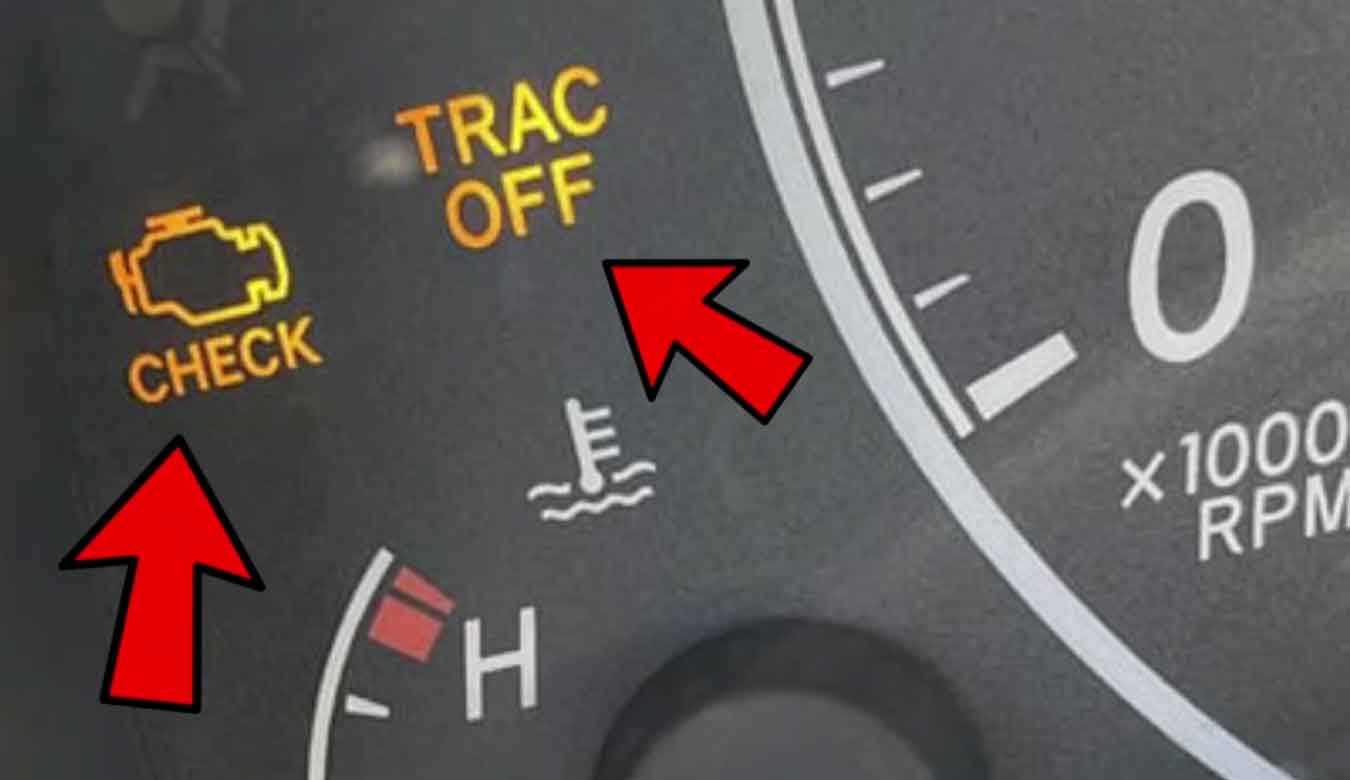
Do you see the trac off light and check engine light on your Toyota dashboard? Are both lights on at the same time? You’re not alone.
From years under the hood, I can tell you this is one of the most common issues I see in my shop. These two lights appearing together mean your Toyota is telling you something important.
In this guide, I’ll walk you through everything you need to know. You’ll learn what these lights mean, why they come on, and how to fix them. Let’s dive in.
What Does Trac Off And Check Engine Light Mean?
Let me explain this in simple terms.
Your Toyota has two important systems working together. The traction control system (TRAC) helps your wheels grip the road. The engine management system keeps your motor running smoothly.
When both lights show up on your dash, it means trouble. Your car has detected a problem that affects safety systems.
Here’s what’s happening:
The check engine light comes on first. It spots an issue with the engine or emissions system. Then your Toyota turns off traction control as a safety step. That’s when you see the trac off light.
In my shop, I explain it like this: Your car is protecting you. It won’t let certain safety features work when the engine isn’t running right.
Why Do These Lights Come On Together?
Your Toyota is smart. Really smart.
The computer system connects the engine and traction control. When one system has a fault, it affects the other.
From my experience, here’s why both lights appear:
The engine control module (ECM) finds a problem. It could be something with sensors, spark plugs, or fuel delivery. Once it detects this fault, it automatically shuts down traction control.
Why? Because traction control needs accurate engine data to work properly. If the engine isn’t running correctly, the traction system can’t do its job safely.
So your Toyota plays it safe. It turns off traction control until you fix the engine problem.
Common Problems That Trigger These Warning Lights
When I service cars like this, I check for specific issues. Here are the most common culprits I find:
1. Engine Not Firing Properly
This is what I see most often in my bay.
One or more cylinders stop firing correctly. This makes your engine shake and run rough. It also creates extra pollution in the exhaust.
Signs you’ll notice:
- Engine feels shaky
- Loss of power when driving
- Rough idle at stop lights
- Poor fuel economy
2. EVAP System Leak
The Evaporative Emission Control System keeps fuel vapors contained. A small leak anywhere in this system sets off the check engine light.
In my years working on Toyotas, I’ve found these leaks in:
- Vapor hoses that crack with age
- The purge valve going bad
- Charcoal canister issues
3. Oxygen Sensor Problems
The O2 sensor sits in your exhaust pipe. It measures oxygen levels and sends data to the computer.
When this sensor fails, your engine runs too rich or too lean. I replace these sensors all the time. They wear out after 80,000 to 100,000 miles.
What happens with a bad O2 sensor:
- Poor gas mileage
- Rough running engine
- Failed emissions test
- Both warning lights on
4. Gas Cap Not Sealed
This one surprises people. But I fix this issue at least once a week.
Your gas cap seals the fuel system. A loose cap lets fuel vapors escape. The computer sees this as an EVAP leak.
Check these things:
- Is the cap clicked on tight?
- Is the rubber seal cracked?
- Does the cap thread on smoothly?
Sometimes a $15 gas cap solves the whole problem.
5. Bad Spark Plugs Or Wires
Spark plugs need replacement every 60,000 to 100,000 miles. Old plugs don’t fire properly. This causes misfires.
From working in my shop, I can spot bad plugs quickly. The engine stumbles. It lacks power. Sometimes it backfires.
Warning signs:
- Hard to start the engine
- Engine bucks when accelerating
- Check engine light flashing
- Smell of raw gas
6. Wheel Speed Sensor Failure
The ABS system has sensors at each wheel. These sensors can fail or get dirty.
When I diagnose these, I look for:
- ABS light on the dash
- Traction control not working
- Speedometer acting weird
- Brake pedal pulsing oddly
Dirty sensors are easy to clean. Failed sensors need replacement.
7. Catalytic Converter Trouble
The catalytic converter cleans your exhaust. It removes harmful gases before they leave the tailpipe.
These converters can fail or get clogged. I’ve replaced hundreds of them. They often fail between 100,000 and 150,000 miles.
You’ll notice:
- Loss of power going uphill
- Rattling sound under the car
- Rotten egg smell
- Terrible fuel economy
Step-By-Step Diagnosis Methods
Let me show you how I figure out what’s wrong. These are the exact steps I use in my shop.
Method 1: Scan The Computer Codes
Every Toyota built after 1996 has an OBD-II port. This port lets you read diagnostic codes.
Here’s my process:
Step 1: Find the OBD-II port. It’s under the dash on the driver’s side. Usually near the steering column.
Step 2: Plug in your scanner. I use a good quality scanner in my shop. But you can get a basic one for $30 to $50.
Step 3: Turn the key to “ON” but don’t start the engine.
Step 4: Follow the scanner instructions to read codes.
Step 5: Write down all the codes. Don’t clear them yet.
Common codes I see:
- P0420 (catalytic converter)
- P0300 to P0304 (misfires)
- P0171 or P0174 (lean fuel mixture)
- P0440 to P0457 (EVAP system)
- P0135 to P0141 (oxygen sensors)
The codes point you to the problem area.
Method 2: Visual Check Under The Hood
Sometimes I find the problem just by looking. No fancy tools needed.
I check these areas:
- All vacuum hoses for cracks
- Wiring for damage or corrosion
- Engine oil level and condition
- Coolant level
- Any obvious leaks
In my experience, loose connections cause a lot of problems. A wiggling test of wires and connectors often reveals issues.
Method 3: Inspect The Gas Cap
This takes 30 seconds. But it’s important.
Remove the cap. Look at the rubber seal. Is it cracked? Damaged? Hard and brittle?
Try this test:
- Put the cap back on
- Turn it until it clicks three times
- Make sure it’s tight
If the cap looks bad, replace it. Wait a day or two. See if the lights go off.
How To Fix The Problem
Now let’s fix what’s broken. Here are solutions for each common issue.
Fix 1: Repair Engine Misfires
First, identify which cylinder is misfiring. The code tells you.
My repair steps:
- Remove the spark plug from that cylinder
- Check the plug condition
- Replace if worn or fouled
- Check the ignition coil
- Test the fuel injector
- Check compression if needed
Most times, new spark plugs solve the misfire. Cost: $50 to $150 for a full set.
Fix 2: Repair EVAP Leaks
EVAP leaks can be tricky. In my shop, I use a smoke machine. It pumps smoke into the system. Then I look for smoke leaking out.
Common fixes:
- Replace cracked hoses ($20 to $40)
- Replace purge valve ($50 to $100)
- Replace gas cap ($15 to $30)
Fix 3: Replace Oxygen Sensors
This job takes me about 30 minutes per sensor.
Here’s the process:
- Let the engine cool down
- Spray penetrating oil on the sensor
- Wait 10 minutes
- Use a special oxygen sensor socket
- Remove the old sensor
- Install the new one
- Clear the codes
Cost for parts: $50 to $150 per sensor.
Fix 4: Change Spark Plugs And Wires
I recommend doing all plugs at once. Don’t mix old and new.
My steps:
- Remove one wire at a time
- Check the boot for damage
- Remove the old plug
- Gap the new plug correctly
- Install with proper torque
- Replace the wire
Use quality plugs. Cheap ones don’t last. I prefer OEM Toyota plugs or NGK brand.
Fix 5: Clean Or Replace Wheel Sensors
Wheel speed sensors get covered in road grime. Cleaning them often fixes the problem.
What I do:
- Remove the wheel
- Locate the sensor
- Clean it with brake cleaner
- Check the wiring
- Reinstall everything
If cleaning doesn’t work, replace the sensor. Cost: $50 to $100 per sensor.
Fix 6: Replace The Catalytic Converter
This is expensive. But sometimes necessary.
A new catalytic converter costs $400 to $2,000. It depends on your Toyota model.
I always check if the converter is under warranty first. Many have extended emissions warranties.
Resetting The Warning Lights
After fixing the problem, you need to reset the lights. Here are three methods I use.
Method 1: Fix The Problem First
This is most important. Don’t just clear the lights without fixing the issue.
Once you repair the fault, the computer needs to run tests. This takes several drive cycles.
A drive cycle includes:
- Cold start
- City driving
- Highway driving
- Idle time
Usually after 50 to 100 miles, the lights turn off on their own.
Method 2: Use Your Scanner
Most OBD-II scanners can clear codes.
Steps I follow:
- Connect the scanner
- Turn the key on
- Select “Clear Codes”
- Follow the prompts
- Turn the key off
- Wait 30 seconds
- Start the engine
The lights should be off. If they come back immediately, the problem isn’t fixed.
Method 3: Disconnect The Battery
This works, but I don’t recommend it as the first choice.
Here’s why:
Disconnecting the battery resets everything. Your radio presets go away. Your clock resets. Your computer loses its learned settings.
If you must do this:
- Turn off the engine
- Disconnect the negative cable
- Wait 15 minutes
- Reconnect the cable
- Start the engine
Your Toyota will need to relearn its idle and shift patterns. This takes a few days of driving.
Prevention Tips To Keep Lights Off
From my years working on cars, I’ve learned prevention saves money. Here’s what I tell my customers.
Tip 1: Follow Your Maintenance Schedule
Toyota provides a maintenance schedule in your owner’s manual. Follow it.
Key services:
- Oil changes every 5,000 miles
- Spark plugs at recommended intervals
- Air filter replacement
- Fuel filter replacement
Regular maintenance catches small problems before they become big ones.
Tip 2: Always Tighten Your Gas Cap
Every time you fill up, make sure the cap clicks three times. This simple habit prevents EVAP codes.
Replace your gas cap every 5 years. The seal gets hard and cracks with age.
Tip 3: Check Fluid Levels Monthly
I tell customers to check these once a month:
- Engine oil
- Coolant
- Brake fluid
- Power steering fluid
Low fluids cause problems. They’re easy to check and top off.
Tip 4: Drive Smoothly
Aggressive driving is hard on your car. Fast starts and hard stops wear parts quickly.
Drive gently:
- Accelerate smoothly
- Brake gradually
- Avoid flooring the gas pedal
- Don’t overrev the engine
Your car will last longer.
Tip 5: Don’t Overload Your Vehicle
Every car has a weight limit. Overloading stresses the engine and transmission.
Check your owner’s manual for weight limits. Stay within them.
Tip 6: Use Quality Fuel
I recommend using Top Tier gasoline. It has better cleaning additives.
Cheap gas can cause carbon buildup. This leads to misfires and sensor problems.
Final Thoughts
The trac off and check engine light on your Toyota is not something to ignore. These lights mean your vehicle needs attention.
In my shop, I’ve diagnosed hundreds of these cases. Most are easy to fix. Some require more work. But all need proper diagnosis.
Remember these key points:
- Both lights together indicate an engine problem
- Get the codes read first
- Fix the root cause, not just the symptoms
- Follow your maintenance schedule
- Don’t ignore warning lights
If you’re not comfortable doing the repairs yourself, find a good mechanic. The money you spend on proper diagnosis saves you from expensive guesswork.
Your Toyota is built to last. Take care of it, and it will take care of you.
Have questions about your specific situation? Drop a comment below. I’ll help you figure it out based on my experience.
Stay safe out there, and keep those warning lights off your dash!
Disclaimer: This guide provides general information based on automotive repair experience. Always consult your vehicle’s owner manual and consider professional diagnosis for specific issues.
My check engine light is on also traction control light is on. I had upstream and downstream sensors replaced and the MAF sensor replaced. check engine light and traction control light are still on. I was told I could drive it like that no problem. when I was driving battery light, ABS light came on so replaced the alternator. Drove it for half a day and the check engine and trac light still on. I am still told by mechanic that it is ok to drive. What do I do now.
Hi Annette
Based on what you’ve described, this doesn’t look like a single failed part—it looks like the original fault was never properly diagnosed.
In Toyota systems, the check engine light triggers first, and the vehicle then disables traction control (TRAC). So if both lights are still on, it means the engine-related fault is still active, regardless of the parts that were replaced.
The fact that you later had a battery light and ABS light come on is important. That points toward a possible electrical issue, charging system instability, or wheel speed sensor/ABS fault, all of which can interfere with traction control.
At this point, replacing more parts without data is just guesswork.
What needs to happen now:
A full diagnostic scan (engine + ABS systems, not just basic codes)
Check for active and pending codes
Inspect wiring, grounds, and connections, especially after recent repairs
Verify wheel speed sensors and ABS module data
Driving it like this might seem fine short-term, but it’s not a proper or safe long-term solution, especially with multiple warning systems involved.
I’d strongly recommend getting a second opinion from a diagnostic-focused technician and asking for the exact fault codes. Once you have those, the issue can be pinpointed accurately.