
Monday to Saturday - 9:00 am -18:00 pm

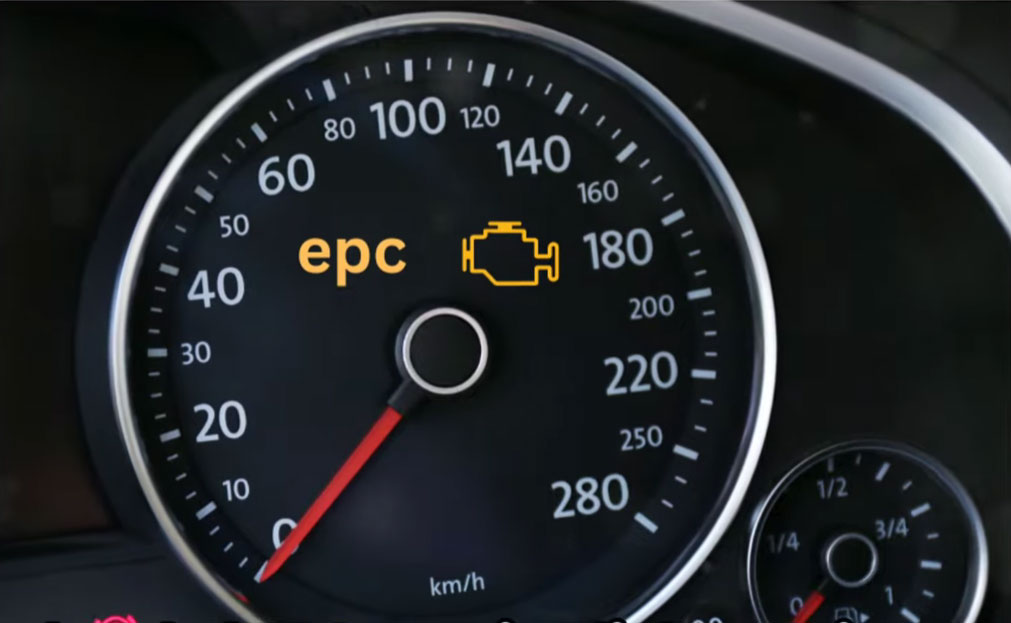
The EPC light just came on in your VW Golf. Your stomach drops. You wonder if your car is about to break down on the highway.
Here’s what you need to know right now: The EPC light doesn’t always mean something catastrophic. But it also isn’t something to ignore.
I’ve diagnosed hundreds of EPC light issues on VW Golfs over 15 years. Some were simple fixes. Others needed serious repairs. The difference? Catching it early and knowing what you’re dealing with.
In this guide, I’ll walk you through exactly what the EPC light means, whether it’s safe to drive, what causes it, and how much it typically costs to fix. By the end, you’ll know whether you need to book a mechanic today or if you can safely drive to one tomorrow.
What the EPC Light Actually Means
EPC stands for Electronic Power Control. It’s VW’s name for the electronic throttle system in your Golf.
Think of it like this: Your engine used to have a cable connecting the gas pedal directly to the throttle. Modern Golfs don’t have that cable. Instead, a computer reads your foot on the pedal and tells an electric motor to open the throttle.
When the EPC light comes on, the car’s computer detected a problem in that system—either with a sensor, the throttle itself, or the wiring that connects them.
What it’s NOT: The EPC light is not your check engine light. They’re different systems. Your Golf might have one, the other, or both lit up at the same time.
Is It Safe to Drive?
The honest answer: It depends on what caused the light.
Here’s what I tell customers in my shop:
Safe to drive (with caution):
- Sensor fault detected but throttle responding normally
- Wiring issue that doesn’t affect throttle operation
- Loose gas cap (yes, this can trigger it)
Not safe to drive:
- Throttle stuck open
- Throttle not responding to pedal input
- Multiple fault codes related to engine management
How to know which one you have:
When you press the gas pedal, does the engine respond normally? If yes, you can usually drive carefully to a mechanic. If the car hesitates, surges, or feels unresponsive, pull over and call for a tow.
In the UK: If the EPC light is on, your car will still pass MOT if it’s not related to emissions. But don’t wait—it will eventually affect performance or emissions.
In the US: The light alone won’t fail inspection in most states, but again, fix it soon.
Most Common Causes (In Order of What I Find First)
I always check these in this order. About 80% of EPC lights I diagnose fall into the first three categories.
1. Mass Air Flow (MAF) Sensor Fault
What it is: This sensor measures how much air is entering the engine so the computer can adjust fuel accordingly.
Why it fails: Carbon buildup. Dirt. Oil in the intake. VW Golfs from 2009-2015 are particularly prone to this.
How it feels when it’s failing: Rough idle, hesitation when accelerating, sometimes the light blinks while driving.
Cost to fix: $150–$400 depending on model year and whether you need the sensor cleaned or replaced.
DIY potential: Yes, if you’re mechanically comfortable. Takes about 30 minutes. Cost: $80–$150 for the sensor alone.
2. Throttle Body Fault
What it is: The electric motor that actually opens and closes the throttle.
Why it fails: Carbon buildup inside the throttle. Worn motor. Corrosion on connectors.
How it feels: Usually the car still drives, but acceleration feels lazy or the EPC light stays on constantly.
Cost to fix: $250–$600. Sometimes just cleaning ($150–$250). Sometimes replacement ($400–$600).
DIY potential: Cleaning yes, replacement no. Cleaning takes an hour and costs $80–$120 in parts.
3. Faulty Throttle Position Sensor (TPS)
What it is: A sensor that tells the computer exactly where the throttle is positioned.
Why it fails: Electrical connector corrosion. Sensor wear. Water damage.
How it feels: The light comes on but the car drives fine. Sometimes it flickers on and off.
Cost to fix: $120–$350.
DIY potential: Yes, if you can access the sensor under the hood. About 20 minutes work.
4. Vacuum Leak
What it is: A crack or loose hose in the intake system that lets unmetered air in.
Why it fails: Age, heat, or accidentally disconnected during another repair.
How it feels: Rough idle, hissing sound from under the hood, EPC light often accompanied by a check engine light.
Cost to fix: $50–$200 depending on which hose is damaged.
DIY potential: Yes. You can find it yourself by listening for a hissing sound with the engine running. Fixing it depends on the location.
5. Connectors and Wiring Issues
What it is: Loose, corroded, or damaged connectors in the throttle system circuit.
Why it fails: Water intrusion, corrosion, vibration loosening a connector.
How it feels: The light comes on intermittently or stays on constantly. Driving is usually unaffected.
Cost to fix: $50–$200 if you find a loose connector. $200–$400 if wiring needs repair.
DIY potential: Yes, for reconnecting loose plugs. No, if wiring is damaged.
6. Fuel Pump Relay (Rare but Worth Knowing)
What it is: A relay that controls power to the fuel pump.
Why it fails: Electrical burn-out, moisture in the connector.
How it feels: The car might start fine but hesitate under load. EPC light often comes on with a fuel supply error code.
Cost to fix: $80–$250.
DIY potential: Yes, if you can locate the relay box. Replacement is simple.
How to Diagnose the Problem
You’ll need a diagnostic scanner. This isn’t optional if you want to know what’s actually wrong.
Step 1: Get the Fault Codes
Most auto parts stores will scan for free. In the US, look for Autozone or O’Reilly Auto. In the UK, find an independent garage willing to do a quick scan.
Write down every code. Don’t just say “I have a P0101 code.” Ask for the exact description.
Common codes you might see:
- P0101: Mass or Volume Air Flow Circuit Range/Performance Problem
- P0122: Throttle/Pedal Position Sensor Low Input
- P0123: Throttle/Pedal Position Sensor High Input
- P0505: Idle Air Control System Malfunction
- P0641: Sensor B Reference Voltage Circuit Low
Step 2: Clear the Codes and Drive
After the scan, have the codes cleared (most shops do this free). Drive for 50 miles. Does the light come back?
If it doesn’t come back, it was a one-time glitch—sometimes moisture or a loose connector. Check your gas cap and make sure it’s tight.
If it does come back, the fault is real and repeating.
Step 3: Physical Inspection
Look at:
- The MAF sensor connector (is it loose, corroded, or wet?)
- The throttle body (can you see carbon buildup?)
- Vacuum hoses (are any cracked or loose?)
- Air filter (is it extremely dirty?)
You don’t need tools for this. Just look.
Step 4: Decide: DIY or Mechanic?
If the codes point to a MAF sensor, throttle position sensor, or loose connector, you can probably handle it yourself if you’re comfortable working on cars.
If it’s a throttle motor failure or fuel pump relay, it’s still manageable DIY.
If you’re unsure, a trusted independent mechanic will charge $100–$150 just to diagnose and advise you. That’s money well spent if it saves you from buying parts you don’t need.
Cost to Fix (by Part and Region)
These are real-world costs I see in my shop and from trusted shops across the US and UK.
MAF Sensor
- Parts only: $80–$200
- Labor to replace: $100–$200
- Total at a shop: $200–$400
- DIY savings: $100–$200
Throttle Body Cleaning
- Labor only: $150–$250
- At a dealership: Add 30% more
Throttle Body Replacement
- Parts: $150–$350
- Labor: $150–$250
- Total: $300–$600
Throttle Position Sensor
- Parts: $40–$100
- Labor: $100–$150
- Total: $150–$250
Vacuum Hose Repair
- Parts: $20–$80
- Labor: $50–$100
- Total: $80–$180
Fuel Pump Relay
- Parts: $30–$80
- Labor: $50–$100
- Total: $80–$180
Regional note: London, Manchester, and major UK cities run 20–30% higher than small towns. Same pattern applies to US coasts vs. inland areas.
Dealership vs. Independent: VW dealerships charge 1.5× to 2× more for the same work. For an EPC light diagnosis and repair, go independent unless it’s warranty work.
Common Mistakes Drivers Make
Mistake 1: Ignoring It Because the Car Feels Fine
I’ve had customers drive for months with the EPC light on because “the car still runs.” Then the throttle sticks wide open at a red light, or the car stalls on the highway.
Don’t do this. Diagnose it within a week.
Mistake 2: Replacing Parts Without Scanning
A customer once told me they replaced their MAF sensor, throttle position sensor, AND air filter because they thought one of those “had to be” the problem.
It was a loose connector. Cost them $400 to fix a $0 problem.
Always scan first. Always.
Mistake 3: Assuming It’s the Throttle Body
The throttle body gets blamed for every EPC light. It’s usually not. Most of the time it’s the MAF sensor or a sensor fault.
Mistake 4: Buying Used Parts
EPC faults are often sensor-related. A used sensor might work today and fail tomorrow. Buy new sensors.
Throttle bodies? You can risk a used one if the price difference is significant and you have a warranty.
Mistake 5: Not Checking the Gas Cap
A loose or missing gas cap can trigger the EPC light on some Golfs. It’s the first thing I check. Takes 10 seconds.
FAQ
Q: Can I unplug the EPC light? A: No. You can unplug the sensor, but the computer will detect that and throw a different code. You can’t trick the system. And unplugging sensors can be dangerous—you might lose throttle control.
Q: Will the EPC light go away on its own? A: Only if it was a one-time electrical glitch (moisture, loose connector that reconnected). If it comes back after clearing, the fault is real.
Q: Should I go to a VW dealership or an independent mechanic? A: For an EPC light, independent is fine. Dealerships will charge more and often replace parts instead of diagnosing. Independents are better at troubleshooting. Reserve the dealership for warranty claims only.
Q: Is EPC light the same as check engine light? A: No. EPC is Electronic Power Control (throttle system). Check engine is broader (emissions, catalytic converter, oxygen sensors, etc.). You can have one without the other.
Q: What if I have both the EPC light AND the check engine light on? A: Scan for both sets of codes. Often one problem triggers both. Example: A vacuum leak can trigger both EPC (because the computer detects air it didn’t measure) and check engine (because it affects fuel trim). Fix the root cause and both lights may clear.
Q: How long can I drive with the EPC light on? A: If the car drives normally, a few hundred miles is safe. If it hesitates, surges, or idles roughly, don’t drive it. Get it scanned the same day.
Q: Will the EPC light affect my fuel economy? A: Yes. Most EPC faults cause the computer to run the engine in “limp mode”—richer fuel mixture, less aggressive timing. You’ll lose 10–20% fuel economy. Another reason to fix it soon.
Q: Can I drive on the highway with the EPC light on? A: Only if the car is responding normally to throttle input and there are no hesitations. If you’re unsure, don’t risk it. Highway driving puts more stress on the throttle system.
Common Mistakes & Myths
Myth: “The EPC light means my engine is about to fail.” False. It’s the throttle system, not the engine itself. Your engine is fine.
Myth: “I need to go to the dealership to fix it.” False. Any competent mechanic can diagnose and fix EPC issues. Independents often do it cheaper and faster.
Myth: “The EPC light will clear itself if I drive enough.” False. Some one-time glitches clear themselves. But if the light comes back, you have a real fault that won’t go away without repair.
Myth: “I can save money by ignoring it.” False. A small fault now becomes an expensive one later. A MAF sensor fault can eventually damage your catalytic converter if left long enough.
What to Do Next
Today:
- Check that your gas cap is tight.
- If the EPC light is flashing (not solid), don’t drive the car. Call a tow truck.
- If it’s solid, drive carefully to an auto parts store and get it scanned for free.
This Week:
- Write down the fault codes you get.
- Take the codes to a trusted independent mechanic and ask for a diagnosis.
- Ask them to show you the fault—don’t just take their word.
- Get a quote before any work begins.
Before You Pay:
- Make sure they scanned it (not just guessed).
- Make sure they identified which sensor, relay, or connector is actually at fault.
- Ask what they’re replacing and why.
- Get it in writing.
If you do the work yourself:
- Watch a YouTube video for your specific model year first.
- Take photos before you disconnect anything.
- Buy OEM or quality aftermarket parts (not the cheapest option).
- Clear the codes after and drive to confirm the light doesn’t come back.
Conclusion
The VW Golf EPC light is annoying, but it’s usually fixable. Nine times out of ten, it’s the MAF sensor, a throttle body issue, or a loose connector.
The key is to diagnose it quickly. Scan for codes. Don’t guess. And fix it before a small problem becomes a big one.
If you’re comfortable working on cars, most EPC fixes are DIY-friendly. If you’re not, an independent mechanic will do it cheaper and faster than a dealership.
Drive safe, and get it checked this week