
Monday to Saturday - 9:00 am -18:00 pm

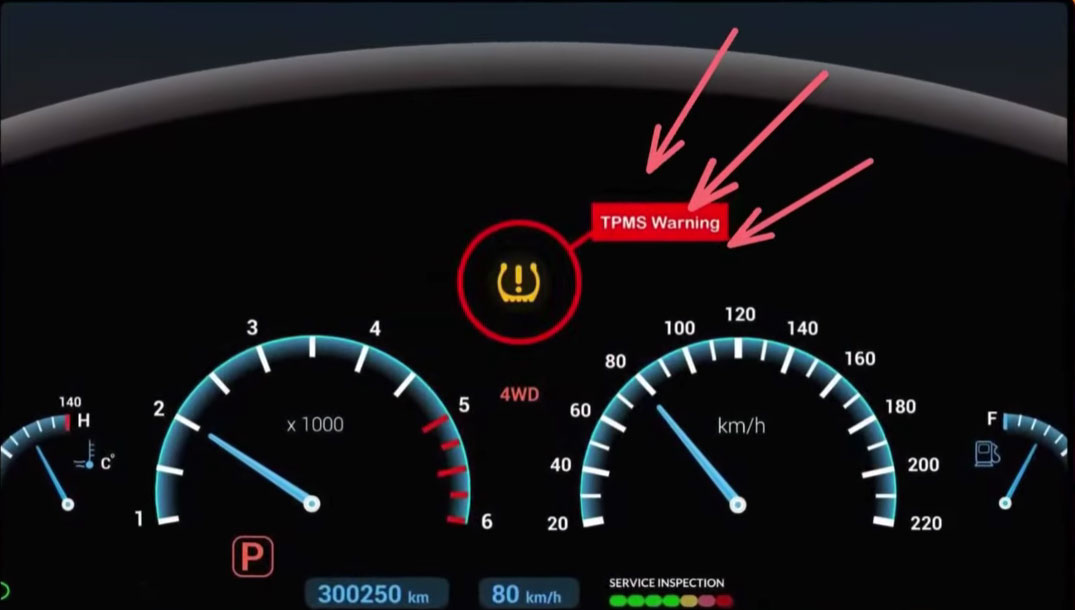
You’re driving your Acura when a warning light pops up on your dashboard: “Check TPMS System.”
Your heart sinks. You think about expensive sensor replacements. You wonder if it’s safe to drive.
Here’s the truth: Most TPMS warnings are simple fixes. You might just need to check your tire pressure. But sometimes, a sensor really is broken.
In this guide, I’ll explain what that warning actually means, how to diagnose the problem yourself, and exactly when you need a mechanic. By the end, you’ll know whether you’re looking at a $5 fix or a $200 repair—and you’ll feel confident either way.
What TPMS Means
TPMS stands for Tire Pressure Monitoring System.
It’s a safety system in your Acura that watches the air pressure in all four tires. If pressure gets too low, it sends a signal to your dashboard and triggers the warning light.
Think of it like a smoke detector for your tires.
The system has sensors inside or on each tire valve stem. These sensors measure pressure constantly while you drive. If one tire drops below the safe level, you’ll see that warning light.
Acura uses TPMS because low tire pressure is dangerous. Underinflated tires can overheat, fail, and cause accidents. They also wear out faster and reduce your fuel economy.
The TPMS warning is telling you: Something isn’t right with your tire pressure.
Why Your Acura Shows This Warning
Your Acura has a tire pressure sensor in each wheel. These sensors talk wirelessly to a receiver in your car.
Here’s what happens:
When a tire loses pressure, the sensor detects it and sends an alert. The receiver picks up that signal and lights up your dashboard warning.
The system also has a “master” sensor that checks if all four sensors are working. If a sensor battery dies or stops responding, you’ll see the warning.
So the “Check TPMS System” message means one of two things:
One or more of your tires has low pressure.
One or more of your sensors is broken or dying.
That’s it. Nothing else.
Most Common Causes
Low Tire Pressure (80% of cases)
This is why you see the warning 8 times out of 10.
Tires lose pressure naturally. Cold weather makes it worse—every 10 degrees Fahrenheit drop can reduce tire pressure by 1-2 PSI (pounds per square inch).
If you see the warning in winter, it’s almost always low pressure.
You might also have a slow leak from a small nail, a worn valve stem, or a bent rim.
Dead Sensor Battery (15% of cases)
TPMS sensors have batteries inside. These batteries last 5-10 years on average.
When a battery dies, the sensor stops sending signals. Your Acura can’t read the pressure, so it shows the warning.
You’ll notice this most often on Acura models from 2010 and earlier.
Broken Sensor (3% of cases)
A sensor can stop working from water damage, impact, or manufacturing defects.
Corrosion inside the sensor can also kill it over time.
Problems with the TPMS Receiver (2% of cases)
Rarely, the receiver module in your car malfunctions. This is inside your dashboard and is harder to diagnose.
How to Check Your Tire Pressure
This is the first step. Do this before spending any money.
You need a tire pressure gauge. They cost $5-$15 and are worth having in your car.
Step-by-Step
1. Find the correct pressure.
Look inside your driver’s door jamb. You’ll see a sticker that says “Tire and Loading Information.” This shows the correct PSI for your tires.
Write it down. For most Acura models, it’s between 30-35 PSI.
Note: The number on your tire sidewall (usually 40-51 PSI) is the maximum pressure, not the target.
2. Check when tires are cold.
Check pressure in the morning or at least 3 hours after driving. Tires heat up when you drive, and hot tires read higher.
3. Remove the valve stem cap.
It’s a small plastic or metal cap on your tire. Just unscrew it.
4. Press the gauge firmly onto the valve.
You’ll hear a small hiss. That’s normal.
The gauge will show the pressure.
5. Check all four tires.
Write down the numbers.
6. Compare to the door jamb sticker.
If all four are at the correct pressure or higher, you found the problem: low tire pressure.
If one or more are significantly low (more than 3-5 PSI below the target), you might have a leak.
How to Reset the TPMS System
If your tires are all at the correct pressure, the light should turn off by itself after 10-20 miles of driving.
The system recalibrates while you drive.
But sometimes it doesn’t. If the light stays on after checking pressure, you can force a reset.
How to Reset on Acura Models
For 2010 and newer Acura TSX, TLX, RDX, and MDX:
- Turn the ignition to the ON position (don’t start the engine).
- Press the main menu button on your steering wheel.
- Navigate to Settings or Vehicle Settings.
- Find TPMS or Tire Pressure Monitoring.
- Select “Initialize” or “Reset” (varies by model year).
- The system will recalibrate.
For 2009 and older Acura models:
- Turn on the ignition.
- Hold down the TPMS reset button (usually under the steering wheel or near the pedals) for 3 seconds.
- You’ll see the light blink twice, then the system resets.
Check your owner’s manual for the exact location of the reset button on your model.
Note: If you’ve just added air to your tires, drive for 10-15 minutes before resetting. This lets the sensors catch up to the new pressure.
When You Need a New Sensor
If your tires are all at the correct pressure and you’ve reset the system, but the light comes back on in a day or two—you probably have a dead or broken sensor.
Here’s how to know which sensor is the problem:
Which Tire Has the Bad Sensor?
Some Acura models show which tire is the problem on the dashboard display.
If yours doesn’t, you’ll need to use a TPMS diagnostic tool. A mechanic can do this in 15 minutes for $50-$80, or you can buy a basic tool for $30-$50.
The tool reads signals from each sensor and tells you which one is failing.
Do You Have to Replace It?
Legally, no. The warning light is annoying, but a broken TPMS sensor won’t damage your car.
Practically, yes. Here’s why:
A working TPMS system could save your life. It catches slow leaks you might miss. It warns you before a tire fails.
Also, some states have inspection laws that flag a broken TPMS system. You won’t fail inspection.
TPMS Sensor Costs & Lifespan
Sensor Lifespan
Most TPMS sensors last 5-10 years. After that, the battery inside the sensor dies, and the sensor stops working.
High-mileage Acura models (over 100,000 miles) often have failing sensors.
Replacement Costs
DIY replacement (if you change your own tires):
- New sensor: $30-$80 per sensor
- Total for four sensors: $120-$320
- You need a special tool to program the sensor to your car
At a tire shop:
- Sensor: $30-$80
- Installation: $15-$25 per tire
- Programming: $10-$30
- Total per sensor: $60-$130
- Total for one sensor: $60-$130
- Total for all four: $240-$520
At an Acura dealer:
- Sensor: $50-$100
- Installation & programming: $50-$100 per sensor
- Total per sensor: $100-$200
- Total for all four: $400-$800
My honest take: If one sensor is bad, replace just that one. You don’t need to replace all four unless they’re all old.
Common Mistakes Owners Make
Mistake #1: Ignoring the Warning Light
Some owners think the TPMS warning is like the “check engine” light—not urgent.
Wrong.
A slow leak can turn into a blowout. Check your pressure immediately.
Mistake #2: Overinflating Tires
Owners sometimes think “low pressure” means they should fill tires to the maximum PSI shown on the sidewall.
This is a big mistake.
Overinflated tires wear in the center, feel harsh, and reduce grip in wet weather.
Use the pressure on your door jamb sticker. That’s it.
Mistake #3: Replacing All Sensors When Only One Is Bad
If one sensor is dead and one tire is low, some owners replace all four sensors.
You only need to replace the broken one.
Save your money.
Mistake #4: Not Checking for Leaks
If a tire is low, it’s either a slow leak or natural pressure loss.
Natural loss happens over time. A leak happens from a puncture, damaged valve stem, or bad rim seal.
If the same tire is low every month, you have a leak. Get it patched or repaired.
Mistake #5: Resetting Before Fixing the Real Problem
Owners often reset the TPMS warning hoping it goes away, but they never check tire pressure.
The light will come back because the real problem—low pressure or a bad sensor—is still there.
Always check pressure first.
FAQ
Q: Is it safe to drive with the TPMS warning on?
A: Short distances, yes. But not for long trips. Low tire pressure can cause overheating and blowouts. If a sensor is broken, you won’t know about future pressure loss. Get it diagnosed within a week.
Q: Why does my TPMS light come on only in winter?
A: Cold weather drops tire pressure naturally. Colder air is denser, so it takes up less space. Check your pressure in the morning when tires are coldest. Add air if needed, and the light will likely turn off.
Q: Can a slow leak cause the TPMS warning?
A: Yes. If your tire loses 5+ PSI per month, the TPMS system will eventually trigger the warning. Check that tire regularly. If it’s slow, have a mechanic inspect the valve stem and rim for damage.
Q: Do I need to replace TPMS sensors when I get new tires?
A: Only if the old sensors are damaged during tire removal, or if they’re already dead. Ask your tire shop to remove sensors carefully and reinstall them. New sensors cost extra money you don’t need to spend.
Q: What if the TPMS warning light blinks instead of staying on?
A: A blinking light usually means a sensor is malfunctioning or the receiver module is having issues. This needs a diagnostic scan. Don’t ignore it—see a mechanic within a few days.
Q: How long does a TPMS sensor battery last?
A: 5-10 years on average. Most Acura sensors are sealed, so you can’t replace the battery separately. You have to replace the whole sensor.
Q: Can I drive with a nail in my tire if the TPMS warning is on?
A: Not for long. The nail will slowly leak air over hours or days. You might not notice the pressure dropping until it’s too late. Patch or repair the tire as soon as possible. If you can’t, drive slowly to a tire shop.
Q: Will the TPMS light turn off automatically after I fill my tires?
A: Usually, yes—after 10-20 miles of driving. The system needs time to recalibrate. If it doesn’t turn off after an hour of normal driving, reset the system manually using the dashboard menu or the reset button.
Common Myths About TPMS
Myth: “TPMS sensors are a scam invented by car makers to make money.”
Truth: TPMS saves lives. Studies show it reduces tire-related accidents by preventing blowouts caused by underinflation. It’s not perfect, but it works.
Myth: “I can ignore the TPMS warning because my tires look fine.”
Truth: You can’t see pressure loss with your eyes. A tire can be dangerously low and look normal. The TPMS system catches problems you’d miss.
Myth: “All TPMS sensors cost $200+ to replace.”
Truth: A basic sensor costs $30-$80. Installation is $15-$25. Total is usually $60-$130 per sensor, not $200.
What to Do Next
If Your TPMS Light Just Came On
Step 1: Check your tire pressure today using a gauge.
Step 2: Add air to any tire that’s low. Use the pressure on your door jamb sticker.
Step 3: Drive normally for 15-20 minutes. The light should turn off.
Step 4: If the light stays on, reset the system using your dashboard menu.
If the Light Comes Back On
Step 1: Check pressure again. If one tire is consistently low, you have a leak.
Step 2: Get the leaky tire inspected by a tire shop ($0-$20). They can patch a puncture for $10-$30.
Step 3: If all pressures are correct and the light won’t turn off, book a diagnostic scan at a tire shop ($50-$80). They’ll identify which sensor is bad.
If a Sensor Is Broken
Step 1: Get a quote from a tire shop. One sensor replacement is usually $60-$130.
Step 2: If the price is over $150, get a second quote. Prices vary.
Step 3: Replace only the broken sensor. Don’t replace all four unless they’re all old (10+ years).
Conclusion
The “Check TPMS System” warning in your Acura is not a disaster. It’s your car telling you something needs attention.
Nine times out of ten, it’s just low tire pressure. Check it, add air, and you’re done.
If pressure is fine, you probably have a dead sensor. This costs $60-$130 to replace—not cheap, but not catastrophic either.
The key is don’t ignore it. A slow leak can become a blowout. A broken sensor means you’re flying blind if pressure drops.
Start with checking your tire pressure today. It takes five minutes and costs nothing. That alone will solve most TPMS warnings.
If you need help beyond that, a tire shop can diagnose the problem in 15 minutes. Trust the system. It’s designed to keep you safe.