
Monday to Saturday - 9:00 am -18:00 pm


Your Mercedes deserves proper care. One simple check can save you thousands in repairs. I’m talking about your coolant level.
After 15 years working on luxury vehicles, I’ve seen too many expensive engine failures. Most could have been prevented with a quick coolant check.
Quick Overview
Coolant keeps your Mercedes engine cool. Without it, your engine will overheat fast. This can warp metal parts and destroy your motor.
Think of coolant as your engine’s air conditioning system. It moves heat away from hot metal. It keeps everything at the right temperature.
In this guide, I’ll show you exactly how to check your Mercedes coolant level. We’ll cover safety steps, what to look for, and when to add more. Let’s keep your Mercedes running strong.
What You’ll Learn
Why Coolant Matters: How it protects your engine and saves you money on repairs.
Checking Process: Simple steps to inspect coolant safely, even if you’ve never done it before.
Safety First: Important precautions that protect you from burns and injuries.
Low Coolant Response: What to do when levels drop and how to spot problems early.
Coolant Changes: When and how to replace old coolant with fresh fluid.
Check Schedule: How often you should inspect coolant to prevent damage.
Getting Help: Signs you need a professional Mercedes technician.
Why Coolant Checks Save Your Engine
From my shop experience, here’s what proper coolant does for your Mercedes:
Stops Overheating: Your engine creates massive heat. Coolant carries this heat to the radiator. Without enough coolant, metal parts get too hot and fail.
Keeps Parts Safe: Coolant lubricates water pump seals and gaskets. These rubber parts dry out without coolant contact. Then they crack and leak.
Extends Engine Life: Heat is the enemy of metal. When parts stay cool, they last longer. I’ve seen engines with 200,000 miles run perfectly because owners checked coolant regularly.
Better Gas Mileage: A cool engine runs efficiently. Hot engines waste fuel trying to compensate. Proper coolant levels can improve your MPG.
Fights Rust: Mercedes coolant has special additives. These chemicals prevent rust inside your engine. Rust can clog passages and cause overheating.
Catches Problems Early: Low coolant means something is wrong. Finding it early prevents expensive repairs later. I’ve saved customers thousands by catching small leaks before they became big problems.
How To Check Your Mercedes Coolant Level
I perform this check on every Mercedes that enters my bay. Here’s my exact process:
Step 1: Park Smart
Find a flat, level surface. Your driveway or garage works perfectly. Turn off the engine completely.
Wait at least 30 minutes after driving. Hot coolant is under pressure. Opening the system hot can spray boiling fluid on you.
Step 2: Pop The Hood
Pull the hood release inside your car. It’s usually near the driver’s left foot.
Lift the hood and secure it with the prop rod. Some Mercedes models have hydraulic struts that hold the hood up automatically.
Step 3: Find The Coolant Tank
Look for a translucent plastic tank. It’s usually near the front or side of the engine bay.
The tank has markings on the side. You’ll see “MIN” and “MAX” lines. Some Mercedes tanks are labeled with a snowflake symbol.
Step 4: Remove The Cap Carefully
Wear gloves now. Coolant irritates skin.
Turn the cap slowly counterclockwise. You might hear a hiss as pressure releases. This is normal.
Remove the cap completely and set it aside on a clean surface.
Step 5: Check The Level
Look at the coolant inside the tank. Compare it to the MIN and MAX marks.
The level should be between these two lines. Closer to MAX is better.
If coolant is below MIN, you need to add more.
Step 6: Add Coolant If Needed
Use the correct Mercedes coolant type. Check your owner’s manual for the specification.
Mix coolant with distilled water. The ratio is 50/50 (half coolant, half water).
Pour slowly into the tank. Stop when you reach the MAX line.
Never overfill. Too much coolant can cause pressure problems.
Step 7: Close Everything Up
Screw the cap back on tightly. Turn clockwise until you hear it click.
Wipe any spilled coolant with a rag. Close your hood securely.
Safety Steps Before You Start
In my years under the hood, I’ve learned these safety rules the hard way:
Level Ground Only: Park on flat pavement. This gives you an accurate reading. Slopes make the coolant slosh to one side.
Cool Engine Required: Wait 30 to 45 minutes after driving. I once saw a tech get burned by hot coolant. Don’t rush this step.
Wear Protection: Put on mechanics gloves and safety glasses. Coolant contains ethylene glycol. This chemical burns skin and damages eyes.
Keep Rags Handy: Have paper towels or shop rags nearby. You’ll need them for drips and spills.
Read Your Manual: Different Mercedes models have different systems. Your owner’s manual has specific instructions for your car. I keep a copy of the manual in every car I work on.
Never Mix Coolant Types: Mercedes uses specific coolant formulas. Using the wrong type can damage your cooling system. Stick with Mercedes-approved coolant only.
What To Do When Coolant Is Low
Low coolant needs immediate attention. Here’s my diagnostic process:
Look For Leaks First
Put on your gloves and grab a flashlight. Inspect these areas carefully:
Radiator: Check the front for green, pink, or orange stains. Look for wetness around the radiator cap.
Hoses: Follow the rubber hoses from the engine to the radiator. Squeeze them gently. They should feel firm, not squishy. Look for cracks or bulges.
Water Pump: This is usually on the front of the engine. Check for coolant trails coming from the pump housing.
Under The Car: Look beneath your Mercedes. Is there a puddle? Coolant has a sweet smell and bright color.
If you find a leak, don’t drive far. Get to a shop quickly.
Add The Right Coolant
If there’s no leak, you can top up safely.
Buy Mercedes-approved coolant from a dealer or auto parts store. I recommend keeping a bottle in your garage.
Mix it with distilled water in a clean container. Use equal parts of each.
Pour slowly into the reservoir. Watch the level rise to the MAX line.
Watch The Level
After adding coolant, check it again in a few days.
If it drops quickly, you have a leak somewhere. Time to visit a professional.
If it stays steady, you’re good. Just keep checking it monthly.
How To Replace Coolant Completely
Every few years, coolant breaks down. Old coolant doesn’t protect as well. Here’s how I do a complete coolant change:
Prepare Your Work Area
Make sure the engine is completely cold. Park on level ground.
Place a large drain pan under the radiator. You’ll need at least a 2-gallon capacity.
Have new coolant ready. You’ll need about 2 gallons of pre-mixed coolant for most Mercedes models.
Drain Old Coolant
Find the drain plug on the bottom of the radiator. It’s usually a petcock valve or a bolt.
Open the radiator cap first. This lets coolant flow freely.
Open the drain plug and let old coolant flow into your pan. This takes about 10 minutes.
When it stops dripping, close the drain plug tight.
Refill With Fresh Coolant
Pour new coolant slowly into the reservoir or radiator opening.
Fill until it reaches the MAX line on the reservoir.
Start your engine and let it idle for 5 minutes. This removes air bubbles from the system.
Check the level again. Add more coolant if needed.
Final Checks
Look under the car for leaks. Check all hose connections.
Replace the radiator cap securely.
Take a short test drive. Let the engine warm up to normal temperature.
Recheck the coolant level when the engine cools down again.
When To Call A Mercedes Technician
Sometimes DIY isn’t enough. From my shop experience, call a professional when:
Constant Low Levels: If you add coolant weekly, there’s a serious leak. A mechanic needs to find it with pressure testing equipment.
Engine Overheats: When your temperature gauge climbs into the red zone, stop driving immediately. Continuing can destroy your engine.
Sweet Smell Inside: Smelling coolant inside your car means the heater core is leaking. This repair requires dashboard removal.
White Smoke: White smoke from the exhaust means coolant is burning in the cylinders. This indicates a blown head gasket. This is a major repair.
Milky Oil: Check your oil dipstick. If the oil looks like a chocolate milkshake, coolant is mixing with oil. Stop driving and get a tow.
Professional Diagnostics
A qualified Mercedes technician has special tools I use in my shop:
Pressure Testers: These pump air into the cooling system. They reveal tiny leaks you can’t see.
Infrared Thermometers: These measure exact temperatures at different points. They find blockages and stuck thermostats.
Scan Tools: Mercedes computers track coolant temperature. Scan tools read these codes and find sensor problems.
Dye Tests: We add UV dye to coolant. Under a black light, leaks glow bright. This finds leaks in hidden places.
Don’t ignore persistent coolant problems. What starts small becomes expensive fast.
Keep Your Coolant System Healthy
Regular maintenance prevents most coolant issues. Here’s my recommended routine:
Monthly Quick Check
Once a month, pop your hood when the engine is cold.
Look at the coolant reservoir. Verify the level is between MIN and MAX.
This takes 30 seconds. It can save your engine.
Pre-Trip Inspection
Before any long drive, check your coolant level.
Long highway trips stress your cooling system. Hot weather makes it worse.
I always check coolant before road trips. It’s cheap insurance.
Annual System Flush
Once a year, have your cooling system flushed professionally.
This removes rust, scale, and old coolant. Fresh coolant protects better.
Most Mercedes need a complete coolant change every 3 to 5 years. Check your maintenance schedule.
Watch For Warning Signs
Pay attention to your temperature gauge while driving.
If it climbs higher than normal, there’s a problem.
Turn off the A/C and turn on the heater. This helps cool the engine. Get to a safe place and stop.
How Often Should You Check Coolant?
Based on my shop experience, here’s the schedule I follow:
Monthly Checks: Look at your coolant level once per month. Pick the same day each month. First Saturday works for many people.
Before Long Trips: Always check before driving more than 100 miles. Highway driving creates more engine heat.
After Repairs: If you’ve had any cooling system work done, check coolant daily for a week. Make sure nothing is leaking.
Seasonal Changes: Check coolant when seasons change. Heat in summer stresses the system. Cold in winter requires proper antifreeze protection.
When Buying Used: If you just bought a used Mercedes, check coolant immediately. Previous owners might have neglected it.
Regular checks take minimal time. They prevent maximum problems.
Final Thoughts
Checking your Mercedes coolant level is simple. Anyone can do it safely.
This basic maintenance protects your expensive engine. It prevents overheating damage that costs thousands to repair.
I’ve seen too many Mercedes come into my shop with blown engines. Most times, low coolant was the cause. The owner never checked it.
Don’t let this happen to you.
Set a reminder on your phone. Check your coolant monthly. Keep a bottle of the correct coolant in your garage.
If you’re ever unsure about what you see, ask a professional. Mercedes technicians have the training and tools to diagnose problems correctly.
Your Mercedes is a precision machine. Treat it right, and it will serve you for years. Coolant checks are a small investment that pays huge dividends.
Stay safe under the hood. Keep your coolant topped up. Enjoy driving your Mercedes with confidence.
Common Questions About Mercedes Coolant
What Color Is Mercedes Coolant?
Mercedes coolant is usually blue or pink. The exact color depends on your model year. Never mix different colored coolants. They have different chemical formulas that don’t work together.
How Long Do Mercedes Batteries Last?
Most Mercedes batteries last 3 to 5 years. Extreme temperatures shorten battery life. Regular testing after 3 years is smart. This isn’t directly related to coolant, but it’s good to know.
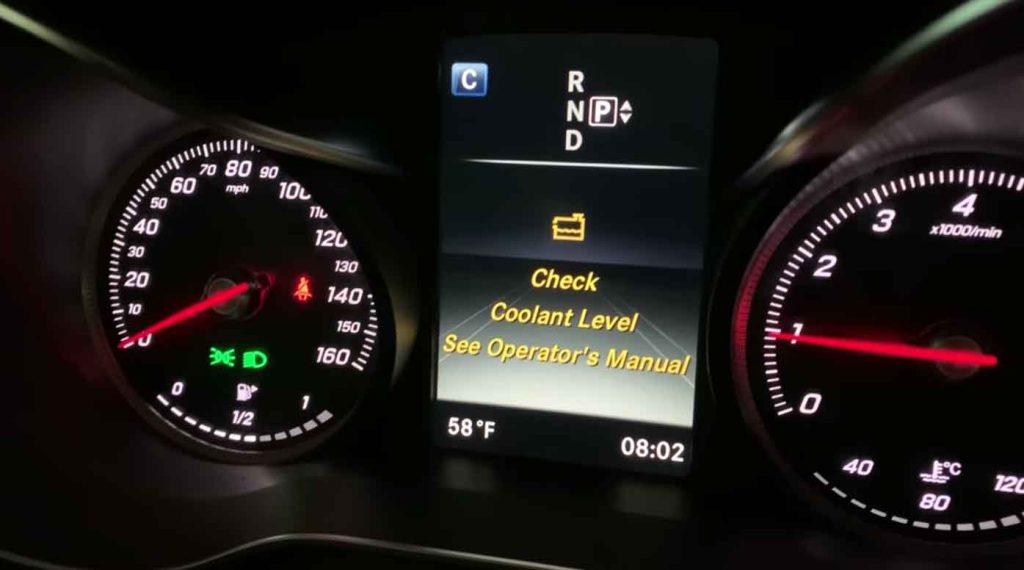
What Does The Coolant Warning Light Mean?
A coolant warning light means the level is too low or the temperature is too high. Stop driving as soon as safely possible. Let the engine cool down. Check the coolant level. Add coolant if needed. If the light stays on, call for help.
Can I Use Water Instead Of Coolant?
Never use only water in your Mercedes. Pure water freezes in cold weather. It also boils at a lower temperature than coolant. Water doesn’t have rust inhibitors. Always use the proper 50/50 coolant mixture.
What Happens If My Engine Overheats?
An overheating engine can warp the cylinder head. It can crack the engine block. Gaskets can blow. Pistons can seize. Repairs cost $3,000 to $8,000 or more. Prevention is much cheaper than repair.
Why Is My Coolant Full But The Light Is On?
The sensor might be faulty. The coolant might be old and not working properly. There could be air bubbles in the system. Your thermostat might be stuck. Have a technician diagnose the exact cause with proper equipment.