
Monday to Saturday - 9:00 am -18:00 pm

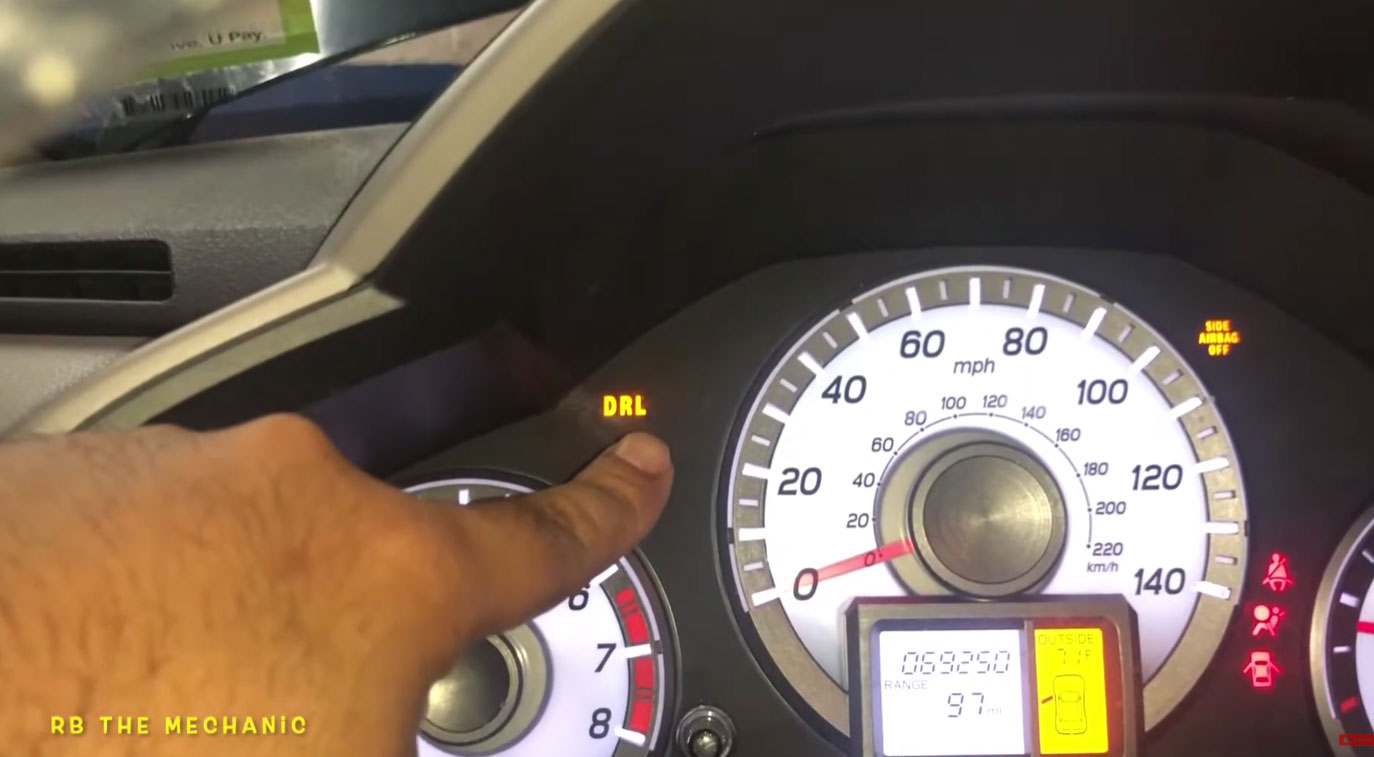
That little light on your dashboard isn’t dramatic. When your Honda Pilot’s DRL light comes on, something is actually broken. Your daytime running lights aren’t working like they should. The good news? Most fixes are easy, and I’m going to walk you through exactly what to check first.
What Your DRL Light Actually Means
Your DRL warning light is a yellow or amber light on your dashboard that says “DRL.” When it’s on, it means your car’s computer detected a problem with the daytime running light system. One or both of your DRL lights aren’t working properly.
That’s it. It’s not an emergency. You can still drive safely. But it means the system that helps other drivers see you during the day is broken, and you should fix it soon.
Think of it like a check engine light, but just for the lights. Your car is telling you, “Hey, fix this.”
How Honda’s DRL System Works (The Simple Version)
Most car owners don’t realize this: your Honda Pilot doesn’t have separate bulbs for daytime running lights.
Instead, it uses your high-beam headlight bulbs and runs them at low power. Here’s what happens:
When you start your Pilot and release the parking brake:
- The engine is running
- Headlights are off
- A control module under your dashboard sends power to your high-beam bulbs
- But it only sends about 50-60% of the power they normally get
- So they glow dimly—that’s your DRL
The parts involved:
- Two high-beam bulbs (9005 type)
- A DRL control module under the driver’s side dashboard
- Fuses (usually Fuse 1, 7.5 amp)
- Relays that control power flow
- Wiring connections
When any of these fail, your DRL light comes on.
Most Common Reasons Your DRL Light Is On
I’ve fixed thousands of these. Here’s what causes 95% of all DRL problems on Pilots:
1. One or Both High-Beam Bulbs Are Burned Out (60% of cases)
This is the most common problem. Your DRL bulbs work every single time you start your car. That’s way more use than regular headlights get.
Over time, the filament inside burns out.
How to check:
- Turn on your high beams at night
- Do both lights come on brightly?
- If one or both are dark or don’t work at all, you found the problem
If your high beams work fine but your DRLs don’t, the problem is elsewhere.
2. Bad Connections or Corrosion (15% of cases)
Moisture gets inside the bulb sockets. Corrosion builds up on the metal connectors. Your car can’t send power to the bulbs, even if they’re good.
How to check:
- Pop your hood
- Look at both high-beam bulb connectors
- Do you see white, green, or blue crusty buildup?
- Are the connectors loose or wiggly?
If yes, this is your problem.
3. DRL Control Module Failure (15% of cases)
The module under your dashboard handles all the voltage changes. Sometimes the solder connections inside fail. You might hear a buzzing sound from under the dash—that’s a sign.
This is trickier to diagnose at home, but it’s usually the problem if bulbs and connections look good.
4. Blown Fuse or Bad Relay (8% of cases)
A fuse blows if too much power flows through the circuit. A relay stops working if it wears out. Both are simple to replace.
5. You Installed LED Bulbs (2% of cases)
Some Pilots owners upgrade to LED high-beam bulbs for better light. LEDs draw way less power than halogen bulbs. Your car’s computer thinks the bulbs are burned out, so the DRL light comes on.
This is actually fixable without replacing the LEDs.
How to Diagnose the Problem Yourself
You don’t need a mechanic to figure out what’s wrong. Just follow these steps in order.
Step 1: Check Your High-Beam Bulbs (5 minutes)
This is where most problems hide.
What you need:
- Flashlight
- Nothing else
What to do:
- Open your hood
- Look behind your headlight
- Find the two bulbs sticking out (these are your high beams)
- Look at the glass bulb itself
- Do you see a dark, blackened filament inside?
- Is the glass cracked or cloudy?
If either bulb looks dark or broken inside, it’s burned out. Replace it (see repair section below).
Quick test:
- Turn on your headlights
- Switch to high beam
- Do both lights come on bright?
- If one is dim or off, that bulb is bad
Step 2: Check Your Bulb Connectors (5 minutes)
Even if your bulbs look good, the connection might be bad.
What you need:
- Flashlight
- Your fingers
What to do:
- Look at the connector plugged into each high-beam bulb
- The connector is the plastic part that plugs in
- Gently wiggle it
- Does it move easily, or is it tight?
- Look inside the connector opening
- See any white, green, or blue crusty stuff?
If it’s loose or corroded, you found your problem.
Step 3: Check Your Fuse (3 minutes)
Your DRL fuse is usually Fuse 1 in your under-dash fuse box. It should be 7.5 amps.
What to do:
- Open your fuse box cover (driver’s side, below the dashboard)
- Find Fuse 1
- Pull it out
- Look through the clear plastic casing
- Is the metal strip inside broken or blackened?
If yes, replace it with a new 7.5-amp fuse.
Step 4: Test for Power (Advanced, but helpful)
If steps 1-3 didn’t find the problem, grab a multimeter.
What to do:
- Turn on your Pilot (don’t start it)
- Release the parking brake
- Set your multimeter to DC volts
- Touch the red probe to the bulb connector
- Touch the black probe to a metal part of the car (ground)
- You should read 11-14 volts
If you read 0 volts, power isn’t reaching the bulb. The problem is in the wiring, relay, or module.
If you read less than 11 volts, there’s resistance in the circuit (corrosion or bad wire).
Step-by-Step Fixes You Can Do at Home
Fix #1: Replace a Burned-Out Bulb
Difficulty: Easy Time: 10–20 minutes Cost: $5–15 per bulb
What you need:
- Replacement 9005 bulbs (buy two, in case both are bad)
- Small Phillips screwdriver
- Flashlight
Steps:
- Pop your hood and locate the bulbs
- Look behind each headlight assembly
- The high-beam bulbs stick out toward the back
- Remove the air intake cover (driver’s side)
- On most Pilots, there’s a plastic cover above the bulb
- Unscrew it with a Phillips screwdriver
- Set screws aside in a safe place
- Grab the bulb and twist counterclockwise
- The bulb twists out, it doesn’t pull straight out
- Turn it about a quarter turn
- It will come free
- Unplug the connector
- The plastic connector plugs off the back of the bulb
- Gently wiggle and pull it straight
- Plug in the new bulb
- Don’t touch the glass part of the new bulb
- Oil from your skin can make it burn out faster
- Plug the connector back on
- Twist the bulb back in clockwise
- Turn it until it’s snug
- Don’t over-tighten
- Test your DRL lights
- Turn off your headlights
- Start your car
- Release the parking brake
- Does the DRL light go out?
- If yes, you’re done
- Replace the air intake cover
- Screw it back on
- You’re finished
Pro tip: Your high-beam bulbs don’t last as long as regular headlights because they’re used for DRL every time you drive. If one burned out, the other will soon too. Replace both at the same time.
Fix #2: Clean Corroded Connections
Difficulty: Easy Time: 10 minutes Cost: $5–10
What you need:
- Electrical contact cleaner (find it at any auto parts store)
- Small wire brush or old toothbrush
- Dry cloth
Steps:
- Remove the bulb connector
- Follow steps 1-2 from Fix #1
- Unplug the connector from the bulb
- Spray electrical cleaner inside the connector
- Spray the female connector (the part on the car)
- Spray the male connector (the part on the bulb)
- Let it sit for 30 seconds
- Brush out the corrosion gently
- Use a soft wire brush or toothbrush
- Scrub the metal contacts inside both parts
- Don’t scrub hard enough to damage them
- Let everything dry
- Wait 2–3 minutes
- Make sure no liquid is visible
- Plug the connector back in firmly
- Push it on until it clicks
- Give it a gentle tug to make sure it’s seated
- Test your lights
- Start your car
- Release the parking brake
- Does the DRL light go out?
Fix #3: Replace Your DRL Fuse
Difficulty: Very easy Time: 3 minutes Cost: $2–5
What you need:
- Replacement 7.5-amp fuse (bring the old one to the auto parts store to match it)
- That’s it
Steps:
- Open the fuse box
- It’s under the driver’s side dashboard, to the left of the steering wheel
- Pop the cover off
- Find Fuse 1
- It should be at the top left
- It’s labeled
- Pull the old fuse straight out
- Use your fingers or small pliers
- Don’t force it
- Push the new fuse straight in
- It’s keyed, so it only goes in one way
- Push until it clicks
- Close the fuse box cover
- Test your lights
When to Go to a Shop
If you’ve done all the checks above and the light is still on, you’ve got two problems that need professional help:
DRL Control Module Failure
If bulbs look good, connections are clean, fuse is fine, and you have power at the connector, your control module is bad.
Signs:
- Buzzing sound from under the dash
- DRL light stays on even with new bulbs
- One bulb works, the other won’t
What it costs:
- Diagnosis: $85–120
- Module replacement: $150–300 installed
- Some shops can resolder the module for $50–100 (if connections are just loose)
Bad Wiring or Relay
If the multimeter test showed zero volts at the connector, power isn’t reaching it. This means bad wiring or a bad relay.
What it costs:
- Diagnosis: $85–120
- Relay replacement: $50–150
- Wiring repair: $100–300 depending on damage
Where to go:
- Any Honda dealer
- Any trusted independent shop
- A shop that specializes in electrical work
Don’t ignore this. Bad wiring can cause fires in extreme cases.
Common Mistakes Pilot Owners Make
I see these all the time:
Mistake #1: Replacing Both High-Beam Bulbs When You Don’t Know Which One Is Bad
You turn on your high beams and one bulb looks dim. Before you replace both, check if the dim one is actually burned out or if it’s just the angle you’re looking at.
Better approach: Replace the bulb that’s actually out. Wait a month. If the other one burns out, replace it then. You’ll save money.
Mistake #2: Installing LED High-Beam Bulbs Without Extra Wiring
LEDs are great for brightness. But they draw way less power than halogen bulbs. Your car thinks they’re burned out. The DRL light comes on.
If you want LEDs, buy “CAN-bus” LEDs that have a computer chip inside. Or install a resistor pack to trick your car into thinking the bulbs draw more power.
Cost of a fix: $15–30 in resistors, or $30–60 for proper CAN-bus bulbs.
Mistake #3: Ignoring the DRL Light
Some owners think it’s no big deal. “The lights still work, right?”
Wrong. Your DRL helps other drivers see you. In fog, rain, or low-light conditions, those lights save lives. If the light is on, something is broken. Fix it.
Mistake #4: Cleaning Corroded Connectors and Not Applying Dielectric Grease
After you clean a corroded connector, apply a tiny bit of dielectric grease to the metal contacts. This stops corrosion from coming back.
It’s a $3 can that lasts for 100 applications.
Mistake #5: Replacing the DRL Module When the Problem Is Just a Blown Fuse
The module is expensive ($150–300). A fuse is $5. Always check the fuse first.
Frequently Asked Questions
Q: Is it safe to drive with the DRL light on?
A: Yes, it’s safe. Your car will still run fine. But your daytime running lights aren’t working, so you’re less visible to other drivers during the day. Fix it as soon as you can.
Q: Will the DRL light go away on its own?
A: No. It won’t fix itself. You need to fix the actual problem (bulb, connection, fuse, or module). Once you do, the light will go out automatically.
Q: Can I just turn my headlights on to replace the DRL?
A: Your headlights serve a different purpose. They’re brighter and designed for night driving. DRLs are dimmer and meant for daytime visibility. Use your DRLs when they work. Don’t use this as a workaround.
Q: Do I need to replace both bulbs at the same time?
A: Only if both are burned out. But here’s the thing: if one high-beam bulb burned out, the other is probably near the end of its life too. I’d recommend replacing both to avoid doing this job twice in a few months.
Q: How much does a DRL bulb cost?
A: Around $5–15 per bulb, depending on the brand. Cheap bulbs ($5) work fine. Expensive ones don’t burn out faster. Don’t waste money on premium bulbs for DRL.
Q: My DRL light comes on and off. What does that mean?
A: This usually means a loose connection. The contact is intermittent—it works sometimes, doesn’t work other times. Clean and reseat your bulb connectors. This almost always fixes it.
Q: I replaced the bulb and the light is still on. What now?
A: Check your connections for corrosion (clean them). Check your fuse. If both are good, test for power with a multimeter at the connector. If power is there and the bulb is good, the problem is in the control module or a bad relay. Take it to a shop.
Q: Can I disable the DRL light so it doesn’t bother me?
A: Technically yes, but don’t. The light is there for a reason. It’s telling you your safety system is broken. Fix the problem instead of hiding the warning light.
Bottom Line
When your Honda Pilot’s DRL light comes on, start with the easy fixes: check your bulbs, clean your connections, and check your fuse. Nine times out of ten, that’s all you need.
If those don’t work, use a multimeter to test for power. If power is there and the bulb is good, you’re looking at a module or relay issue. That’s when you take it to a shop.
The whole process takes 15–30 minutes of your time and saves you $100+ in unnecessary shop visits. And remember: this light exists to keep you visible to other drivers. Fix it soon.
Your safety depends on it.
Have a Honda Pilot DRL problem we didn’t cover? Drop a comment below or reach out to us at Mechanic Voice. Real mechanics answer real questions.